


Painted Full Length Mirror
A painted full length mirror brings height and reflected light to a room, ranging from grand French chateau cheval frames to tall Victorian wall hangings.
Painted Full Length Mirror
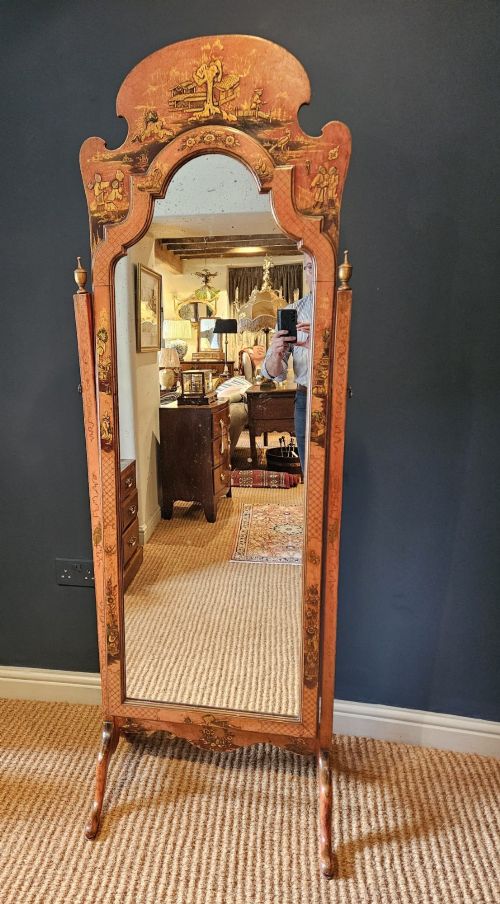
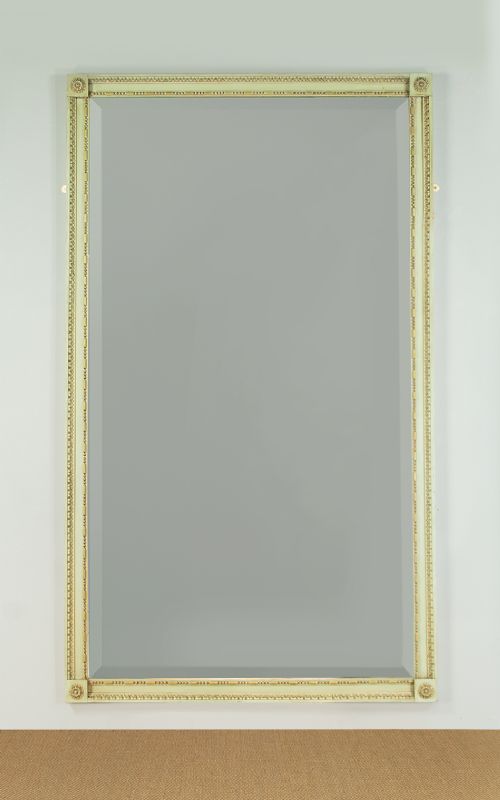
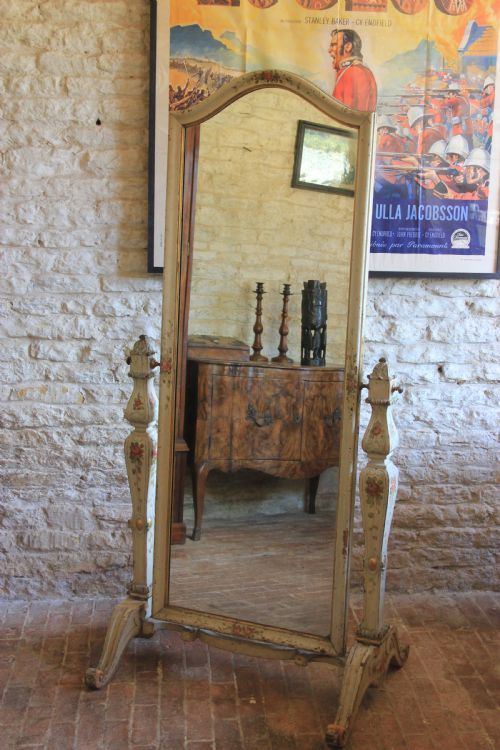
When you search for a painted full length mirror, you encounter substantial vertical looking glasses designed to reflect the entire figure. The examples gathered here span from the mid nineteenth century through to the 1920s, with French provincial and chateau pieces appearing most frequently alongside English and Italian variants.
These items manifest primarily as cheval mirrors that tilt on floor stands, alongside tall wall mirrors and dressing mirrors. Styles draw heavily upon Louis XV rococo, Louis XVI classical restraint, Edwardian utility, and decorative Chinoiserie motifs.
Originating largely from domestic chambers, dressing rooms, bistros, and haberdashery shops, these vertical glasses served both practical grooming needs and decorative interior enlargement.
How They Were Made
Frames are constructed predominantly from wood, often augmented with applied gesso to build up intricate surface ornamentation and scrollwork. Artisans then applied paint directly to the timber or gesso ground, sometimes combining this with areas of gilt wood to highlight carved details.
Glass plates were set within these carved wooden structures, which range from simple column frames and arched tops to elaborate Vitruvian scroll borders.
Several mirrors spent their early mornings inside nineteenth century French bistros and bustling haberdashery shops before retiring to domestic walls.
What Varies in Quality
Quality reveals itself in the depth and crispness of the carved wooden decoration and the application of the gesso relief work. Finer examples display meticulous hand-painted finishes and harmonious proportions across substantial dimensions.
The architectural integrity of the frame, particularly in freestanding cheval mechanisms and heavy floor-standing formats, distinguishes the more accomplished pieces from simpler utilitarian designs.
The Painted Full Length Mirror Glossary
- Cheval mirror
- A freestanding full length mirror mounted on a frame with pivots that allow the glass to tilt. This form emerged to provide a complete view for dressing.
- Gesso
- A plaster-like mixture applied to wood frames to create a smooth surface for painting or to be moulded into relief ornaments. It provides the crisp detail seen on nineteenth century frames.
- Vitruvian scroll
- A classical decorative border pattern composed of repeating wave-like scrolls. It appears frequently on formal architectural mirror frames.
- Chinoiserie
- A European artistic style reflecting Chinese motifs and decorative techniques. This aesthetic is found on specific twentieth century standing mirrors in the selection.
Painted Full Length Mirror: Frequently Asked Questions
Where should I place a floor mirror?
These large vertical glasses work effectively in bedrooms, dressing rooms, and hallways where full length reflection is required. Position them opposite windows to maximise light distribution across the interior.
Freestanding cheval formats require sufficient clearance to allow the glass to tilt without obstruction, while wall-mounted versions need secure fixing to support their substantial weight.
How do I identify French provincial mirrors?
French provincial and chateau pieces typically feature carved wood and gesso frames with arched tops or column details. Painted finishes often show a softer, rustic character compared to formal gilt court styles.
Originating across the nineteenth century, these pieces combine functional height with decorative regional craftsmanship typical of French interiors.
What is a haberdashery shop mirror?
Haberdashery shop mirrors originate from commercial retail interiors of the early twentieth century. They were built to withstand robust daily use while helping customers view garments.
These pieces offer a distinct industrial or commercial aesthetic compared to domestic bedroom dressing mirrors from the same era.
How do I date an antique mirror?
Dating relies upon stylistic markers such as the presence of Louis XVI proportions, Edwardian simplicity, or mid nineteenth century gesso ornament. Construction methods and framing materials also provide key chronological indicators.
Pieces span from the 1850s through to the 1920s, reflecting shifts in interior taste from ornate rococo revival to cleaner architectural lines.