
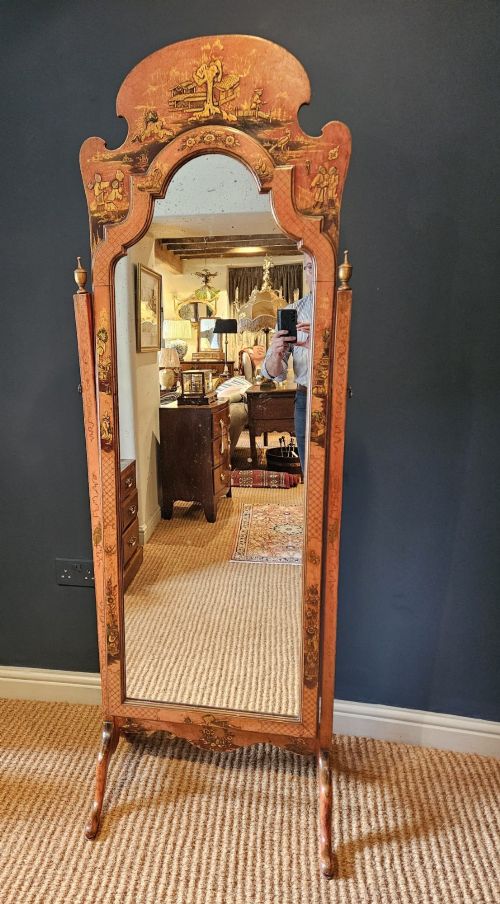
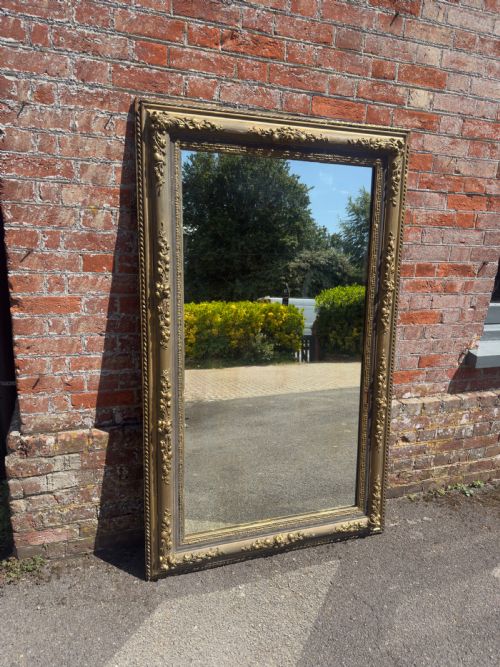
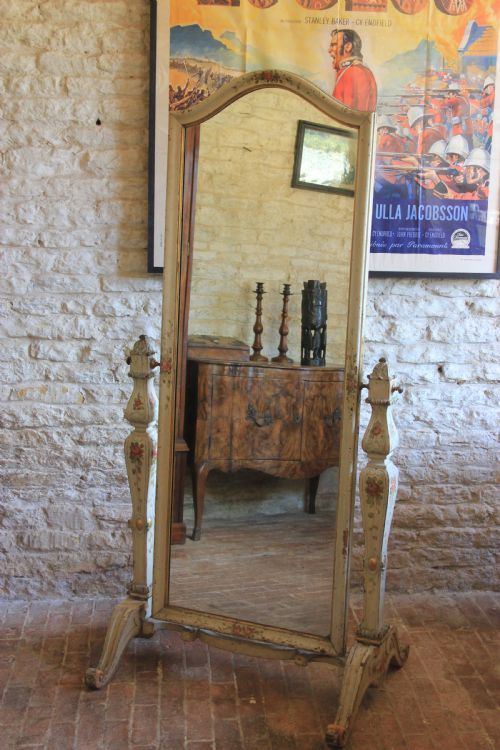
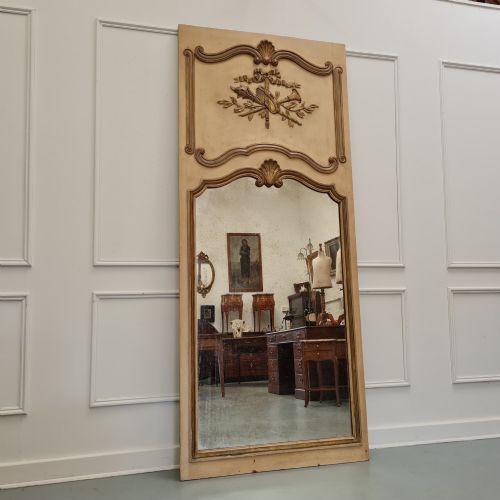


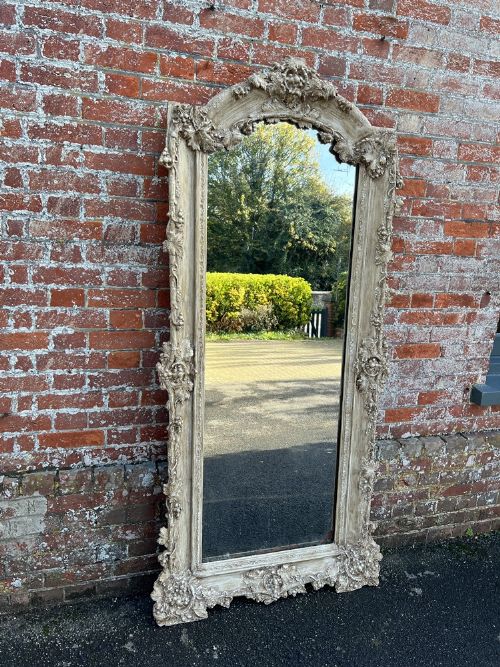
Painted Wood Floor Mirror
A painted wood floor mirror brings scale and reflected light to a room, offering grand proportions suited to dressing or opening up a space.
Painted Wood Floor Mirror
A painted wood floor mirror typically presents as a substantial standing object designed to lean against a wall or pivot upon a frame. When searching for a painted wood floor mirror, buyers encounter tall vertical formats originating largely from the nineteenth and early twentieth centuries.
The inventory leans heavily toward French provincial, nineteenth century French, and English workshops, often taking the form of cheval mirrors or large standing plates. These pieces combine practical reflection with decorative surface treatments suited to principal rooms.
Materials and Construction
Carpenters built the foundational frames from timber, applying layers of gesso to smooth the surface before adding paint and occasional gold leaf. Carved wood details provide architectural relief beneath the painted or gilded skin.
Original mirror glass sits within these shaped or arched frames, held securely by traditional backboards. The integration of wood, gesso, and paint produces a tactile finish that ages with visible character.
Mirrors that survived generations in French bistros carry the quiet haze of countless spilled coffees and midnight toasts.
Distinctions in Quality
The integrity of the carved wood and gesso ornamentation determines much of the visual weight. Finely modelled scrollwork and well-preserved paint or gilt layers separate standard workshop output from exceptional examples.
Proportion and scale dictate the success of the piece, particularly in larger formats where arched or shaped tops require careful balance. The retention of original glass and surface patination further defines the standard of survival.
The Painted Wood Floor Mirror Glossary
- Cheval mirror
- A freestanding mirror suspended on a central pivot within a floor frame. This design allows the glass to tilt to various angles.
- Gesso
- A plaster mixture applied to wood frames to create a smooth surface for painting or gilding. It takes fine carved detail before hardening.
- Trumeau
- A decorative wall mirror or panel featuring painted or carved scenes above the glass. It often integrates directly into interior architecture.
- Pier mirror
- A tall mirror designed to hang or stand on the wall space between windows. It maximises light reflection in traditional rooms.
Painted Wood Floor Mirror: Frequently Asked Questions
How do I secure a heavy floor mirror safely?
Large standing mirrors rely on proper weight distribution and secure wall tethers to prevent tipping. Lean the frame firmly against a structural wall and utilise discrete brackets behind the top rail for stability.
Position the base on level flooring to ensure the timber frame bears the load evenly without twisting the glass plate.
What defines a cheval mirror?
A cheval mirror is a freestanding glass plate mounted on vertical posts with pivots, allowing the entire frame to swing. This format appeared frequently in nineteenth century bedrooms and dressing rooms for full-length viewing.
The supporting legs often feature castors to move the heavy timber structure across carpets and floorboards.
How should I clean antique painted mirror frames?
Dust the carved wood and gesso surfaces gently with a dry, soft brush to protect the delicate painted layers. Avoid moisture or chemical solvents that might soften historic gesso or strip original finishes.
Clean the glass plate separately using a mild glass cleaner applied to a cloth rather than sprayed directly near the wooden frame.
How do I distinguish nineteenth century mirrors?
Examine the construction of the timber backing boards and the composition of the gesso beneath the paint. Nineteenth century frames often display hand-carved detailing and heavier proportions compared to later reproductions.
The mirror glass itself may show subtle foxing, uneven thickness, or distortion characteristic of older manufacturing techniques.