


Vintage Tilt Cheval Mirror
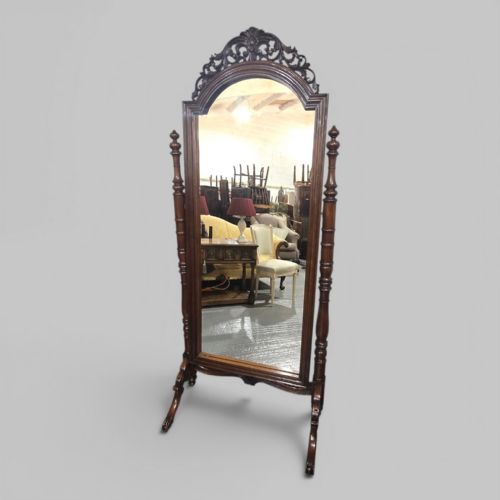
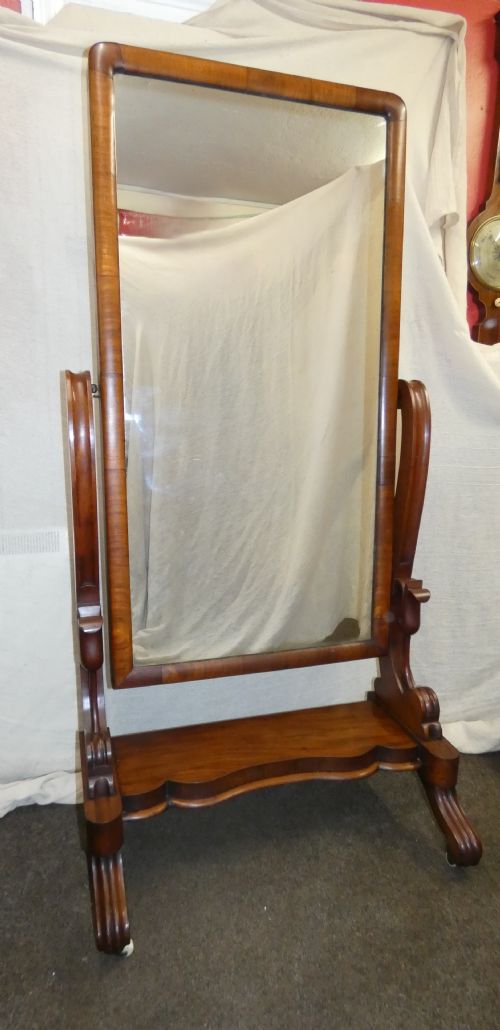
A vintage tilt cheval mirror stands ready to anchor a dressing room, offering full-length reflection with an adjustable frame.
Vintage Tilt Cheval Mirror
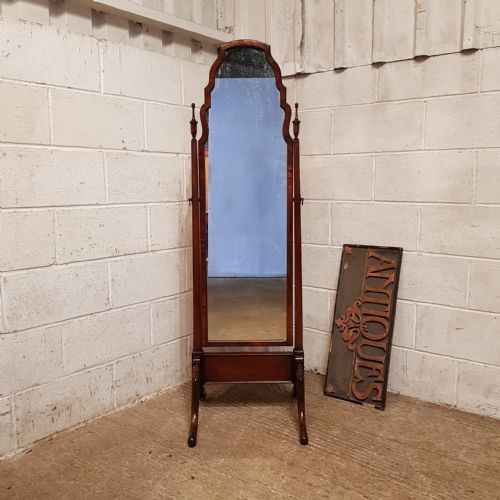
When buyers search for a vintage tilt cheval mirror, they seek a freestanding dressing glass supported on a pivoted frame between vertical posts. These pieces range from Georgian and Regency forms through Victorian and Edwardian examples to items from the 1920s.
The form functions primarily as a dressing mirror, allowing the glass to tilt at various angles within its standing frame. Examples span full-length floor-standing designs to compact table-top variants.
How they were made
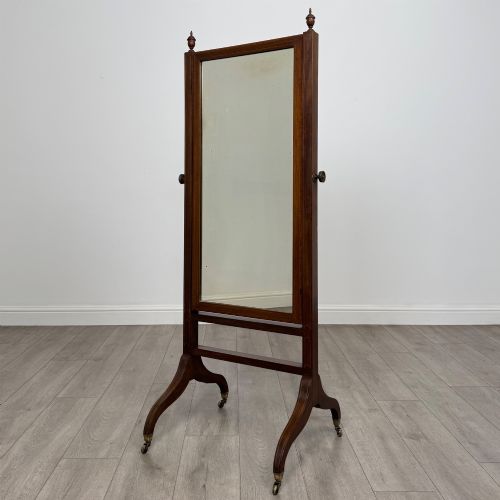
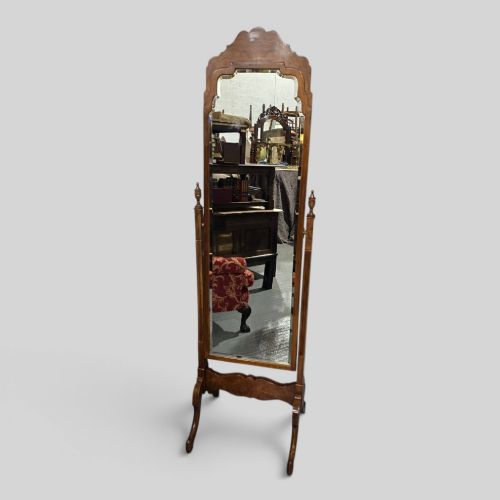
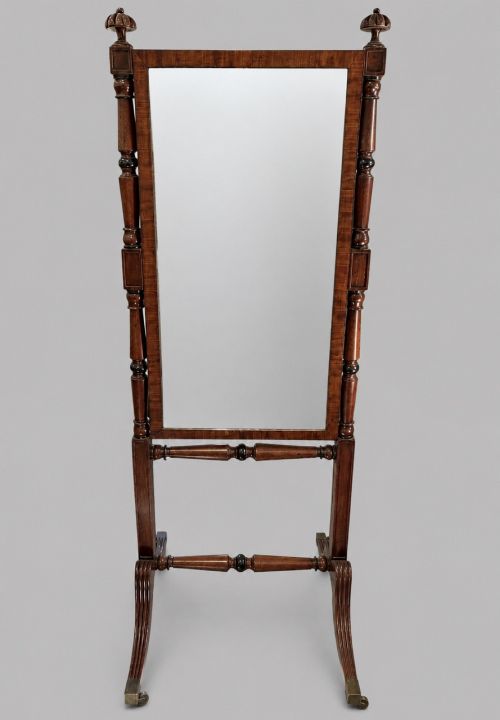
Frames utilise solid timber and rich veneers such as mahogany and burr walnut, shaped with traditional joinery and occasional inlay. Brass fittings secure the pivoting mechanism, frequently featuring decorative sabots and castors.
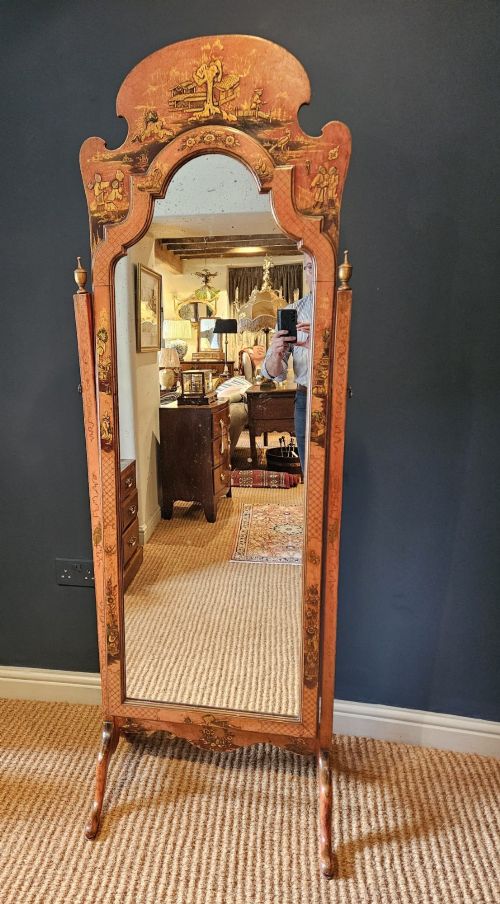
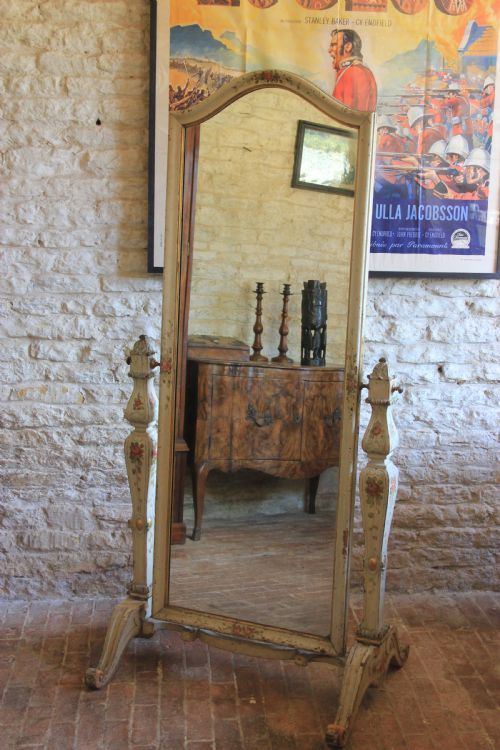
Surface treatments include polished timber finishes, gilt highlights, and lacquered wood applied in distinct stylistic traditions like Chinoiserie. The glass itself rests within a secondary frame suspended between sturdy upright pillars.
Listings feature periods spanning Georgian, Regency, Victorian, Edwardian, and the 1920s, constructed in mahogany, walnut, oak, and lacquered wood.
What varies in quality
The distinction between standard examples and finer pieces lies in the selection of timber veneers, such as figured burr walnut or dense mahogany. Superior execution shows in the crispness of carved details, inlay work, and stylistic coherence.
Hardware quality also separates the range, with solid brass pivots, sabots, and castors demonstrating greater durability and refinement than simpler metal components. The stability of the standing frame and the balance of the tilting mechanism reflect the original maker's standard of construction.
Waring and Gillow·Whytock & Reid
The Vintage Tilt Cheval Mirror Glossary
- Cheval mirror
- A freestanding full-length dressing glass mounted on a pivoting frame. The name derives from the French word for horse, referencing the four-legged support trestles of early examples.
- Sabot
- A metal shoe or sleeve fitted to the foot of a furniture leg. These brass caps frequently incorporate castors to aid movement.
- Chinoiserie
- European decorative style reflecting Chinese artistic influences. This aesthetic employs lacquered finishes and gilt motifs on wood.
- Burr walnut
- Timber featuring intricate, swirling grain patterns formed from tree growths. Cabinetmakers prized this veneer for high-status furniture surfaces.
Vintage Tilt Cheval Mirror: Frequently Asked Questions
How do I secure the tilt mechanism?
Most frames use side screw caps or thumb nuts tightened against the upright posts to hold the glass at the desired angle.
Adjusting these fittings gently prevents undue strain on the wood and the pivot pins over years of daily use.
Where should I place a cheval mirror?
Position the piece near a natural light source to maximise reflection and illumination in a dressing room or bedroom.
Ensure adequate floor space surrounds the frame so the legs and castors remain unobstructed during movement.
How do I identify a Regency period mirror?
Look for classical proportions, sabre legs, and brass details characteristic of early nineteenth-century design.
Mahogany timbers and restrained classical lines often help separate these pieces from later Edwardian revivals.
Are these mirrors heavy to move?
Solid timber frames carry significant weight, though many period examples feature original castors to ease relocation.
Two people should handle larger full-length variants to protect the pivoting frame and glass during transit.