


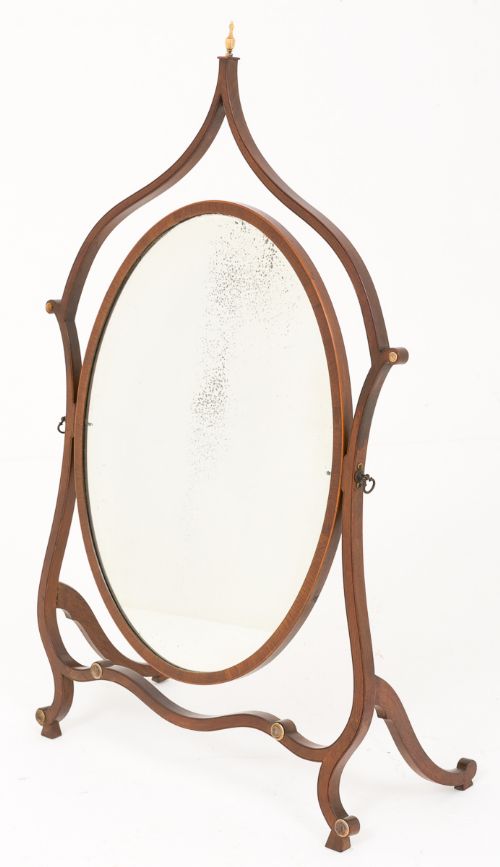

Georgian Style Floor Mirror
A georgian style floor mirror brings upright elegance and practical reflection to a room, captured here in free-standing cheval forms and tall dressing designs.
Georgian Style Floor Mirror
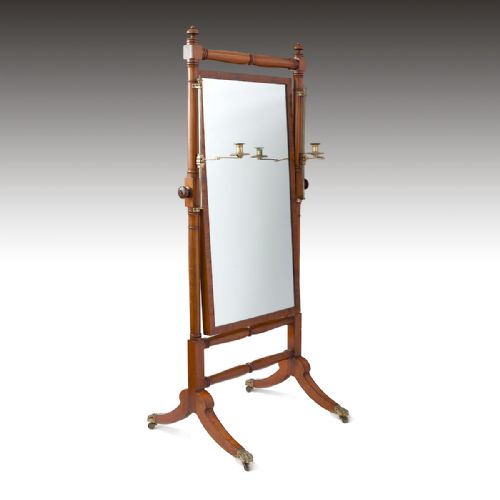
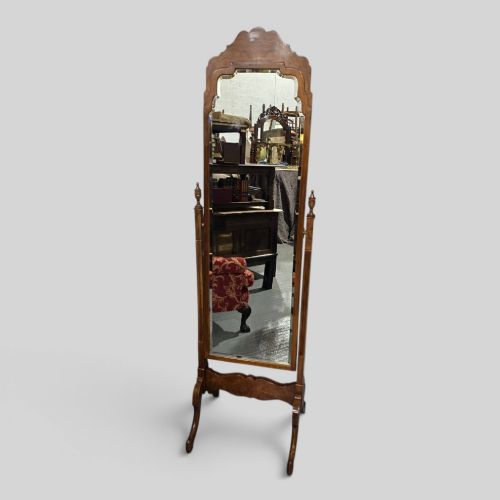
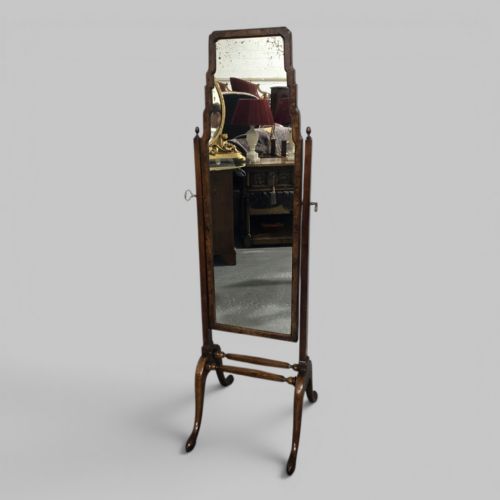
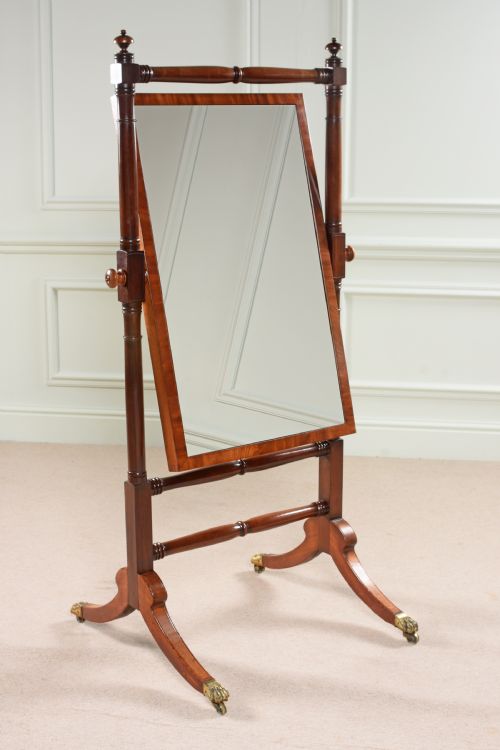
When you search for a georgian style floor mirror, you encounter tall, pivoting full-length looking glasses designed for dressing and grooming. These pieces include large country house cheval mirrors, dressing mirrors on stands, and tall robing frames.
The versions you meet most frequently on this page span the 18th century, the Regency era, Victorian revivals, and 1920 interpretations. They stand on fixed frames or stable floor bases rather than hanging simply upon a wall.
Formations range from simple swing mirrors mounted on horizontal supports to grand cheval designs fitted with sabots and castors. Their origins stretch across authentic period craftsmanship and later revivals inspired by George III, Queen Anne, and Sheraton aesthetics.
How they were made
Cabinet makers constructed these frames primarily in solid timbers and veneers such as mahogany, walnut, burr walnut, and satinwood. Wood choice dictated the visual weight and richness of grain exposed across the upright standards and supporting legs.
Makers integrated brass elements, including sabots and castors, to facilitate movement and protect the feet of the floor stands. Surface decoration often involved marquetry inlay, gilt touches, and painted finishes to achieve Neoclassical or revival elegance.
Designed for morning check-ups, some tall mirrors hide tiny castors so stealthy they practically glide across the bedroom floor.
What varies in quality
Quality rests in the proportional harmony of the upright frame and the stability of the pivoting mechanism. Superior examples display refined timber selection with balanced wood grain matching across the panels and structural members.
Finer pieces exhibit meticulous hand-cut joinery, crisp carving detail, and original brass hardware that complements the timber tone. Lesser examples rely on heavier, unrefined framing and simpler secondary woods lacking the same depth of finish.
The Georgian Style Floor Mirror Glossary
- Cheval mirror
- A freestanding full-length mirror suspended on a vertical frame that allows it to swing. This design originated in France and became popular in English bedrooms.
- Sabots
- Metal protective caps fitted to the feet of furniture legs. They are frequently cast in brass on Regency and revival mirrors.
- Castors
- Small wheel attachments fixed to the base of floor stands. These allow the heavy mirror frame to be repositioned easily across a room.
- Burr walnut
- A figured wood veneer harvested from the burl growth of the walnut tree. It produces intricate, swirling patterns favoured in high-status cabinetry.
- Marquetry
- Decorative inlay work using various tinted woods to form pictorial or geometric designs. It adds surface ornamentation to satinwood and mahogany frames.
Georgian Style Floor Mirror: Frequently Asked Questions
Where should I place a cheval mirror?
These mirrors suit dressing rooms, large hallways, and bedrooms where full-height reflection is required. Their freestanding nature allows them to be angled to catch natural light from windows.
Ensure the floor surface is level so the pivoting frame operates smoothly without straining the side supports or floor castors.
How do I date a floor mirror?
Dating relies on examining the timber species, framing style, pivot hardware, and construction methods. Earlier 18th-century pieces often feature hand-shaped mahogany and simple brass screws, while later revival pieces show standardised fixings.
Stylistic cues such as sabre legs, Hepplewhite shield shapes, or Queen Anne curves also point to specific periods of manufacture or revival.
Are these mirrors heavy to move?
Freestanding floor mirrors are substantial items built from dense hardwoods like mahogany and walnut. Many period designs include brass castors on the feet to assist with repositioning.
When moving them, it is best to secure or lock the pivoting mirror plate to prevent it from swinging and risking damage to the glass.
What is the difference between George III and Georgian style?
George III pieces date directly from the reign of that monarch in the 18th century, showcasing authentic period cabinet-making techniques and contemporary design trends. Georgian style covers both original antiques and later revivals from the 19th and early 20th centuries.
Revival pieces emulate the proportions and decorative motifs of the 18th century while utilising the manufacturing standards of their own production era.