



Traditional Floor Standing Mirror
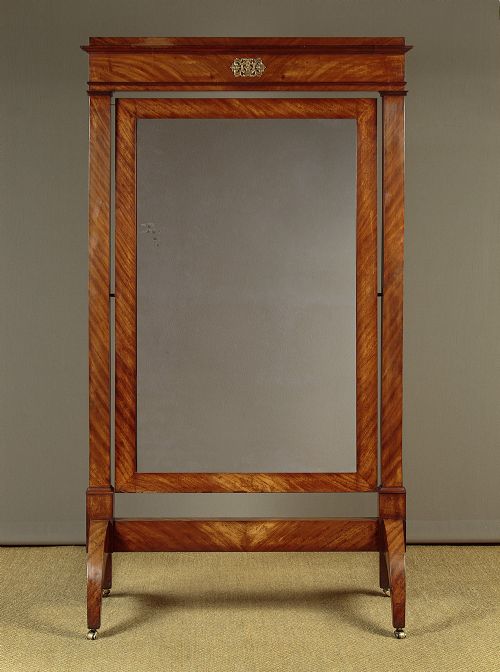
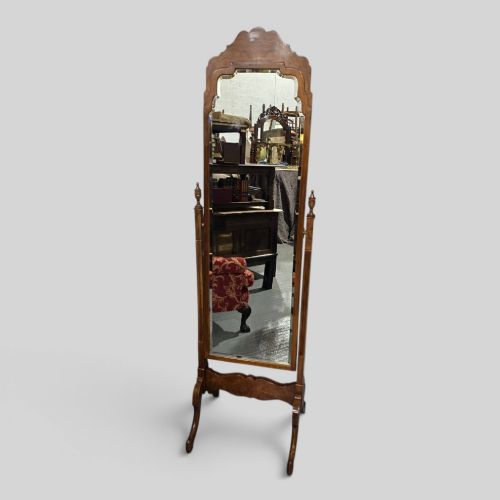
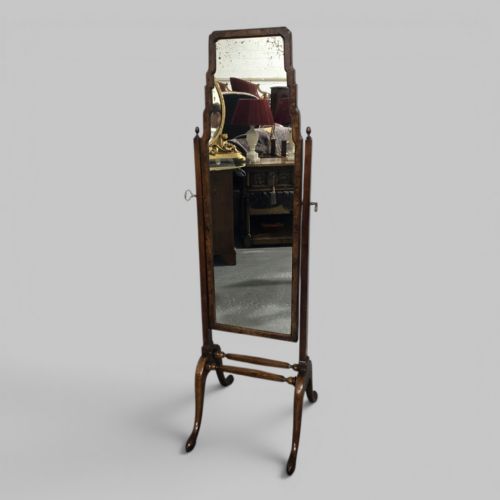
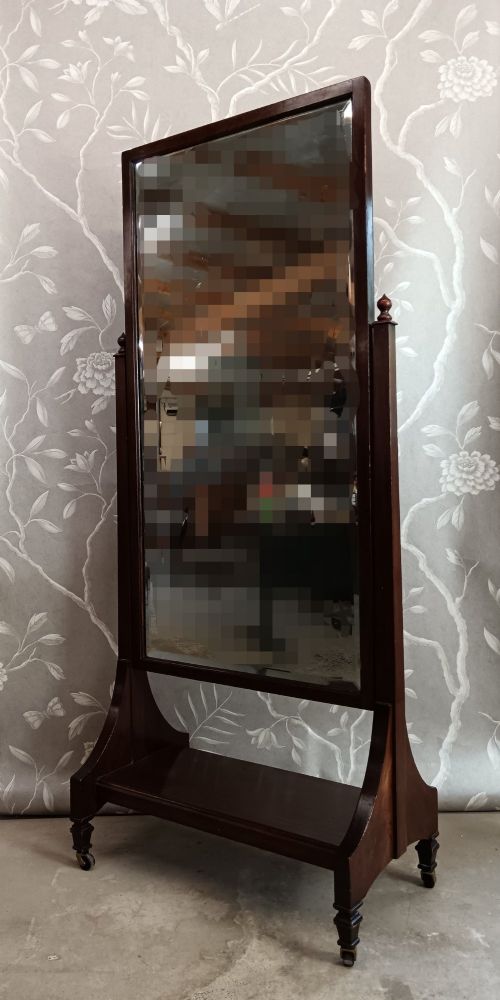
A traditional floor standing mirror brings length and proportion to a room, offering adjustable glass framed in mahogany, walnut or gilded wood.
Traditional Floor Standing Mirror
When you search for a traditional floor standing mirror, you encounter cheval mirrors and large upright swing mirrors designed to show the full figure. These pieces range from Georgian and Victorian examples in rich timbers to later revivals.
Mahogany remains the dominant wood across the selection, often taking the form of a cheval mirror with upright standards and a pivoting frame. Walnut and burr walnut appear alongside pitch pine and painted finishes.
The styles span Queen Anne proportions, George III elegance, American Empire, and French nineteenth-century design. While most examples are freestanding on frame feet or scroll supports, large wall and overmantel mirrors also feature.
How they were made
Cabinetmakers constructed these frames using solid hardwoods like mahogany and walnut, frequently applying burr walnut veneers to curved crests and stands. Turned wooden supports and pegged joints provided the necessary stability for heavy pivoting plates.
Gilded overmantel and wall pieces relied on carved wood and gesso foundations moulded into architectural crests and ornate frames. Silvered mirror glass sat securely within rebates backed by protective timber panels.
What varies in quality
The standard of a traditional floor standing mirror rests on the depth of the timber figuring and the crispness of any carved or turned detail. Substantial proportions and well-balanced swing frames indicate superior workshop origins.
Fine examples retain their original mirror glass, showing appropriate ageing without loss to the silvering beneath. The integration of brass mounts, pivots and candle sconces further distinguishes finer pieces.
The Traditional Floor Standing Mirror Glossary
- Cheval mirror
- A floor-standing dressing glass mounted on a swivelling frame between two upright pillars. This form allows the user to tilt the glass to various angles.
- Overmantel mirror
- A large glass designed to hang directly above a fireplace mantelpiece. These pieces often feature architectural mouldings or arched tops.
- Gesso
- A plaster-based mixture applied to wood surfaces as a smooth base for gilding. Skilled artisans carved intricate relief patterns directly into this ground.
- Burr walnut
- Timber taken from the gnarled growths of walnut trees, yielding rich and swirling grain patterns. Cabinetmakers prized this veneer for high-status furniture fronts.
Traditional Floor Standing Mirror: Frequently Asked Questions
What is a cheval mirror?
A cheval mirror is a freestanding dressing glass mounted in a pivoting frame supported by four legs or a heavy base. This mechanical design lets you adjust the tilt of the glass.
Most examples in the current selection date from the nineteenth and early twentieth centuries, constructed in mahogany or walnut.
How do I place a floor mirror?
Floor standing mirrors require a stable surface and sufficient wall clearance to accommodate the pivoting frame safely. Placing them near natural light sources helps maximise their reflective capacity.
Heavier wood frames benefit from placement against solid walls rather than partition drywall.
How do I identify a Victorian mirror?
Victorian mirrors often feature dense timbers such as mahogany or pitch pine with robust turned supports and scroll feet. Construction methods include visible hand-cut joinery and heavy brass pivoting hardware.
Earlier Georgian pieces tend to show lighter framing proportions and refined bracket feet.
Are these mirrors original?
The listings comprise antique pieces from the nineteenth and early twentieth centuries alongside revival styles. Timber patination, construction wear and glass silvering help indicate the age of each piece.
Detailed descriptions note specific periods including Georgian, Victorian, and later revival dates.