



Black Standing Mirror
A black standing mirror brings architectural weight to a room, offering both practical reflection and deep surface contrast.
Black Standing Mirror
A black standing mirror encompasses tall floor-length glasses, dressing pieces, and hall stands spanning the eighteenth century through to the nineteen-twenties. These items serve to anchor a room's interior scheme while providing full-length or targeted reflections.
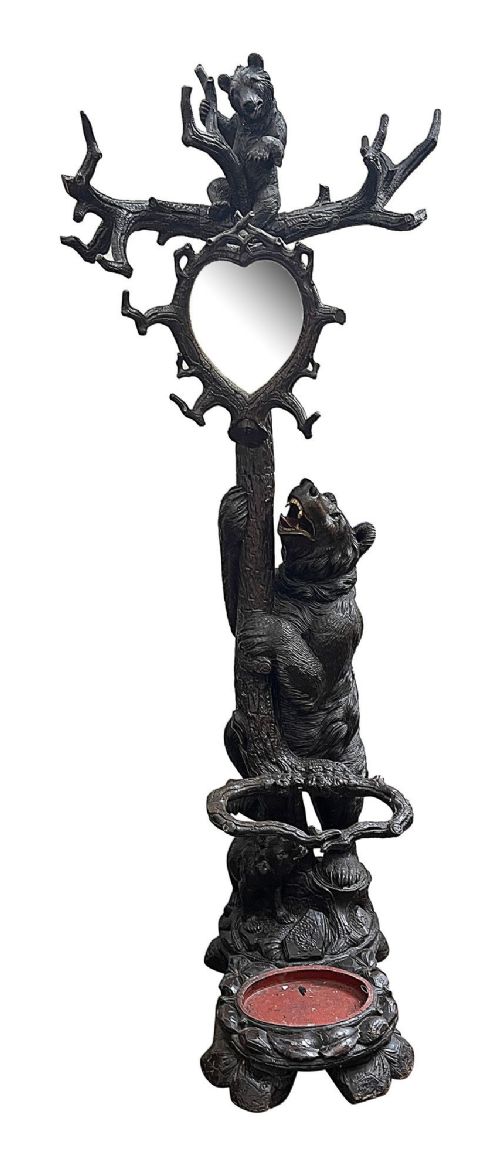
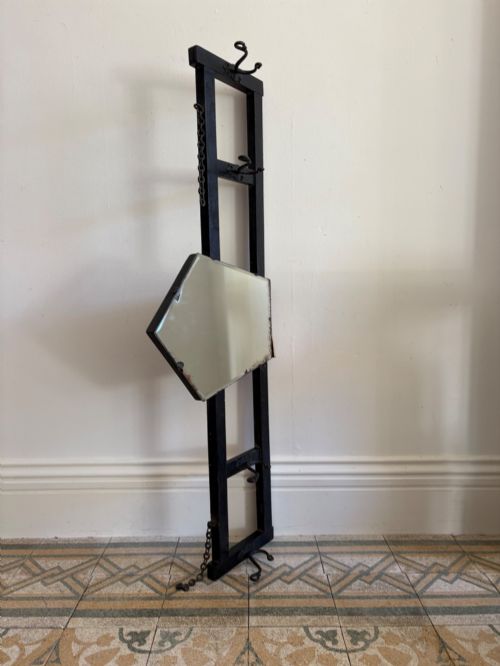
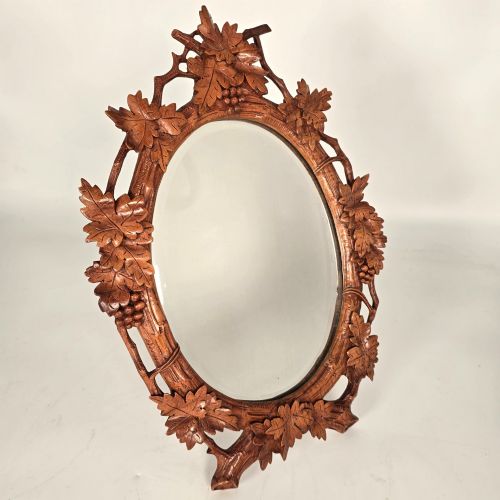
The selection on this page demonstrates considerable variety in form, ranging from carved lime wood table pieces and ebonised dressing units to cast iron hall stands and large painted floor mirrors. Each example deploys dark finishes or ebonised surfaces to create a distinct visual anchor.
Origins stretch across European workshops, including French, Swiss, and British examples, alongside Chinese export pieces. Buyers encounter diverse stylistic influences such as Black Forest carving, Art Deco industrialism, Chinoiserie, and the Aesthetic Movement.
How they were made
Construction relies upon traditional timber framing, cast iron casting, and wrought iron forming. Woods such as lime wood and mahogany provide the base for intricate hand carving or smooth ebonised finishes.
Surfaces receive dark coloration through ebonising, black lacquer, or painted treatments, occasionally complemented by gilt highlights or mercury glass panels. Metal elements utilise cast iron or spelter to achieve robust structural frames and decorative brackets.
Black Standing Mirror Retail Price Guide 2026
Typical asking prices for black standing mirror among the pieces listed under this phrase on Sellingantiques today, from the lower quarter to the upper quarter. They describe what is for sale here now, not the wider market.
Listings span multiple centuries, incorporating eighteenth-century Chinese export pieces alongside nineteenth-century Aesthetic Movement ebonised mahogany and nineteen-twenties mercury glass.
What varies in quality
Quality rests upon the depth of hand-carved detail within the wooden frames, particularly visible in Black Forest lime wood pieces where crisp undercut foliage defines the upper tier of craftsmanship. Simpler cast iron frameworks depend upon clean casting lines and the structural integrity of integrated stands and shelves.
The treatment of the dark surface finish dictates much of the visual success, with subtle ebonising, precise lacquer work, and delicate gilt highlights outperforming flat, uniform modern paints. Original mercury glass and well-preserved silvering add historical depth that elevates an entire piece.
The Black Standing Mirror Glossary
- Ebonised wood
- Timber treated with stain or chemical agents to imitate expensive ebony. This dark finish became particularly fashionable during the Victorian and Aesthetic periods.
- Chinoiserie
- European interpretation of Chinese and East Asian artistic traditions. It frequently appears on lacquerwork and dressing mirror frames.
- Mercury glass
- Silvered glass produced by pouring a liquid mercury amalgam between double-walled blown glass before sealing. It yields a distinctive mottled reflection.
- Spelter
- A zinc alloy used as a cost-effective substitute for bronze. It accepts metallic and dark finishes readily for decorative figures and frames.
- Black Forest
- A regional style of wood carving originating in Switzerland and Germany. It is characterised by naturalistic motifs such as animals and foliage carved from lime wood.
Black Standing Mirror: Frequently Asked Questions
How do I style a black standing mirror?
Position the piece against a pale wall to let the dark frame draw the eye and create strong visual contrast in a hallway or bedroom. The heavy frame grounds the surrounding furniture.
Pair the mirror with complementary wooden or iron items from similar periods to maintain a cohesive interior narrative.
Are these mirrors truly full length?
Many examples on this page offer full-length reflection, particularly the floor-standing dressing mirrors and tall hall stands with integrated glass panels. Other variations focus on table or vanity use.
Check the dimensions of each specific listing to confirm the height suits your intended room placement.
What is ebonised wood?
Ebonised wood is ordinary timber, such as mahogany or fruitwood, treated to achieve a deep black appearance that resembles true ebony. This technique was favoured by cabinetmakers seeking a dramatic, formal aesthetic.
It allows intricate carvings to absorb light and show form through subtle highlights rather than natural grain.
How do I identify a Black Forest mirror?
Black Forest mirrors feature deeply carved lime wood depicting natural elements, often incorporating foliage, branches, or animals. The carving is typically high-relief and shows exceptional depth.
Swiss and German workshops produced these distinctive pieces during the nineteenth century.