

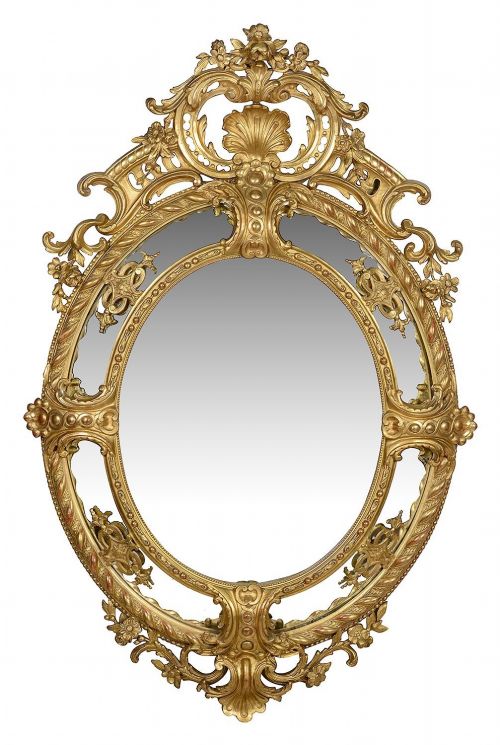


Overmantel Oval Mirror
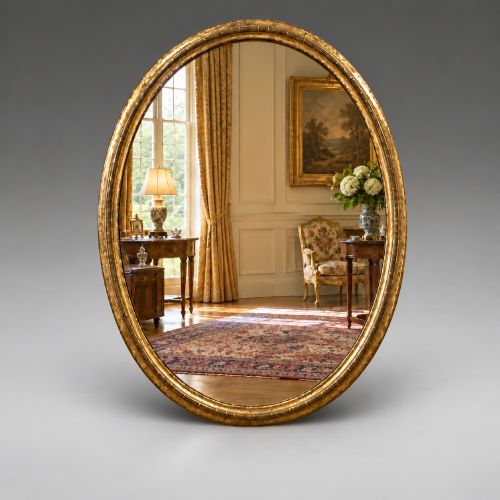
An overmantel oval mirror brings scale and reflected light to a fireplace wall, drawing the eye upwards with curved gilded frames.
Overmantel Oval Mirror
An overmantel oval mirror is a large wall glass designed specifically to hang above a mantelpiece, though many serve equally well as principal hall or pier mirrors. These pieces span the Georgian, Victorian, and Edwardian eras, reflecting the changing interior fashions of the eighteenth, nineteenth, and early twentieth centuries.
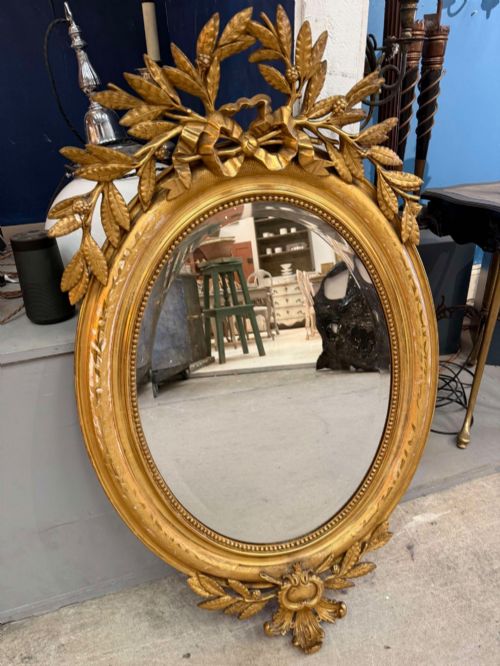
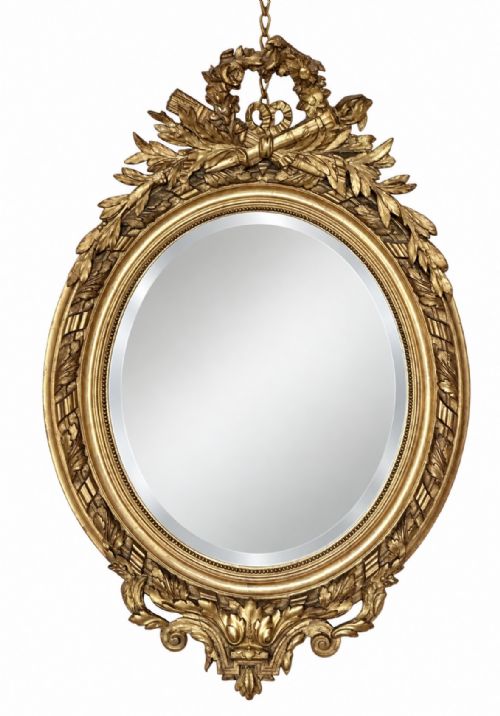
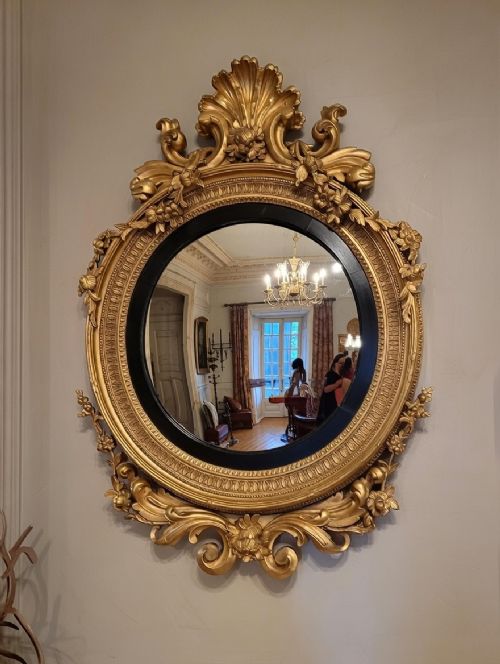
The version most commonly met on this page is a nineteenth-century giltwood and gesso example, often carrying Regency, Rococo Revival, or Adam style motifs. These mirrors range from simple, restrained frames to enormous, heavily ornamented pieces with carved details like laurel wreaths, scrolls, or fern motifs.
Materials and Construction
Makers built these frames using carved wood, composition ornament, and gesso laid over a timber base, which provided a stable foundation for subsequent gilding. Gold leaf or liquid gilding was then applied to the prepared surfaces, sometimes paired with parcel-gilt sections or ebonised accents to create visual contrast.
Mirror glass was set into these heavy frames, occasionally taking the form of cushion plates or divided panels. Secondary woods like oak or burr yew appeared in specific regional or period pieces, while cast iron occasionally served for heavier structural frames.
Overmantel Oval Mirror Retail Price Guide 2026
Typical asking prices for overmantel oval mirror among the pieces listed under this phrase on Sellingantiques today, from the lower quarter to the upper quarter. They describe what is for sale here now, not the wider market.
Some nineteenth-century makers snuck unexpected carved fern motifs into their giltwood frames, bringing woodland undergrowth straight into the drawing room.
Assessing Quality
Quality in an overmantel oval mirror rests in the crispness of the hand-carved woodwork and the depth of the gesso mouldings rather than simple mass. Superior examples display sharply defined ornament, such as deep acanthus leaves or crisply rendered urns, which weaker pieces substitute with shallow, soft composition pressings.
The integrity of the original mercury or silvered mirror plate and the tightness of the frame joints further separate standard production from exceptional craftsmanship. Frames that retain their original untouched gilding surfaces carry far greater aesthetic weight than those heavily overpainted.
The Overmantel Oval Mirror Glossary
- Giltwood
- Wood that has been coated with gold leaf or gold paint. This finish defines the majority of classical overmantel frames.
- Gesso
- A plaster-like mixture applied to wood frames to create a smooth surface for carving or moulding details. It accepts subtle ornamental motifs before gilding.
- Composition
- A moulded mixture of whiting, resin, linseed oil and glue used to form decorative reliefs on picture and mirror frames. It offered a faster alternative to hand carving during the nineteenth century.
- Overmantel
- A large mirror or painting designed to hang directly above a fireplace mantel. These pieces were scaled to anchor the chimney breast visually.
- Parcel-gilt
- Partially gilded, leaving sections of the underlying dark wood or painted ground visible. This technique highlights specific carved details on the frame.
Overmantel Oval Mirror: Frequently Asked Questions
How do I hang a heavy overmantel mirror?
These large mirrors require fixing directly into wall studs or masonry using heavy-duty mirror plates and appropriate wall anchors. Professional installation is strongly recommended given the substantial weight of timber, gesso, and glass.
Ensure the weight is distributed evenly across multiple fixing points to protect the antique frame and wall structure from undue strain.
Can these mirrors go in rooms other than the living room?
While originally designed for the main reception room fireplace, many examples function effectively as grand hall or pier mirrors. Their generous scale also suits dining rooms and bedrooms where reflected light opens up the floor plan.
Placement should simply account for the physical dimensions of the frame and the sightlines within the space.
How do I distinguish a Victorian copy from a Georgian original?
Georgian frames typically exhibit meticulous hand-carved wooden details and heavier joinery techniques native to the eighteenth century. Victorian interpretations often incorporate composition ornamentation and softer pine carcasses beneath the gesso.
Examining the backboards, fixings, and the chemical composition of the glass plate provides further clues to dating.