







Moulded Giltwood Mirror
A moulded giltwood mirror brings light and presence to a room, offering the reflective depth and ornate framing characteristic of nineteenth-century craftsmanship.
Moulded Giltwood Mirror
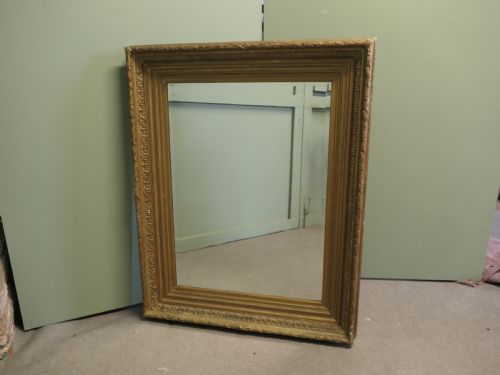
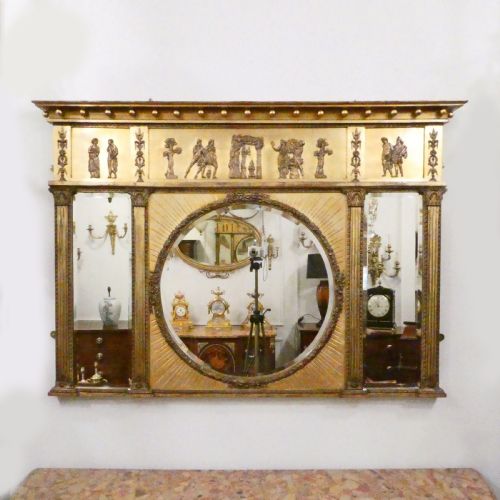
A moulded giltwood mirror is typically encountered as a wall mirror or an overmantel mirror dating from the nineteenth century, including Regency and Victorian periods. These pieces serve practical and decorative functions within domestic interiors, frequently featuring prominent frames designed to catch and reflect light.
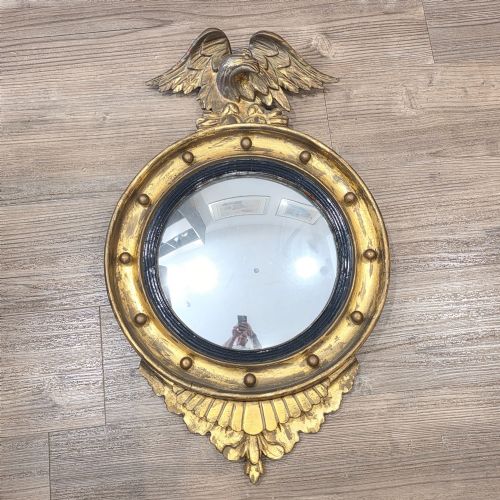
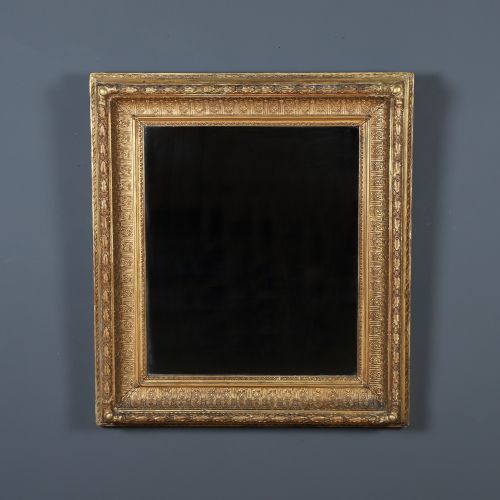
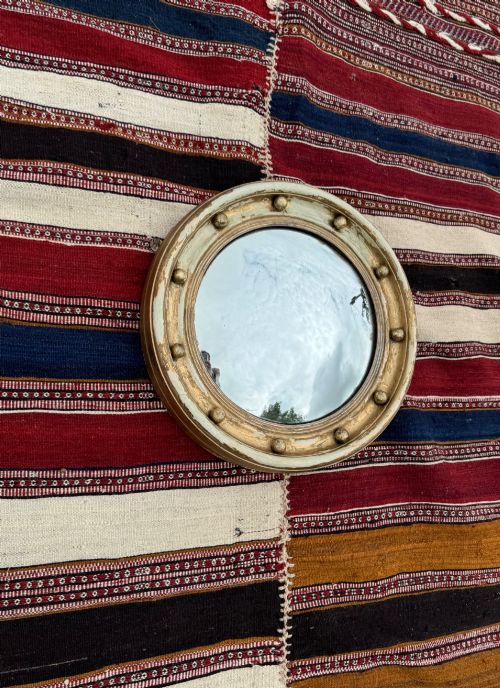
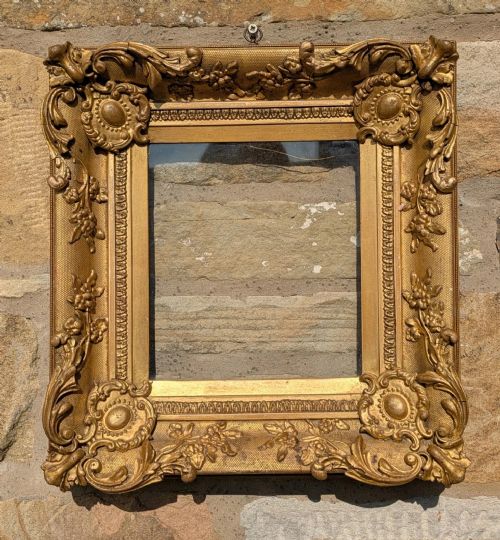
The selection ranges from large circular convex mirrors surmounted by eagles to grand arched top overmantels and rectangular frames. Many examples display specific stylistic revivals such as Rococo or French Baroque, alongside classical Regency proportions.
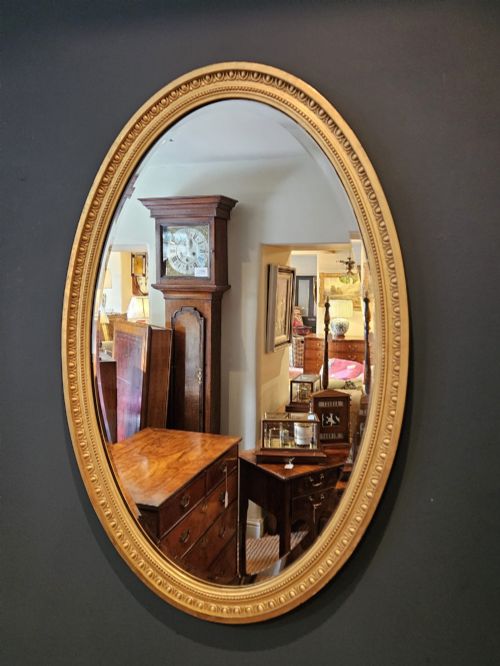
Makers utilised various formats, from landscape mirrors to oval and picture-frame configurations, incorporating traditional forms that anchor historical decorative schemes.
How they were made
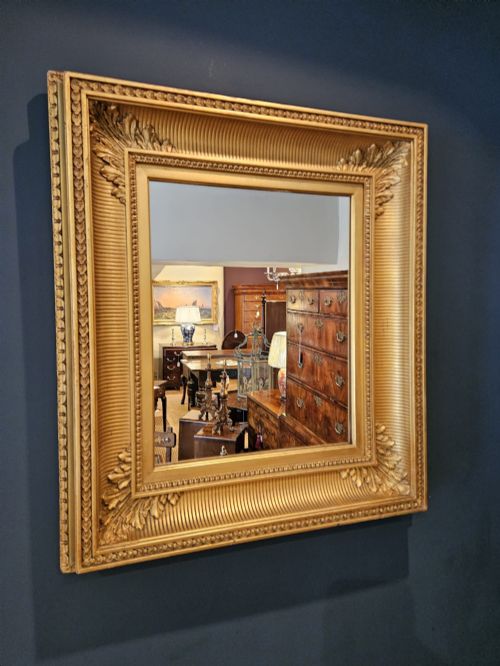
Construction relies upon a wooden base, predominantly pine or carved wood, which provides the structural support for the decorative surface. Artisans applied layers of gesso and plaster to this core, allowing them to mould intricate details such as acanthus leaf decoration and ripple frames.
The characteristic metallic finish is achieved through the application of gold leaf or giltwood onto the prepared ground. Certain specialist pieces incorporate decorative elements like verre eglomise panels alongside the primary glass mirror plate.
Listings feature pieces spanning from the seventeenth century through the Regency and Victorian eras, utilising pine, ebonised wood, and gesso.
What varies in quality
The refinement of the carved wood and gesso ornamentation distinguishes simpler examples from more ambitious works. Crispness in the modelling of details like eagle mounts and leaf scrollwork indicates superior workshop execution.
The integrity of the original gilt surface and the depth of the moulded frame profile determine the visual impact of the piece. Preservation of the primary gilding and structural joins underpins the historical value of each mirror.
The Moulded Giltwood Mirror Glossary
- Giltwood
- Wood that has been coated with gold leaf or a gold-coloured metallic finish. This surface treatment defines the bright, reflective appearance characteristic of these frames.
- Gesso
- A plaster-like mixture applied to wood bases to create a smooth surface for moulding or gilding. It allows craftsmen to fashion deep relief ornamentation.
- Convex mirror
- A circular mirror with a curved glass plate that provides a wide-angled reflection of the room. These pieces often feature prominent frames and eagle ornaments.
- Overmantel mirror
- A large mirror designed specifically to be hung above a fireplace mantel. They typically span considerable widths in rectangular or arched formats.
- Verre eglomise
- A technique involving cold painting and gilding on glass panels. It frequently appears in historical mirror compositions as a decorative border.
Moulded Giltwood Mirror: Frequently Asked Questions
How do I hang a heavy overmantel mirror safely?
Heavy overmantel mirrors require secure fixings anchored directly into the wall studs or masonry to support their substantial weight. Professional wall brackets distribute the load evenly across the frame structure.
Ensuring the hanging wire or strap matches the scale of the piece prevents strain on the original wood and gesso joints.
What distinguishes a Regency mirror from a Victorian one?
Regency mirrors frequently exhibit classical restraint, clean architectural lines, and circular convex formats often topped with eagle motifs. They rely on balanced proportions derived from neoclassical design principles.
Victorian pieces tend towards heavier ornamentation, embracing revival styles like Rococo and incorporating complex acanthus leaf carvings and shaped tops.
How should I clean a giltwood frame?
Dusting giltwood frames requires a very soft, dry brush to prevent disturbing the fragile gold leaf and underlying gesso layers. Moisture and modern chemical cleaners damage the historical metallic surface.
Gentle maintenance preserves the integrity of the original nineteenth-century finish without removing the accumulated patina of age.
Where should I place a convex mirror?
Convex mirrors project a wide-angled view of an entire room, making them effective focal points opposite windows or light sources. Their curved glass concentrates light and creates a sense of expanded space.
Placing them at eye level in hallways or reception rooms allows viewers to appreciate their decorative frames and optical properties fully.