
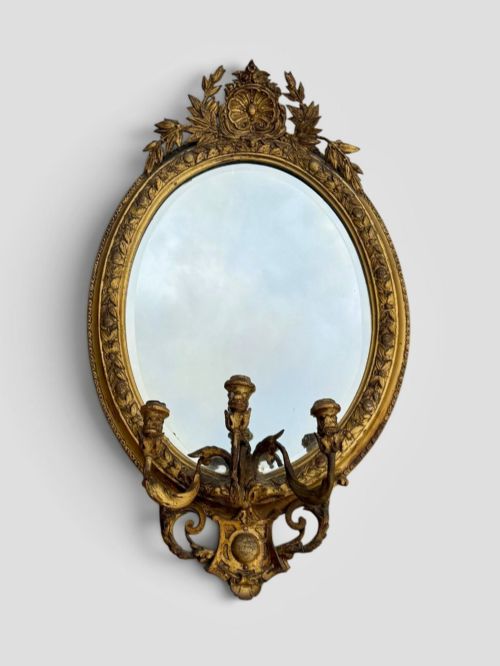
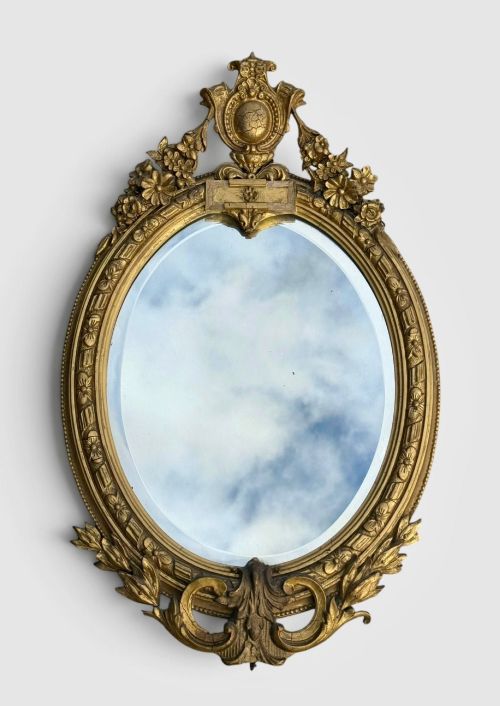
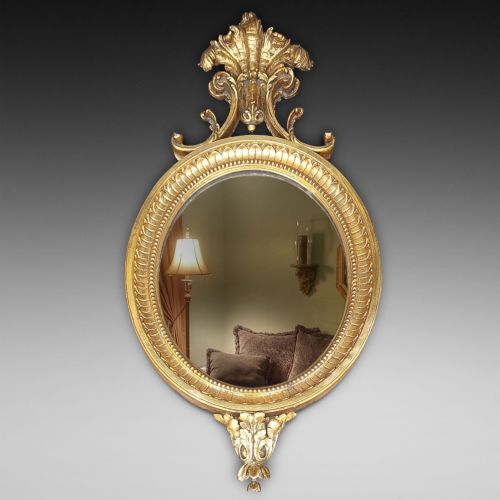
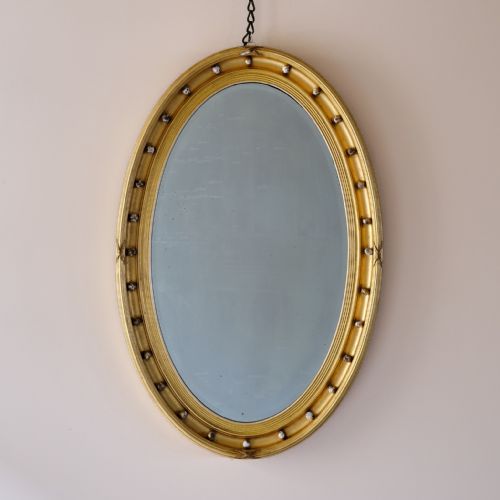
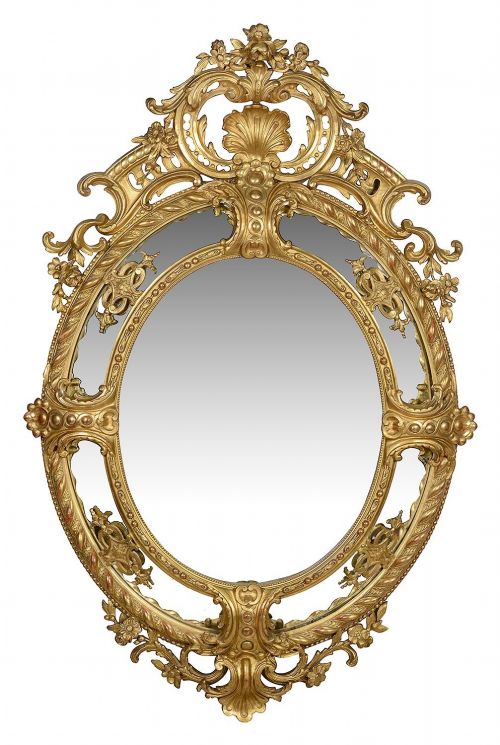


Gesso Oval Wall Mirror
A gesso oval wall mirror brings refined curves and classic reflection to a room, drawing the eye with moulded detail.
Gesso Oval Wall Mirror
When you search for a gesso oval wall mirror, you encounter pieces spanning from the eighteenth century through the Edwardian era, with Victorian and nineteenth-century examples forming the core of the selection. These looking glasses appear in various scales, from intimate boudoir pieces to grand overmantle mirrors designed to anchor a principal reception room.
The oval format softens architectural angles within an interior, while the vertical or horizontal orientation allows the frame to sit comfortably above a fireplace, console table or dressing chest. The recorded pieces demonstrate origins ranging from English workshops to French provincial ateliers, showing both restrained neoclassical symmetry and exuberant revivalist ornamentation.
Materials and construction methods
The structural core of these frames typically relies on timber or carved giltwood, which provides a stable foundation for the decorative skin. Artisans applied successive layers of gesso - a mixture of plaster of Paris or chalk with a binder - over the wooden base, building up a smooth surface suitable for intricate moulding and carving.
Once dry, the gesso surface received applications of gold leaf, metal leaf or paint to achieve a lustrous finish, often paired with traditional glass plates or original mercury glass. The interplay between the built-up gesso relief and the reflective glass plate creates the characteristic depth and sheen observed across the period examples.
Several mirrors arrive with stubborn nineteenth-century newspaper fragments still glued to their backsides, providing unexpected reading material from the era of manufacture.
Distinctions in quality and execution
Quality reveals itself in the crispness of the moulded gesso ornament and the depth of the underlying carved detail, where superior examples exhibit sharp botanical or neoclassical motifs rather than soft, blurred profiles. The integrity of the ground layers dictates how well the gilding or paint adheres over centuries of environmental change.
The character of the glass plate further distinguishes the tier of a piece, with original mercury plates or bevelled edges offering historical authenticity and superior optical depth. Furthermore, the harmonious proportion of the oval frame relative to its decorative cresting separates mass-produced items from masterwork commissions.
The Gesso Oval Wall Mirror Glossary
- Gesso
- A preparation mixture consisting of a binder mixed with chalk, gypsum or pigment, applied to wood to create a smooth surface for gilding or painting. It allows craftsmen to model elaborate relief decorations before finishing.
- Giltwood
- Timber, such as pine or oak, that has been coated with gold leaf over a prepared gesso ground. This material provides the structural strength of wood combined with the brilliance of gold.
- Mercury glass
- A type of double-walled glass blown in the nineteenth century, silvered with a mercury amalgam poured between the layers. It produces a mottled, atmospheric reflection distinct from modern silvered mirrors.
- Girandole
- A wall mirror featuring attached candle sconces that reflect and multiply the candlelight within a room. These dual-purpose fixtures combine illumination with decorative wall display.
- Overmantle mirror
- A large horizontal or vertical mirror designed specifically to hang on the wall directly above a fireplace mantelpiece. They often dominate a room's proportions and reflect the interior light.
Gesso Oval Wall Mirror: Frequently Asked Questions
How do I date a gesso mirror?
Dating relies upon examining the construction techniques of the wooden backing, the composition of the gesso layers and the characteristics of the glass plate. Stylistic indicators such as Regency neoclassical restraint or Victorian ornate revivalism also point to specific decades.
Secondary clues include old fixings, backing boards and handwritten labels or stamps left by historical makers or retailers. Comparing these elements with documented pieces from the same era confirms the likely period of manufacture.
Where should I hang an oval mirror?
An oval mirror suits spaces where softer lines are required to balance sharp architectural angles, such as above a fireplace mantelpiece, a console table or a hallway chest. Their curved frames draw the eye and create a focal point without overwhelming adjacent furniture.
Consider the height of the room and the natural light sources when positioning the piece, as placing the glass opposite a window maximises illumination. Ensure the wall fixings are rated to support the combined weight of the timber, gesso and glass.
What is Barbola work?
Barbola is a specific decorative technique involving sculpted gesso or composition moulded into high-relief floral and fruit motifs, popular on early twentieth-century pieces. The colourful, tactile arrangements stand proud of the frame surface.
These whimsical decorations provide a distinct contrast to gilded neoclassical frames, offering a more domestic and decorative aesthetic suited to dressing rooms or cottage interiors.
How do I clean a antique gesso frame?
Dusting should be performed gently with a soft, dry brush or feather duster to prevent disturbing fragile gesso mouldings or flaking gilding. Avoid using liquid cleaners, abrasive cloths or chemical sprays, which can permanently damage the historic surface.
If deeper cleaning is necessary, consult a professional conservator who understands historical gilding and gesso stabilisation. Keeping the mirror away from direct sunlight and excessive humidity preserves the materials for the future.