

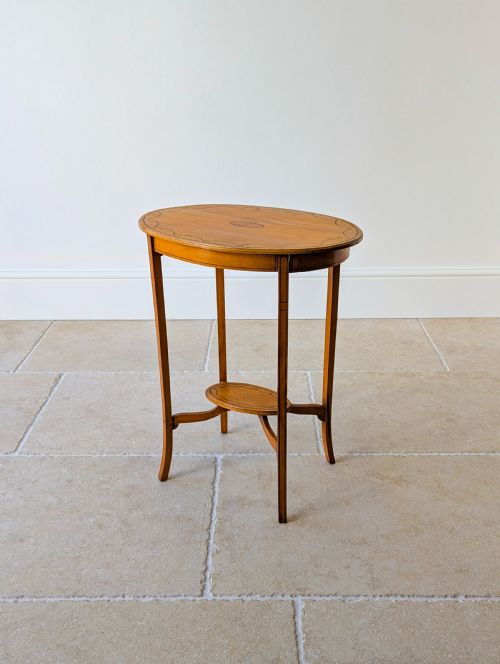

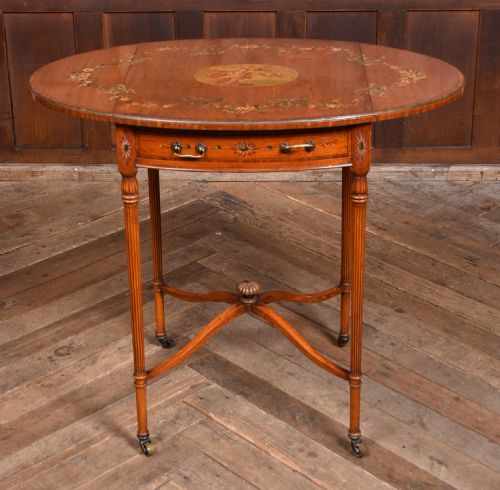


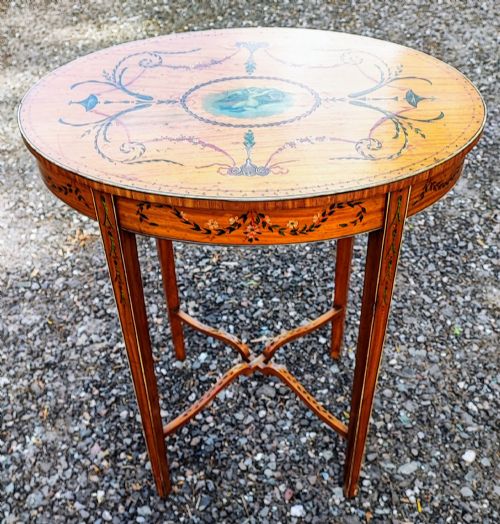

Oval Satinwood Table
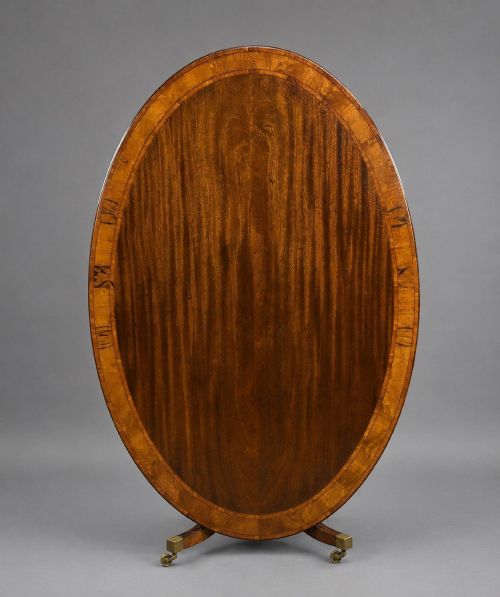
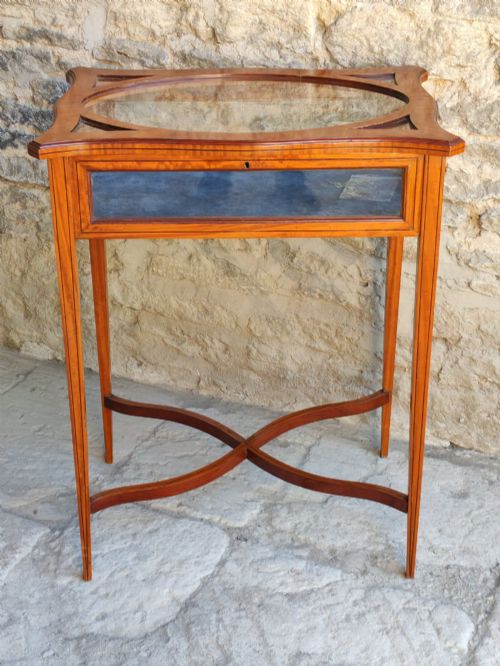
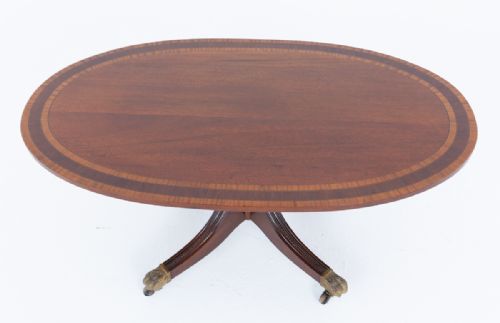
An oval satinwood table brings light-toned timber and refined classical proportion into a room, serving primarily as a decorative occasional or centre piece.
Oval Satinwood Table
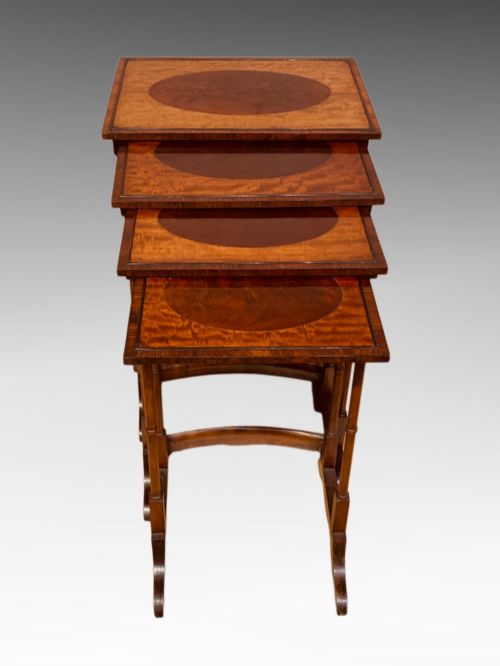
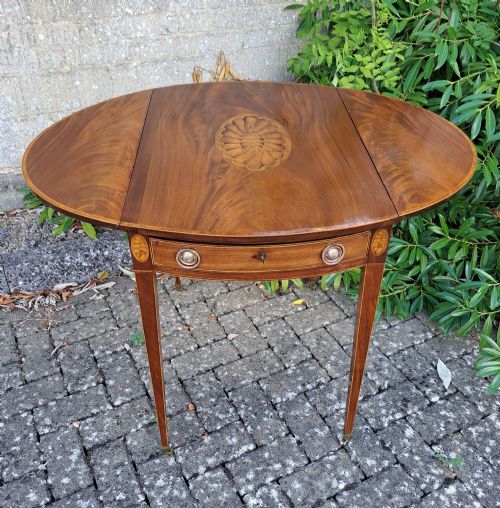
When you search for an oval satinwood table, you encounter pieces spanning from the late 18th century through the Edwardian period and the Sheraton Revival style. These items take several functional forms, most commonly occasional tables, centre tables, Pembroke tables, and work tables designed for drawing rooms and parlours.
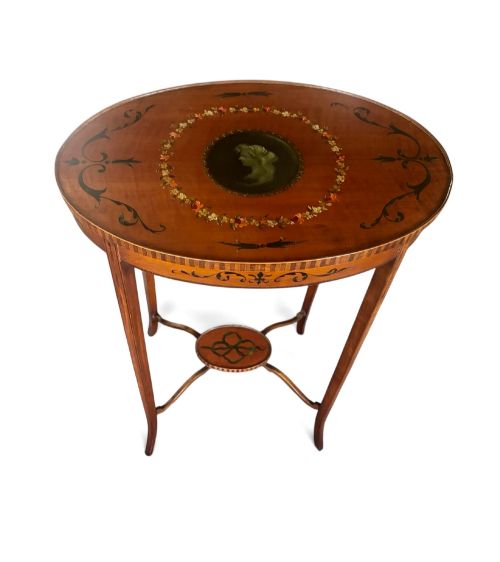
The version most frequently met on this page is the Edwardian occasional table or the later Sheraton Revival interpretation, often featuring delicate painted floral decoration or contrasting crossbanding. Earlier 18th-century and Georgian examples appear less frequently, offering simpler geometry or richer inlaid marquetry executed in solid timbers and fine veneers.
How they were made
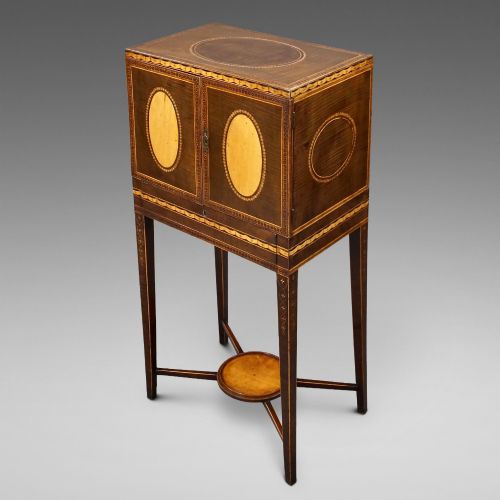
Cabinet makers utilised satinwood primarily as a fine veneer applied over structural ground timbers such as mahogany or pine, laying the grain to catch the light from different angles. This gleaming yellow-brown surface was frequently embellished with contrasting boxwood, rosewood, kingwood, or tulipwood stringing and marquetry.
Many Edwardian and late 19th-century examples incorporate hand-painted floral motifs directly onto the wood surface, sometimes protected beneath a clear finish. Joinery techniques combined traditional mortise and tenon frames with careful veneering, creating lightweight movable tables suited to formal entertaining.
Oval Satinwood Table Retail Price Guide 2026
Typical asking prices for oval satinwood table among the pieces listed under this phrase on Sellingantiques today, from the lower quarter to the upper quarter. They describe what is for sale here now, not the wider market.
Secret rising compartments inside a George III worktable suggest past owners kept more than just sewing threads hidden away.
What varies in quality
The distinction between ordinary production and superior craftsmanship lies in the selection of the timber and the precision of the inlay work. Highly figured satinwood with natural chatoyancy commands attention, whereas plain or uniformly flat grain indicates standard commercial output.
Hand-painted decoration and crispness of marquetry stringing separate exceptional pieces from simpler utilitarian tables. Additionally, the integrity of the underlying structure and the subtlety of the tapering leg profiles determine the overall refinement of the piece.
The Oval Satinwood Table Glossary
- Satinwood
- A dense, lustrous tropical hardwood native to Ceylon and India, known for its golden-yellow colour and natural sheen. It is sliced into thin veneers for decorative furniture surfaces.
- Crossbanding
- A narrow strip of veneer laid around the border of a table top so that its grain runs perpendicular to the central panel. This technique frames the primary wood.
- Pembroke table
- A small, versatile table featuring two hinged drop leaves on opposing sides. Many include a single small drawer beneath the top.
- Marquetry
- The art of forming decorative patterns by fitting together thin slices of different coloured wood veneers. It differs from inlay by assembling the pattern before gluing it to the carcase.
- Sheraton Revival
- A late 19th and early 20th-century design movement inspired by the neoclassical furniture of George Sheraton. It reinterprets light satinwood, painted details, and classical proportions.
Oval Satinwood Table: Frequently Asked Questions
How do I care for a satinwood table?
Keep the wood away from direct sunlight and excessive heat to prevent the delicate veneer from fading or drying out. Dust regularly with a dry cloth and apply occasional wax suitable for antique finishes.
Avoid using modern silicone polishes or placing damp items directly on the polished surface. Gentle handling preserves both the painted decorations and the original timber lustre.
Were these tables used for dining?
Most pieces matching this description served as occasional, writing, or Pembroke tables rather than main dining furniture. Their lighter construction and smaller scale suited sitting rooms and boudoirs.
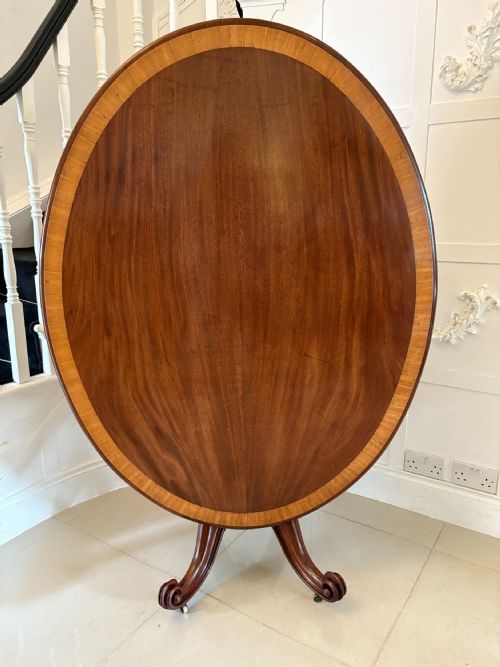
Larger dining variants in the records generally utilise mahogany with satinwood banding, rather than being built from solid satinwood.
How can I tell an 18th century table from an Edwardian copy?
Examine the construction methods, timber preparation, and the ageing of the secondary woods beneath the top. Eighteenth-century pieces typically show hand-cut joinery and older patination.
Edwardian Sheraton Revival pieces often feature machine-prepared elements and brighter, more uniform surface treatments characteristic of the early 20th century.
What is a pembroke table used for?
A Pembroke table functioned as a versatile writing or breakfast table that could expand when its drop leaves were raised. Historically, servants moved them around rooms depending on the household requirements of the day.
Today, their compact footprint makes them practical side tables in smaller living spaces.