


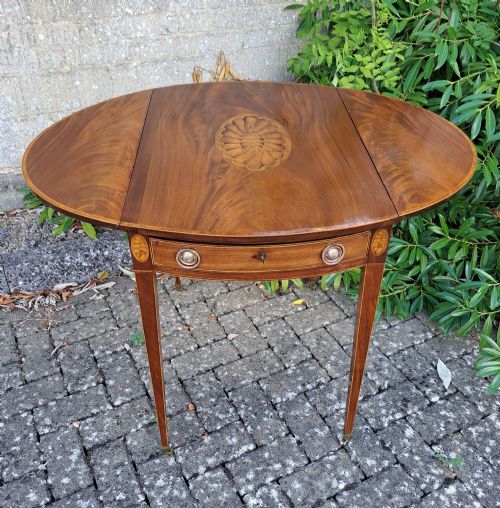
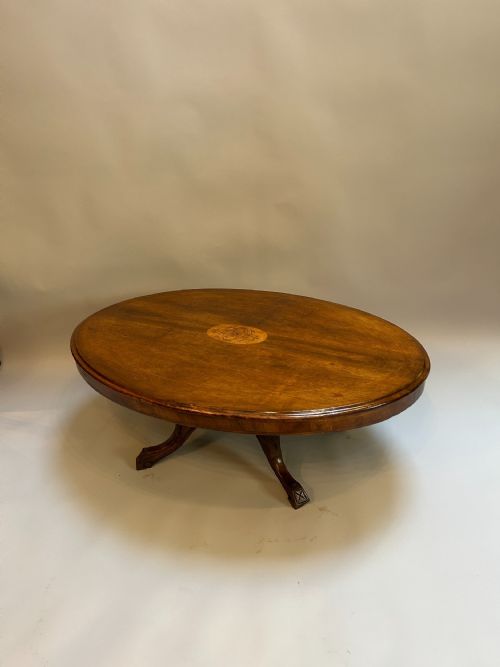
Oval Marquetry Table
An oval marquetry table brings together decorative wood veneers and curved surfaces, offering a surface for display or gathering that suits period and traditional interiors.
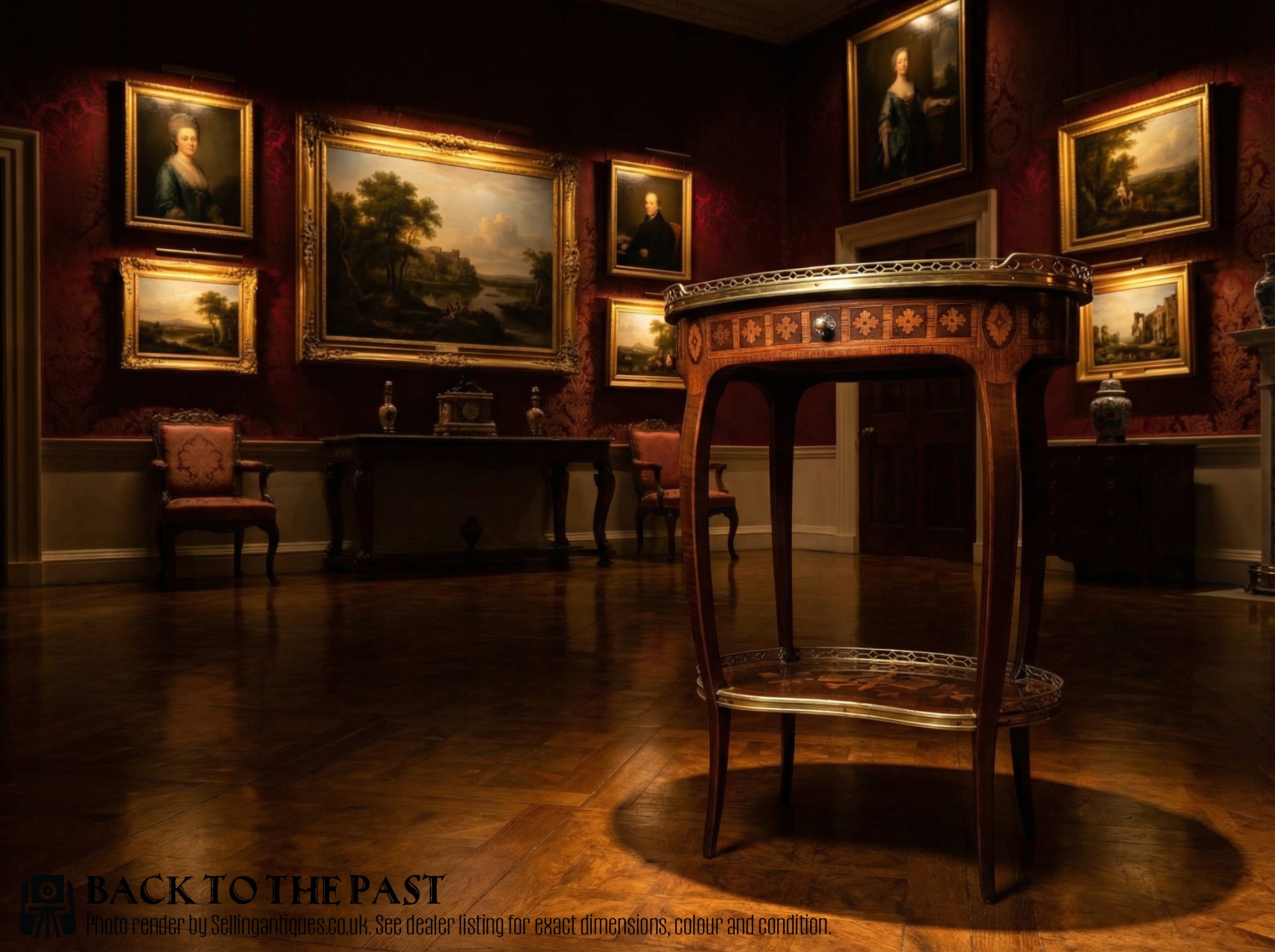
Oval Marquetry Table
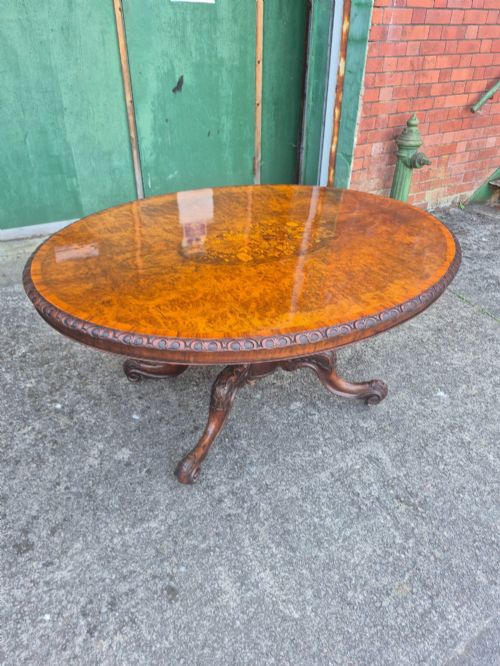
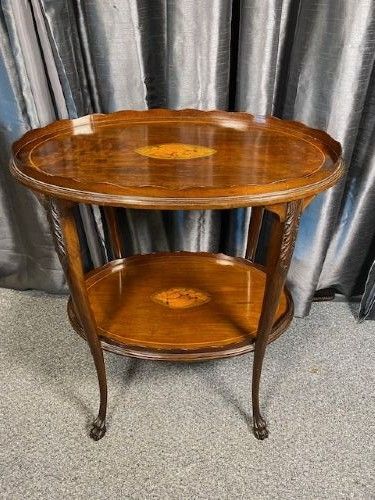
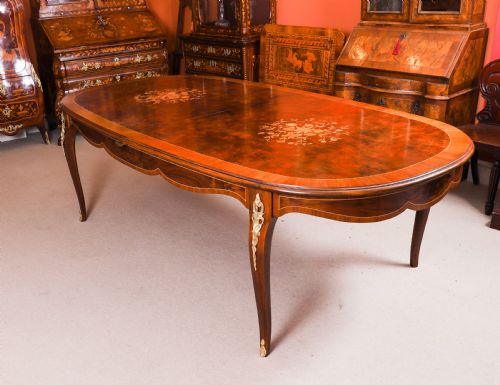
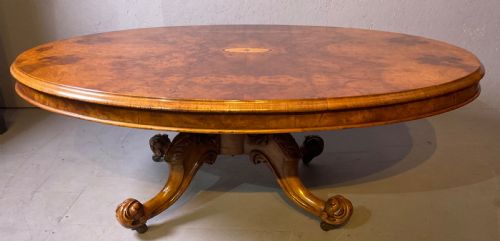
When searching for an oval marquetry table, buyers encounter a variety of forms designed for drawing rooms, parlours, and sitting rooms across the Victorian, Edwardian, and eighteenth-century periods. These include large loo and breakfast tables with tilt tops, centre tables, coffee tables, and smaller occasional or lamp tables.
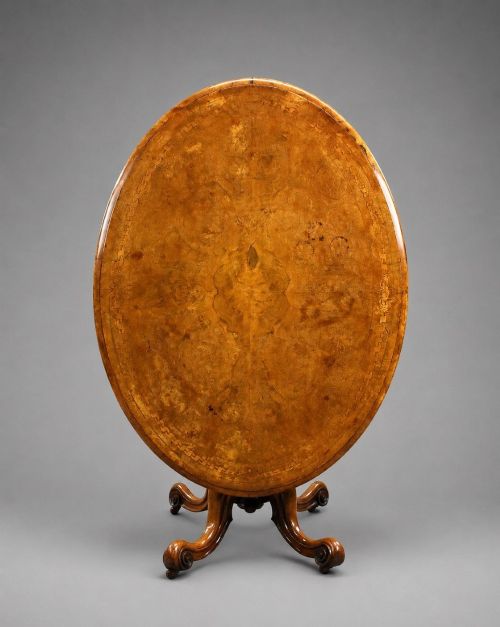
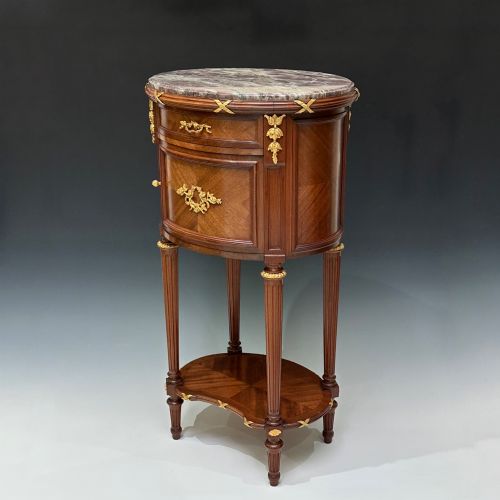
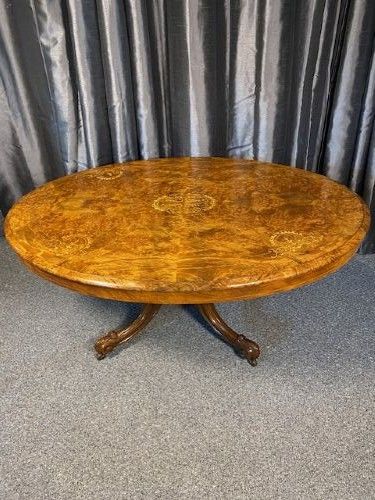
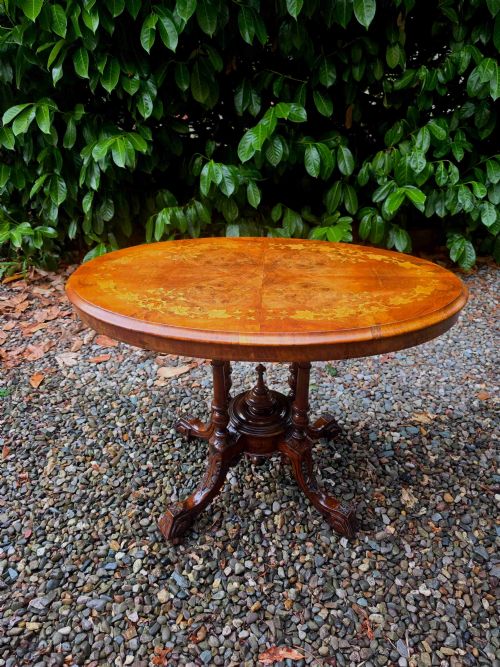
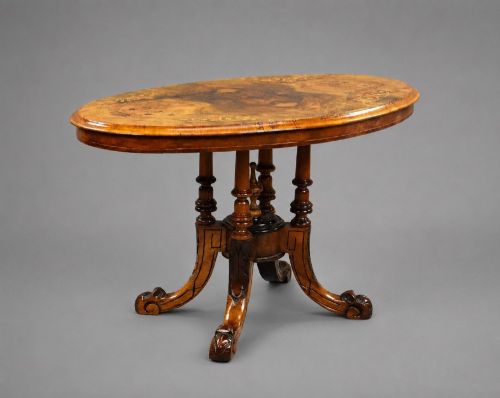
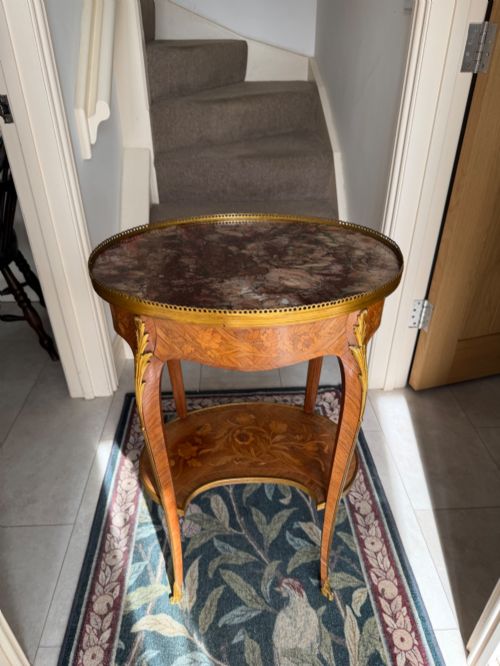
The most common examples on this page date from the Victorian era and feature burr walnut veneers decorated with floral marquetry. French influences also appear through Louis-style side and bedside tables employing kingwood and brass mounts.
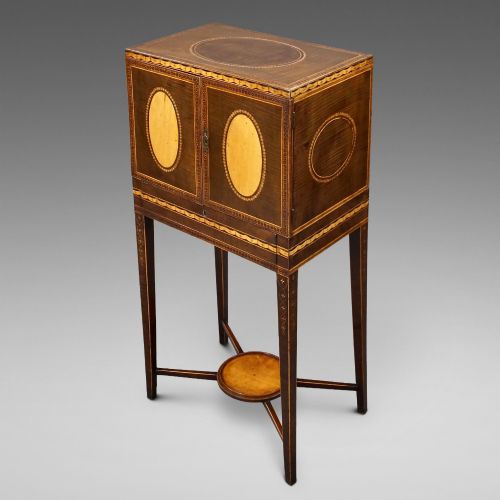
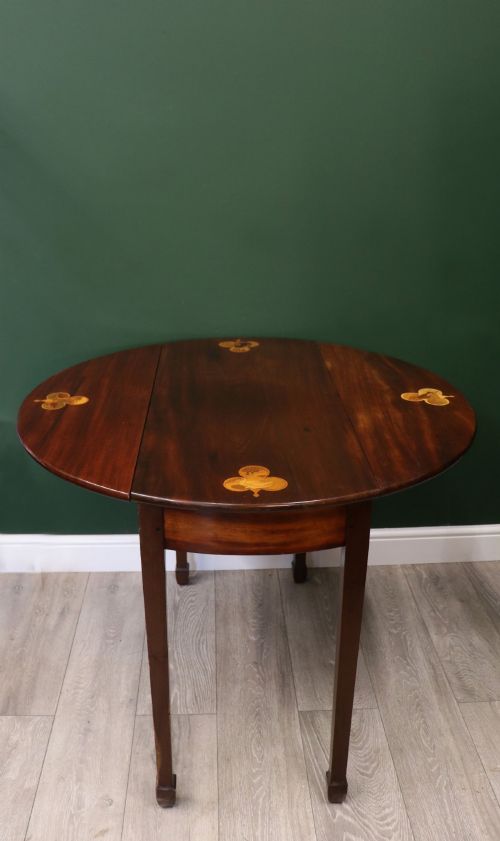
English iterations lean towards mahogany, satinwood, and pembroke designs with drop leaves or inlaid borders. Each form serves a specific domestic function, from serving tea to displaying decorative objects.
How They Were Made
Cabinet makers utilised solid secondary timbers such as mahogany or pine to construct the foundational frames, carcases, and turned pedestals. Over these sturdy structures, they applied thin veneers of decorative woods including burr walnut, satinwood, and kingwood.
The distinct surface patterns characteristic of an oval marquetry table were achieved by cutting contrasting wood veneers and assembling them into floral, shell, or geometric pictorial motifs. These veneer sections were then glued to the table tops and secured with boxwood or brass stringing.
Finishing techniques involved hand-polishing with shellac to build a glossy surface that protects the wood while highlighting the natural grain and the varied tones of the inlaid elements.
Oval Marquetry Table Retail Price Guide 2026
Typical asking prices for oval marquetry table among the pieces listed under this phrase on Sellingantiques today, from the lower quarter to the upper quarter. They describe what is for sale here now, not the wider market.
Periods represented span from the eighteenth century through the Edwardian era and 1930s.
What Varies in Quality
The distinction between standard and exceptional pieces rests upon the precision of the veneer work and the choice of timbers. Highly prized tables exhibit tightly figured burr walnut and intricately detailed marquetry without visible gaps or mismatched grain patterns.
Construction methods also dictate grade, where hand-carved bases, sturdy pillar supports, and original tilting mechanisms demonstrate superior workshop standards. Finer examples often integrate secondary woods and delicate stringing that remain intact over centuries of use.
François Linke·Greenwood & Sons
The Oval Marquetry Table Glossary
- Marquetry
- A decorative technique where pieces of contrasting veneer are assembled to form pictorial patterns on a wooden surface. This method creates the intricate floral and scroll designs seen on many tabletops.
- Burr Walnut
- A specialised wood grain harvested from the wart-like growths on walnut trees, prized for its swirling, organic patterns. It forms the primary visual field on numerous Victorian tabletops.
- Pembroke Table
- A small table featuring hinged drop leaves on two opposing sides and often fitted with a drawer. Eighteenth and nineteenth-century examples were frequently made in mahogany or satinwood.
- Loo Table
- A large Victorian centre or breakfast table, often with a tilt-top mechanism for easy storage. These tables were traditionally used for card games as well as dining.
- Ormolu
- Gilded bronze mounts applied to furniture edges and legs, commonly found on French revival pieces. This decorative metalwork adds architectural definition to curved surfaces.
Oval Marquetry Table: Frequently Asked Questions
What is an oval marquetry table used for?
These tables function as central display pieces, coffee surfaces, or breakfast tables depending on their height and scale. Their decorative tops make them suitable for placing lamps, books, or ornaments in a principal room.
Larger versions with tilt mechanisms allow the top to be stored vertically against a wall when not in use. Smaller occasional and bedside variants provide convenient surfaces for daily items within domestic spaces.
How do I identify a Victorian oval table?
Victorian examples frequently employ burr walnut veneers paired with detailed floral marquetry and heavy, turned pedestal bases. They often feature tilt-top mechanisms designed for nineteenth-century dining and parlour use.
Examining the underside reveals construction methods and secondary timbers consistent with mid-to-late nineteenth-century British cabinet making. The presence of hand-carved walnut components further distinguishes pieces from this period.
What wood is used in marquetry tables?
Cabinet makers used a foundation of solid mahogany, walnut, or pine, applying fine decorative veneers across the visible surfaces. Common surface woods include burr walnut, satinwood, kingwood, and harewood.
Inlays often incorporate contrasting materials such as boxwood, ebony, and brass stringing to outline the central marquetry panels. This combination of timbers provides the varied tonal contrast characteristic of these pieces.
How do I care for an antique table top?
Maintain the polished finish by dusting regularly with a soft, dry cloth and avoiding placement near direct heat sources or strong sunlight. Direct moisture should be prevented from sitting on the veneer to protect the shellac polish.
Occasional applications of appropriate wax polish help nourish the wood and preserve the lustre of the marquetry. Care must be taken to lift rather than drag the table when repositioning it in a room.