
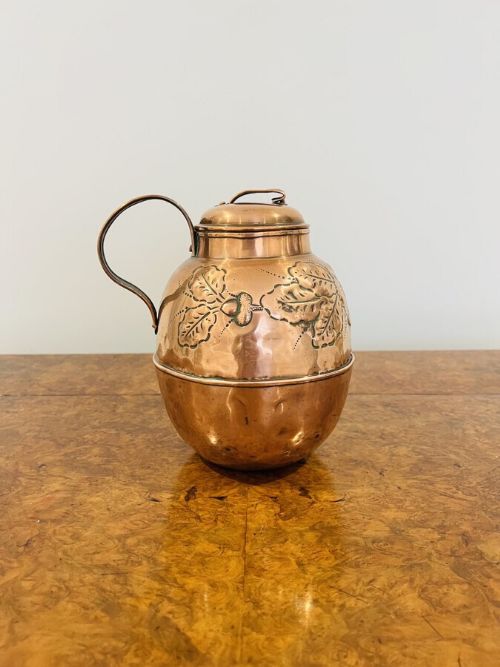


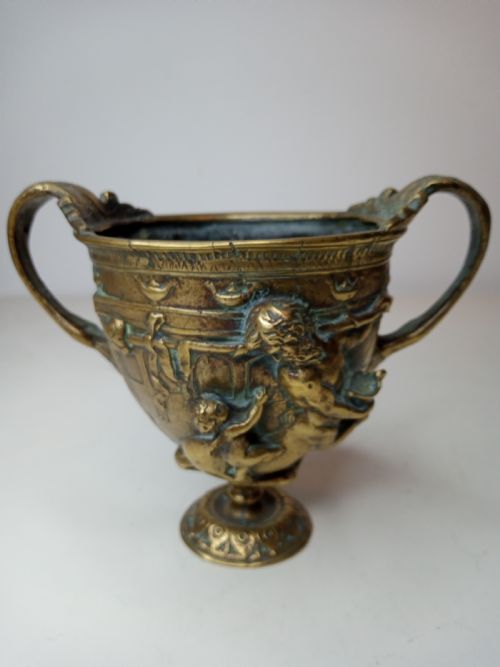

Ornate Metal Vessel
An ornate metal vessel brings striking sculptural form and tactile weight to a room, ranging from grand French gilt bronze to practical Victorian copper.
Ornate Metal Vessel
When you search for an ornate metal vessel, you encounter a diverse group of decorative objects spanning the eighteenth, nineteenth, and early twentieth centuries. The selection encompasses functional items like samovars and tea urns alongside purely decorative jardinieres, trophies, and ewers.
You are most likely to meet nineteenth-century brass, bronze, and copper pieces shaped by Victorian, French, and Indo-Persian aesthetic traditions. These objects range from pierced brass vases to figural ewers adorned with classical motifs such as dolphins and Bacchus.
Origins vary widely across European and international workshops, touching upon English copperware, French empire and baroque revival styles, and Indian ceremonial vessels. Each piece reflects the specific domestic or decorative aspirations of its period of origin.
Materials and construction
Makers utilised a range of metals including brass, bronze, copper, and German silver, frequently applying surface treatments such as gilding, patination, and ormolu. Techniques like cloisonné enamel add vibrant colour and intricate patterning directly onto the metal body.
Construction methods combine casting, piercing, and hammering, often pairing cast figural handles with heavier body sections. Artisans shaped bone and mixed metals in specific pieces, integrating decorative elements through precise joining and finishing.
Assessing quality in metalwork
Quality rests in the crispness of the casting and the sensitivity of the chasing, where sharper relief and finer surface detail distinguish superior work. Well-executed figural handles and balanced proportions indicate a higher tier of craftsmanship.
The integrity of the material and the subtlety of the applied patina or gilding separate mass-produced items from distinguished studio pieces. Maker attribution and the harmony of decorative motifs further elevate the standing of an individual vessel.
The Ornate Metal Vessel Glossary
- Ormolu
- Gilded bronze, typically produced in France by applying a mercury and gold amalgam to a bronze base. This technique creates a rich, lasting surface finish found on decorative mounts and centrepieces.
- Jardiniere
- An ornamental pot or stand designed to hold plants or flowers. These vessels often feature pierced work or heavy casting to serve as focal points in a room.
- Ewer
- A large pitcher with a wide spout, traditionally used for pouring water but frequently made as a purely decorative ornamental vessel. They often showcase elaborate handles and classical figural scenes.
- Cloisonné
- An ancient technique for decorating metalwork objects with coloured glass paste placed within compartments defined by bent wire. The piece is then fired and polished to a smooth finish.
- Samovar
- A heated metal container traditionally used to boil water for tea in Russian and related cultures. Victorian examples in copper and brass combine utilitarian function with decorative handles and spigots.
Ornate Metal Vessel: Frequently Asked Questions
How do I clean an ornate metal vessel?
Dust gently with a soft brush and avoid harsh chemical polishes that strip historical patination from bronze and copper surfaces.
For brass and unlacquered metals, a light wipe with a dry microfibre cloth preserves the finish without causing abrasion.
Were these vessels used daily or displayed?
Many objects, such as samovars and tea urns, served practical functions in nineteenth-century domestic life for heating water.
Other forms like jardinieres, trophy vases, and ewers were intended primarily for interior decoration and display in reception rooms.
How can I tell a Victorian piece from an eighteenth-century one?
Examine the casting quality, tool marks, and stylistic vocabulary, noting that Victorian pieces often revive earlier French baroque or renaissance styles.
Eighteenth-century examples generally display hand-chased details and wear patterns consistent with earlier domestic or ceremonial use.
Can I use a antique jardiniere for plants?
Placing a modern waterproof liner inside protects the antique metal from moisture and soil erosion during use.
Direct planting should be avoided to prevent corrosion and protect the internal patination of the vessel.