




Antique Bronze Jug
An antique bronze jug brings weight, craft and centuries of domestic ritual straight to a mantel or a side table.
Antique Bronze Jug
An antique bronze jug covers a broad family of metal vessels designed for pouring, libation and display, spanning simple domestic forms to elaborate ceremonial ewers. When you search for an antique bronze jug, you encounter pieces that range from nineteenth-century European revival designs to medieval Islamic metalwork and nineteenth-century Indian and Persian vessels.
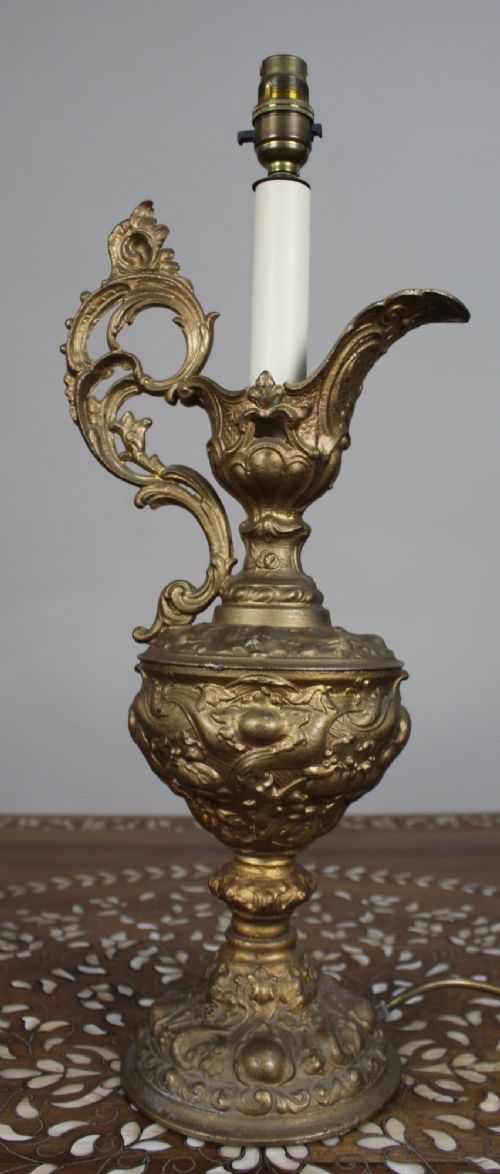
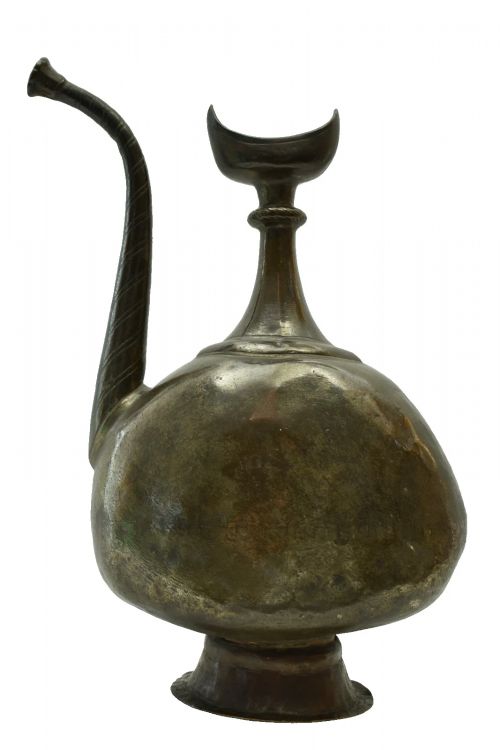
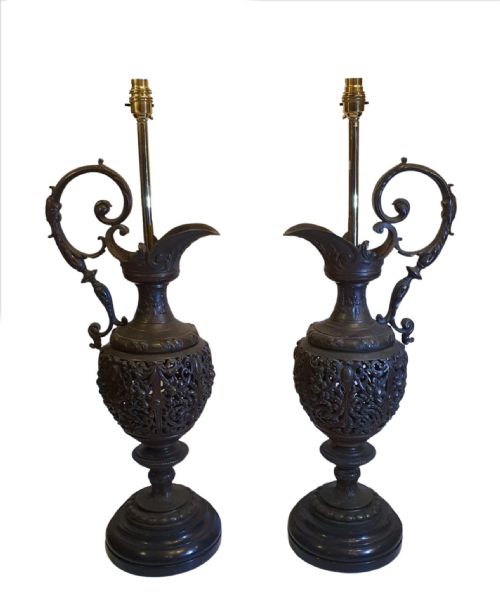
The nineteenth-century examples often lean into European revivals such as Rococo, Renaissance, and Neoclassical styles, frequently cast as ornamental ewers, pitchers, or converted table lamps. Alongside these, Middle Eastern and South Asian forms appear regularly, including finely detailed Ottoman aftabas with crescent finials and Khorasan inlaid pieces.
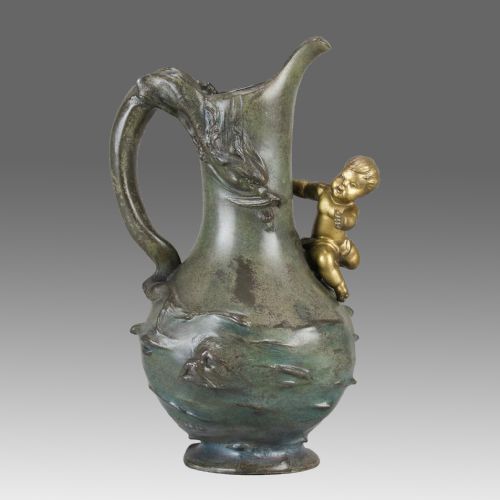
The physical form varies considerably according to regional origin and intended function, from large monumental pitchers to small cabinet vessels. Handles frequently take figural or zoomorphic shapes, depicting creatures like dolphins, makaras, or mythological figures such as Bacchus and Dionysus.
What varies in quality
Quality in these vessels rests primarily on the crispness of the casting and the sensitivity of the finishing hand-work. Superior examples display sharply defined relief details on handles, spouts, and bodies without the soft edges or pitting that indicate a tired mould.
The integrity of the surface finish and the authenticity of the material also dictate the standing of a piece. Older Middle Eastern inlaid work relies on the precision of the metal inlay, while European nineteenth-century revival pieces depend on the quality of the original gilding, patination, and the structural soundness of joints and figural attachments.
Georges Van De Voorde·Charles Anfrie
The Antique Bronze Jug Glossary
- Ewer
- A large jug with a wide spout and handle, traditionally used for pouring water for hand-washing or for serving wine. Many ornamental examples survive purely as decorative display objects.
- Aftaba
- A traditional Islamic long-necked metal ewer, commonly used for ritual ablutions or domestic water service. These often feature slender spouts and distinctive finials such as crescent moons.
- Ormolu
- Finely ground high-carat gold applied to a bronze object using a mercury amalgamation technique, common in French decorative arts. It provides a bright, durable golden finish.
- Askós
- An ancient Greek pottery shape characterised by a low, flat body and a side handle, occasionally adopted by nineteenth-century metalworkers for water jugs.
Antique Bronze Jug: Frequently Asked Questions
What were antique bronze jugs used for?
Many of these vessels served practical functions in homes or ceremonial contexts, holding water, wine, or oil for serving and washing.
Over time, numerous European and Middle Eastern examples transitioned into purely decorative objects, displayed on sideboards or converted into table lamps.
How do I identify a nineteenth-century ewer?
Nineteenth-century pieces frequently draw on historical revivals such as Rococo, Renaissance, and Neoclassical styles, reflecting the period's fascination with past aesthetics.
Examine the casting quality, patination, and construction methods, which often combine machine assistance with traditional hand-finishing techniques typical of the era.
Are Middle Eastern bronze jugs different from European ones?
Middle Eastern and Persian pieces, such as Ottoman aftabas or Khorasan vessels, often feature traditional regional motifs, geometric patterns, and intricate silver or copper inlay.
European counterparts tend to follow classical sculptural traditions, utilising figural handles depicting mythological characters like Dionysus or decorative elements inspired by French and Italian design.
Can I use an antique bronze jug for daily service?
While these vessels were originally made for holding liquids, many older or converted pieces are now treated as decorative works of art.
If a piece has been converted into a table lamp or shows fragile interior patina, it is best suited for display rather than active functional use.