




Ornate Bronze Centrepiece
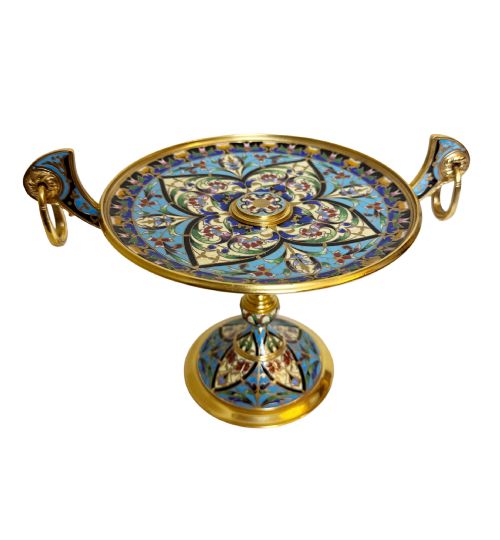
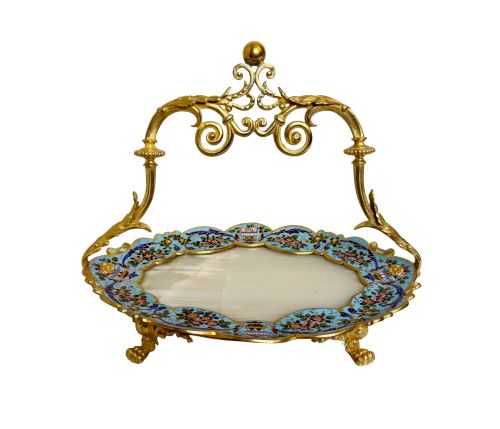
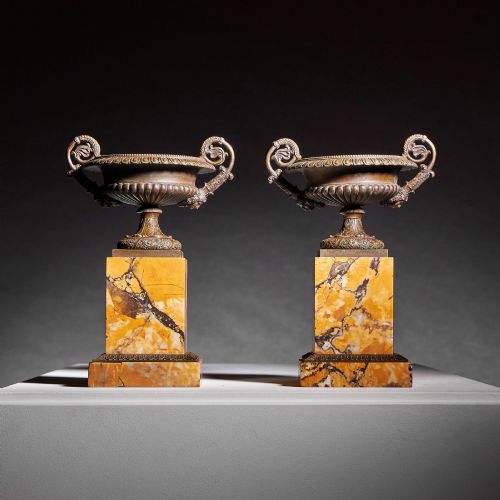
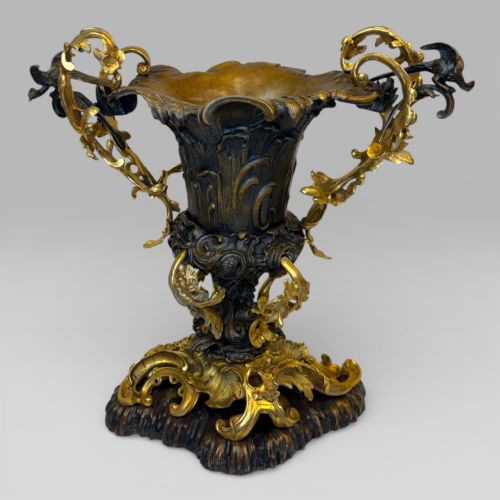
These ornate bronze centrepiece examples bring nineteenth-century French and revival aesthetics to table settings through gilt work, marble, and champleve enamel.
Ornate Bronze Centrepiece
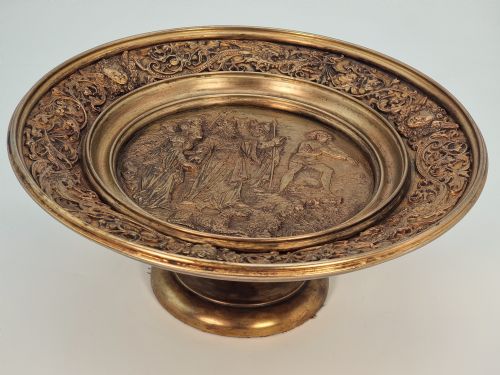
An ornate bronze centrepiece comprises heavy table vessels, tazzas, jardinieres, and decorative bowls intended to anchor a formal dining table or surface. These items date predominantly from the nineteenth century, spanning periods such as the Napoleon III era and the Aesthetic Movement.
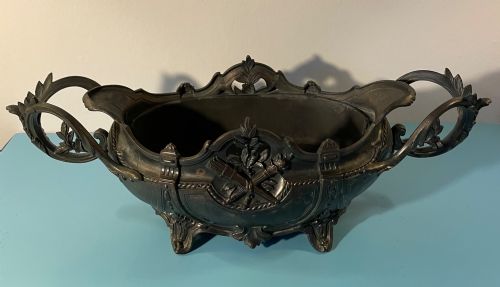
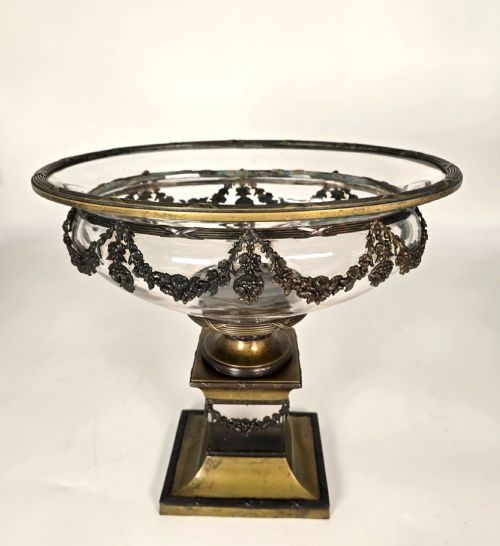
Buyers will most frequently encounter nineteenth-century French designs on this page, often combining gilt bronze or ormolu with contrasting elements like marble, crystal glass, or champleve enamel. Forms range from pedestal bowls and tazzas to large planters and decorative trays.
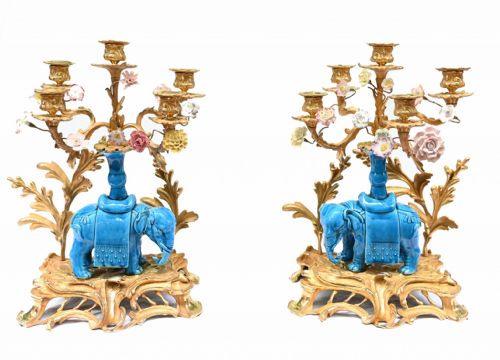
The selection also includes related display pieces such as candelabra, vases, and classical urns that share the heavy metal mountings and ornamental detail typical of the period. Origins lean heavily toward French workshops, alongside occasional Italian and English Victorian pieces.
How they were made
Maker workshops cast bronze, brass, and ormolu into intricate decorative frames, handles, and mounts using traditional foundry methods. Gilt finishes and silvering were then applied to the metal surfaces to create rich, light-catching sheens.
Artisans combined the cast metal frames with hand-cut crystal glass bowls, polished marble bases, alabaster bodies, or ceramic plaques such as Limoges enamel. Champleve enamel work frequently added vibrant colour fields directly into recessed metal channels.
Listings include nineteenth-century works spanning the Napoleon III era, the Aesthetic Movement, and later twentieth-century interpretations.
What varies in quality
The weight and selection of the supporting materials also drive the tier of the piece. Heavy gauge bronze, dense variegated marble bases, and unblemished crystal or thick champleve enamel elevate the physical presence of the object.
Lerolle Fres·Henry Dasson
The Ornate Bronze Centrepiece Glossary
- Ormolu
- Gilded bronze produced by applying a mercury-gilding amalgam to cast bronze, creating a rich golden surface finish.
- Champleve enamel
- A technique where troughs or cells are hollowed out of the metal surface and filled with vitreous enamel before firing.
- Tazza
- A shallow ornamental vase or bowl set upon a stem and foot, frequently utilised as a table centrepiece.
- Jardiniere
- An ornamental pot or stand designed to hold growing plants or floral arrangements upon a dining table or sideboard.
- Candelabra
- A branched candlestick holder designed to match the aesthetic and metalwork of companion table centrepieces.
Ornate Bronze Centrepiece: Frequently Asked Questions
How were ornate bronze centrepieces used?
These pieces sat in the middle of formal dining tables, often holding fruit, flowers, or simply serving as decorative display objects.
Wealthy households utilised them to demonstrate taste and status during dinner parties and social gatherings.
How do I clean an ormolu centrepiece?
Dust the metal gently with a soft, dry brush to prevent the accumulation of dirt in the recessed areas of the chasing.
Avoid commercial metal polishes, as abrasive liquids will strip the original gilt layer from the bronze.
What is the difference between bronze and ormolu?
Bronze is an alloy of copper and tin used for the structural cast body of the decorative object.
Ormolu specifically refers to the gilded surface treatment applied over that bronze base.
Can these centrepieces hold water for flowers?
Many items featuring removable glass bowls or glazed ceramic liners can safely hold water and fresh floral arrangements.
Pieces with integrated marble bases or exposed metal interiors require protective inner vessels to avoid moisture damage.