


Gilded Metal Urn
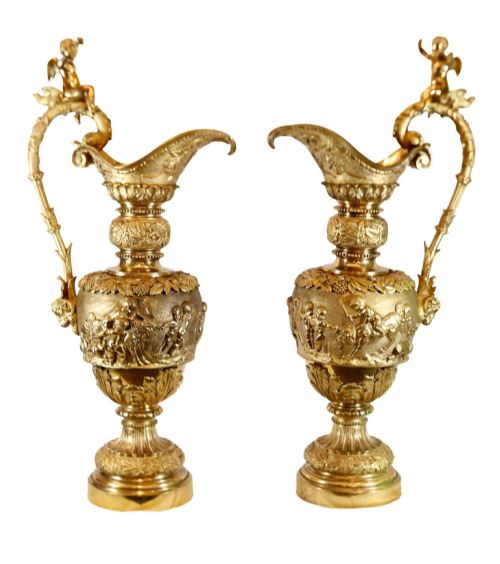
These gilded metal urn pieces offer sculptural presence and classical decorative flair, bringing refined ornamental weight to any interior scheme.
Gilded Metal Urn
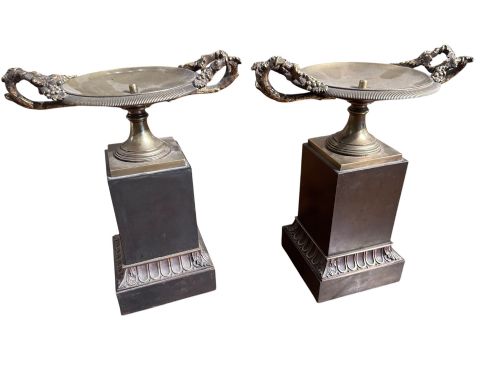
A gilded metal urn serves as an ornamental centrepiece or decorative vessel, drawing heavily on classical forms like the campana shape and traditional tazza design. Pieces matching this phrase span the nineteenth century through the art nouveau period, frequently appearing as matched pairs intended for mantelpieces or console tables.
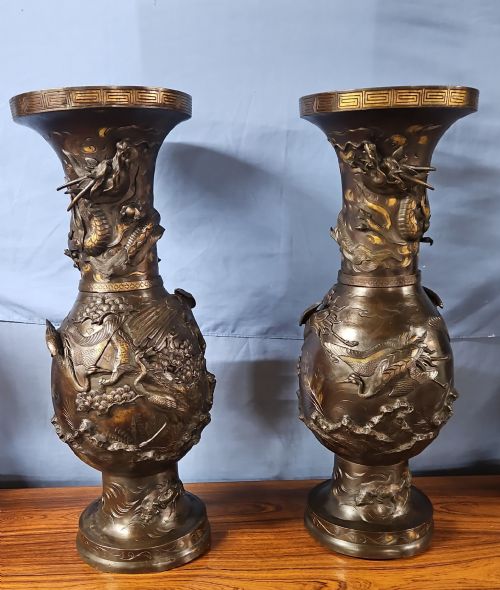
The selection here encompasses French empire, neoclassical, and Victorian revival styles, alongside items influenced by Chinese Qing dynasty taste and Japanese Meiji period metalwork. Makers and designers utilised varied metallic finishes to produce decorative vases, lamps, and cassolettes that anchor a room with architectural dignity.
Buyers meet objects cast in bronze, brass, or ormolu, sometimes combined with white marble bases, cloisonné enamel, or blue glass bodies. These pieces function primarily as visual focal points rather than utility vessels, displaying handles, pedestal feet, and chased surface details.
What varies in quality
The durability of the gilding and the integrity of any applied patina determine how the metal ages, with well-preserved fire gilding retaining a warm luminous depth. Precision in assembling disparate materials - such as the tight joint between a marble plinth and a bronze collar - signals skilled construction.
Listings feature pieces spanning the nineteenth century, including specific dates from 1830, 1850, 1870, 1880, 1890, 1900, 1910, and 1930.
Charles Korschann·Henry Dasson
The Gilded Metal Urn Glossary
- Ormolu
- Gilt bronze created by applying a mercury and gold mixture to a bronze object and heating it until the mercury evaporates. This technique produces a durable golden surface associated with fine decorative arts from the eighteenth and nineteenth centuries.
- Campana Urn
- A classical vessel shape resembling an inverted bell, featuring a wide flared rim and a tapering body supported on a stem and foot. This form became popular during the neoclassical revival of the nineteenth century.
- Cassolette
- A decorative ornamental vase equipped with a reversible lid that functions either as a closed urn or a vessel for burning perfumes. These items typically combine cast metal mounts with marble or porcelain bodies.
- Cloisonné
- An enamelwork technique where metal wires are soldered onto a metal base to create compartments filled with glass paste and fired. This method produces intricate colourful patterns across vases and decorative objects.
- Tazza
- A wide, shallow saucer-like dish or cup mounted on a stem and foot, used historically for display or serving. In nineteenth-century decorative metalwork, tazzas often feature ornate cast handles and classical relief decoration.
Gilded Metal Urn: Frequently Asked Questions
Where should I place a gilded metal urn?
These decorative objects work well anchored on sturdy mantelpieces, large sideboards, or console tables where their metallic weight can be properly appreciated. Pairs look balanced when flanking a central mirror or clock.
Ensure the surface is level and capable of supporting the combined weight of metal and marble components without sagging.
How do I clean gilded metal?
Dust the surface gently using a soft, dry artist's brush or a clean microfiber cloth to prevent dirt accumulation in recessed chased details. Avoid abrasive metal polishes that can strip away thin layers of historical gilding or ormolu.
Consult a professional restorer if the piece requires deeper conservation to address oxidation or structural looseness.
What is the difference between ormolu and brass?
Ormolu consists of gilded bronze where a gold layer adheres to a bronze substrate, producing a rich and reflective golden tone characteristic of high-end French decorative arts. Brass is an alloy of copper and zinc with a yellower body metal that develops a different patina over time.
Objects described as brass lack the mercurial fire gilding process typical of nineteenth-century ormolu mounts.
Are these urns waterproof?
Most ornamental urns and cassolettes are designed purely for visual display and feature constructed seams, internal weights, or mounted bases that are not watertight. Placing water and fresh flowers inside can cause internal corrosion or damage adhesives.
Use a concealed glass liner or insert if you intend to use any vessel for floral arrangements.