

Ormolu Mounted Furniture
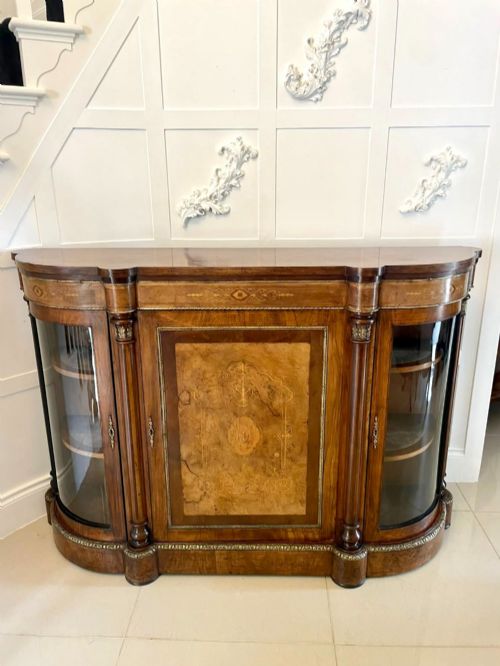
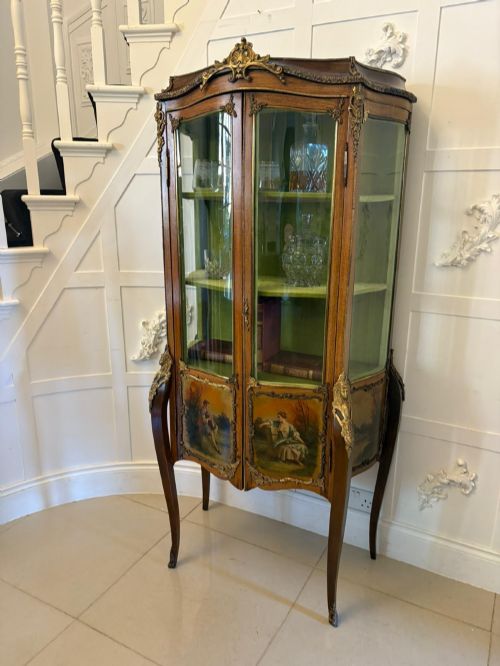
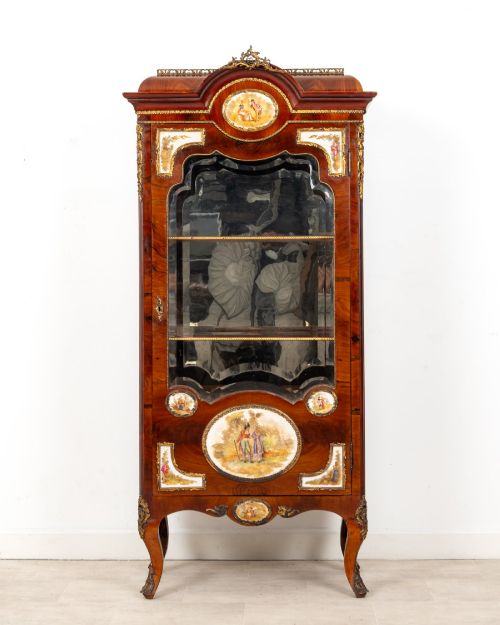
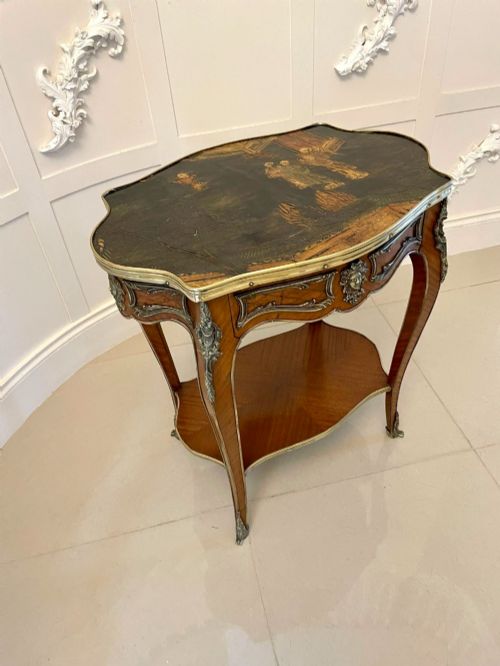
When you search for ormolu mounted furniture, you are looking at substantial wooden carcasses enriched with cast and gilded bronze details that lift a room.
Ormolu Mounted Furniture
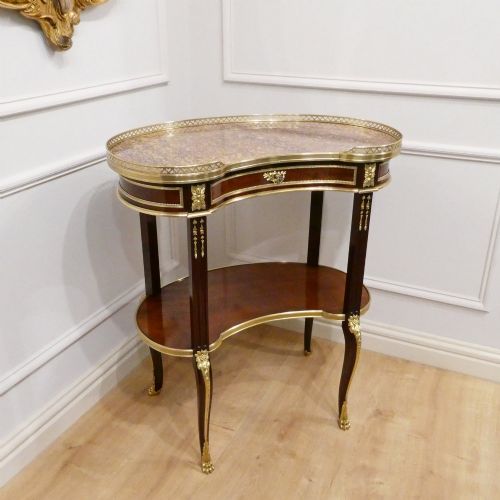
Ormolu mounted furniture encompasses a range of functional and decorative items designed to combine polished timber surfaces with cast metal highlights. The pieces encountered here span from side tables and writing desks to display cabinets, chests of drawers, and occasional tables.
Most examples originate from the nineteenth century, drawing heavily on revival aesthetics such as Louis XV, Louis XVI, and French Empire styles. Makers utilised walnut, kingwood, mahogany, and rosewood as primary timber supports for the ornate metalwork.
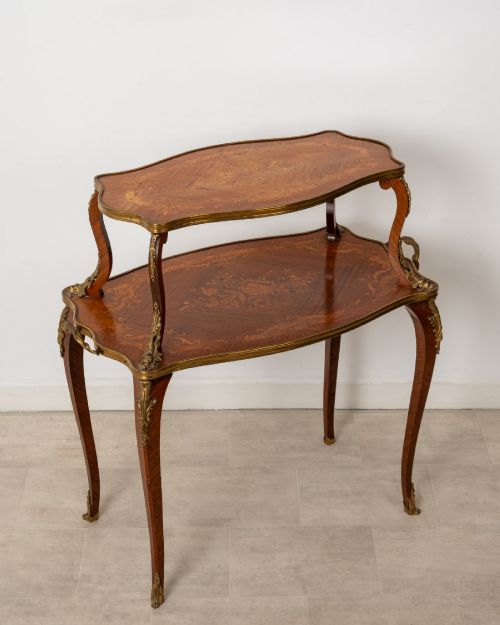
Buyers will find that many forms serve a dual purpose of utility and display, whether as a freestanding centre table or a marble-topped commode. The integration of mounts serves to accent the structural lines and corners of each specific form.
How They Were Made
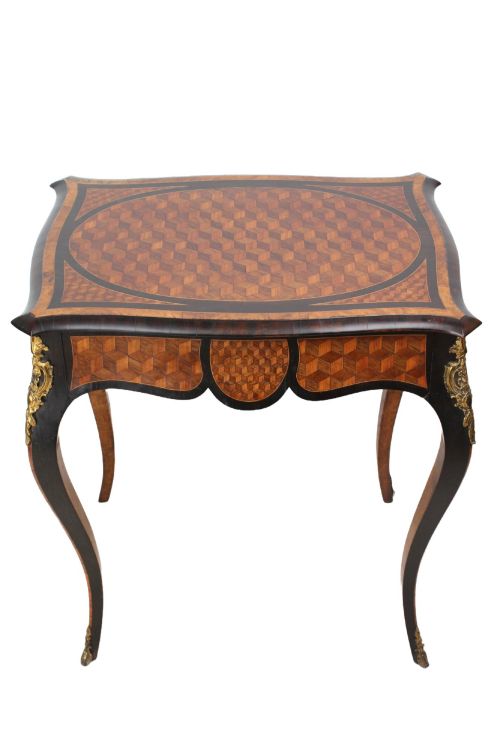
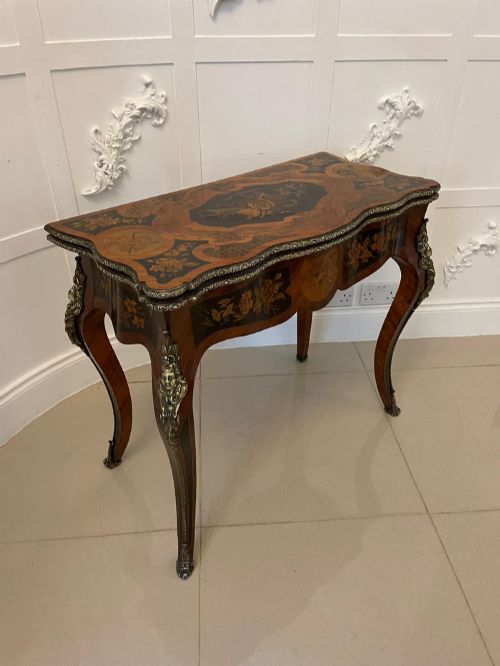
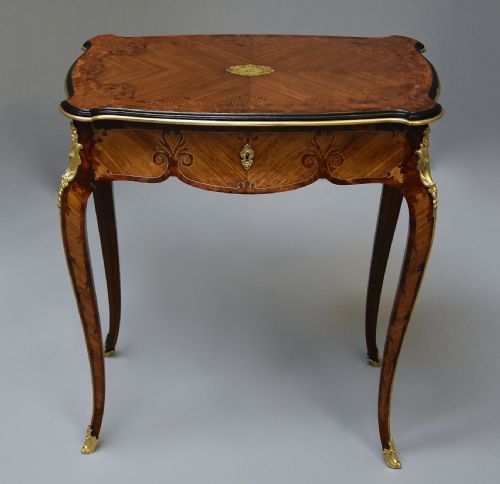
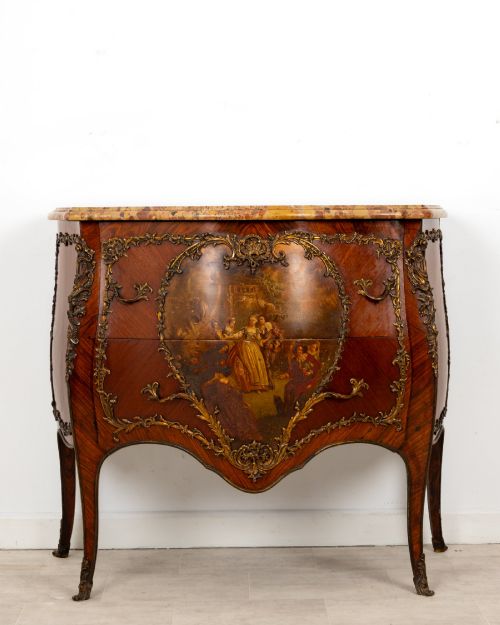
The construction of these pieces relies on a dense timber carcass, often finished with delicate marquetry, parquetry, or veneer work in woods like kingwood and walnut. Craftsmen applied intricate inlay patterns alongside porcelain plaques and Vernis Martin panels before attaching the metal ornamentation.
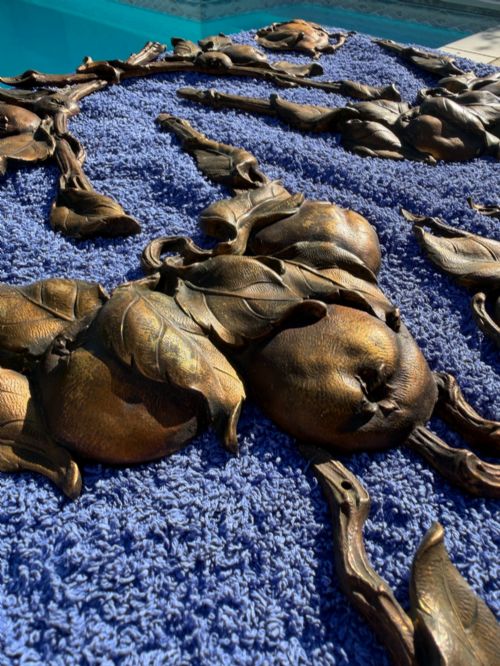
The metallic elements themselves are cast from bronze and subsequently gilded, creating the characteristic ormolu or gilt-bronze finish that is secured to the wood with precise fastenings. Marble tops, frequently in rouge or other decorative varieties, are fitted directly to the upper surfaces of cabinets and commodes.
Specialised mechanisms, such as those found on envelope card tables, writing desks, and cylinder desks, required sophisticated internal carpentry to operate smoothly alongside the exterior decorative mounts.
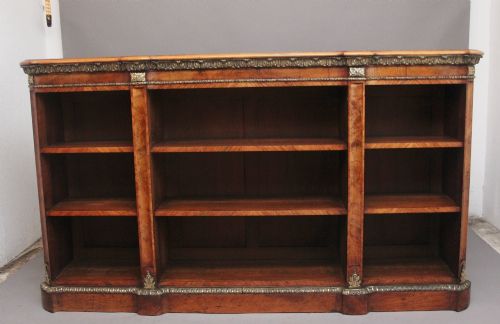
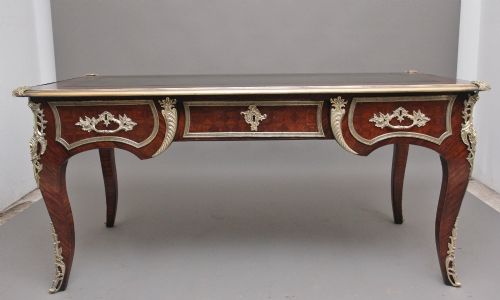
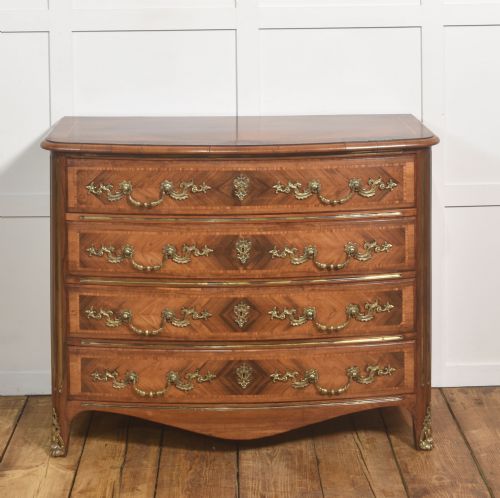
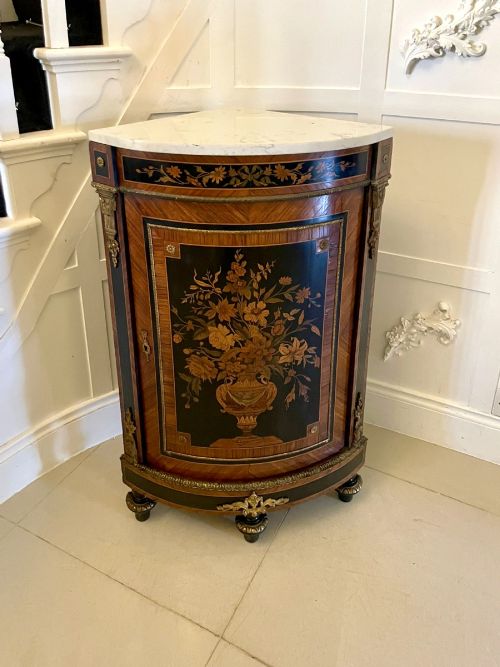
Common functional forms include writing desks, display cabinets, and marble-topped commodes accented with gilt-bronze mounts.
What Varies in Quality
The standard of the cast bronze mounts separates exceptional items from standard production, visible in the crispness of the chasing and the depth of the gilding. Master workshops invested heavily in carving the initial models for these mounts so that every leaf, scroll, and figural finial retained sharp definition.
Cabinetwork quality rests on the precision of the timber veneers, the complexity of the parquetry or marquetry patterns, and the stability of the underlying carcase timbers like mahogany and walnut. Sophisticated mechanisms and integrated marble slabs further distinguish the upper tier of surviving items.
The reputation of the maker or workshop also dictates the standing of a piece, with documented signatures or stamps from known Paris and London cabinetmakers reflecting superior standards of execution and design ambition.
Poix Blin·JAS Shoolbred·Johnstone and Jeanes·Maison Millet·Joseph-Emmanuel Zwiener·H. J. Hatfield And Sons·Henry Dasson·Gillows·Antoine Lampre
The Ormolu Mounted Furniture Glossary
- Ormolu
- Gilded bronze used for decorative furniture mounts and ornaments. The technique involves applying a mercury and gold amalgam to cast bronze before heating.
- Marquetry
- Decorative veneer work arranged in pictorial or geometric patterns using various coloured woods. Craftsmen cut thin sheets of timber to fit together precisely across table tops and drawer fronts.
- Parquetry
- Geometric wood inlay forming repeating patterns such as cubes or chequers. This technique provides texture and visual depth to flat surfaces on cabinets and desks.
- Vernis Martin
- A type of decorative lacquer finish developed in France, mimicking Asian lacquer work. It appears on panels of cabinets and vitrines.
- Commode
- A low chest of drawers, often fitted with a marble top and substantial metal mounts. These pieces frequently served as focal points in nineteenth-century formal rooms.
- Vitrine
- A glass-fronted display cabinet designed for porcelain and small objects. These freestanding or corner cabinets showcase interior shelving through glazed doors.
Ormolu Mounted Furniture: Frequently Asked Questions
What is ormolu mounted furniture?
These are wooden cabinets, desks, and tables decorated with cast and gilded bronze mounts. They combine timber veneers with metallic ornamentation.
The style originates largely from French revival periods of the nineteenth century, reflecting earlier royal tastes.
Where were these pieces made?
Most items originate from workshops in Paris or London, reflecting the strong nineteenth-century demand for French design styles. Master cabinetmakers produced these works for affluent urban residences.
English firms also adopted these continental fashions, often incorporating local cabinet-making traditions.
How do I care for marble tops?
Marble surfaces require gentle cleaning with a soft cloth and mild soap to avoid scratching or staining the polished stone. Keep acidic liquids away from the surface.
Ensure the marble rests evenly on the wooden carcase without putting pressure on the surrounding ormolu mounts.
How can I tell a desk's period?
Examine the secondary timbers inside the drawers and the construction methods used for the joints. Nineteenth-century pieces often employ machine-cut elements alongside hand-finished veneers.
Stylistic cues, such as Louis XV or Empire motifs, combined with maker stamps provide reliable chronological markers.