



Serpentine Glass Display Case
A serpentine glass display case brings together curved glazing and fine timber work, offering a sophisticated way to showcase prized collections.
Serpentine Glass Display Case
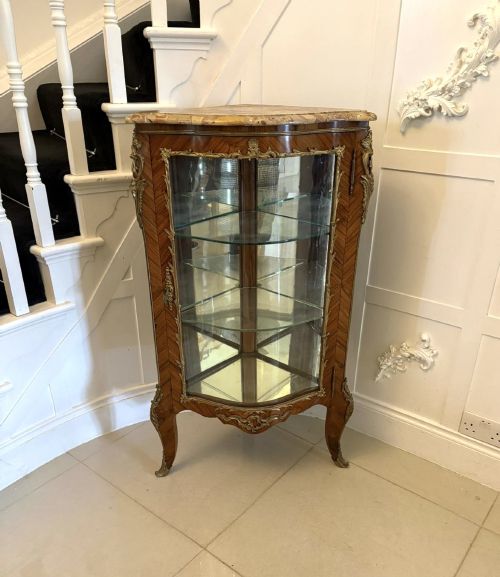
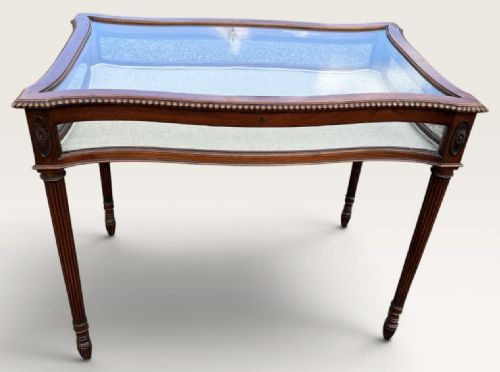
A serpentine glass display case combines a distinct undulating front contour with glazed panels designed to exhibit treasured objects from every angle. These pieces predominantly appear in forms such as freestanding vitrines, corner cabinets, and bijouterie tables, reflecting robust cabinet-making traditions from the nineteenth century onwards.
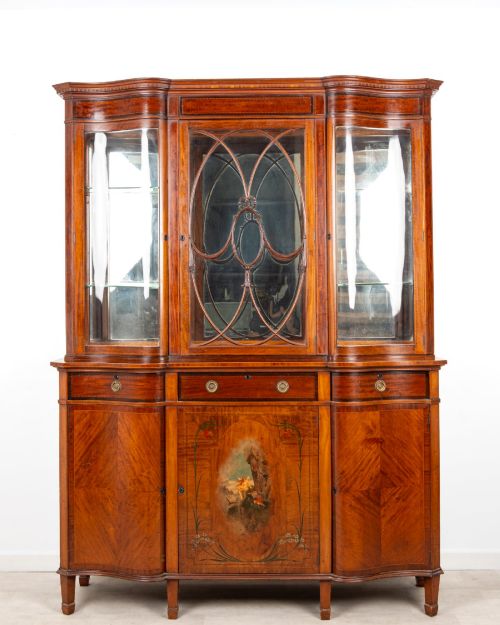
The items found within this selection draw heavily on periods including the Victorian and Edwardian eras, alongside stylistic revivals like Louis XV and Louis XVI. Buyers encounter everything from compact corner units to large exhibition-quality cabinets, each shaped by historical French and British design influences.
Makers utilised rich veneers and intricate inlay techniques to elevate these display pieces beyond simple storage. The resulting furniture serves both a functional purpose and an ornamental role in a traditional or contemporary interior.
Materials and construction methods
Cabinet makers constructed the foundational carcase using timbers such as mahogany, kingwood, walnut, satinwood, and rosewood, frequently applying detailed marquetry or parquetry patterns. Surfaces often feature delicate painted decorations or panels finished in the Vernis Martin style, adding depth to the wooden ground.
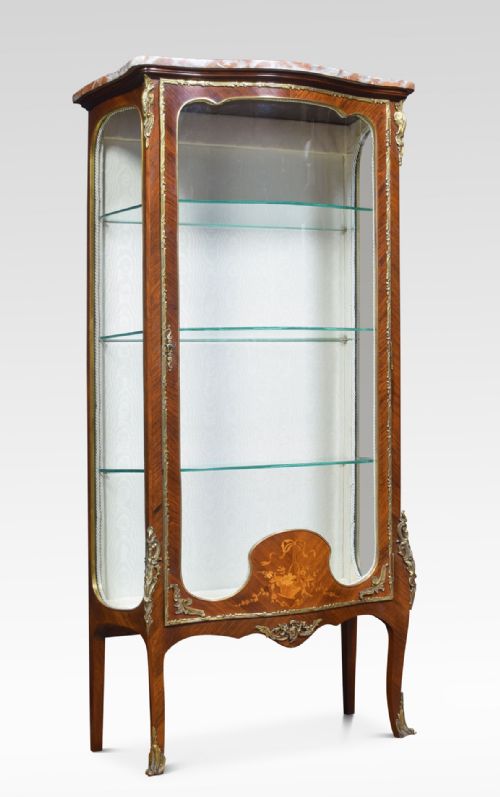
The characteristic undulating front requires specialist skill in bending timber and shaping glass to follow the gentle convex and concave curves. Artisans mounted these glazed structures with cast ormolu and gilt bronze mounts, highlighting the architectural lines of the cabinet.
Many examples incorporate marble tops, adding weight and a cool tactile contrast to the warm polished veneers below. Fabric linings within the interior complete the construction, providing a soft backdrop for displayed objects.
Serpentine Glass Display Case Retail Price Guide 2026
Typical asking prices for serpentine glass display case among the pieces listed under this phrase on Sellingantiques today, from the lower quarter to the upper quarter. They describe what is for sale here now, not the wider market.
Listings feature pieces from the Victorian and Edwardian eras, incorporating materials such as kingwood, mahogany, ormolu, and marble.
Factors that distinguish the work
The degree of refinement in the ormolu mounts largely separates standard production from exceptional pieces. Finely chased bronze details demonstrate sharper relief and greater attention to botanical or scroll motifs than mass-produced alternatives.
The complexity of the timber work and veneer matching indicates the maker's ambition. Superior items display seamless parquetry and marquetry across difficult curved surfaces, whereas simpler pieces rely on plain polished grain.
Overall proportion and the fluidity of the serpentine curve define the aesthetic success of the furniture. Master workshops achieved balanced silhouettes where the glazed doors and wooden framework harmonise without appearing heavy.
Edwards And Roberts·Thomas Justice And Sons
The Serpentine Glass Display Case Glossary
- Serpentine
- A curved furniture front featuring a convex centre flanked by two concave ends, mimicking the undulating movement of a snake. This shape demands advanced carpentry skills to execute successfully across wood and glass.
- Vitrine
- A glass-fronted cabinet or display case created specifically for showing porcelain, curiosities, and small decorative arts. The term derives from the French word for glass.
- Ormolu
- Gilded bronze mounts applied to furniture to accent corners, frames, and feet. The technique involves treating brass or bronze with a gold amalgam.
- Marquetry
- Decorative woodwork where small pieces of veneer are assembled to form pictorial or geometric patterns. Makers used contrasting timbers to create tonal shading.
- Vernis Martin
- A simulated Japanese lacquer technique developed in France, known for its translucent glossy finish and painted scenes. It frequently appears on high-end vitrines from the nineteenth century.
Serpentine Glass Display Case: Frequently Asked Questions
Where should I place a serpentine glass display case?
These cabinets suit drawing rooms, dining spaces, or hallways where their reflective glass and detailed woodwork can catch natural light. Corner models fit neatly into unused angles, whilst freestanding vitrines work well against principal walls.
Keep them away from direct sunlight to protect sensitive interior fabrics and wooden veneers from fading over time.
How do I care for the timber and ormolu?
Dust the surfaces regularly with a soft, dry cloth and apply a quality beeswax sparingly to nourish the wood. Avoid modern aerosol polishes, which can build up a residue and dull the finish.
Clean the bronze mounts gently without abrasive cleaners to preserve the original gilding.
What can I store inside a vitrine?
Vitrines were traditionally built to house porcelain collections, silver, glassware, and small curiosities. The glass panels and internal fabric lining protect delicate items from dust while keeping them visible.
Ensure heavier objects are placed on lower shelves to maintain stability.
How do I distinguish Victorian from Edwardian pieces?
Victorian examples often lean towards heavier timber selections, darker finishes, and pronounced revival styles like Louis XV. They frequently feature rich kingwood or walnut with substantial ormolu mounts.
Edwardian pieces tend to show lighter satinwood or mahogany tones, sometimes incorporating painted decorations and more restrained proportions.