





Kingwood Work Table
A kingwood work table brings rich violet-brown timbers and refined mounts into a room, serving as both a practical sewing desk and a decorative centrepiece.
Kingwood Work Table
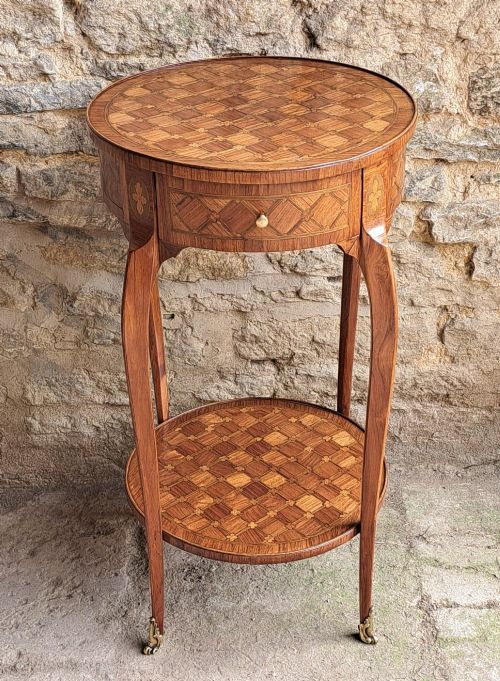
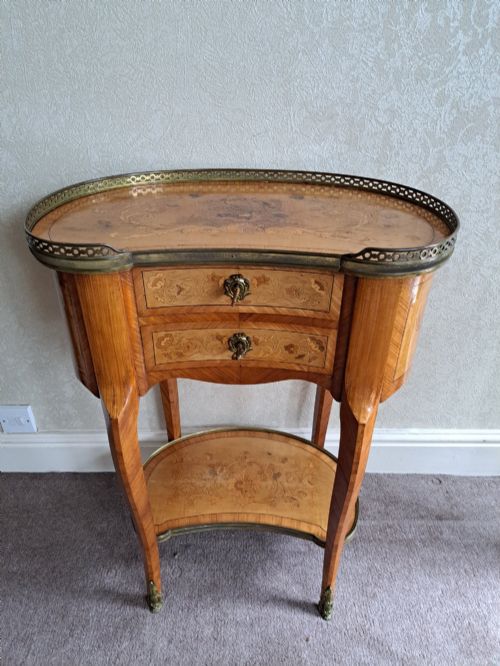
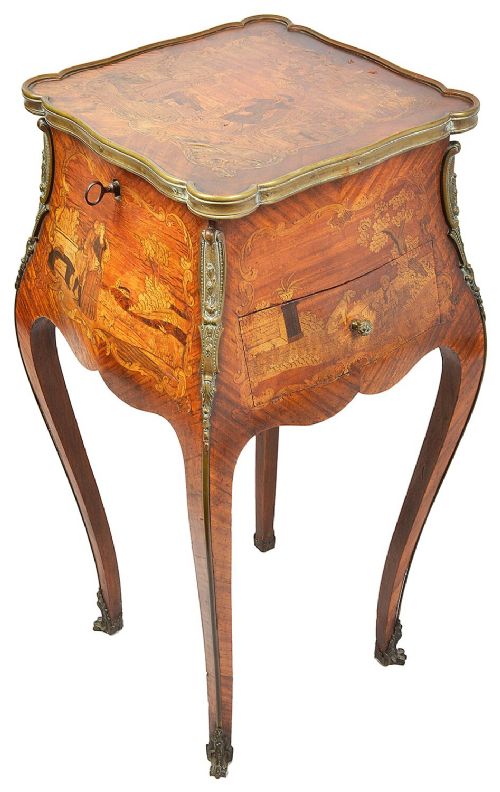
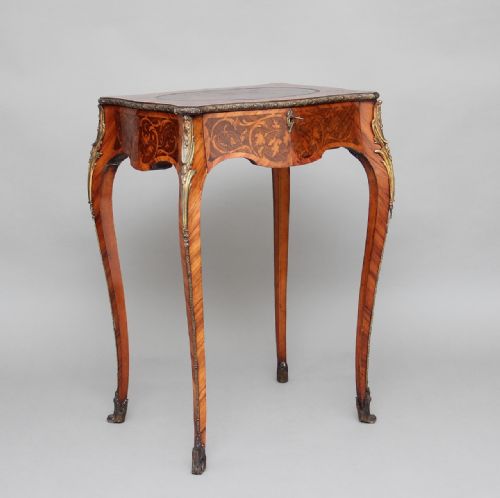
A kingwood work table is a specialised piece of antique furniture designed for needlework, correspondence, and small domestic tasks, typically featuring a fitted interior or drawer. Most examples encountered here originate from the nineteenth century, reflecting French revival tastes and Regency periods.
The forms range from two-tier occasional tables and side tables to dedicated sewing boxes and table en chiffonnière designs. Buyers select these pieces for their intricate marquetry surfaces and compact proportions, which suit sitting rooms and studies alike.
How they were made
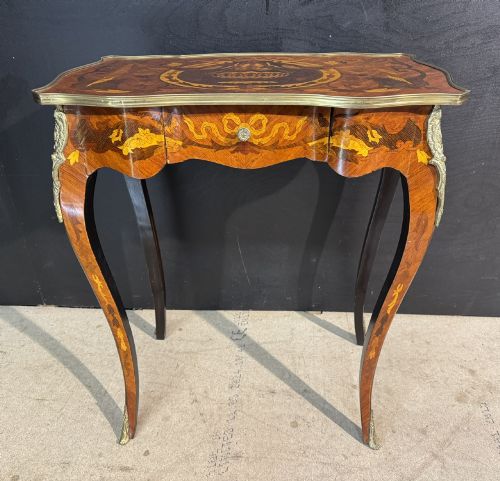
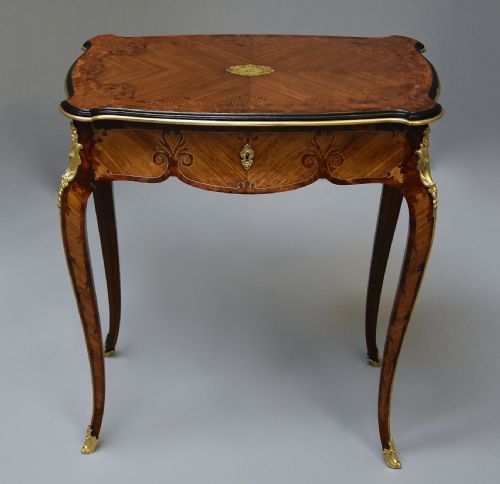
Cabinetmakers constructed these tables using solid carcases veneered with sliced kingwood, often arranging the grain in geometric parquetry or floral marquetry patterns. Mixed wood marquetry and rosewood frequently complement the primary timber across the top and sides.
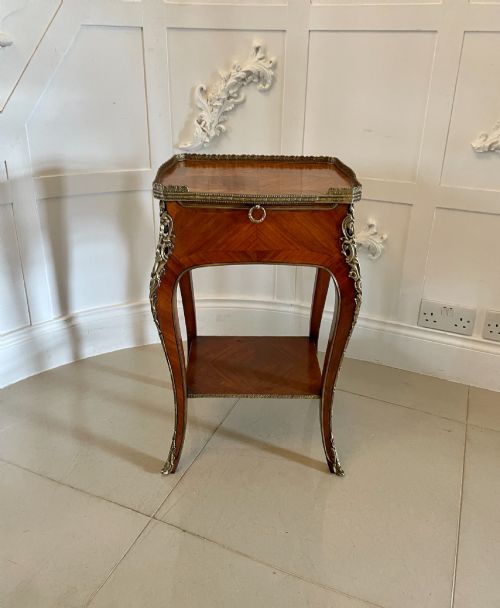
Gilt-metal, ormolu, and brass mounts edge the drawers, corners, and legs, whilst leather occasionally panels the writing surfaces. Sophisticated internal mechanisms organise sewing implements, threads, and personal papers.
Sophisticated mechanisms concealed inside these small tables ensure your secret needlework stays properly hidden from polite company.
What varies in quality
Quality rests upon the precision of the veneer work and the crispness of the cast ormolu mounts that accent the frame. Pieces bearing maker stamps or workshop labels demonstrate higher atelier standards.
The complexity of the internal mechanism and the depth of the marquetry detail separate standard production pieces from exhibition quality examples.
Millet
The Kingwood Work Table Glossary
- Kingwood
- A dense, heavily figured Brazilian timber displaying rich violet-brown tones with darker striping. Cabinetmakers prized it for high-status veneering during the eighteenth and nineteenth centuries.
- Ormolu
- Gilded bronze mounts applied to furniture edges and legs for architectural definition. The best examples exhibit hand-chasing after casting.
- Marquetry
- The art of forming decorative patterns using thin veneers of different coloured woods. It differs from parquetry through its pictorial or floral designs.
- Table en chiffonnière
- A small French occasional table fitted with multiple drawers for sewing materials and small items. They gained widespread popularity during the nineteenth century.
Kingwood Work Table: Frequently Asked Questions
What is a kingwood work table used for?
These tables served as compact desks for ladies to write letters, read, or sort threads and needles. Their fitted interiors and small drawers kept sewing implements neatly organised out of sight.
Today, they function well as bedside tables or decorative occasional surfaces in reception rooms where space is limited.
How do I identify French revival styles?
French revival pieces adopt the curved cabriole legs and floral marquetry associated with Louis XV, or the straighter, neoclassical lines of Louis XVI. Makers in the nineteenth century reinterpreted these eighteenth-century aesthetics using modern workshop techniques.
Ormolu mounts and parquetry patterns help signal this decorative lineage.
Are all work tables fitted for sewing?
Many include internal compartments, lift-top lids, or pull-out fabric bags designed specifically to hold sewing accessories. Some examples double as simple side tables or lamp tables without dedicated compartments.
Examine the interior layout to determine the intended domestic use.
How do I care for kingwood veneer?
Protect the polished surface by keeping the timber away from direct sunlight and strong heat sources. Regular dusting with a dry cloth maintains the finish without needing harsh polishes.
Wax can be applied sparingly to nourish the wood grain over time.