

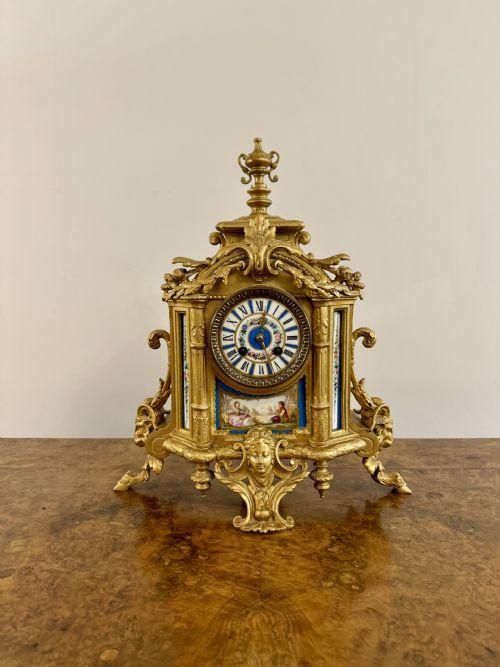


Sevres Style Table
A sevres style table brings ornate French porcelain and gilt bronze into a room, offering functional elegance for a traditional interior.
Sevres Style Table
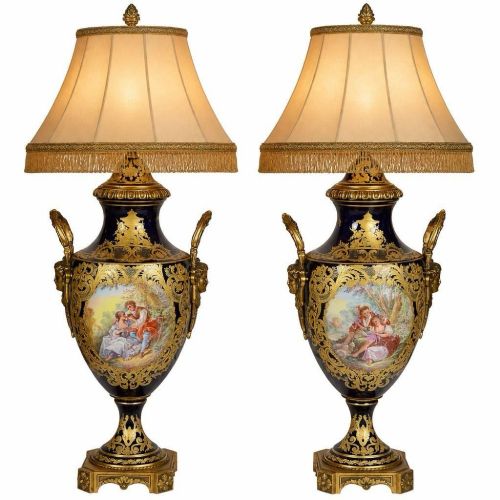
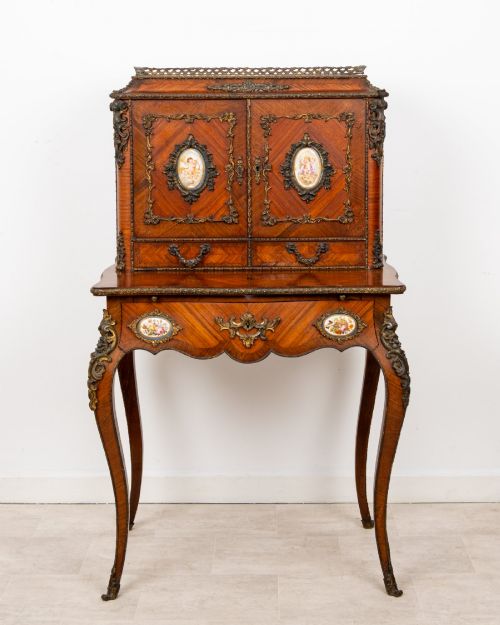
A sevres style table encompasses occasional furniture such as writing desks, writing tables, and centre pieces mounted with decorative porcelain plaques. These items emerge predominantly from the nineteenth century, reflecting the revival of French court aesthetics during the Victorian period and the Second Empire. Buyers will encounter various formats, from cylinder desks to occasional work tables designed for display.
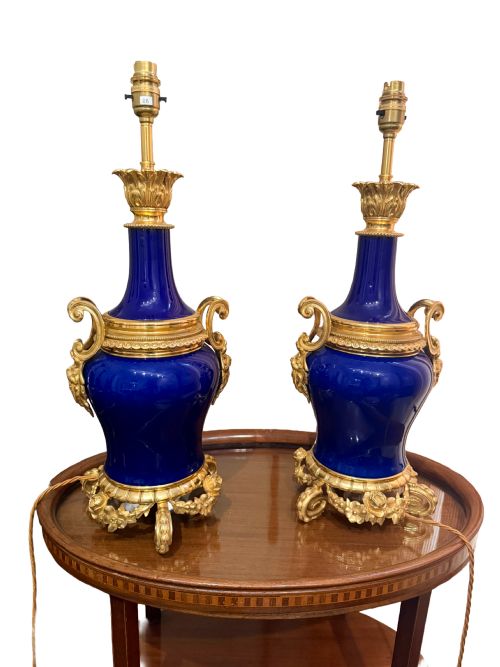
The desks and tables incorporate porcelain plaques painted by hand, often featuring cobalt blue backgrounds and delicate floral or figural scenes. These ceramics are set into timber carcases made from hardwoods like kingwood, rosewood, and walnut. Ormolu mounts frame the porcelain panels and accent the curved legs and aprons of the furniture.
Makers drew inspiration from Louis XV and Louis XVI designs, applying asymmetrical curves or symmetrical neoclassical proportions to the furniture frame. Surviving pieces demonstrate the nineteenth-century interest in blending cabinet-making with high-fired ceramic art. Such items served as status symbols in period drawing rooms and continue to function as focal points in contemporary reception spaces.
How they were made
Cabinet-makers constructed the timber frames using dense woods such as kingwood and walnut, frequently applying veneer over a stable core. Ormolu, an alloy of copper and zinc cast to simulate gold, was chased by hand to create crisp leaf scrolls and decorative borders around the wood and porcelain components. These metal mounts were then fire-gilded and secured to the furniture carcase with specialised brass screws.
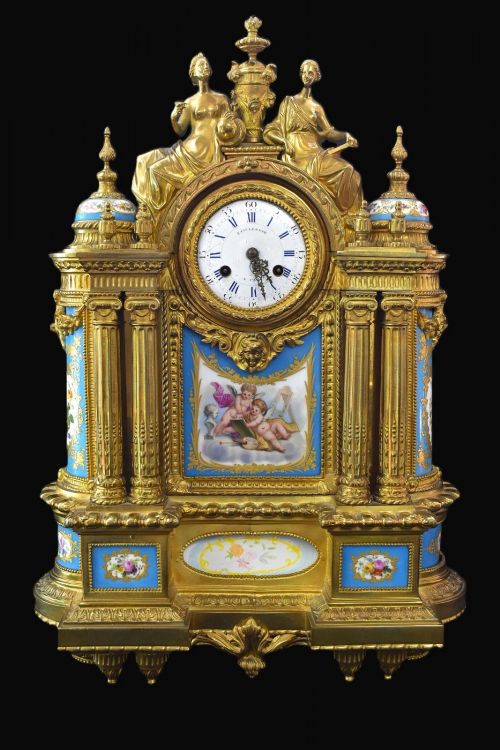
The porcelain plaques were shaped, glazed, and hand-painted with mineral colours before undergoing high-temperature kiln firing. Artisans applied enamel detailing and gilding directly onto the ceramic surface to mimic eighteenth-century factory output. These fired panels were subsequently fitted into tailored recesses within the wooden furniture or metal clock housings.
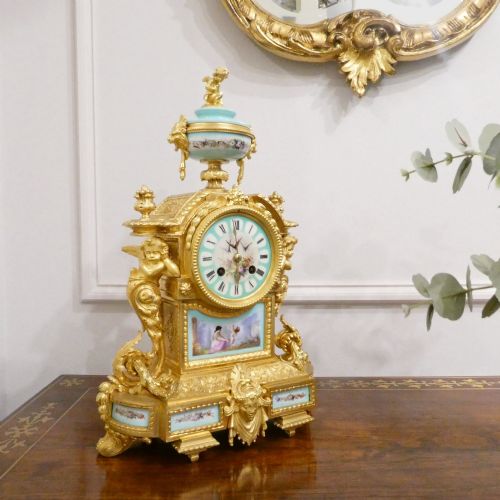
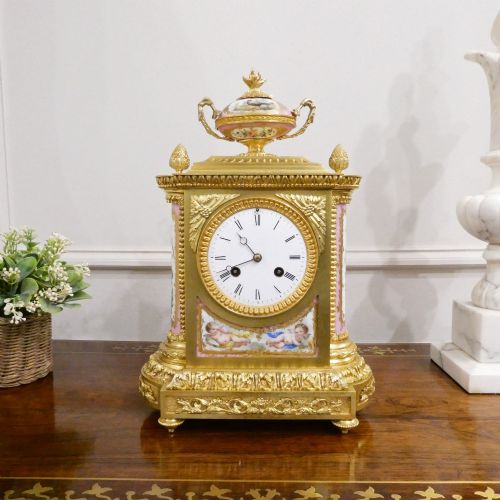
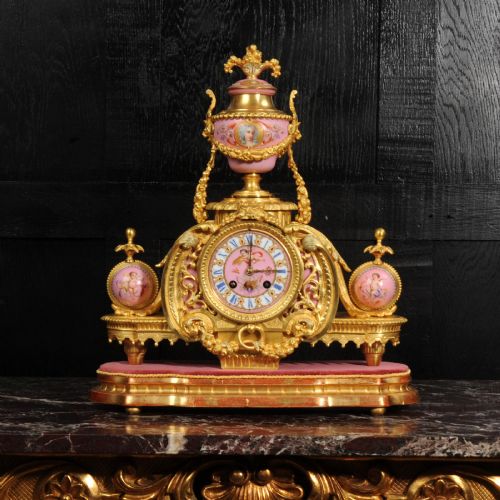
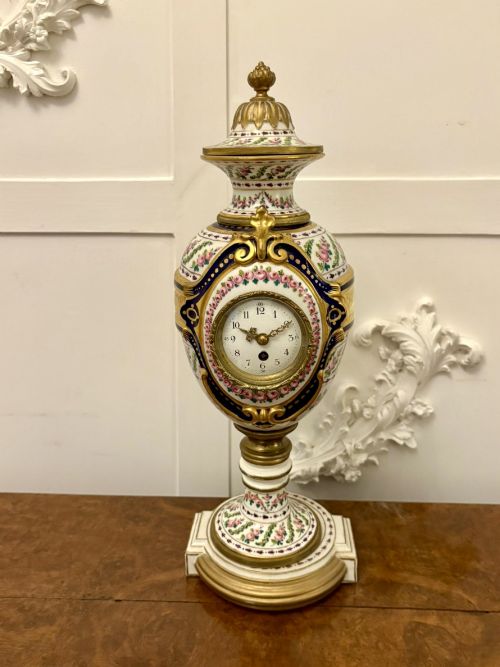
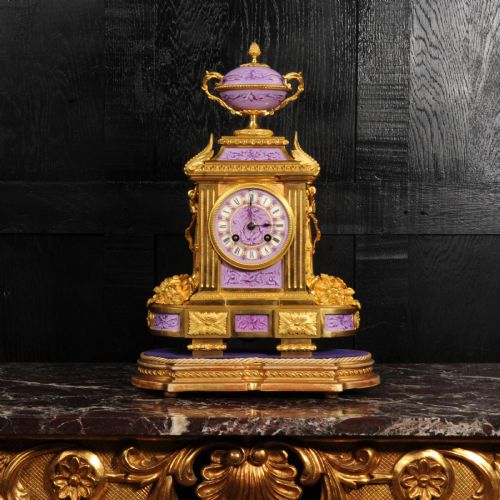
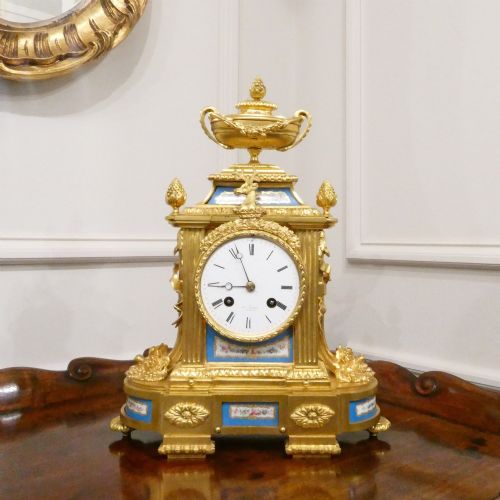
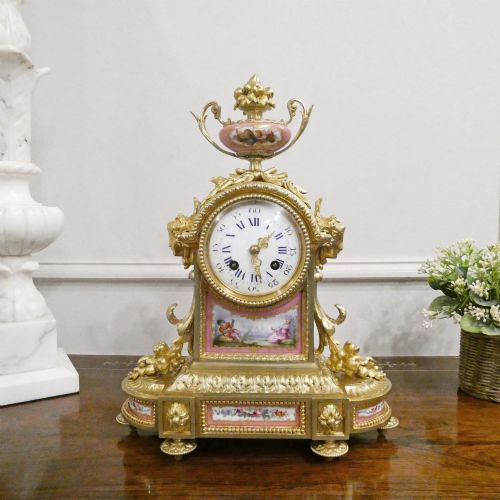
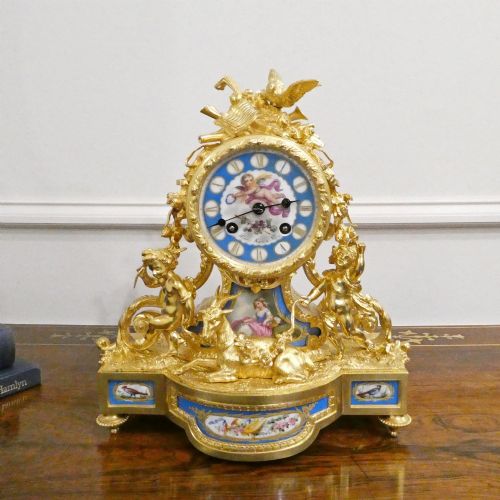
Several nineteenth-century clockmakers clearly could not resist adding porcelain faces to their ormolu creations, proving timekeeping is better with flowers.
What varies in quality
The crispness of the ormolu chasing dictates the visual success of the metal mounts, where deep, hand-tooled relief separates superior castings from softer, mass-produced alternatives. Hand-painted ceramic plaques display varying artistic merit, with finer examples featuring detailed brushwork, precise facial expressions in figural scenes, and rich cobalt glazes. The choice of timber veneer and the precision of the marquetry or parquetry layout further distinguish workshop standards.
Structural integrity depends on the joinery within the desk carcase and the stability of the wood beneath the veneer. Superior items retain their original fire-gilt surfaces on the bronze mounts rather than later electroplated finishes. The integration between the porcelain plaque and the surrounding metal or wood mount indicates the skill of the original assembler.
Jean-Baptiste Delettrez·Achille Brocot·Henry Marc·Japy Freres·Etienne Lenoir·Le Roy Paris·PH Mourey·LE ROY & FILS·Linke
The Sevres Style Table Glossary
- Ormolu
- A gilded brass or bronze mounting used to adorn furniture and clocks. The term derives from the French for ground gold, describing the yellowish metallic finish.
- Kingwood
- A dense, durable timber featuring dark violet and brown figuring, frequently used as a veneer in nineteenth-century French cabinet-making. It provides a rich, dark backdrop for gilt metal mounts.
- Bonheur du jour
- A small lady's writing desk featuring a tiered superstructure with drawers, shelves, or a cabinet above the writing surface. These desks often incorporate porcelain plaques and ormolu mounts.
- Bureau plat
- A flat-topped writing table with drawers in the frieze, typically finished on all sides so it can stand in the centre of a room. This form frequently displays gilt bronze mounts and inset leather or wooden writing surfaces.
- Jardinieri
- An ornamental stand or container designed to hold indoor plants or floral arrangements. Nineteenth-century examples often feature porcelain plaques and metal liners.
- Cartonnier
- A decorative cabinet or desk-top stand fitted with compartments for storing papers, letters, and documents. These pieces are often mounted in ormolu and matched to writing tables.
Sevres Style Table: Frequently Asked Questions
What is a sevres style table?
A sevres style table is a nineteenth-century piece of furniture, such as a writing desk or centre table, decorated with hand-painted porcelain plaques and gilt bronze mounts. These items draw on French rococo and neoclassical revival designs.
They reflect the Victorian and Napoleon III fascination with eighteenth-century court aesthetics, combining fine cabinet-making with decorative ceramics.
How do I clean the ormolu?
Ormolu requires gentle dusting with a soft, dry brush to prevent the accumulation of dirt in the chased recesses. Moisture and chemical cleaners can damage the delicate gilt surface.
Professional conservation advice should be sought if the metal mounts require deeper cleaning to remove tarnish without stripping the original gilding.
Are the porcelain plaques original?
The porcelain plaques on these pieces were typically manufactured in the nineteenth century to complement the furniture frame, adopting eighteenth-century factory painting styles. Close inspection under magnification reveals the quality of the hand-painted enamels and gilding.
Matching the plaque dimensions and firing characteristics to the furniture carcase helps confirm their period association.
Where should I place this furniture?
These tables and desks suit reception rooms, studies, or drawing areas where their decorative surfaces and gilt mounts can catch the light. Placing them away from direct sunlight protects the timber veneers and hand-painted ceramic pigments.
Because many writing tables are finished on all sides, they can function as freestanding centre pieces within a room.