



Ormolu Ladies Desk
An ormolu ladies desk combines refined 19th-century cabinet-making with gilt-bronze mounts, offering a compact and decorative writing surface.
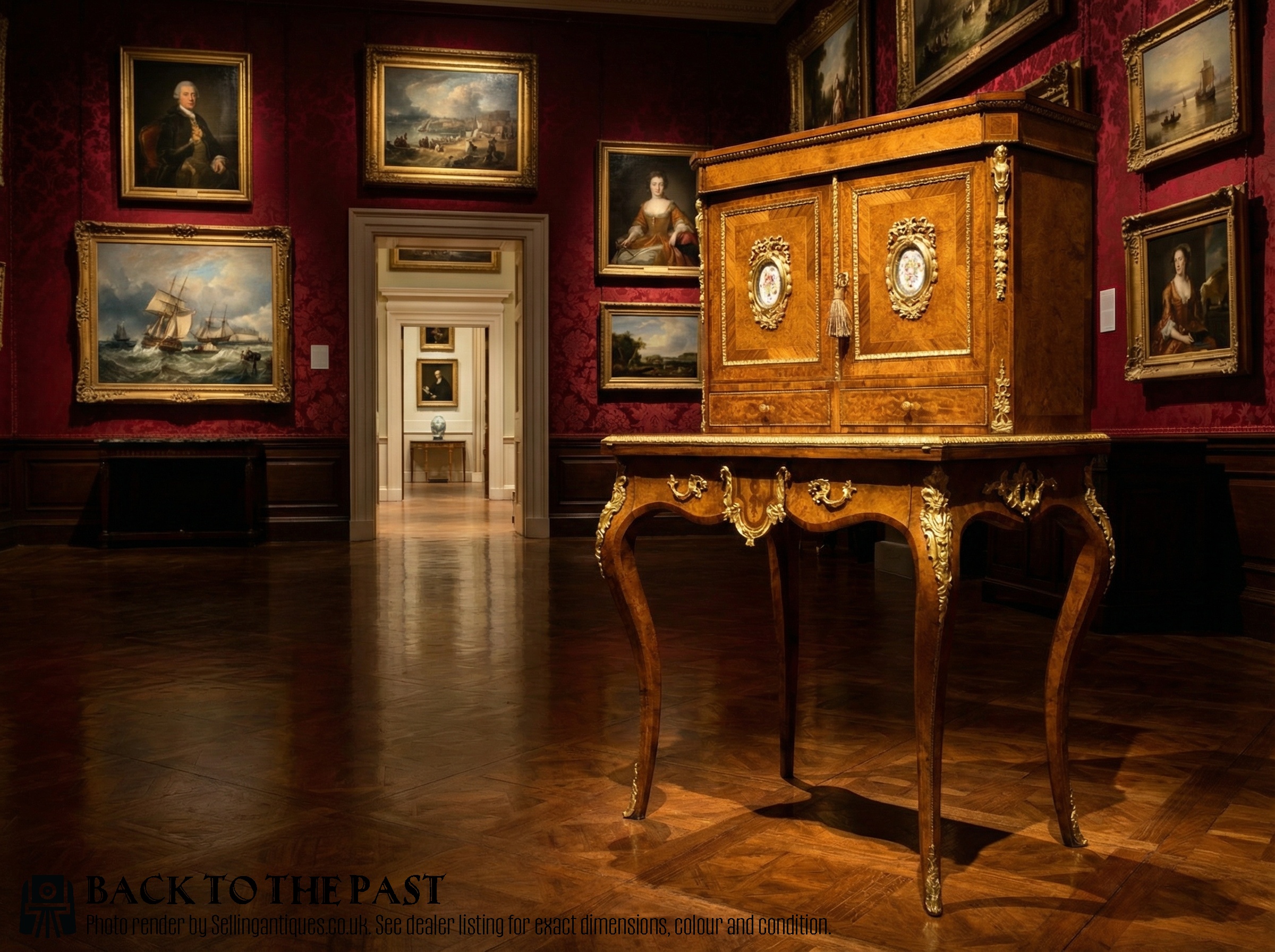
Ormolu Ladies Desk
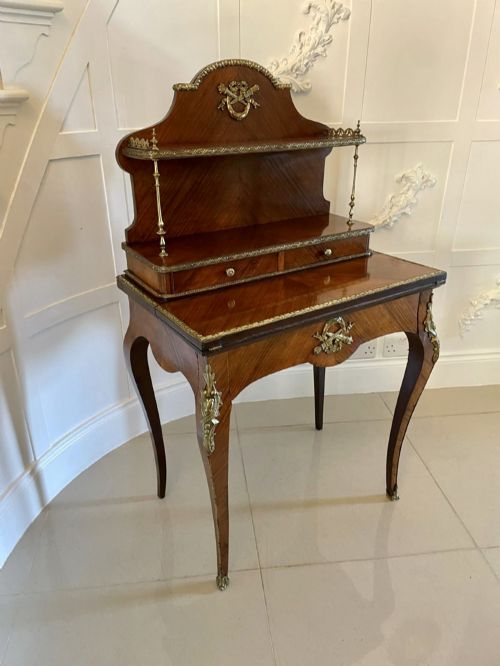
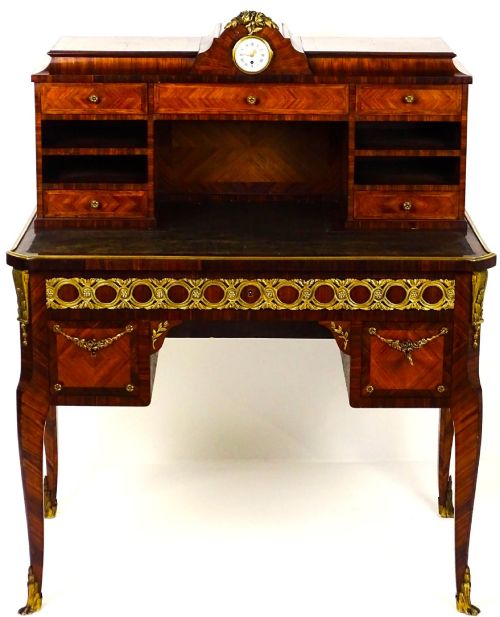
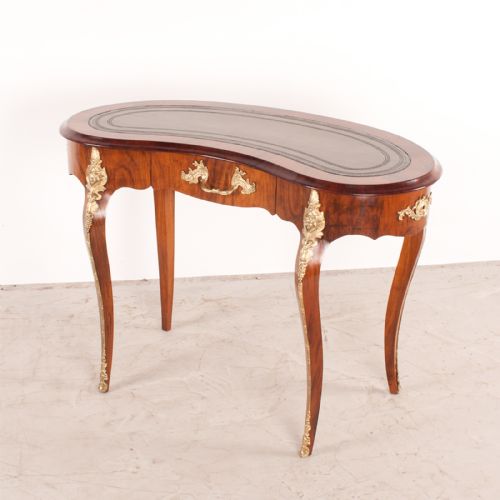
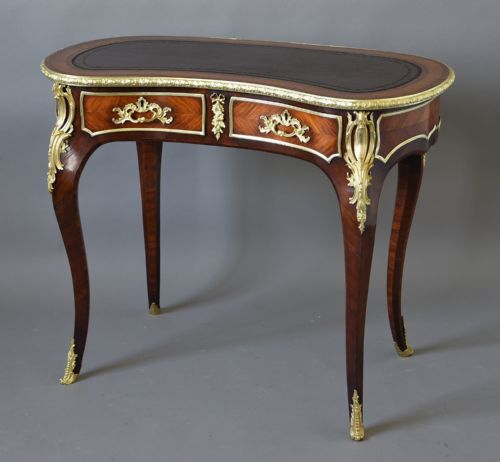
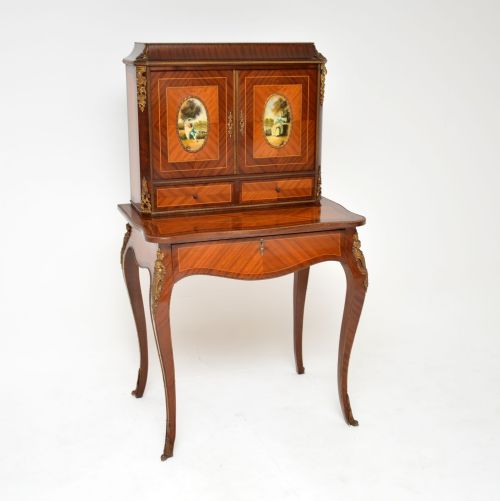
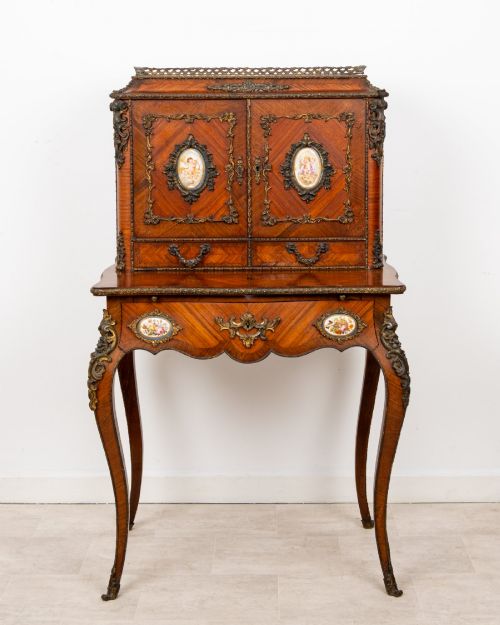
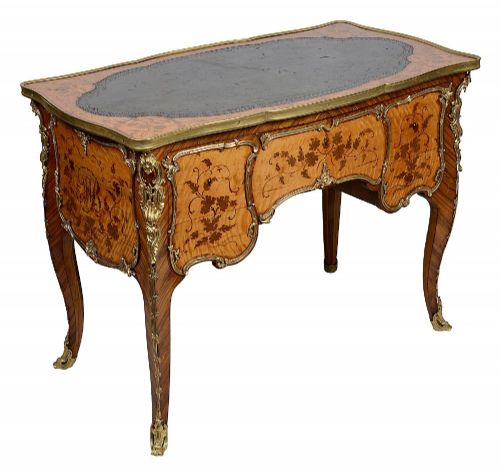
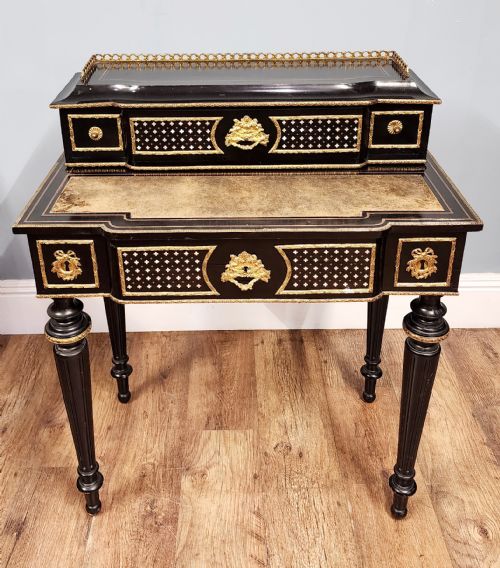
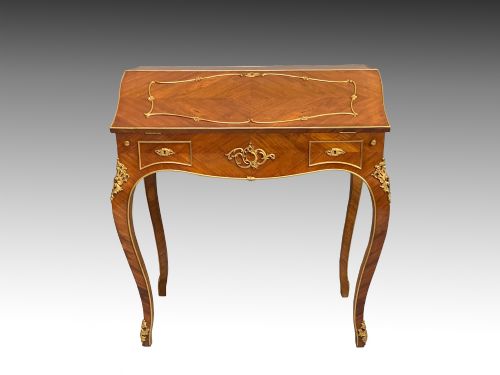
When searching for an ormolu ladies desk, buyers encounter small writing tables, bureau de dame forms, and bonheur du jour cabinets from the 19th century. These pieces reflect Louis XV revival and French rococo styles, often shaped with kidney outlines or fitted writing flaps.
The dominant forms originate from French and Victorian workshop traditions where decorative writing furniture served drawing rooms and boudoirs. Kingwood, walnut, and rosewood veneers dominate the surfaces, accented with cast bronze mounts.
Materials and construction
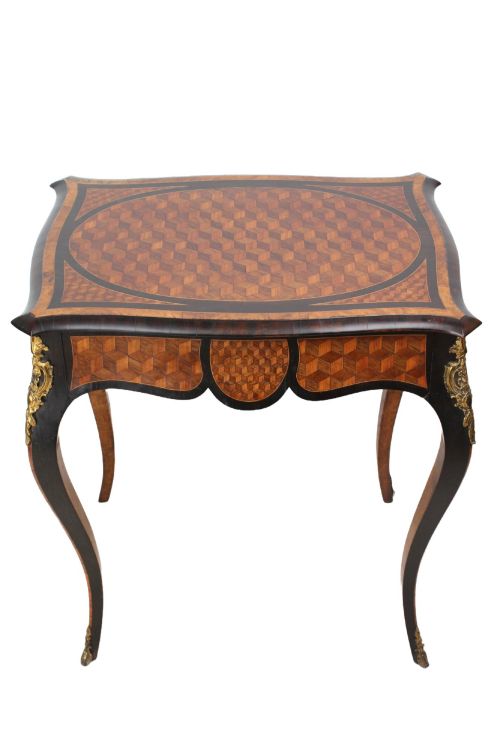
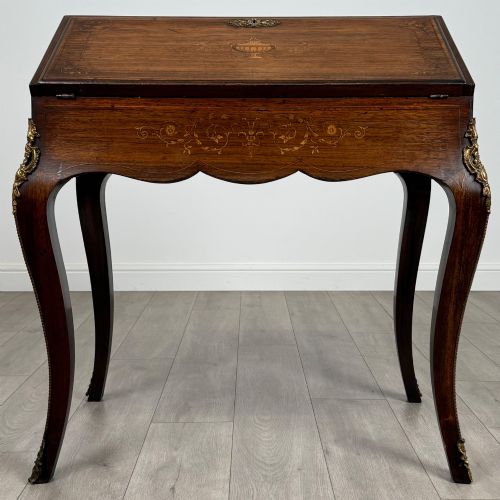
Cabinet-makers laid exotic timber veneers such as kingwood, tulipwood, and amboyna over sturdy carcases, frequently employing parquetry and floral marquetry patterns. Brass and ormolu mounts were cast and gilded then fitted along corners, drawer edges, and legs.
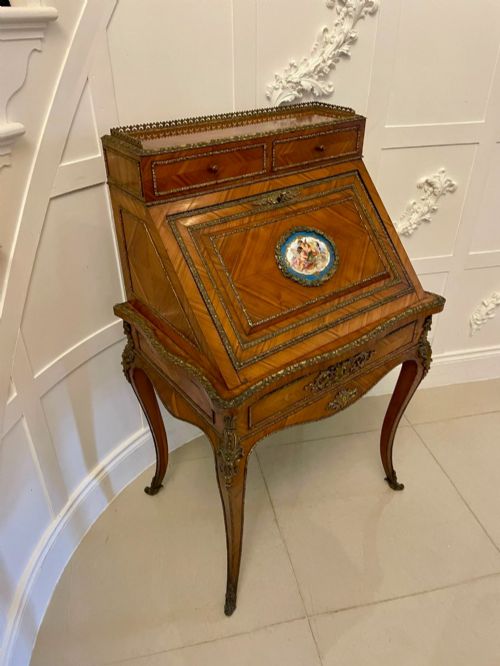
Writing surfaces were routinely lined with panels of tooled leather, whilst finer models incorporated inset Sevres porcelain plaques or glass-fronted display tiers.
Listings feature woods like kingwood and rosewood alongside ormolu, with the 19th Century and Victorian periods appearing most frequently.
Assessing quality
Quality rests upon the crispness of the ormolu cast work and the precision of the timber inlay. Stronger examples display heavier, more deeply chiselled bronze mounts and balanced proportions in serpentine or kidney forms.
Maker attribution elevates desirability, as demonstrated by signed pieces from recorded makers whose joinery and hardware integration remain superior.
JAS Shoolbred·Paul Sormani
The Ormolu Ladies Desk Glossary
- Ormolu
- Gilded bronze used for decorative mounts and furniture trim. It provides a bright metallic contrast against dark timber veneers.
- Bonheur du jour
- A small ladies writing desk featuring a raised cabinet or tier of shelves above the main writing surface. Originating in France, it became popular during the Victorian period.
- Bureau de dame
- A lady's writing desk, typically featuring a sloping fall-front lid enclosing small drawers and pigeonholes. These items rely heavily on revival styling and veneered surfaces.
- Marquetry
- Decorative veneer work forming pictorial or geometric patterns using various coloured woods. Craftsmen cut contrasting timbers to fit precisely into prepared backgrounds.
Ormolu Ladies Desk: Frequently Asked Questions
Where were these desks placed?
These pieces sat in private drawing rooms, bedrooms, or boudoirs where light and space suited smaller writing furniture.
They functioned as practical writing slopes and decorative display cabinets for letters and small personal items.
What woods were used?
Cabinet-makers utilised exotic tropical hardwoods, notably kingwood, tulipwood, rosewood, and amboyna, laid as fine veneers over sturdy carcases. Walnut and mahogany also appear frequently in Victorian interpretations.
Inlays often incorporated satinwood and maple to create contrasting geometric or floral marquetry patterns.
How should I clean ormolu mounts?
Ormolu requires gentle dusting with a soft brush to protect the original mercury or electroplated gilt surface. Abrasive polishes remove the gold layer and damage the underlying bronze.
Timber surfaces benefit from traditional beeswax applied sparingly to preserve the sheen of the veneer.