

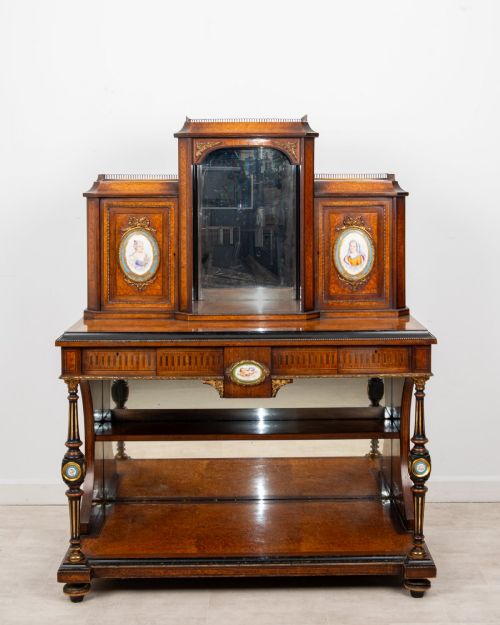


Nineteenth Century Bonheur Du Jour
A nineteenth century bonheur du jour brings elegance and refined writing space into a room, offering small drawers and shelves above a fitted writing surface.
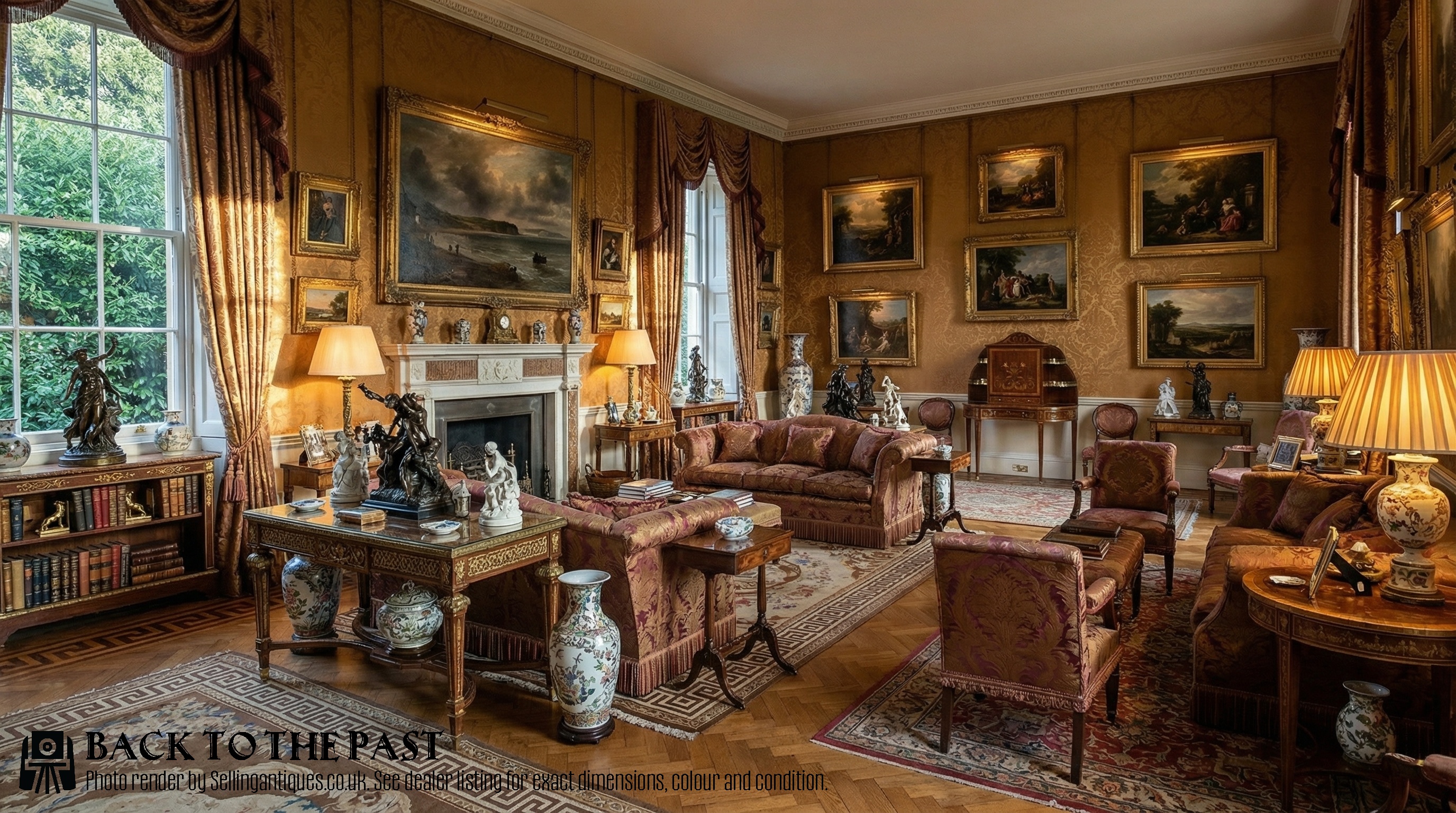
Nineteenth Century Bonheur Du Jour
A nineteenth century bonheur du jour is a small, light writing desk designed for lady's use, typically featuring a tiered superstructure with compartments, drawers, or cupboards above the writing surface. These pieces often combine the utility of a Davenport with the decorative grace of a small cabinet.
The versions most commonly met on this page originate from English Victorian workshops or French cabinet makers working in revival styles. They span periods from mid to late Victorian and include French models reflecting Louis XV and Napoleon III tastes.
The form functions equally well as a compact writing desk or a display cabinet, making it a versatile addition to a study or drawing room. The upper section frequently incorporates small doors or open shelving suited for correspondence and stationery.
Materials and construction
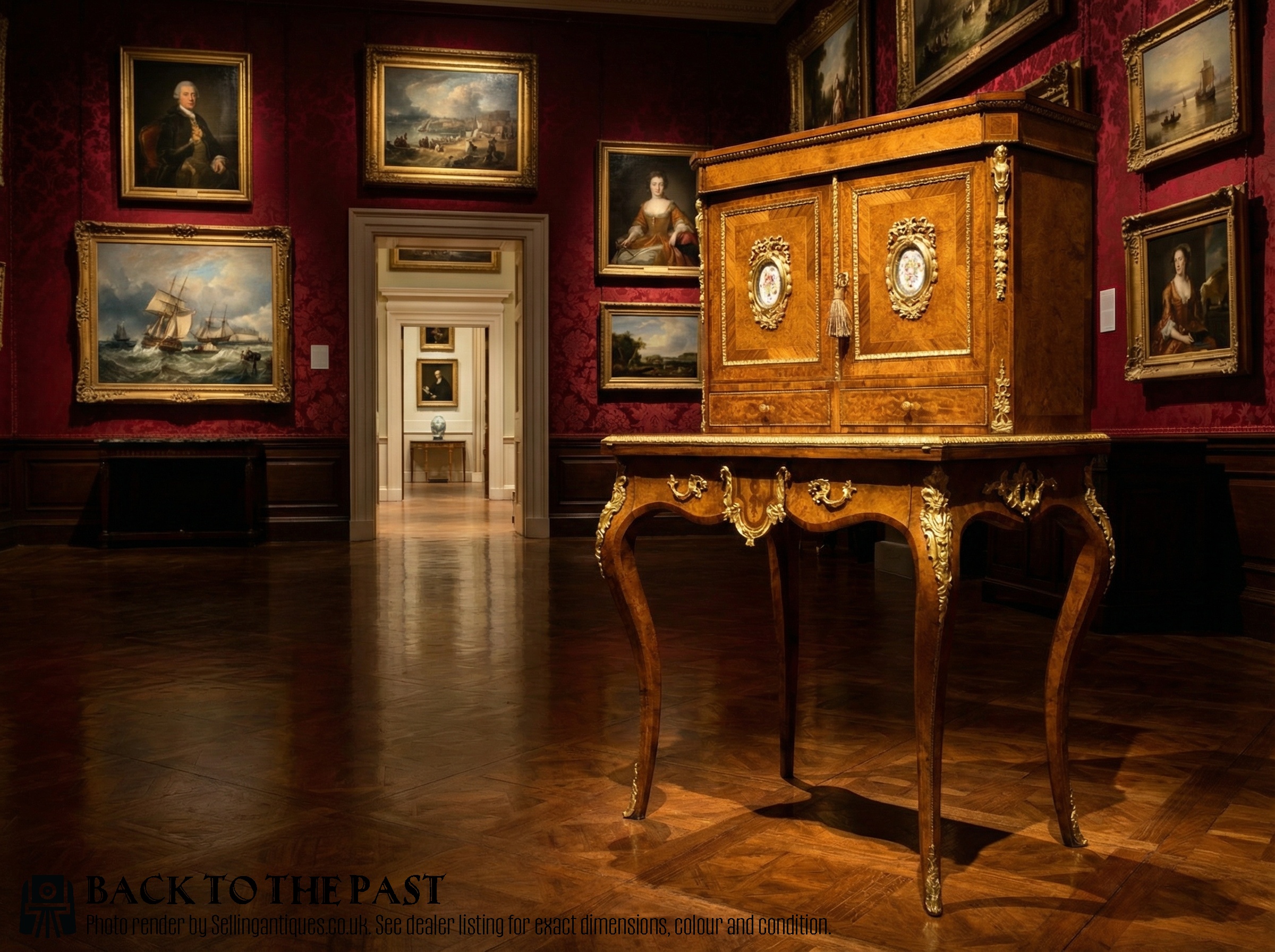
Construction relies upon a mix of rich exotic timbers and dark foundational woods, with mahogany, kingwood, rosewood, and ebonised wood forming the primary carcases. Fine veneers and intricate marquetry inlay decorate the surfaces, supported by contrasting lighter woods such as satinwood and amboyna.
Metal mounts in ormolu and brass edge the writing surfaces, frame porcelain plaques, and protect the slender legs. These gilt bronze and brass enrichments define the French revival aesthetic alongside traditional cabinet making joinery.
Makers designed these delicate desks specifically for morning correspondence, before the serious business of the afternoon began.
Judging quality
Quality rests upon the crispness of the marquetry and the choice of veneers, where dense grain patterns and precise geometric or floral inlay elevate a piece. The integration of porcelain plaques and fire gilded ormolu mounts rather than plain brass further separates standard furniture from finer examples.
Maker attribution elevates standing, particularly when pieces bear signatures from notable firms like Edwards & Roberts or makers such as Jean Werner. The subtlety of the internal fittings and the harmony between the upper superstructure and lower writing table determine the overall success of the design.
Edwards & Roberts·Jean Werner
The Nineteenth Century Bonheur Du Jour Glossary
- Bonheur du jour
- A small ladies writing desk with a tiered upper section containing drawers, shelves, or a cabinet. The name translates literally from French as day's happiness.
- Ormolu
- Gilded bronze mounts used extensively on French furniture of the period to accent corners, legs, and panels. The technique involves applying a gold amalgam to a bronze base.
- Marquetry
- Decorative patterns formed by fitting together thin veneers of different coloured woods, ivory, or shell. It creates pictorial or geometric designs across flat surfaces.
- Ebonised
- Timber treated with a stain or finish to imitate ebony. This dark, polished surface was particularly popular during the Victorian and Napoleon III periods.
- Kingwood
- A dense, richly figured Brazilian timber prized for its contrasting dark violet and brown striping. Cabinet makers used it primarily for high quality veneered surfaces.
Nineteenth Century Bonheur Du Jour: Frequently Asked Questions
What is a nineteenth century bonheur du jour?
A nineteenth century bonheur du jour is a small, elegant ladies writing desk featuring an upper tier of drawers and shelves. It combines compact workspace with decorative storage.
First appearing in France, the form remained popular throughout the Victorian era across both English and continental workshops.
How were these desks used?
These desks were designed for morning correspondence, writing letters, and keeping intimate personal papers. The upper compartments held stationery, inkwells, and small valuables.
Placed in private boudoirs or drawing rooms, they served as both functional writing furniture and decorative display pieces.
How do you style one in a modern home?
A nineteenth century bonheur du jour works well as a compact writing desk in a home office or as a striking console in a living room. Its delicate proportions allow it to fit into spaces where a large partner desk would overwhelm.
Keep the surface uncluttered to showcase the wood veneers and marquetry inlay, using the internal drawers for modern storage.
How do French and English styles differ?
French examples from this period often embrace Louis XV or Napoleon III revival styles with curved cabriole legs, extensive ormolu mounts, and porcelain plaques. They lean towards decorative flair and exotic veneers like kingwood and amboyna.
English Victorian versions tend to utilise mahogany, walnut, and ebonised finishes with marquetry inlay, focusing on disciplined cabinet work and practical stationery fittings.