




Antique French Escritoire
An antique french escritoire combines private writing compartments with decorative cabinetry, offering a sophisticated surface for correspondence.
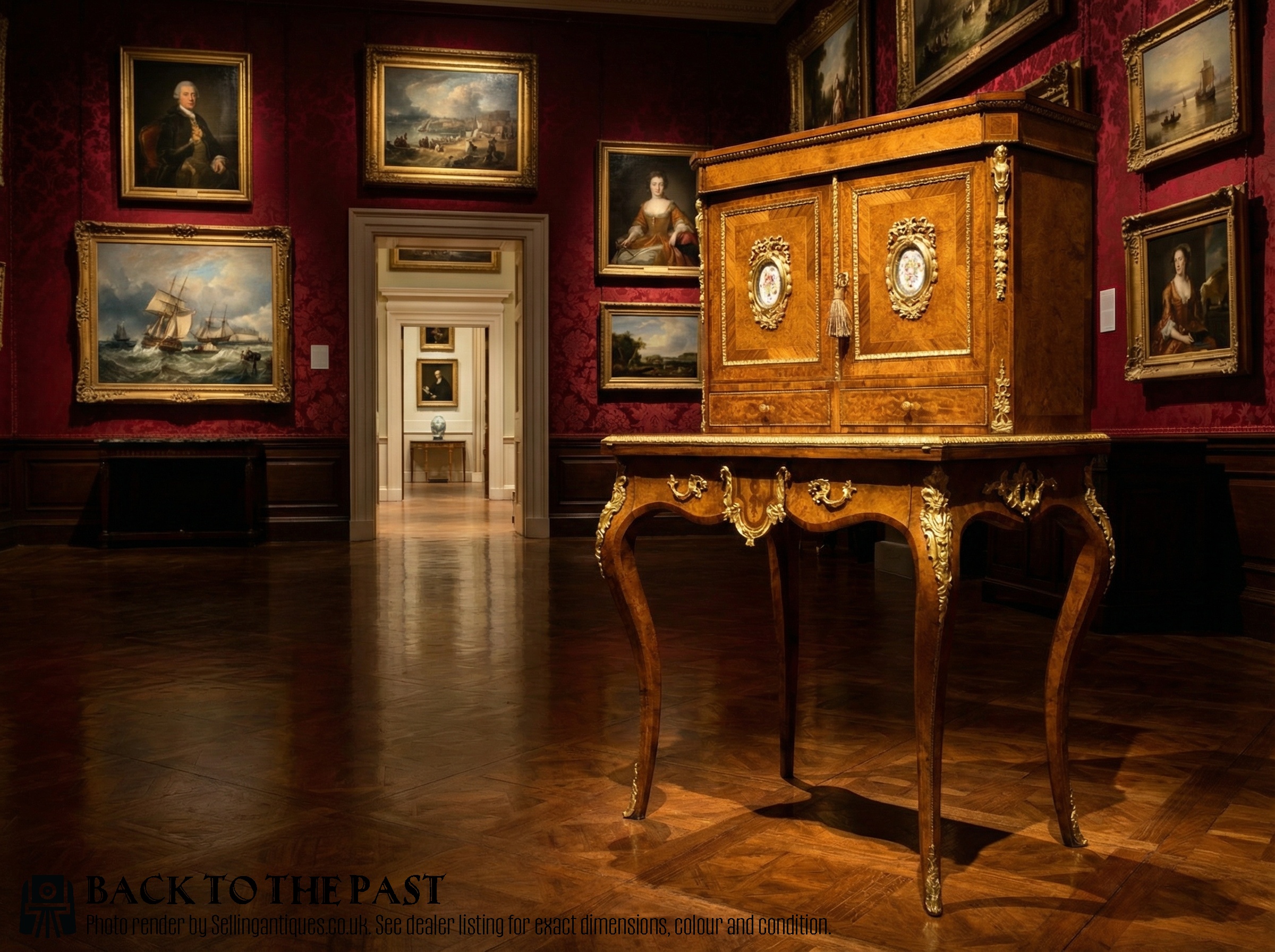
Antique French Escritoire
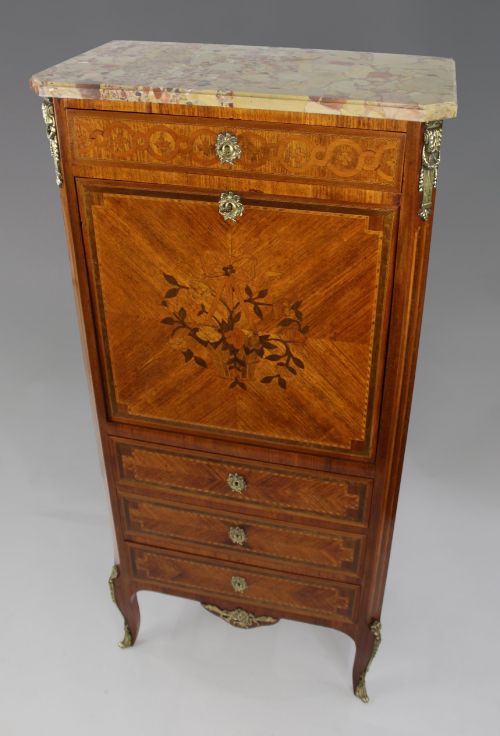
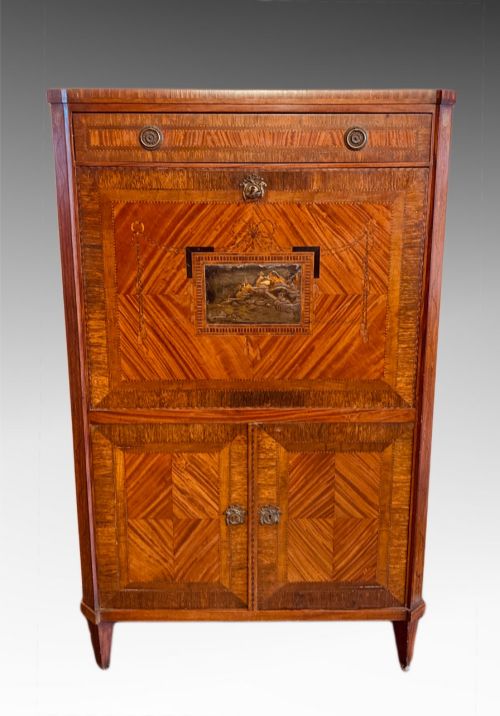
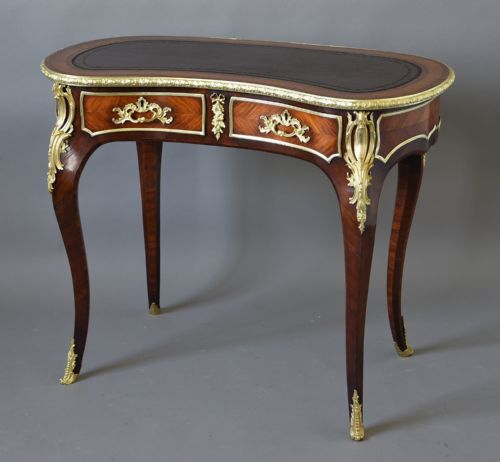
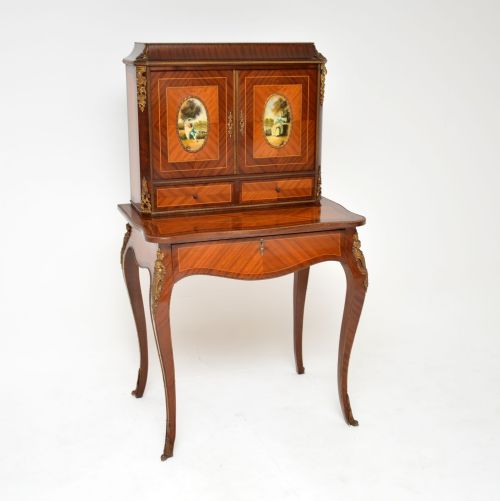
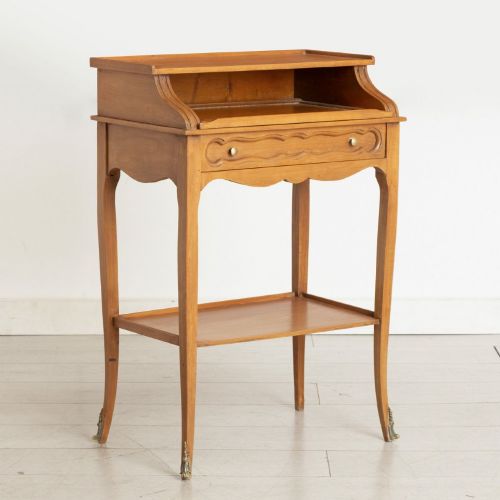
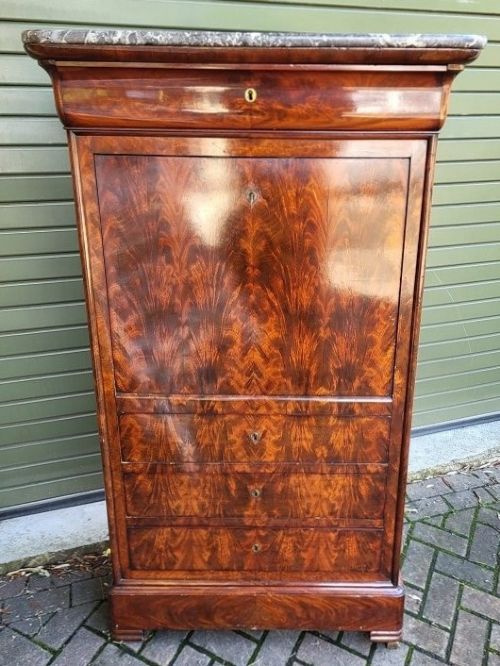
The antique french escritoire appears across the nineteenth century in various forms, including the vertical secretaire à abattant with its drop-down writing flap and the smaller ladies writing desk or bureau de jour. These pieces originated to serve private correspondence and record-keeping in refined domestic interiors.
Most examples encountered on this page date from the Victorian era and the nineteenth century, reflecting revival styles such as Louis XV and Louis XVI. Makers utilised rich timbers and decorative mounts to project status and elegance in reception rooms and private boudoirs.
Materials and Techniques
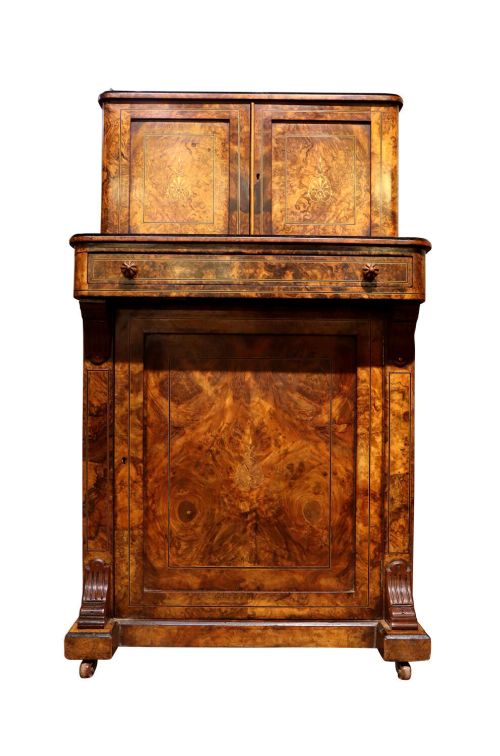
Cabinets rely upon a carcase of supportive timbers like mahogany, walnut, or fruitwood, veneered with decorative exotic hardwoods including kingwood, rosewood, and burr walnut. Marquetry and brass inlay form intricate patterns across the exterior surfaces.
Gilded bronze or ormolu mounts accentuate the structural lines and corners, while marble tops provide durable, smooth surfaces on upright cabinets. Interior compartments often conceal secret drawers accessed through clever mechanical releases.
Many writing cabinets conceal secret compartments behind sliding pigeonholes, designed for hiding love letters from prying eyes.
Indicators of Excellence
The sophistication of the timber veneers and the precision of the marquetry inlay set superior examples apart from simpler utilitarian desks. Finely chased ormolu mounts with crisp detail indicate a higher standard of workshop production.
Internal engineering, such as well-fitted secret drawers and smooth drop-front mechanisms, demonstrates the skill of the maker. The integrity of the original marble top and the preservation of vernis martin panels also influence the standing of a piece.
Befort Jeune
The Antique French Escritoire Glossary
- Escritoire
- A writing cabinet featuring a hinged fall-front writing surface that conceals internal pigeonholes and small drawers. This form allows correspondence to be securely closed away when not in use.
- Secretaire à abattant
- A tall, upright writing cabinet with a vertical drop-front panel that opens to reveal a fitted desk interior. These pieces frequently feature a marble top and lower drawers.
- Bonheur du jour
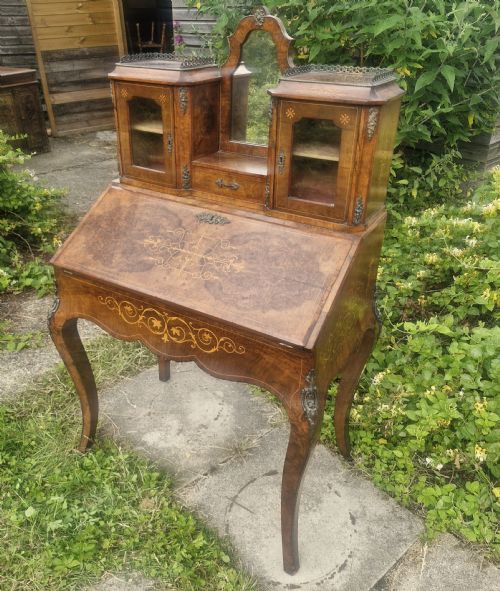
- A light ladies writing desk originating in France, typically featuring a small set of drawers or a cabinet superstructure upon the main writing surface. It functions primarily for casual correspondence.
- Ormolu
- Gilded bronze mounts applied to furniture for decorative effect and edge protection. The technique involves coating bronze with a mercury and gold amalgam.
- Vernis martin
- A type of decorative lacquer finish developed in France to imitate Japanese import lacquers. It utilises multiple layers of varnish to create translucent painted scenes.
- Marquetry
- The art of applying thin veneers of different coloured woods to a structural carcase to form pictorial or geometric designs. Craftsmen cut these pieces meticulously to fit flush together.
Antique French Escritoire: Frequently Asked Questions
What is an escritoire?
An escritoire is a dedicated writing cabinet featuring a fall-front desk flap that conceals internal compartments for stationery and letters. It is designed to keep writing materials neatly organised and out of sight.
These pieces range from tall upright cabinets to smaller tables, serving both practical writing needs and decorative display functions within a room.
How do I use an escritoire today?
An escritoire functions well as a compact workspace for modern correspondence, laptop use, or home organisation. The drop-front flap provides a convenient writing surface while containing clutter.
Internal drawers and pigeonholes hold stationery, pens, and small documents, making it a practical desk for rooms where space is limited.
How do I distinguish French and English styles?
French escritoires typically incorporate curved lines, extensive marquetry, ormolu mounts, and exotic woods like kingwood and rosewood. They often reflect revival movements such as Louis XV or Empire.
English interpretations tend to use mahogany or walnut with more restrained inlay and simpler structural forms, even when adopting continental aesthetic influences.
What is a bonheur du jour?
A bonheur du jour is a light, elegant ladies writing desk featuring a small cabinet or shelving superstructure above the writing surface. It was designed for brief correspondence and casual reading in private sitting rooms.
These desks frequently utilise burr walnut or kingwood veneers and often stand on slender cabriole or tapered legs.