



Gilded Bronze Mounted Desk
A gilded bronze mounted desk brings warmth and weight to a room through cast metal work paired with fine timber.
Gilded Bronze Mounted Desk
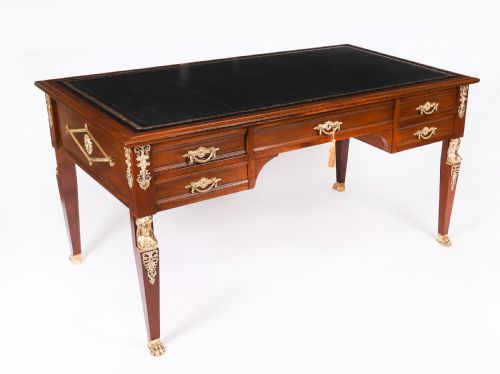
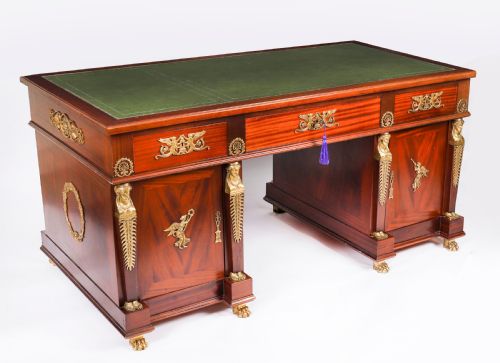
A gilded bronze mounted desk brings together heavy metal fittings and rich timber work from the nineteenth and early twentieth centuries, drawing heavily on French design vocabulary. These pieces take the form of writing tables, bureau plats, and freestanding tables designed to sit in the centre of a room rather than against a wall.
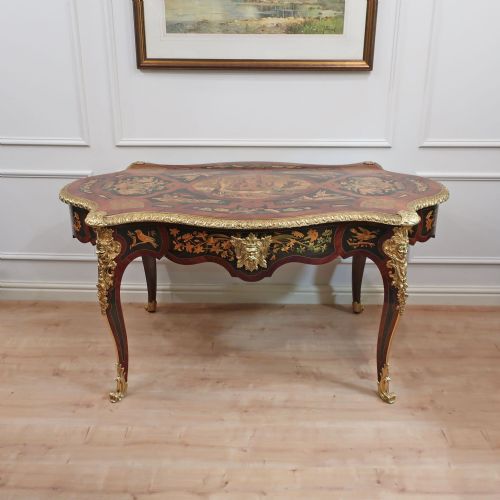
The version most commonly met on this page is the French Louis XV or Louis XVI revival writing table, produced across the nineteenth century and into the early decades of the twentieth. Such pieces combine mahogany or inlaid timber surfaces with cast ormolu mounts framing the drawers and legs.
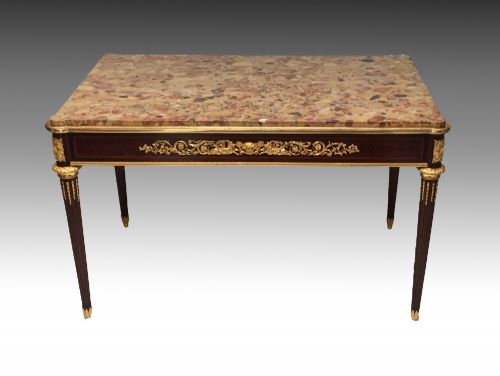
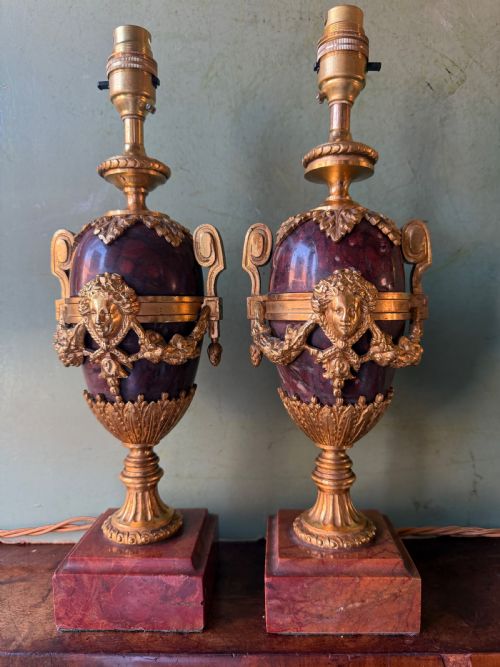
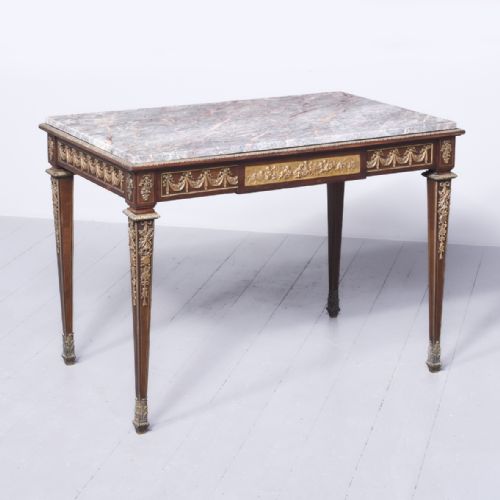
Beyond standard writing desks, the category extends to related furniture forms and decorative items that share the same metal mount vocabulary, including centre tables and lap desks. These pieces reflect enduring European tastes for classical revivalism, executed in mahogany, coromandel, and marble.
Materials and construction
Makers built the foundational carcass using dense timbers such as mahogany or coromandel, often incorporating detailed marquetry or wood inlay across the surfaces. Leather writing panels frequently insert into the top surface, bordered by gilt tooling.
Cast ormolu and gilt bronze mounts define the aesthetic, secured to the timber frame with small pins or screws to accentuate the corners, aprons, and legs. Marble tops appear on specific table and desk variants, adding considerable weight and a cool tactile contrast to the warm metal and wood.
Some nineteenth century makers concealed mystery clocks among the desk mounts to charm guests who checked the time.
Factors of quality
The precision and crispness of the bronze and ormolu casting separate ordinary pieces from the finest examples. Superior mounts retain sharp chased details in the metalwork, whereas lower quality castings appear soft and uniform.
The choice of timber and the complexity of the foundational joinery dictate overall value. Desks constructed with dense mahogany or intricate marquetry inlay, combined with heavy marble tops and thick gilt bronze mounts, represent the upper tier of the range.
The Gilded Bronze Mounted Desk Glossary
- Ormolu
- Gilt bronze applied as a decorative mount to furniture and decorative objects. The technique involves treating brass or bronze with a gold amalgam.
- Bureau plat
- A freestanding writing table fitted with one or more drawers along the frieze. This form gained popularity in France during the eighteenth century and saw extensive revival periods.
- Marquetry
- The art of applying small pieces of veneer to a structure to form decorative patterns. Makers utilised contrasting timbers to achieve pictorial or geometric designs.
- Coromandel
- A dense, dark cabinet wood imported from Asia, prized for its rich grain and contrasting light streaks. It frequently appears on higher grade nineteenth century writing pieces.
Gilded Bronze Mounted Desk: Frequently Asked Questions
Where should a bureau plat go?
A bureau plat functions best as a freestanding piece positioned in the middle of a study or library. Because the back receives the same decorative attention as the front, it does not need to rest against a wall.
Sufficient clearance allows chairs to move freely around the table while keeping the metal mounts visible from all angles.
How do I clean bronze mounts?
Dust bronze and ormolu mounts gently with a dry, soft brush to prevent dirt accumulation in the recessed cast details. Avoid harsh metal polishes that strip away the original gilding.
Professional conservation advice remains necessary if the metal requires deeper cleaning or stabilisation.
What is a bureau plat?
A bureau plat is a flat topped writing table featuring a finished back and drawers fitted into the frieze. It differs from a bureau bookcase by lacking a vertical superstructure.
These tables served administrative and writing functions in formal nineteenth century rooms.
Are these desks good for daily work?
Antique writing desks accommodate modern writing tasks, though leather inserts require care to avoid damage from moisture or heavy pressure. Using a blotter protects the vintage surface.
The height and knee clearance of nineteenth century models generally suit standard seating arrangements.