



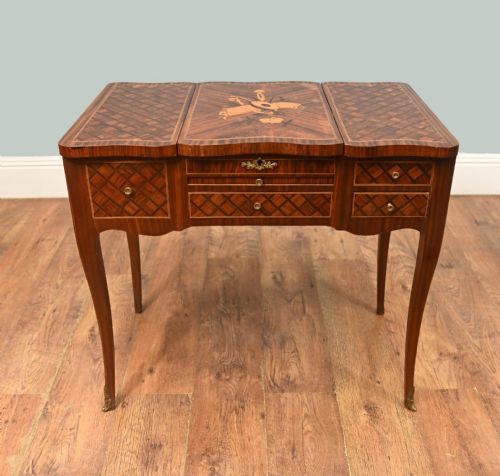
Rosewood Ormolu Desk
A rosewood ormolu desk combines rich dark timber with gilded bronze mounts, offering a sophisticated surface for correspondence and study.
Rosewood Ormolu Desk
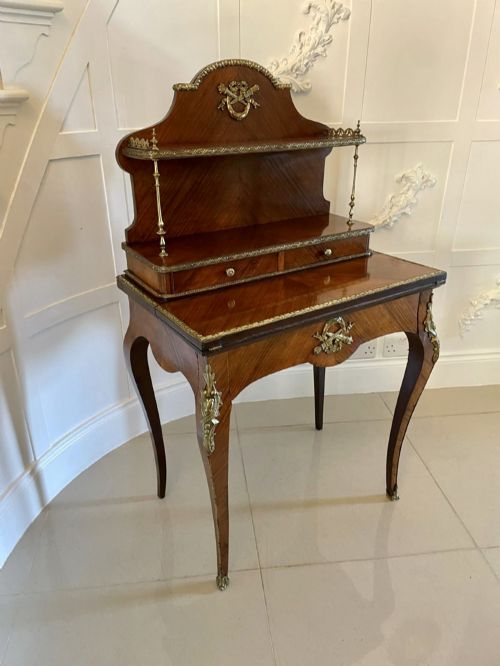
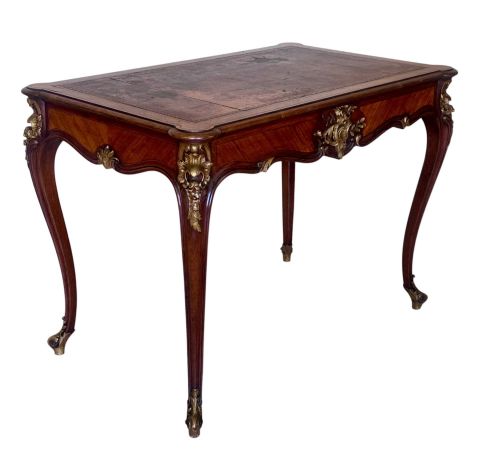
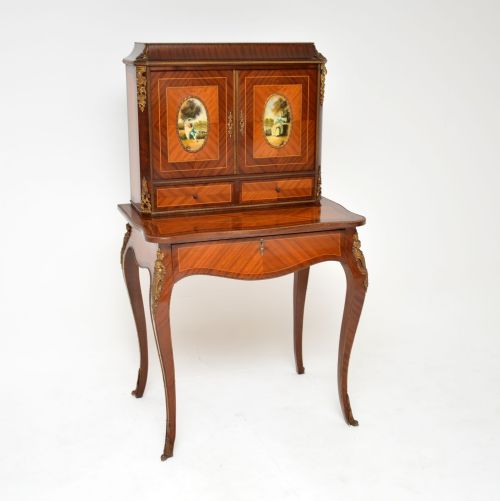
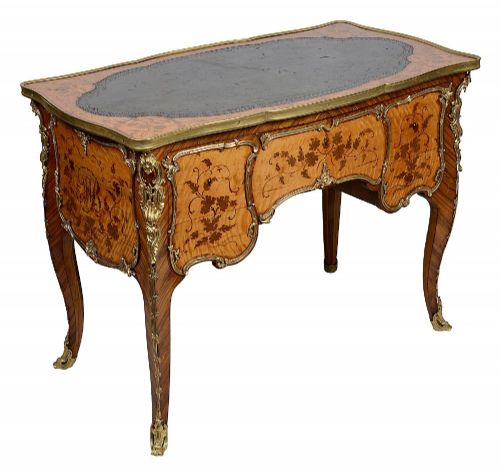
A rosewood ormolu desk encompasses writing tables, bureau de dame forms and bureau plat designs originating predominantly in the nineteenth century. These pieces reflect revival aesthetics, notably the Louis XV style, French Rococo revival and Napoleon III periods, bringing continental elegance to interior spaces.
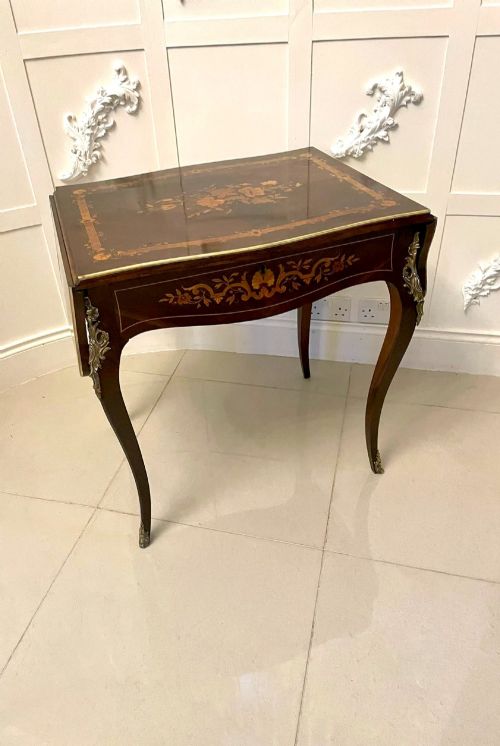
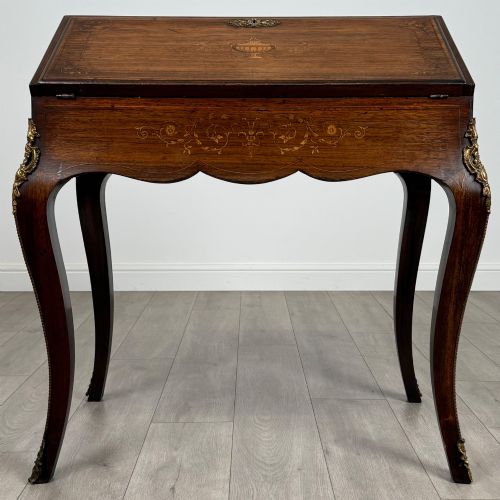
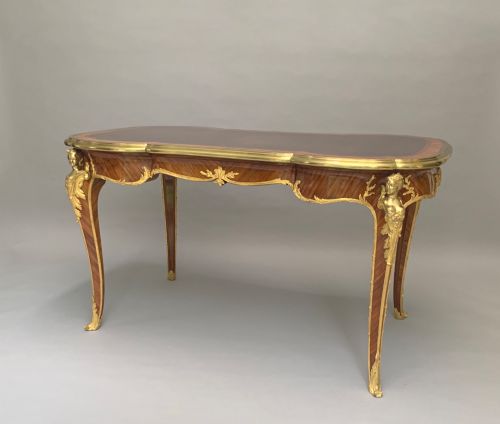
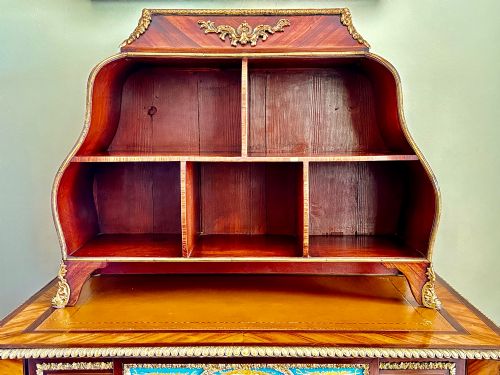
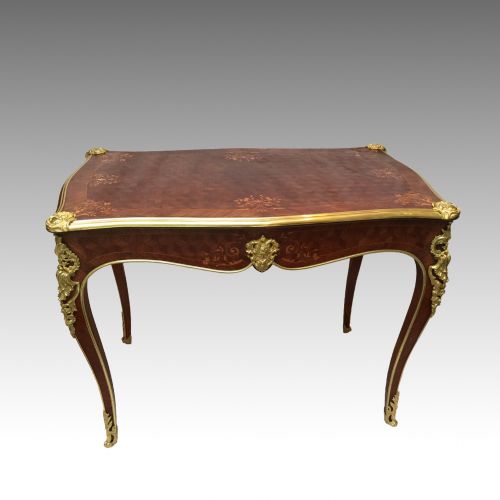
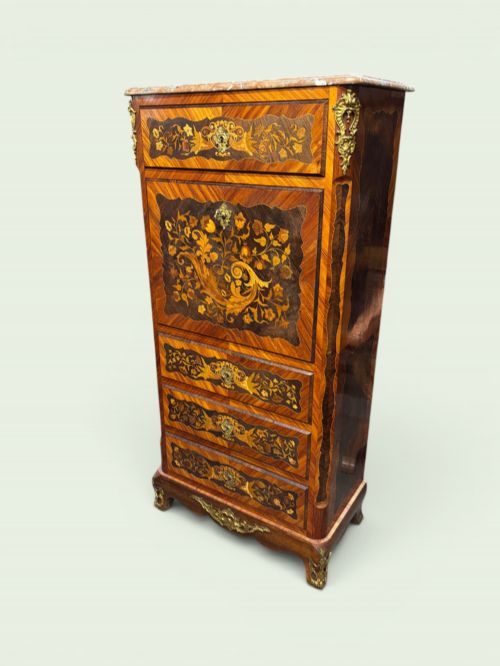
The most common form met on this page is the compact lady's desk or writing table, often detailed with marquetry or parquetry inlay. Alongside these, freestanding centre tables and desktop cartonnier units provide alternative writing and storage solutions utilising the same rich vocabulary of materials.
How they were made
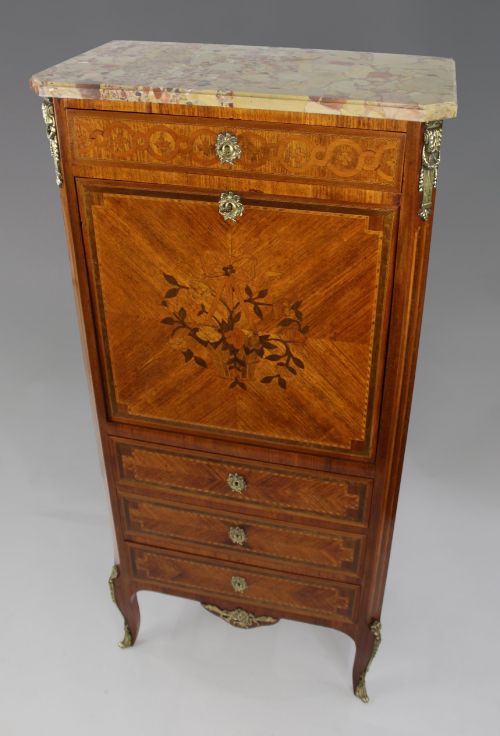
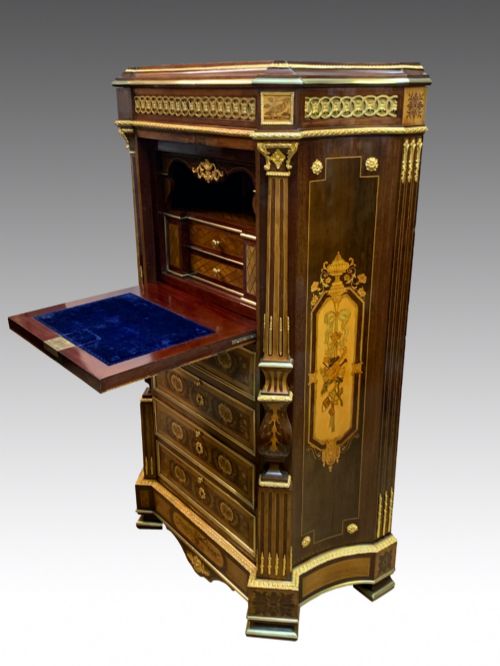
Construction relies on a supportive timber carcass overlaid with dense rosewood, kingwood, tulipwood or satinwood veneers. Floral marquetry patterns and geometric parquetry are meticulously cut and fitted into the surface grain.
Cast ormolu and gilt bronze mounts are applied to corners, legs and drawer edges to accentuate the contours of the piece. Leather writing inserts frequently provide a tactile working surface framed by gilded tooling.
Several desks include secret compartments designed for stashing love letters or keeping family gossip safely out of sight.
What varies in quality
Quality rests in the precision of the cabinetwork and the crispness of the cast bronze mounts. Finer examples display deeply chased ormolu details that fit snugly against the timber contours without gaps.
The complexity and execution of the marquetry define the upper tier of production. Subtle shading in the fruitwood veneers and balanced, symmetrical grain patterns distinguish superior workshop output from simpler commercial variants.
Francois Linke·Maison Krieger·CH. Jeanselme and Co
The Rosewood Ormolu Desk Glossary
- Ormolu
- Gilded bronze used for decorative mounts and accents on furniture. This technique creates a bright metallic contrast against dark timbers.
- Marquetry
- Decorative patterns formed by inlaid pieces of wood veneer arranged on a solid ground. It often depicts floral or symmetrical motifs.
- Bureau Plat
- A freestanding writing table fitted with drawers beneath the top. This form became popular during the Louis XV period.
- Bonheur Du Jour
- A small light lady's writing desk featuring a tiered superstructure with shelves or small drawers. The name translates from French as daylight happiness.
- Cartonnier
- A desktop filing cabinet or set of an-shaped compartments for papers. It frequently matches the materials of an associated writing table.
Rosewood Ormolu Desk: Frequently Asked Questions
How do I care for rosewood surfaces?
Keep the timber away from direct sunlight and excessive heat sources to prevent the natural oils from drying out. Dust regularly with a soft, dry cloth and avoid silicone polishes.
Apply a microcrystalline wax periodically to nourish the veneer and maintain a gentle sheen. Ensure spills are wiped immediately to protect the polished finish.
Where were these desks made?
The majority of these pieces originate from nineteenth-century French workshops and cabinetmakers working in revival styles. Paris served as the primary centre for this specialised furniture production.
English makers also adopted these continental forms during the Victorian era, utilising imported tropical hardwoods. Stylistic markers and construction methods typically indicate the likely regional origin.
What is a bureau de dame?
A bureau de dame is a small ladies' writing desk designed for private correspondence and personal paperwork. These compact forms usually feature a sloping writing flap or a flat top with integrated drawers.
They were intended for intimate sitting rooms rather than formal libraries. Their refined proportions suit smaller interior spaces while retaining decorative presence.
How do I identify Louis XV style?
Louis XV style furniture is characterised by asymmetrical curved lines, cabriole legs and organic rococo motifs. Ormolu mounts typically take the form of scrolling foliage and floral cascades.
Surfaces often feature intricate floral marquetry rather than strict geometric parquetry. The overall silhouette avoids straight lines in favor of flowing serpentine contours.