


Sevres Plaque Desk
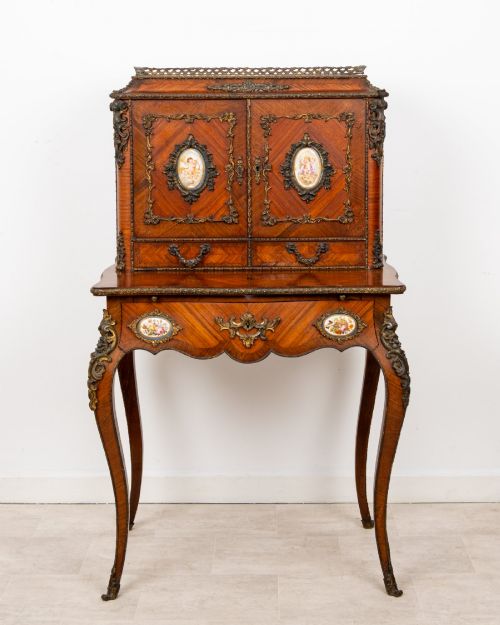
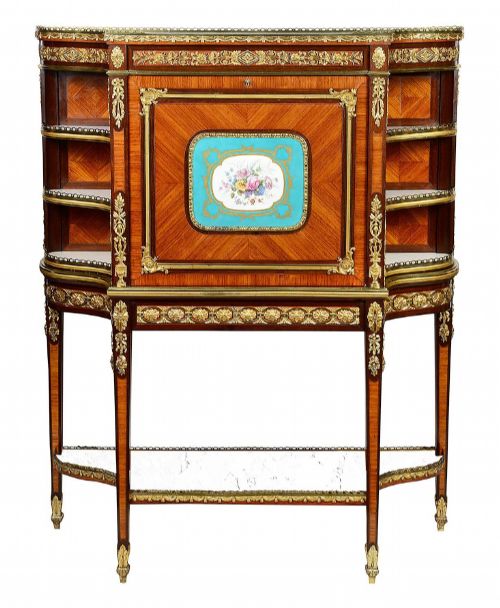
These sevres plaque desk pieces combine fine cabinetry with painted porcelain panels, offering a tangible link to nineteenth-century French revival design.
What a sevres plaque desk is
When searching for a sevres plaque desk, you are looking at nineteenth-century writing furniture incorporating porcelain panels. The common forms seen here include the bonheur du jour and the bureau plat, often drawing on Louis XV and Louis XVI revival styles.
Makers in London and France produced these pieces during the Victorian and Edwardian periods, frequently mounting porcelain plaques into kingwood, walnut, rosewood, and ebonised timber.
The desks range from compact writing cabinets with small superstructures to larger flat-topped tables designed for formal reception rooms.
How they were made
Cabinetmakers built the carcass frames using dense hardwoods like kingwood, walnut, and rosewood, sometimes employing ebonised wood or amboyna for contrasting surfaces. Leather inserts frequently formed the writing surface of the bureau plat designs.
Gilt bronze or ormolu mounts were cast and chased to frame the porcelain plaques and edge the desk borders, securing the ceramic panels into the wooden structure. The porcelain plaques themselves were painted with pastoral scenes or floral motifs in imitation of the Sevres factory style.
Retail Price Guide 2026
Typical UK retail prices for sevres plaque desk, calculated from the Sellingantiques database of over a million retail prices indexed since 2003. This retail price guide relies exclusively on Sellingantiques data; no external sources or auction records are used, so the figures do not describe the wider market.
Materials documented across the collection include porcelain, ormolu, kingwood, leather, marble, walnut, ebonised wood, and rosewood.
What varies in quality
The refinement of the ormolu casting largely dictates the quality tier of the piece, with crisply chased mounts standing apart from softer, simpler brass edgings. The precision of the cabinetwork in the kingwood or walnut veneers also marks the distinction between standard production and top-tier workshop output.
The hand-painted detail on the porcelain plaques creates another clear division in grade. Finer ceramic panels show meticulous brushwork and depth of colour, whereas lesser examples rely on simpler, flatter decoration.
Blake London·Edwards and Roberts·Linke
The Sevres Plaque Desk Glossary
- Ormolu
- Gilt bronze mounts used extensively on nineteenth-century French revival furniture. This technique involved applying gold to a bronze base to provide decorative trim.
- Kingwood
- A dense, beautifully figured timber favoured by cabinetmakers for decorative veneers. It was frequently used in French-style desks alongside ormolu mounts.
- Bonheur du jour
- A small ladies writing desk featuring a small cabinet or superstructure on the top. These pieces often incorporate drawers and porcelain plaques.
- Bureau plat
- A flat-topped writing table, usually freestanding with drawers in the frieze. This form gained popularity during the Louis XV and Louis XVI periods.
- Secretaire abattant
- A tall writing cabinet featuring a drop-down flap that conceals an interior fitted with small drawers and compartments.
Frequently Asked Questions
What is a sevres plaque desk?
It is a nineteenth-century writing desk adorned with painted porcelain panels, usually produced in French revival styles.
These pieces utilise timber frames such as kingwood and walnut, finished with ormolu mounts.
How do I identify the period?
Examine the timber species, construction methods, and the style of the revival ornament. Nineteenth-century pieces often reflect Louis XV or Louis XVI designs.
Maker marks and specific hardware styles can also help narrow down the date of manufacture.
Where were these desks made?
Many were made in France during the nineteenth century, while prominent London cabinetmakers also produced similar pieces.
English firms frequently adopted French revival aesthetics for their high-end clientele.
How should I care for the wood?
Keep the timber away from direct sunlight and maintain stable humidity levels to protect the veneers. Dust gently with a dry cloth.
Avoid harsh chemical polishes that might damage the polished finish or the ormolu mounts.