


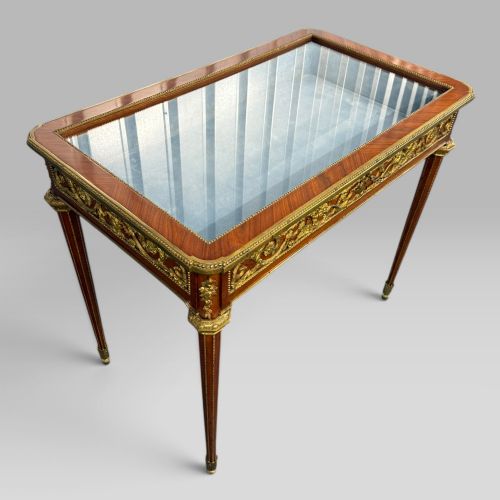
Ormolu Glass Cabinet
When you search for an ormolu glass cabinet, you are looking for timber and metal display pieces designed to show off valuables.
Ormolu Glass Cabinet
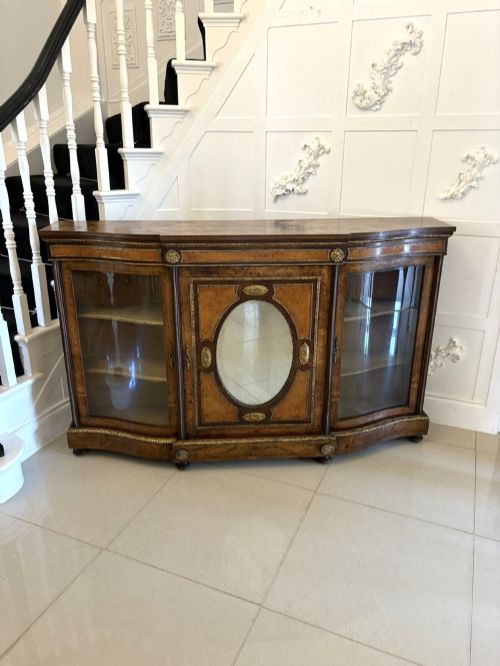
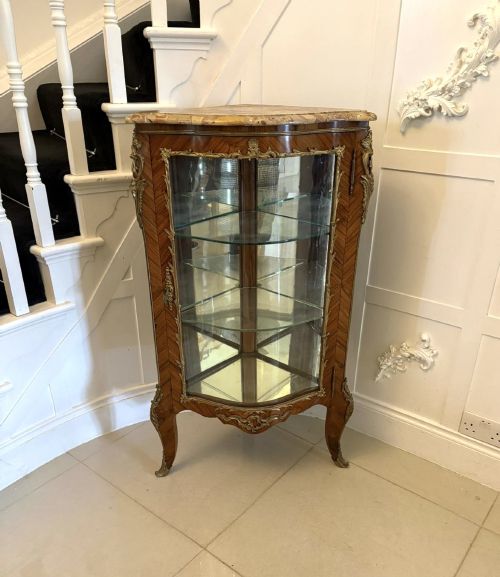
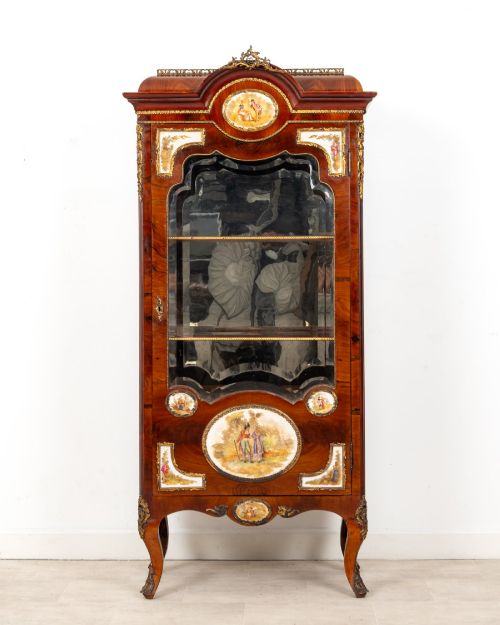
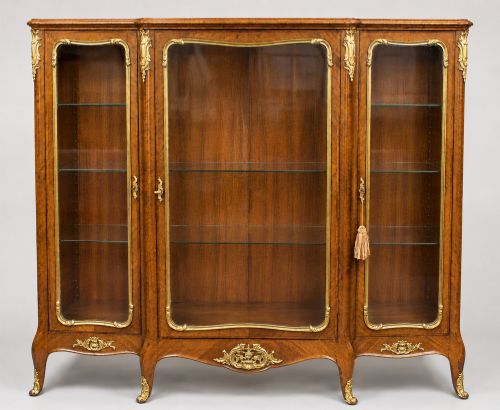
An ormolu glass cabinet combines transparent glazed panels with gilt-metal mounts, originating mainly in Victorian England and continental France. These pieces serve primarily to exhibit porcelain, small sculptures and collectables while introducing decorative metalwork into a room.
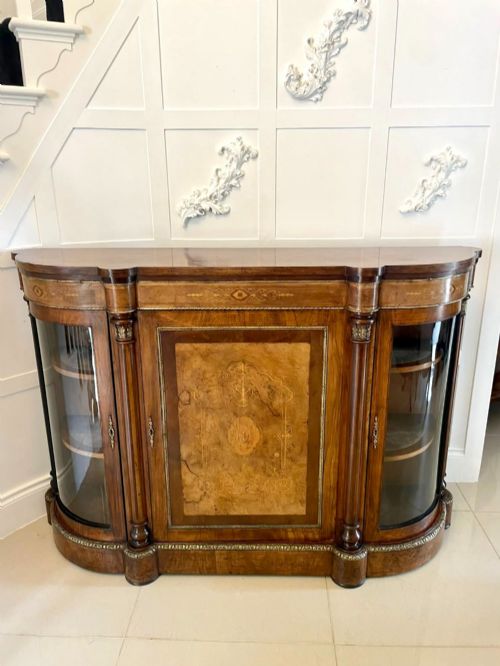
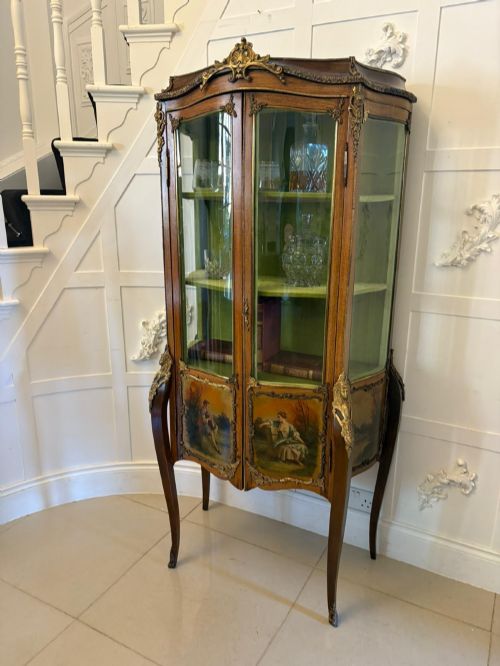
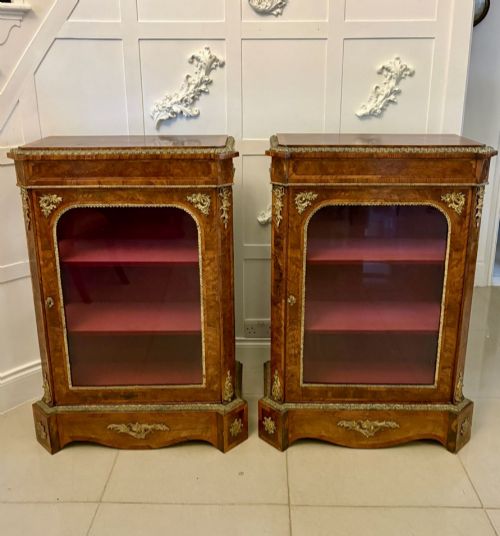
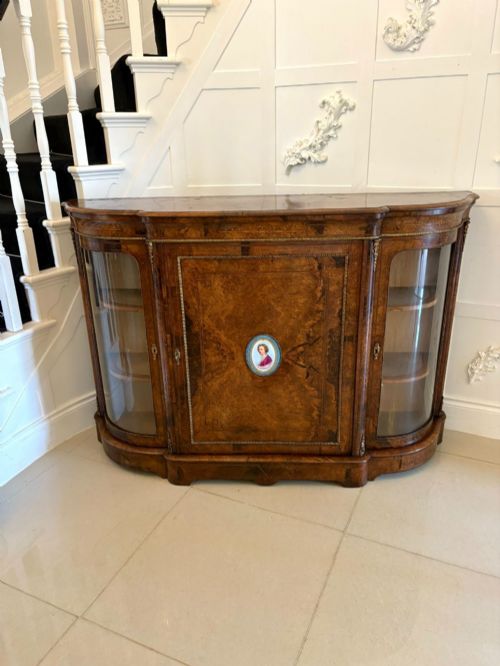
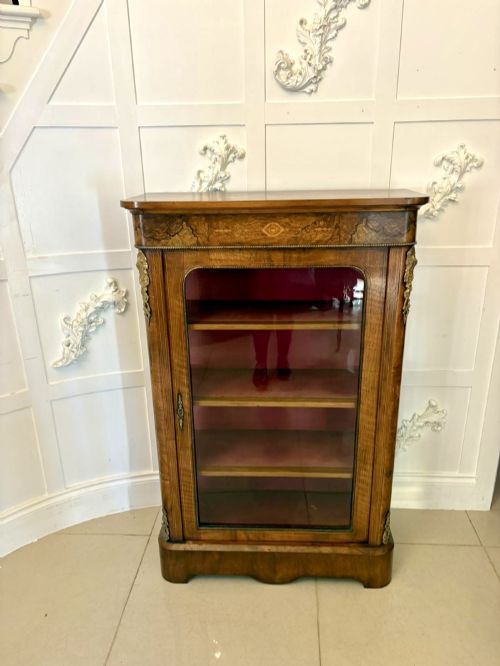
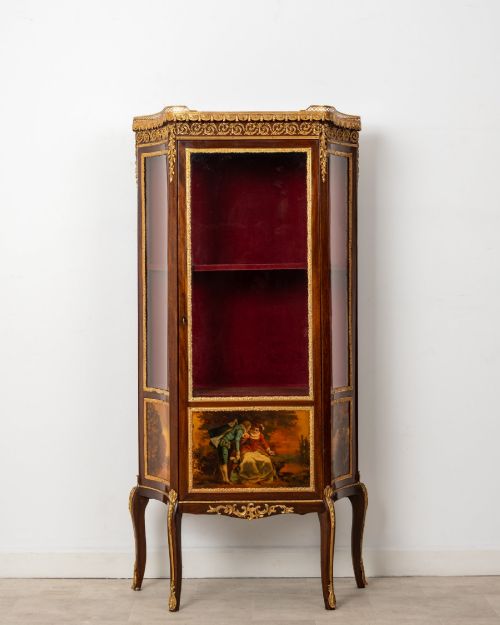
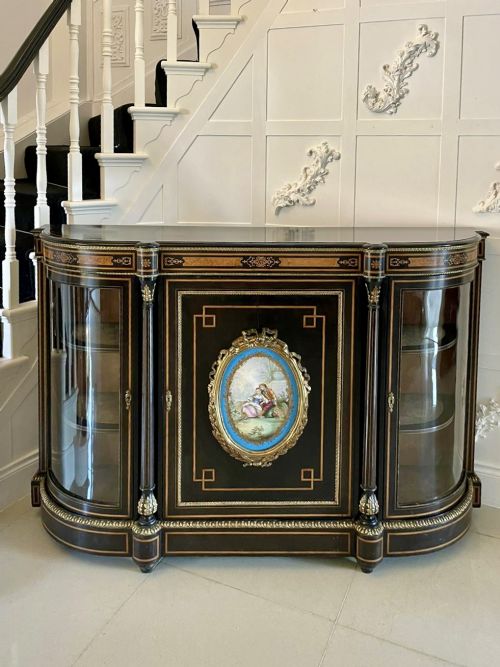
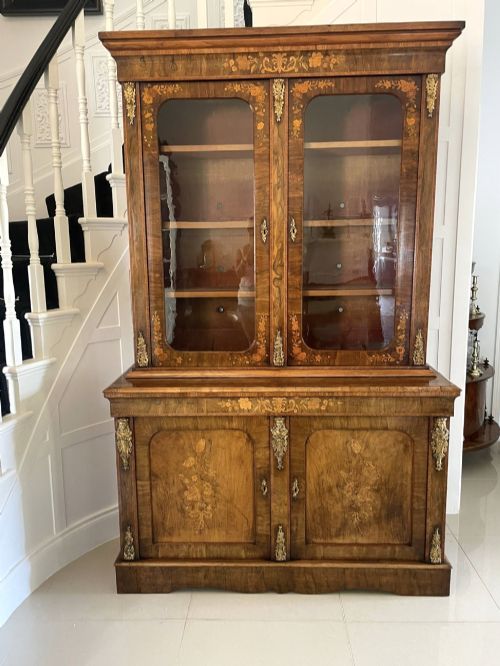
The dominant forms on this page include serpentine credenzas, tall vitrines, pier cabinets and low side cabinets. French models often lean towards Louis XV and Louis XVI revivals with marble tops, whereas English pieces frequently utilise burr walnut with marquetry inlay.
Buyers encounter items spanning the nineteenth century, including specific dates such as 1860, 1870, 1880, 1890 and 1900. These range from compact single-door pier cabinets to large multidoor bookcase combinations.
How they were made
Makers built carcass structures from primary timbers like mahogany, walnut, kingwood and amboyna, often over softwoods, then applied decorative veneers such as burr walnut in geometric or floral marquetry patterns.
Gilt-bronze or ormolu mounts were cast and chased by hand before being fixed to corners, friezes and feet with brass screws, framing the glass doors and curved side panels.
Marble tops in white or coloured varieties were worked to fit the serpentine or rectilinear contours of French vitrines and credenzas, providing a heavy, durable surface.
Listings feature eighteenth and nineteenth-century revivals including Louis XV and Louis XVI styles alongside Victorian walnut and mahogany forms.
What varies in quality
The crispness and depth of the ormolu chasing define the upper tier of production, where metal mounts show sharp relief rather than soft, cast-flat contours.
Timber selection and marquetry precision dictate value, with tightly figured burr walnut and intricate floral inlay marking out superior cabinet work against plain veneer.
Integration of the glass and framing reveals maker skill, seen in curved bevelled glass panes that fit snugly without strain into heavily moulded doors.
François Linke·H. J. Hatfield & Sons·Maison Gagneau
The Ormolu Glass Cabinet Glossary
- Ormolu
- Gilt-bronze mounts applied to furniture. The technique involves coating bronze with a mercury and gold amalgam before heating.
- Vitrine
- A glass-fronted display cabinet. It allows light to reach items stored on interior shelves from multiple angles.
- Marquetry
- Inlaid wood veneers forming decorative patterns. Craftsmen piece together different timber species to create floral or geometric designs.
- Credenza
- A low side cabinet or sideboard. Nineteenth-century examples often feature central glazed doors flanked by curved side compartments.
- Pier cabinet
- A narrow freestanding cabinet designed for placement against a wall space between windows. These are typically single-door Victorian items.
- Vernis Martin
- A simulated Japanese lacquer technique developed in France. It uses translucent varnishes over painted panels depicting pastoral scenes.
Ormolu Glass Cabinet: Frequently Asked Questions
What is an ormolu glass cabinet used for?
These cabinets were originally manufactured to protect and display delicate porcelain, silver and miniature ornaments in formal reception rooms. The glass panels and mirrored backs ensured that objects could be viewed easily from various angles in daylight or candlelight.
Today, collectors use them for the same purpose, placing them in drawing rooms or dining spaces to hold curated displays of small antiques and ceramics.
How do I tell English and French cabinets apart?
English pieces from the Victorian era frequently feature dark burr walnut with marquetry inlay and rectangular or serpentine shapes. They often take the form of pier cabinets or low credenzas with porcelain plaque mounts.
French pieces from the nineteenth century more commonly utilise kingwood or mahogany, accompanied by heavier ormolu mounts, Vernis Martin painted panels and inset marble tops reflecting Louis styles.
Are the marble tops original?
Marble tops on French vitrines and credenzas were designed as an integral part of the piece, shaped to match the serpentine or breakfront contours of the timber carcass. They provide a stable, heat-resistant surface above the display area.
Inspect the underside and edges of the stone to check that it sits flush against the wood moulding without modern adhesive or replacement shims.
How do I care for ormolu mounts?
Ormolu mounts require gentle dusting with a soft, dry brush to prevent dirt from settling into the chased recesses of the gilt bronze. Avoid using metal polishes or harsh chemical cleaners, as these strip away the original fire gilding.
Keep the timber and metal away from direct sunlight and heat sources to prevent the veneers from drying out and the mounts from loosening over time.