


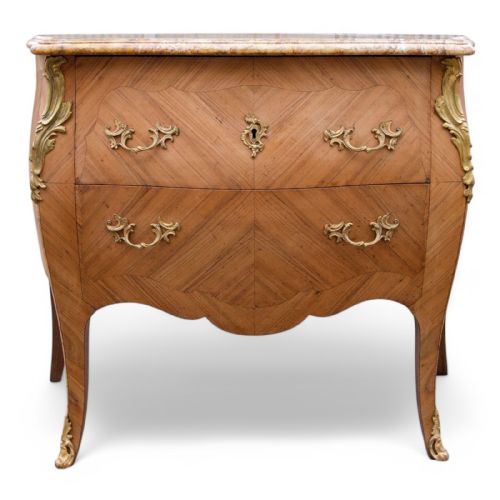
French Bombe Cabinet
A french bombe cabinet brings undulating curves and elaborate mounts into a room, offering both storage and a distinct silhouette.

French Bombe Cabinet
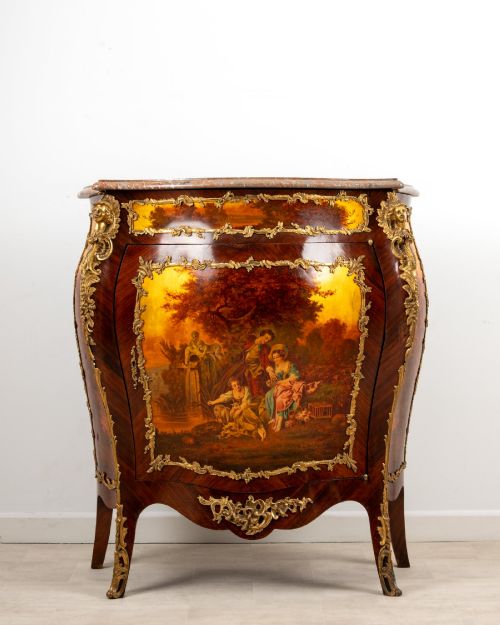
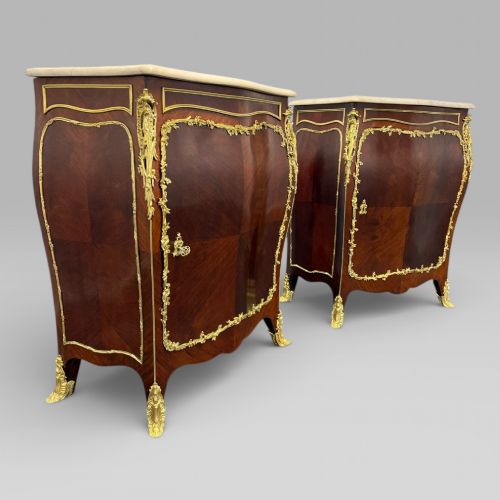
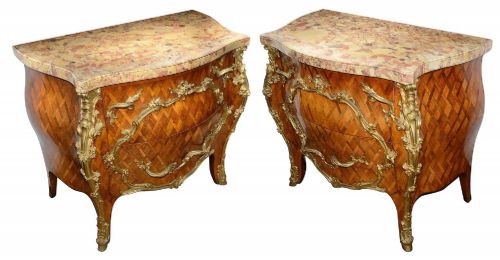
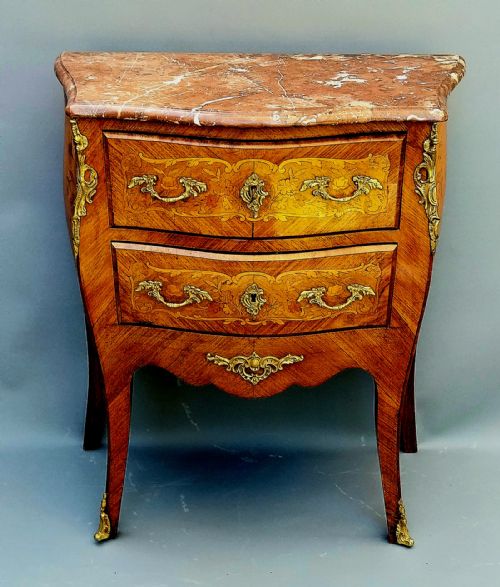
A french bombe cabinet displays the characteristic swelling, convex curves of the Rococo Revival and Louis XV styles, shaped to catch the light on polished wooden surfaces. These pieces emerge predominantly from the nineteenth century, ranging from bedside commodes to large display cabinets.
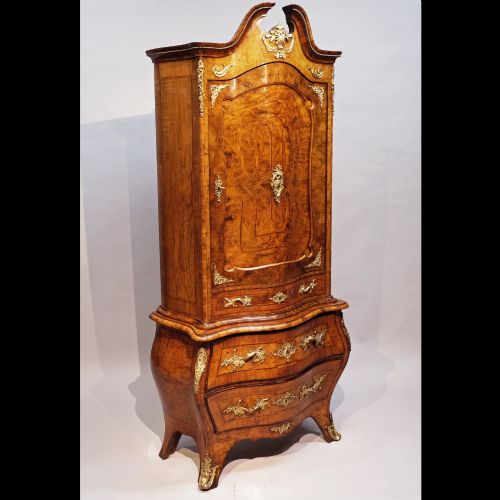
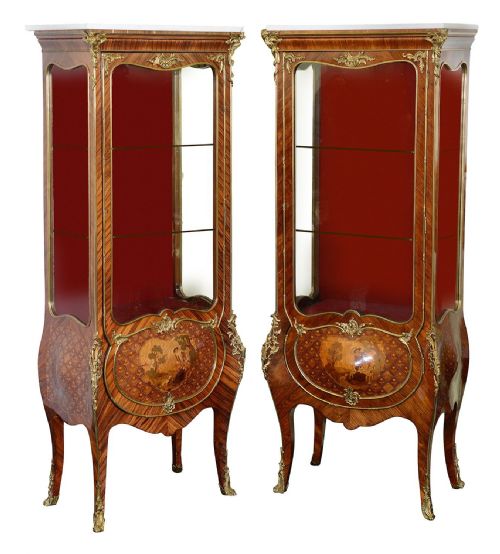
The form appears most frequently as a commode or chest of drawers, though vitrines and side cabinets also surface regularly. Walnut and kingwood dominate the structures, often paired with marble tops and decorative mounts.
Makers drew heavily upon eighteenth-century French design principles, producing revival pieces that emphasise sweeping lines and symmetrical ornamentation. Buyers seeking this phrase encounter a mix of compact bedside tables and taller display vitrines.
How they were made
Craftsmen shaped these carcasses using dense hardwoods like walnut and kingwood, frequently applying intricate marquetry and parquetry veneers across the swelling panels. The curved profile required meticulous carpentry to maintain structural integrity while achieving the signature bulging silhouette.
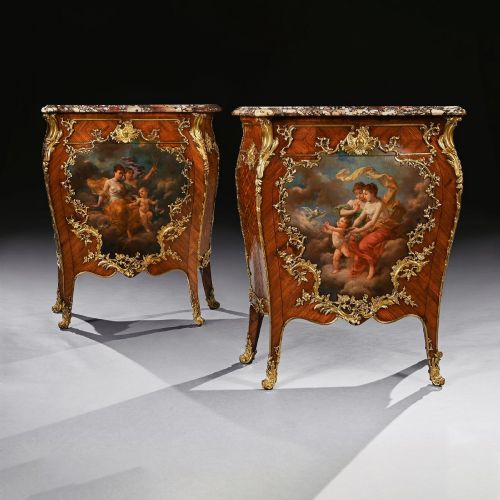
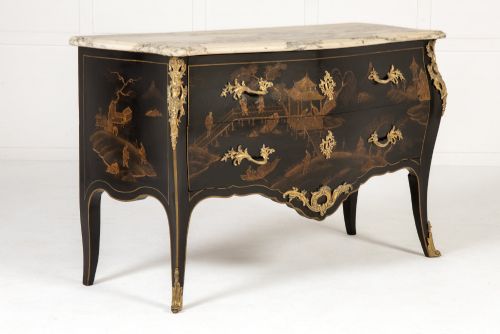
Gilt bronze and ormolu mounts were cast and chased to accent the corners, handles, and apron, framing the wooden contours. Marble slabs were cut and polished to fit precisely onto the undulating upper surface of commodes and cabinets.
Vernis Martin lacquer techniques appear on select pieces, imparting a glossy painted finish that emulates Asian screens popular in European interiors. Brass details and glass panels complete the construction of vitrines and display cabinets.
Some nineteenth-century makers even added carved lion paw feet to let a stately beast hold up your bedside novel.
What varies in quality
The precision of the veneer work and the depth of the marquetry patterns separate standard production from finer examples. Artisans who aligned wood grains meticulously across complex curves achieved a cohesion that lesser pieces lack.
The weight and crispness of the ormolu or gilt bronze mounts indicate the workshop standard. Hand-chased mounts with sharp detail outclass lighter, cast fixtures that show softer edges and simpler finishing.
The quality of the marble top, its thickness, and the matching of the stone to the cabinet contour determine the overall execution. Interior construction, dovetailing, and the selection of secondary timbers reveal the attention paid by the original maker.
E. Kahn·Gouffel·Zweiner
The French Bombe Cabinet Glossary
- Bombe
- A swelling, convex shape characteristic of French furniture from the Rococo period and later revivals. This bulging contour requires advanced woodworking skill.
- Ormolu
- Gilt bronze mounts applied to furniture edges, corners, and feet. These decorative elements highlight the curved lines of the piece.
- Vernis Martin
- A type of simulated Japanese lacquer developed in France during the eighteenth century. It creates a lustrous, painted finish often seen on cabinets and commodes.
- Marquetry
- Inlaid patterns of wood veneers applied to furniture surfaces to create pictorial or geometric designs. Artisans cut various timber species to fit tightly together.
- Commode
- A low chest of drawers, frequently fitted with a marble top in nineteenth-century French designs. The term covers various storage forms with doors or drawers.
- Vitrine
- A glass-sided display cabinet designed to showcase porcelain or small objects. These tall pieces often feature bombe lower sections.
French Bombe Cabinet: Frequently Asked Questions
How do I date a french bombe cabinet?
Dating relies on timber selection, construction methods, and stylistic cues such as the specific revival movement present. Most pieces on this market originate from the nineteenth century, drawing on earlier eighteenth-century designs.
Hardware styles, secondary woods, and the execution of the veneer work provide further clues to the manufacturing decade.
Are marble tops original?
Marble tops on these commodes and cabinets were typically fitted during initial production to follow the exact contour of the wooden carcass. They provide a durable surface that contrasts with the warm tones of kingwood or walnut.
Inspecting the edge profile and the fit against the ormolu mounts helps confirm the relationship between stone and cabinet.
Where should I place a bombe cabinet?
The curved silhouette and decorative mounts make these pieces suitable as focal points in hallways, living rooms, or bedrooms. Compact versions serve well as bedside tables or smaller side storage.
Because the sides swell outward, they require adequate floor space rather than tight alignment against flat walls.