



Original Paper Watercolour Painting
An original paper watercolour painting captures a fleeting effect of light or place with fluid pigments on paper, offering an intimate record of an artist's direct observation.
Original Paper Watercolour Painting
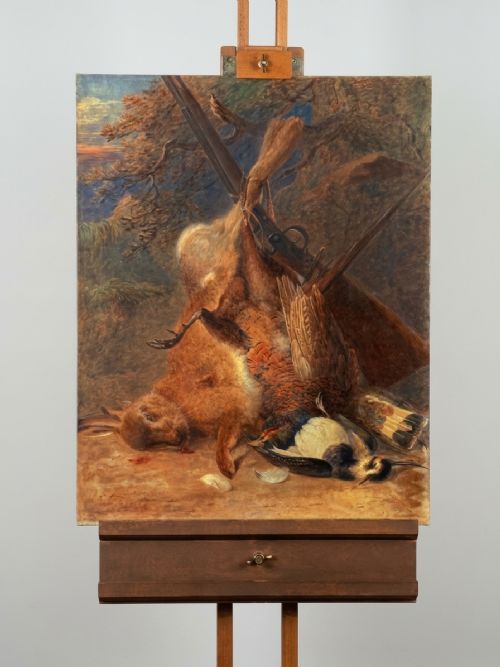
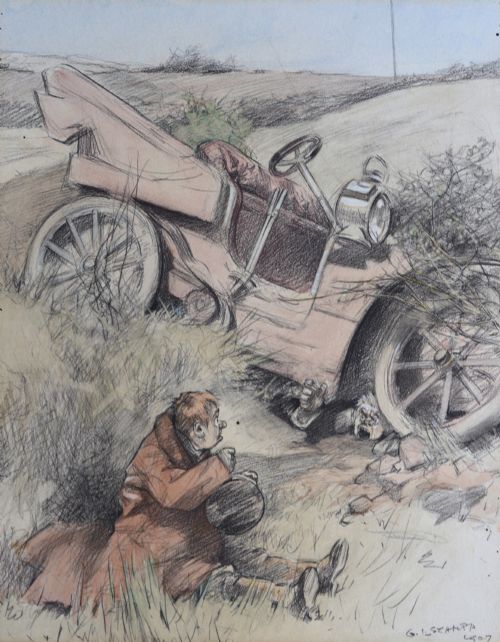
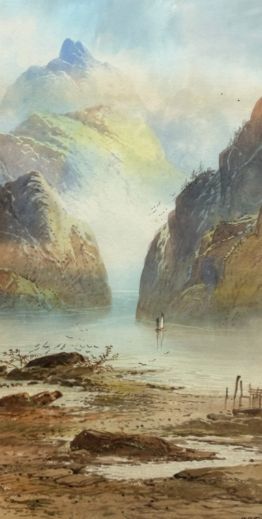
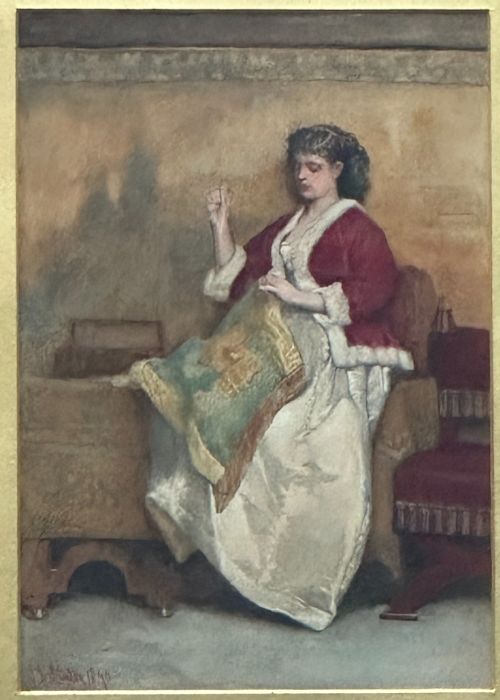
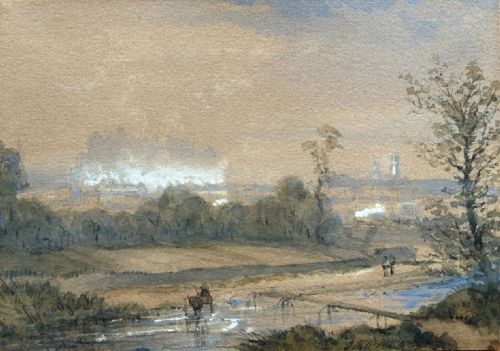
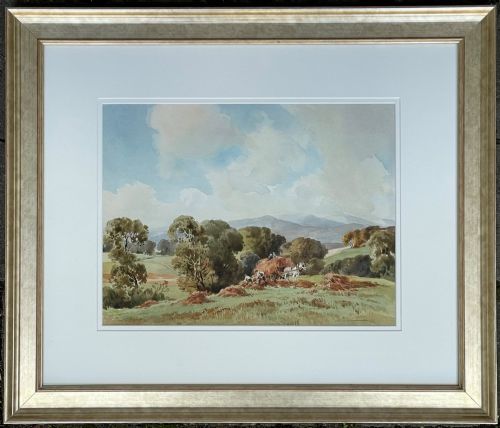
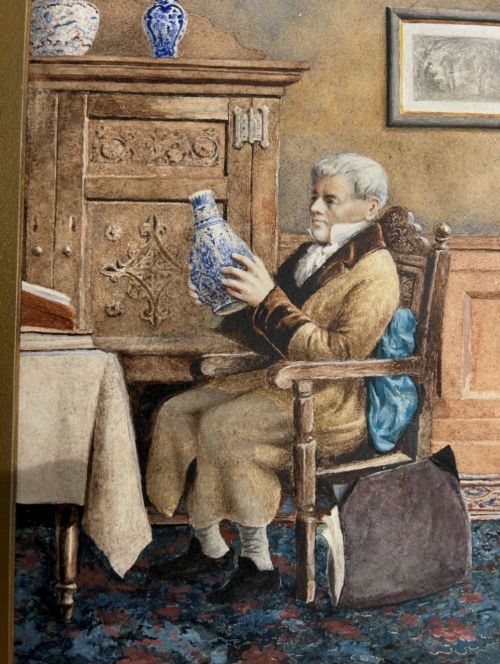
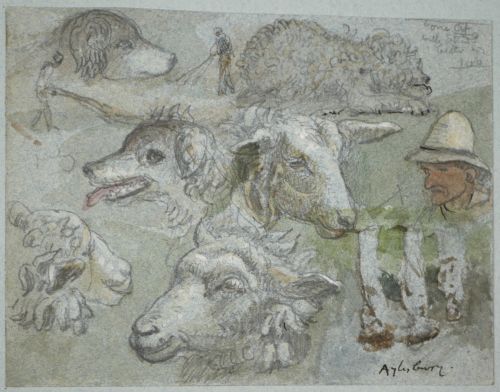
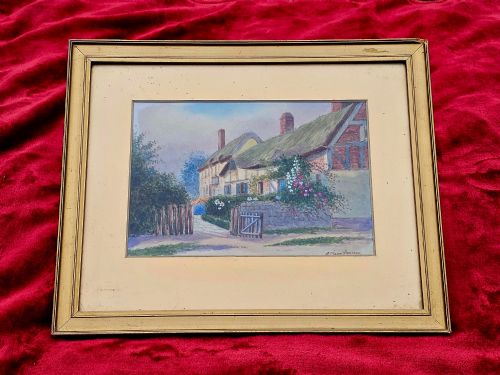
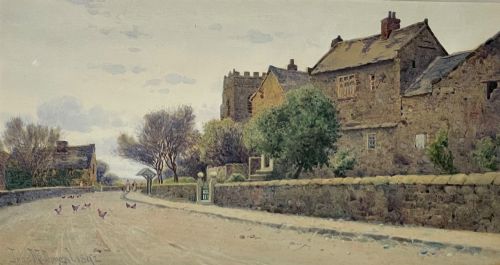
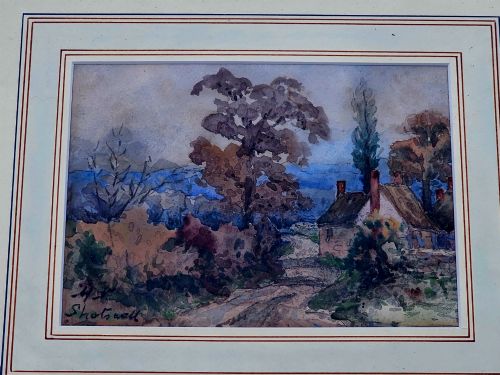
An original paper watercolour painting represents a diverse range of subjects created by artists from the nineteenth and twentieth centuries, encompassing landscapes, coastal scenes, portraits, and botanical studies. Buyers browsing this selection frequently encounter Victorian and Edwardian framed artwork alongside early twentieth-century British impressionism and mid-century modern pieces.
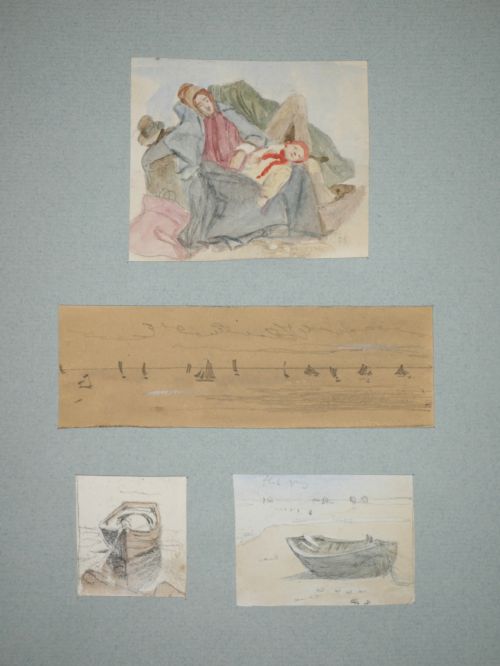
The inventory includes finished exhibition-scale watercolours, intimate landscape sketches, intricate wallpaper designs, and delicate miniature portraits housed in paper mache frames. Many works bear signatures or attribution to notable British and European painters, documenting regional scenes from Scottish highlands to Venetian canals.
Pigments and Supports
These works rely primarily on water-soluble pigments applied to various paper supports, occasionally augmented with bodycolour, ink, graphite, or wash to add opacity and fine detail. Artists utilised specialised surfaces including laid paper, buff paper, rice paper, and pith paper, sometimes selecting embossed sheets carrying manufacturer watermarks.
Framed behind glass, these paintings preserve the delicate interaction between translucent watercolours and the underlying texture of the paper. Support materials range from lightweight sheets intended for sketchbooks to robust boards designed for formal exhibition.
Wallpaper design studies in the collection reveal the commercial application of watercolour techniques in nineteenth and early twentieth-century interior decoration.
Judging Quality and Execution
Quality in an original paper watercolour painting depends upon the surety of the brushwork and the artist's ability to retain the luminosity of the paper beneath translucent washes. Superior examples demonstrate confident handling of light and atmosphere without excessive overworking of the pigment.
The preservation of the sheet significantly influences the standing of a piece, with top-tier examples maintaining vibrant pigment saturation and minimal fading from historical exposure to light. Provenance, legible signatures, and detailed contemporary documentation further elevate the status of individual works.
George Sydney Shepherd·George Lorain Stampa·James Orrock·William Henry Earp·Sir James Dromgole Linton·John R Prentice·Thomas Ellison·Alfred Young Nutt·Percy Lancaster·Henry Stacy Marks·James Smetham·A Marie Parsons·John McDougal·Robert Leslie Howey·James E Aitken·William Joseph Boyes·Henry Silkstone Hopwood·Muriel Metcalfe·John Smith Atherton·Henry de Waroquier·Th Thibault·Hector Caffieri·Richard Henry Wright·Thomas Maidment·Alfred G Morgan
The Original Paper Watercolour Painting Glossary
- Bodycolour
- Watercolour paint mixed with Chinese white to produce an opaque, gouache-like effect. This technique allows artists to introduce pale highlights and solid areas of colour over transparent washes.
- Laid paper
- Paper featuring a grid of fine parallel lines and wider spacing lines created by the wire mesh of the handmade paper mould. It provides a textured surface favoured by artists for ink and wash studies.
- Pith paper
- A delicate material derived from the pith of the Tetrapanax papyrifer plant, commonly used in nineteenth-century Chinese export watercolours. It possesses a velvety, absorbent texture that yields unique brilliant colour saturation.
- Grisaille
- A painting executed entirely in shades of grey, neutral grey, or monochromatic monochrome. Artists utilised this method to create monochromatic studies resembling low-relief sculpture.
- Provenance
- The documented history of ownership of an artwork, establishing its authenticity and chain of custody from the artist's studio to the present collection.
Original Paper Watercolour Painting: Frequently Asked Questions
What is an original paper watercolour painting?
An original paper watercolour painting is a unique artwork created by applying pigment suspended in water directly to a paper support by hand. Unlike prints or reproductions, each brushstroke is singular and executed directly by the artist.
These pieces capture transient effects of light and weather with a transparency unique to the medium. Collectors value them for their direct connection to the artist's hand and observation.
How should I frame and hang these paintings?
Watercolours on paper require careful framing behind protective glass to shield the delicate pigments from atmospheric pollutants and physical damage. Acid-free window mounts should be used to prevent the paper from touching the glass directly.
Display these works away from direct sunlight and strong artificial heat sources to prevent fading and paper degradation over time. Proper conservation framing ensures the longevity of antique paper supports.
How do I identify the period of a watercolour?
Period identification relies on examining the paper watermark, framing style, costume details in figurative subjects, and the specific palette favoured by artists of a given era. Nineteenth-century works often feature heavy laid or woven papers with distinct tonal washes.
Signatures, dates inscribed on the reverse, and exhibition labels provide definitive chronological markers. Stylistic clues, such as the brushwork characteristics of Victorian marine art or Edwardian landscapes, also help date the piece.
How were nineteenth-century watercolours created?
Artists typically prepared their compositions with light graphite underdrawing before applying transparent washes of watercolour pigment onto damp or dry paper. They used specialised sable or hog-hair brushes to achieve fine linear details and broad atmospheric washes.
Some painters enhanced their works with bodycolour or gum arabic to create areas of opacity and glossy sheen. These techniques allowed for rapid outdoor sketching as well as highly finished studio exhibition pieces.