





Coastal Watercolour Scene
A coastal watercolour scene captures the motion of tides and the salt air of harbours across the nineteenth and twentieth centuries.
Coastal Watercolour Scene
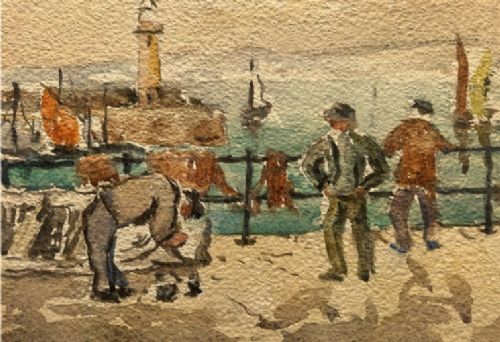
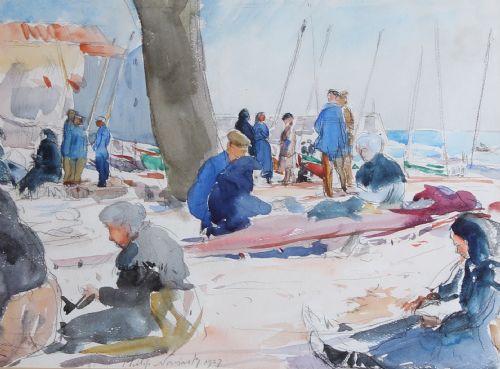
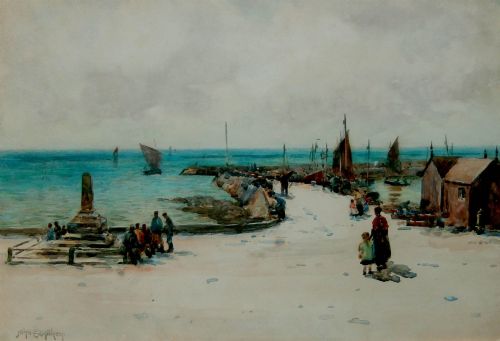
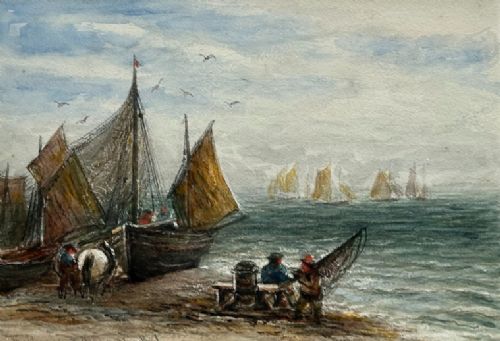
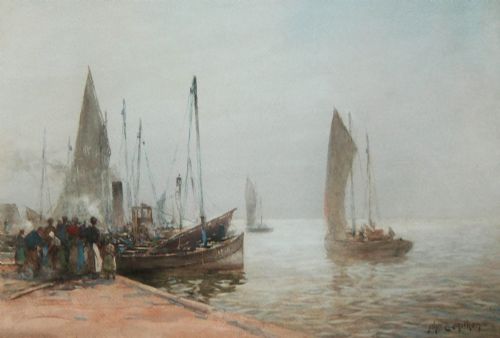
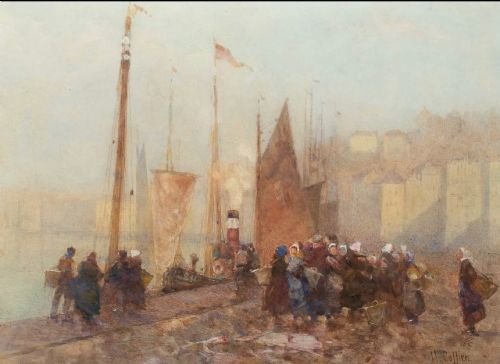
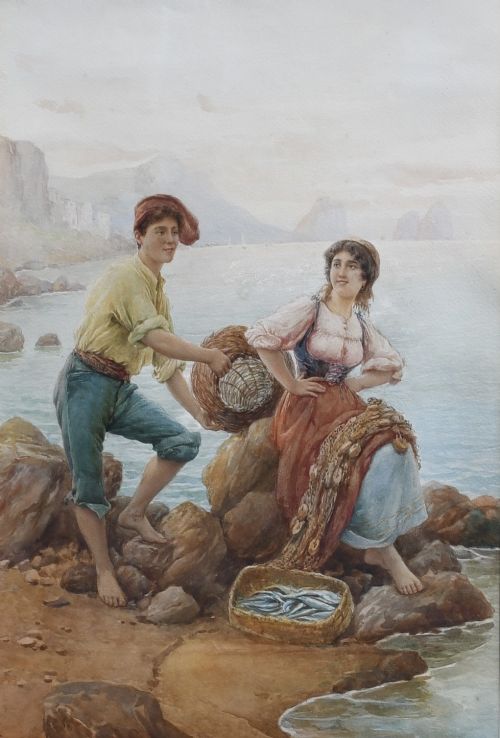
A coastal watercolour scene brings together maritime views, fishing ports, and tidal harbours executed on paper using pigment and water. The works span from Victorian depictions of British and European shores up to mid-century modern interpretations.
Most examples date between the late nineteenth century and the interwar period, reflecting regional artist colonies in places such as St Ives, Whitby, and various European coastal towns. Subjects range from bustling fishing docks to quiet estuaries and open seascapes.
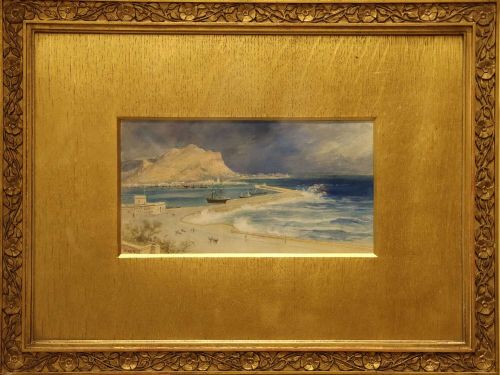
Framed behind glass with wooden mouldings, these paintings preserve the delicate medium of watercolour through generations. They offer an intimate record of maritime life, local craft, and changing light along the coast.
How they were made
Artists applied water-soluble pigments onto textured paper, occasionally heightening details with gouache or bodycolour to add opacity to waves and foam. The transparency of the wash allowed the natural tone of the paper to act as a source of light within the composition.
Pigments were worked with varied brushstrokes, from loose, impressionistic washes capturing sky and water to precise line work defining rigging and architecture. Finished sheets were typically mounted within card borders and protected beneath glass in wooden frames, sometimes accented with gold leaf.
Coastal Watercolour Scene Retail Price Guide 2026
Typical asking prices for coastal watercolour scene among the pieces listed under this phrase on Sellingantiques today, from the lower quarter to the upper quarter. They describe what is for sale here now, not the wider market.
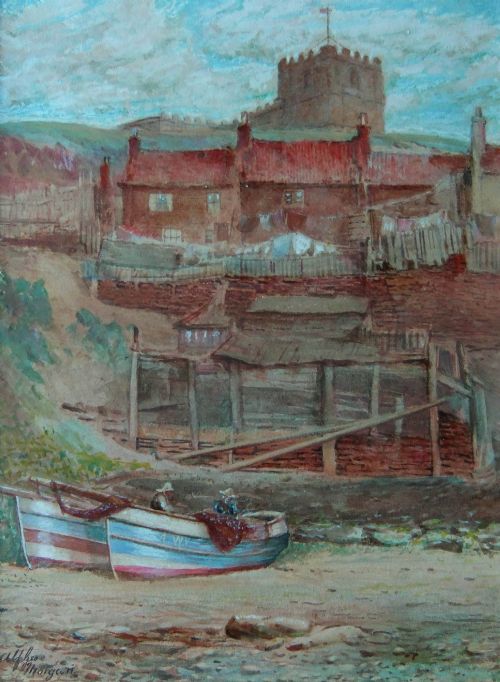
Several artists clearly braved harsh North Sea gales to paint muddy slipways and salt-sprayed hulls.
What varies in quality
The strength of a coastal watercolour scene lies in the artist's ability to handle light and atmospheric movement with confidence. Superior works demonstrate fluid control of the medium, where washes describe sea and sky without becoming overworked.
Condition is paramount, as prolonged exposure to sunlight causes watercolours to fade, diminishing the vibrancy of the original pigments. Original framing and clear provenance linked to recognised regional schools or exhibited artists elevate the standing of a piece.
James Orrock·James E. Aitken·John E. Aitken·William Banks Fortescue·Hector Caffieri·Alfred G. Morgan·Carlo Ferranti·George F Pennington·Paul Delvaux·Richard Harry Carter·William Lee Hankey·Arthur Tucker·Thomas Bush Hardy·William Tuck·Colin H Greenwood·James Watson·George Hamilton Constantine·Sir William Russell Flint·Frederick William Hattersley·James Thomas Watts·Leslie Rackham·Kate E Booth·Ernest F. Hill·Frederick Stuart Richardson·Percy Brooke
The Coastal Watercolour Scene Glossary
- Watercolour pigment
- Finely ground colour particles suspended in a water-soluble binder, applied in translucent layers to paper. It requires precise control as alterations are difficult to make once dry.
- Gouache
- An opaque water-soluble paint often combined with watercolour to create solid highlights and dense areas of colour. It is frequently seen in nineteenth-century marine works to depict foaming waves and clouds.
- Wash
- A thin, fluid layer of diluted pigment spread across the paper to create uniform areas of tone such as sky or sea. Mastery of the wash defines the technical skill of the painter.
- Newlyn School
- An art movement based in Cornwall focusing on naturalistic plein-air painting of local fishing communities and coastal life. Artists in this circle recorded the daily routines of harbours with direct observation.
Coastal Watercolour Scene: Frequently Asked Questions
Where were most of these coastal scenes painted?
The majority depict British fishing ports, Yorkshire coastal towns, Cornish harbours, and various European maritime locations recorded during painting trips.
Artists frequently gathered in specific coastal colonies to capture the distinct local light, maritime architecture, and daily routines of fishermen.
How should I hang a antique watercolour?
Watercolours are sensitive to direct sunlight and should be placed on interior walls away from prolonged windows and strong heat sources.
Using conservation-grade glass with UV protection helps safeguard the fugitive pigments from fading over time.
Are all these works signed by the artist?
Many examples feature signatures, monograms, or inscriptions naming specific harbours and coastal views in the lower corners of the sheet.
Unsigned works do appear, often attributed through stylistic similarities, framing evidence, or contemporary exhibition labels on the reverse.
What framing is appropriate for these pieces?
Traditional wooden frames, sometimes finished with subtle gilt details or ebonised surfaces, complement the period aesthetic of these watercolours.
Original frames preserved through the decades add historical context, provided the backing and mount boards remain chemically stable.