






Brown Earthy Watercolour Landscape
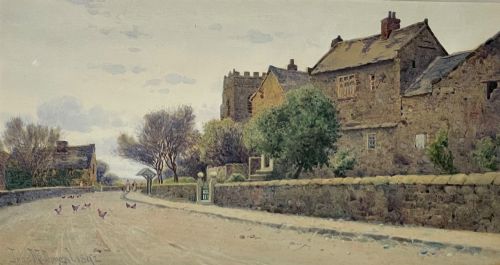
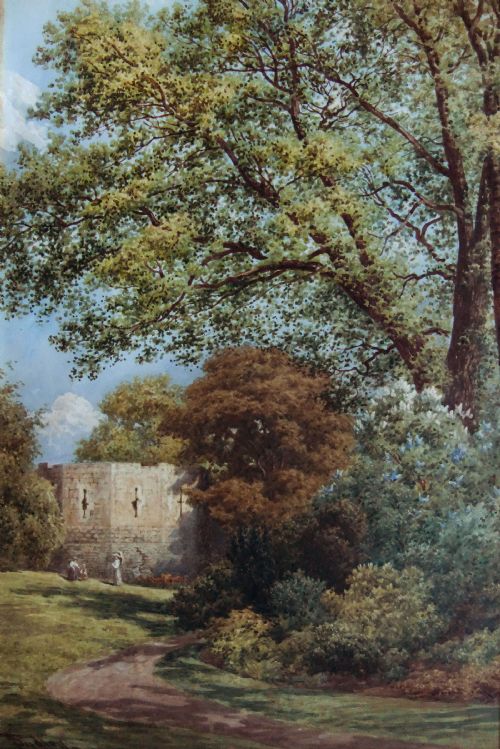
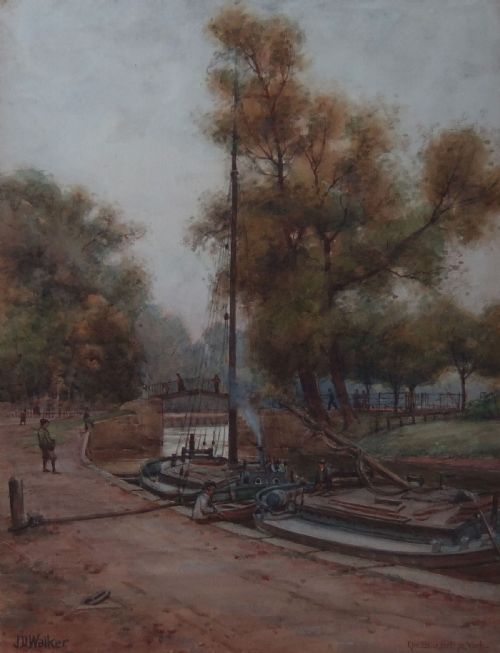
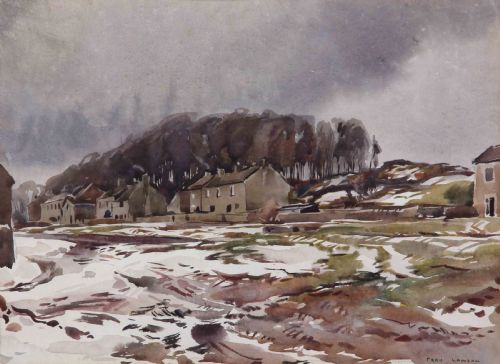
These brown earthy watercolour landscape works on paper capture pastoral scenes and coastal views through washes of pigment.
Brown Earthy Watercolour Landscape
A brown earthy watercolour landscape brings together traditional paper supports and fluid pigments to depict rural views, village scenes, and coastal settings. Buyers seeking these works find depictions ranging from English windmills and Yorkshire villages to French rural settlements and Spanish vistas.
The selections on this page span the Victorian period through to the nineteen thirties, encompassing nineteenth century examples alongside Edwardian and early twentieth century British and French movements. These watercolours present quiet rural moments, farm yards, and castle ruins rendered in restrained, natural tones.
How they were made
Artists executed these works by applying watercolour paint and pigment onto paper, often framing the finished sheets behind glass within wood and gilt wood surrounds. The technique relies on translucent washes to build depth across landscape compositions.
Makers utilised the white of the paper itself to catch light, contrasting thinned pigment with heavier concentrations of earth tones to define architectural elements, figures, and terrain.
Listings feature works created across several decades, moving from nineteenth century Victorian examples into nineteen thirties British Modernism.
What varies in quality
The strength of a brown earthy watercolour landscape lies in the confidence of the brushwork and the management of tone across the paper surface. Stronger examples display a sure handling of pigment that fixes the atmosphere of a specific location without heavy reworking.
Compositional balance and the preservation of the paper support further divide the standard of works. Pieces that retain their original framing and tonal depth without excessive fading or discolouration represent the upper tier of the range.
John McDougal·James Orrock·John Atkinson·Alfred Grey·R P Noble·Rowland Henry Hill·Tom Dudley·Francis William Topham·Charles Branwhite·Maurice Asselin·Fred C Jones·John D Walker·Fred Lawson
The Brown Earthy Watercolour Landscape Glossary
- Watercolour paint
- A medium consisting of colour pigments suspended in a water-soluble vehicle, applied to paper to create transparent washes.
- Gilt wood
- Timber frames finished with a thin layer of gold leaf or metallic gilt, commonly used to house nineteenth and early twentieth century works on paper.
- Victorian
- The period of British history spanning the reign of Queen Victoria, associated here with nineteenth century landscape painting traditions.
- Impressionism
- An art movement characterised by relatively small, thin, yet visible brush strokes and an emphasis on accurate depiction of light.
Brown Earthy Watercolour Landscape: Frequently Asked Questions
How should I hang a watercolour?
Watercolour pigments are sensitive to strong light and should be positioned away from direct sunlight to prevent fading. Framing behind glass with conservation mount board helps protect the paper support from atmospheric moisture.
Keep them in rooms with stable temperature and humidity levels to preserve both the paper and any original wooden or gilt frame.
What dates are these landscapes from?
The works seen here date from the nineteenth century through the early decades of the twentieth century. Examples range from Victorian pastoral scenes to British Modernist and Camden group compositions from the nineteen twenties and thirties.
Stylistic cues and artist signatures help place individual pieces within this broad nineteenth and early twentieth century timeline.
Are these works original paintings?
Yes, every piece listed is an original watercolour painting executed by hand on paper. Artists applied pigment directly to the sheet, making each landscape a unique creation rather than a reproduction.
Brush texture and pigment pooling under magnification confirm the hand-painted nature of these historical artworks.
How do I identify a Victorian watercolour?
Victorian watercolours often feature traditional British subjects such as rural farm yards, coastal castles, and village markets rendered in earthy palettes. Signatures, period framing styles, and the character of the paper help confirm the nineteenth century origin.
Many of these pieces carry inscriptions detailing specific locations like Yorkshire, Devon, or Leicestershire.