



Ruined Castle Art
Ruined castle art captures the enduring romantic appeal of medieval fortification in decline, spanning delicate watercolours and robust oils from the seventeenth century onward.
Ruined Castle Art
Ruined castle art encompasses works depicting crumbling masonry, coastal fortresses and historic towers across multiple centuries. These pieces reflect a fascination with the picturesque and the passage of time over once-mighty strongholds.
Buyers frequently encounter nineteenth-century watercolours and oils on board, alongside specific depictions such as Bolton Castle and Richmond, Yorkshire. The subjects range from English landscapes to Italian pastoral scenes featuring distant fortifications.
The selection extends from seventeenth-century works by Angelo Maria Crivelli to twentieth-century British watercolours by artists such as Fred Lawson. Formats vary from intimate drawings to large framed fine art suitable for prominent display.
Materials and Techniques
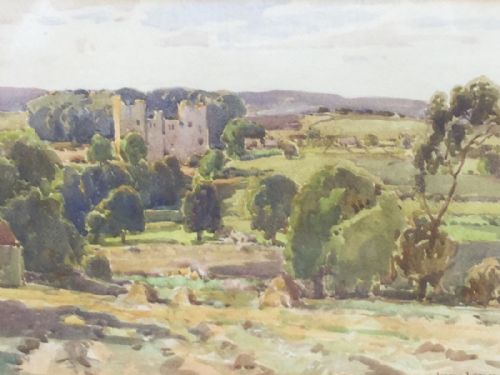
Artists captured these architectural subjects using watercolour paint on paper, often adding ink to define the intricate stonework of crumbling walls. This medium allowed for swift outdoor sketching and delicate atmospheric effects in coastal and rural settings.
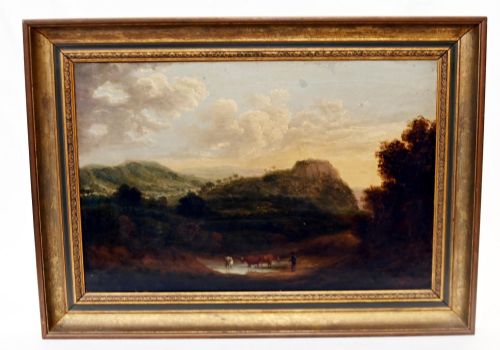
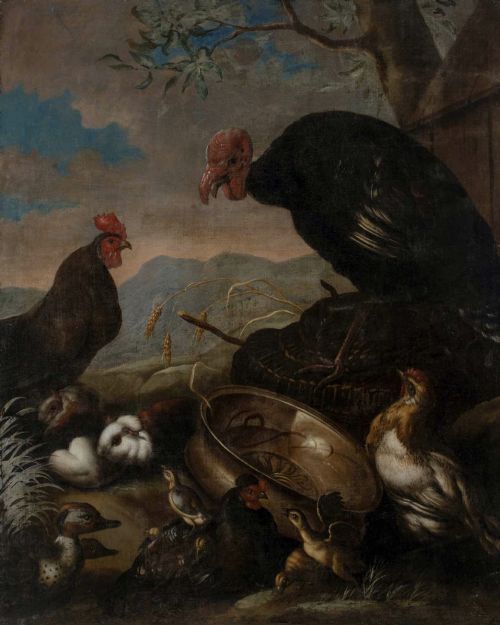
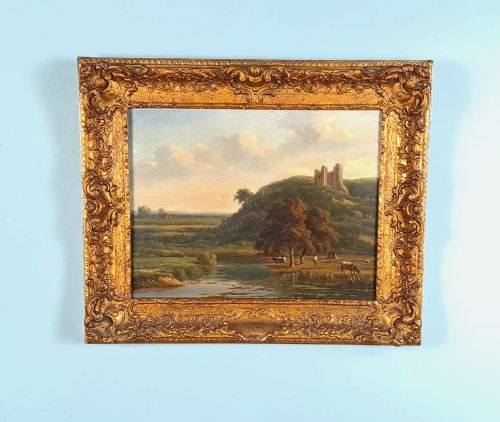
Larger compositions utilise oil paint on canvas or board, providing richer texture and depth to landscapes featuring fowl, fishing boats and cottages. Elaborate frames in giltwood and gesso frequently house these oil paintings, enhancing their visual presence.
Listings feature works across the seventeenth, eighteenth, nineteenth and twentieth centuries, executed in watercolour, oil and ink on paper or board.
Distinguishing Quality
Quality rests upon the artist's command of perspective and the atmospheric rendering of light upon aged stone. Skilled hands balance the solidity of architectural ruins with the surrounding landscape, whereas lesser works treat the subject with rigid uniformity.
The handling of secondary elements - such as coastal water, figures, or vegetation - separates accomplished compositions from routine topographical records. Material preservation, from the stability of the board or canvas to the clarity of the watercolour, further defines the standing of each piece.
Angelo Maria Crivelli·T C Hofland·George Gregory·R P Noble·Fred Lawson·Peter Toft·J D Walker·George Graham·Henry Bright
The Ruined Castle Art Glossary
- Watercolour
- A paint consisting of pigment suspended in a water-based solution, traditionally applied to paper. It creates transparent washes that suit luminous skies and distant landscapes.
- Giltwood
- Wood carved and coated with gold leaf, frequently used for traditional picture frames. This finish adds warmth and contrast to the artwork it encloses.
- Gesso
- A plaster-like mixture applied to wood panels or frames before painting or gilding. It provides a smooth, durable surface for fine decorative detail.
- Oil on Board
- A painting technique where oil pigments are applied to a rigid wooden or composition board rather than stretched canvas. This support offers a stable and flat surface for detailed brushwork.
- Baroque
- An artistic style prevalent from the seventeenth century characterised by drama, rich detail and deep chiaroscuro. Works in this manner emphasise movement and theatrical light.
Ruined Castle Art: Frequently Asked Questions
What periods do these paintings date from?
The selection spans several centuries, beginning with seventeenth-century works and moving through the eighteenth, nineteenth and twentieth centuries.
Victorian, Edwardian, Georgian and Regency periods are all represented alongside mid-twentieth-century British modernism.
Are all the depicted castles located in Britain?
While many pieces record specific British landmarks such as Bolton Castle and Richmond in Yorkshire, others depict continental European scenes.
Some compositions place ruins within imaginative or Italianate landscapes rather than exact topographical locations.
What is the difference between an oil on board and a watercolour?
Watercolour paintings utilise water-soluble pigments on paper to produce luminous, translucent effects and swift atmospheric studies.
Oil paintings on board employ heavier, slow-drying pigments that allow for deeper texture, layering and richer colour saturation.