




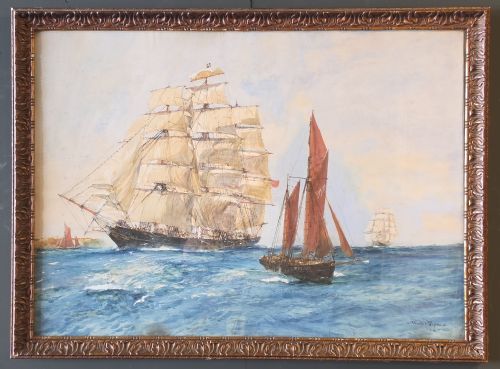

Vintage Marine Artwork
Vintage marine artwork captures the movement of coastal waters, harbour shipping, and historic naval vessels across canvas and paper.
Vintage Marine Artwork
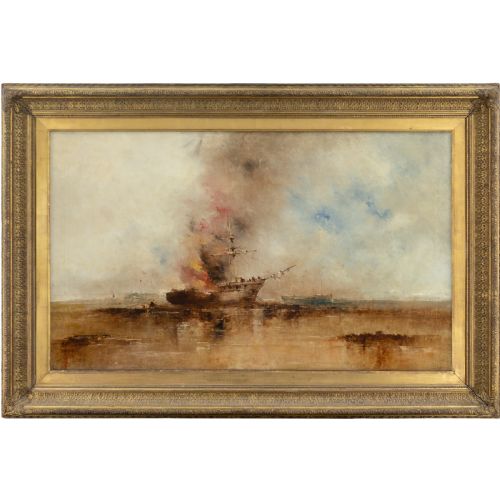
When you examine vintage marine artwork, you encounter painted and drawn records of coastal life, shipping lanes, and maritime conflict spanning from the nineteenth century into the mid twentieth century. These works capture everything from calm estuary anchorages and bustling commercial ports to dramatic shipwrecks and naval engagements in heavy seas.
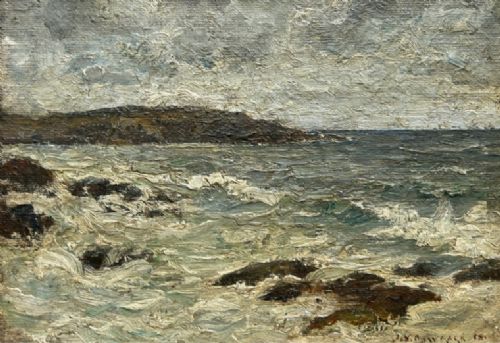
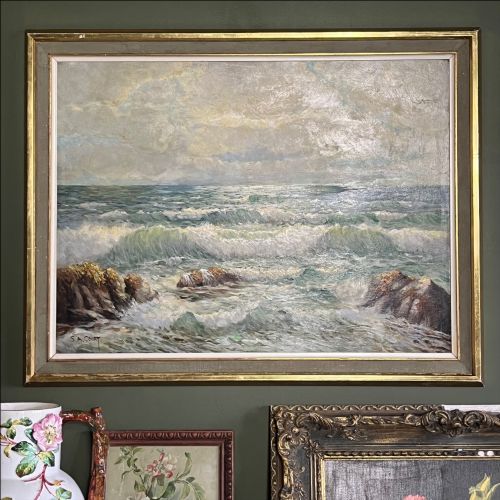
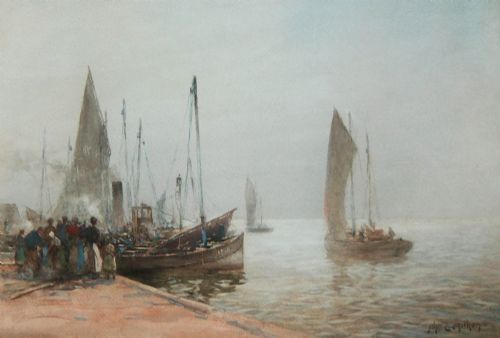
You are most likely to meet oil paintings on canvas or board and watercolours on paper, often framed in period gilt wood. The subjects range from named steamships and wartime vessels to en plein air studies of Cornwall and Scottish havens, reflecting the broad maritime interests of British and European artists.
How they were made
Artists utilise oil paint on canvas or board, watercolour on paper, and occasionally gouache, building up coastal scenes through layered brushwork and impasto texture. Works on paper require protective glass and framing, whilst canvas supports allow for deep, expressive impasto applications that render rough waves and stormy skies.
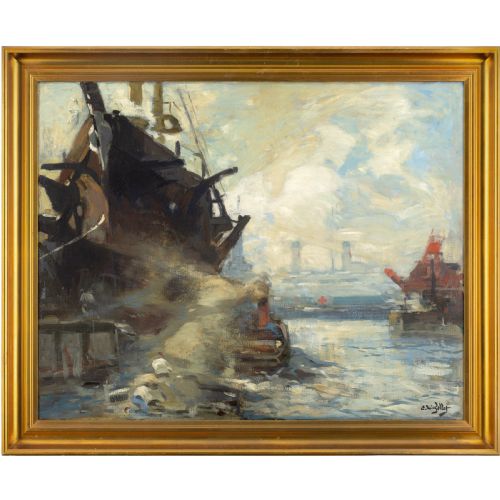
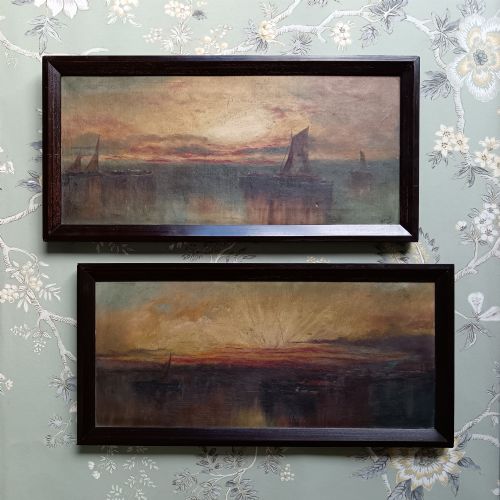
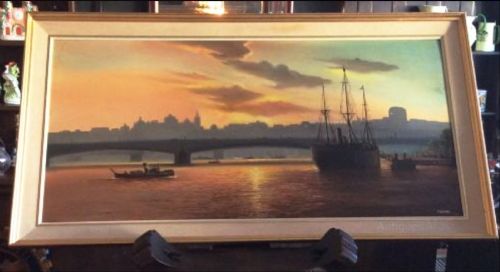
Framing forms an integral part of the physical object, with many pieces retained in their original gilt wood frames that complement the tonal palette of the maritime scene. Pigments capture the shifting light of dawn and sunset across open water, alongside the dark smoke of early steamships and industrial tugs.
Vintage Marine Artwork Retail Price Guide 2026
Typical asking prices for vintage marine artwork among the pieces listed under this phrase on Sellingantiques today, from the lower quarter to the upper quarter. They describe what is for sale here now, not the wider market.
Listings span from the 19th century through the 1960s, featuring works on paper, canvas, and board.
What varies in quality
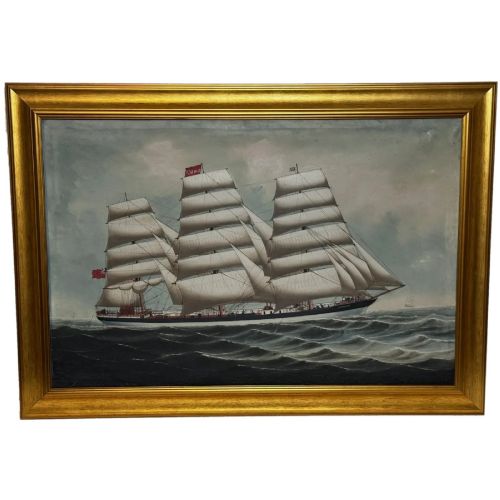
Quality rests in the artist's command of maritime atmosphere, water movement, and vessel rigging accuracy rather than the mere age of the piece. A superior painting conveys the weight of a three-masted schooner and the convincing swell of an open sea through confident brushwork and precise tonal control.
The sophistication of the palette and the fidelity of architectural and nautical detail elevate a composition. Weaker examples rely on formulaic waves and static hull lines, whereas accomplished works demonstrate keen observation of light on water and accurate structural rendering of ships.
Kenneth Cozens·Clifford Hanney·Eugène-Louis Gillot·William McAlpine·Reginald Arthur Borstel·Sidney A. Court·B. Nash·James E. Aitken·Charles Edward Dixon·John E. Aitken·Eric Tufnell·William Banks Fortescue·Frank Watson Wood·Bernard Gribble·William Lionel Wyllie·Frank William Scarbrough·F. Corpuz·Clive Browne·Peter Brannan·Paul Bret·Bernard Benedict Hemy·Willem Bos·Lai Fong
The Vintage Marine Artwork Glossary
- Impasto
- Paint applied thickly to a canvas or board, standing out in relief from the surface. This technique allows artists to build up the physical texture of breaking waves and churning water.
- En plein air
- Painting outdoors to capture direct natural light and atmospheric conditions on location. Coastal works produced in this manner reflect immediate weather changes.
- Gouache
- An opaque watercolour medium containing gum arabic and added white pigment for solid coverage. It offers matte surfaces that artists use for sharp maritime details.
- Etching
- A printmaking method where acid bites lines into a metal plate to hold ink. Artists produce detailed linear plates depicting ships and river reaches.
Vintage Marine Artwork: Frequently Asked Questions
What subjects appear in vintage marine art?
The works depict commercial steamships, naval battles, historic sailing barques, and quiet fishing harbours. Coastal landscapes and estuary views also feature prominently across the collection.
Artists recorded specific vessels, wartime hospital ships, and everyday maritime trade routes in British and European waters.
How do I date a maritime painting?
Dating relies on vessel types, costume details, artist signatures, and framing styles. Steamships, three-masted schooners, and naval uniform changes provide reliable chronological markers.
Examine the back of the canvas or board for period inscriptions, gallery labels, and artist exhibition notes.
Where should I hang marine watercolours?
Watercolours on paper require protection from direct sunlight to prevent fading of the pigments. Position them away from bright windows and damp environments.
Pair framed watercolours with complementary wall colours that echo the muted tones of traditional coastal palettes.
What is the difference between oil and watercolour marine art?
Oil paintings utilise heavy canvas or board supports, allowing for rich impasto textures and deep colour layering. Watercolours on paper offer lighter, transparent washes suited to atmospheric skies and calm seas.
Oils generally handle dramatic weather and heavy seas with physical presence, whilst watercolours excel at luminous coastal light.