



Vintage Harbour Watercolour
These vintage harbour watercolour paintings capture coastal life and maritime scenes across Britain and beyond.
Vintage Harbour Watercolour
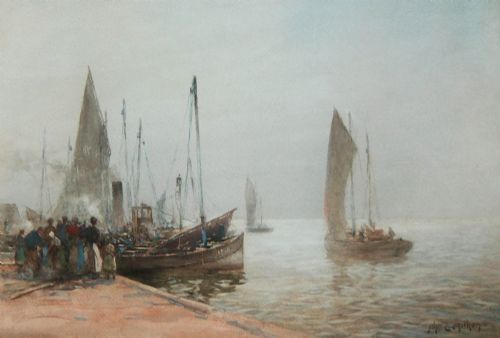
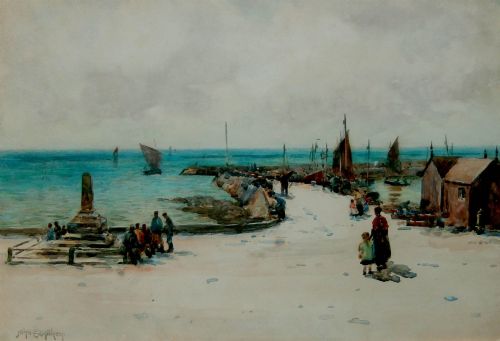
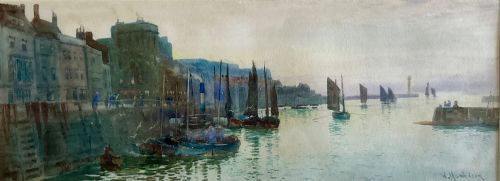
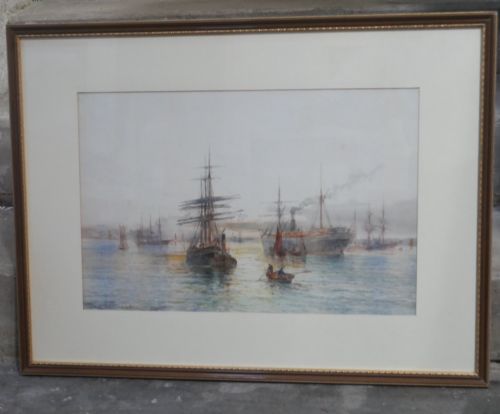
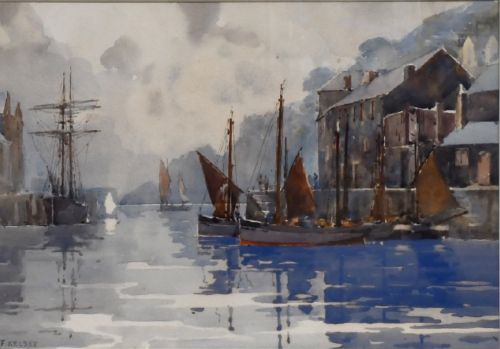
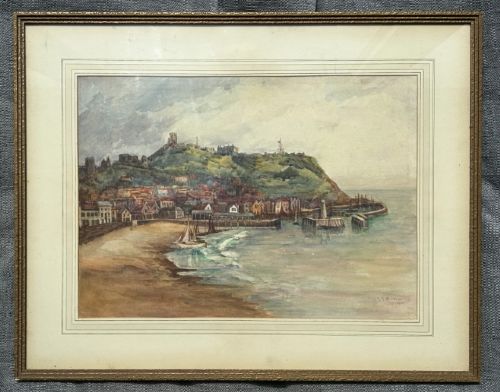
A vintage harbour watercolour typically portrays coastal scenes, fishing ports, and tidal docks from the nineteenth and twentieth centuries. These paintings record maritime activity, historic quaysides, and coastal villages through traditional British artistic movements.
The selections span Victorian origins into the mid-twentieth century, encompassing Edwardian maritime studies and early British impressionism. Common forms include framed fine art paintings, wall art, and detailed topographical views of specific coastal locations.
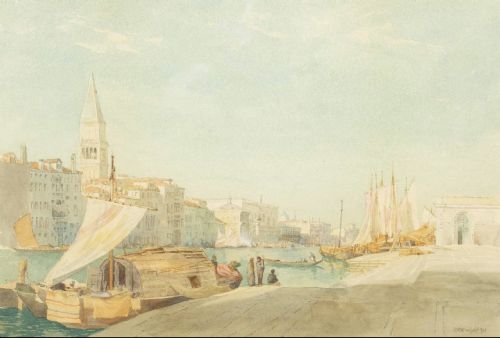
Regional British harbours feature prominently, from Cornish fishing villages like St Ives and Polperro to Yorkshire ports such as Whitby and Scarborough. Examples also extend to international waterside locations including Venice and Normandy.
Materials and technique
Artists executed these works using watercolour pigment and ink applied to paper supports, often framed behind protective glass with wood mouldings. The combination of water-soluble pigments and fine ink line work allowed painters to capture translucent washes of sea and sky alongside sharp architectural details of boats and harbour walls.
The physical construction frequently incorporates period wooden framing, occasionally complemented by hand-enamelled polychrome decoration. These traditional mounting methods protect the delicate paper works while establishing the visual presentation characteristic of early twentieth-century fine art.
Vintage Harbour Watercolour Retail Price Guide 2026
Typical asking prices for vintage harbour watercolour among the pieces listed under this phrase on Sellingantiques today, from the lower quarter to the upper quarter. They describe what is for sale here now, not the wider market.
Several artists clearly braved biting North Sea gales to capture Whitby harbour exactly as the fishing luggers returned.
Qualities of distinction
Quality rests upon the artist's handling of light, atmosphere, and maritime topography, distinguishing swift topographical sketches from accomplished impressionist studies. Stronger examples demonstrate confident brushwork that conveys the movement of water and the dense atmosphere of busy port scenes.
Condition and provenance further define the standing of a piece, particularly the preservation of pigment vibrancy against fading from light exposure. Works retaining their original period framing and clear documentary attribution to recognised regional artists command greater artistic interest.
James E Aitken·Frank William Scarbrough·William Matthison·William Lee Hankey·Alfred Robert Quinton
The Vintage Harbour Watercolour Glossary
- Watercolour pigment
- A colourant suspended in a water-soluble binder, applied to paper to create translucent washes and fine details.
- Fine art painting
- A unique visual creation executed on paper or canvas for aesthetic appreciation rather than purely illustrative purposes.
- Edwardian maritime
- Artistic works produced during the reign of Edward VII focusing on marine subjects, shipping, and coastal communities.
- British impressionism
- A painting style developed in Britain emphasising loose brushwork, natural light, and contemporary landscape subjects.
- Topographical view
- An accurate pictorial representation of a specific real-world location, such as a named harbour, town, or dockyard.
Vintage Harbour Watercolour: Frequently Asked Questions
What periods do these watercolours date from?
The available works span from the nineteenth century through the Victorian era and into the mid-twentieth century, with a strong representation of pieces from the nineteen-hundreds to the nineteen-thirties.
This timeframe encompasses Edwardian maritime views, early twentieth-century British art, and later regional landscape traditions.
Which coastal locations are commonly depicted?
British fishing ports and harbours are heavily featured, particularly Cornish locations like St Ives, Mousehole, Looe, and Polperro. Yorkshire coastal towns such as Whitby, Scarborough, and Staithes also appear frequently.
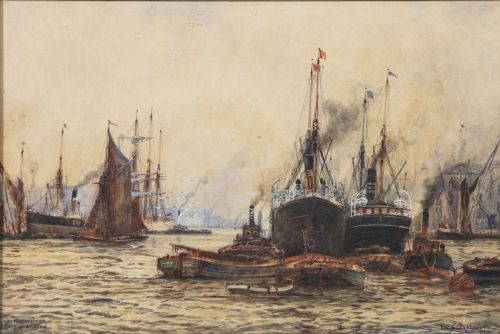
Other scenes extend to London river pools, Scottish firths, and international waterside settings like Venice and Normandy.
How should these paintings be displayed?
These framed works suit domestic wall display as fine art wall art, benefiting from placement away from direct sunlight to protect the watercolours from fading. Proper glass protection safeguards the delicate paper supports from atmospheric moisture.
Maintaining stable indoor environmental conditions helps preserve both the paper and the original wood framing.
Are these works signed by the artists?
Many of the watercolours bear signatures or attributions to documented painters who recorded British and European coastal scenes during the nineteenth and twentieth centuries. Some pieces are associated with specific regional schools of painting.
Signatures, dates, and inscriptions on the mounts or reverse often provide additional historical context regarding the depicted harbour.