


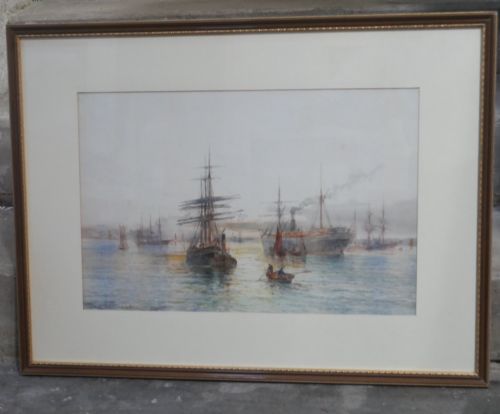
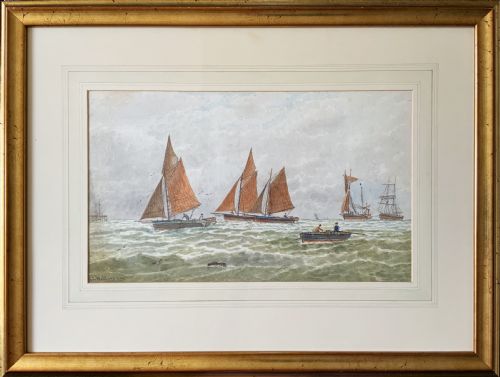
Coastal Watercolour Art
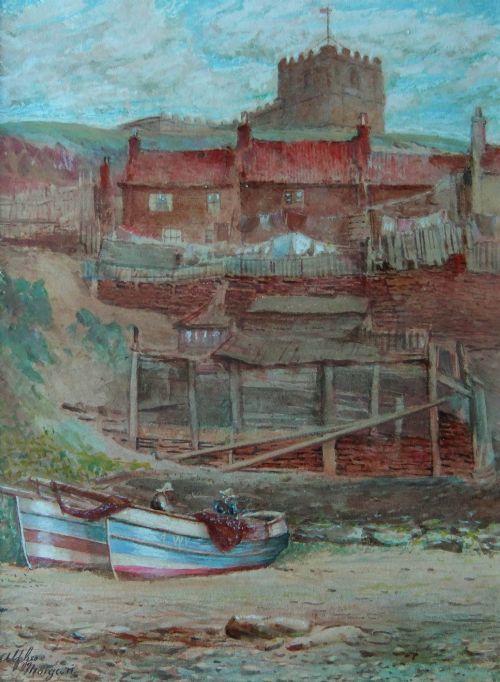
Coastal watercolour art captures harbours, fishing vessels and open seas across the nineteenth and early twentieth centuries through delicate washes on paper.
Coastal Watercolour Art
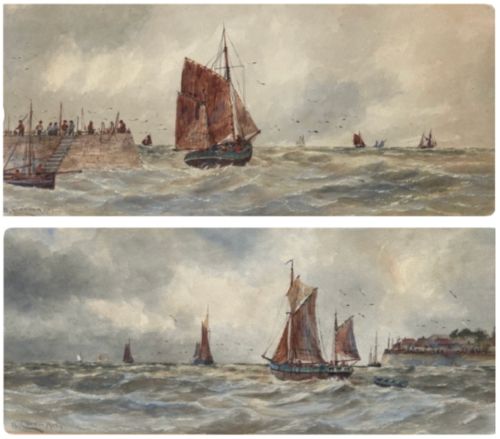
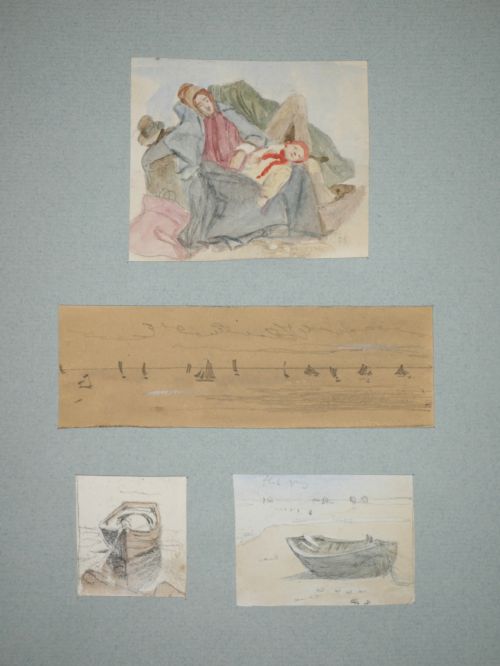
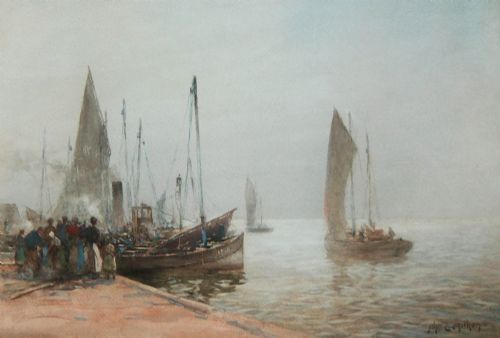
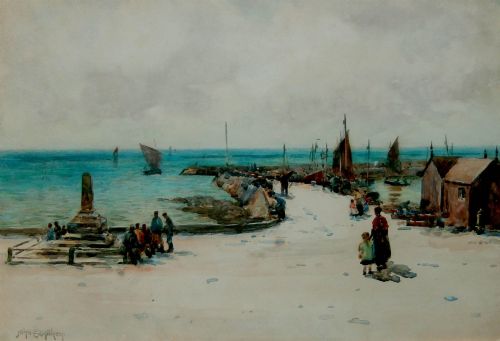
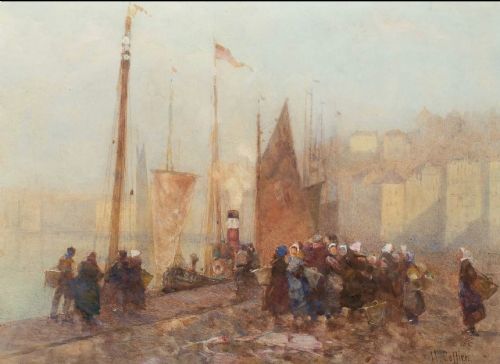
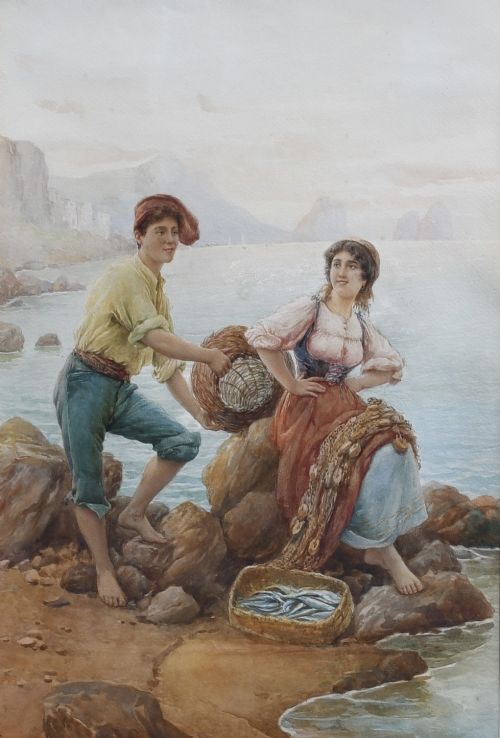
When searching for coastal watercolour art, collectors encounter works depicting British and European maritime scenes, sandy shores and busy fishing harbours. These paintings range from small marine sketches to large framed artworks created during the Victorian and Edwardian eras.
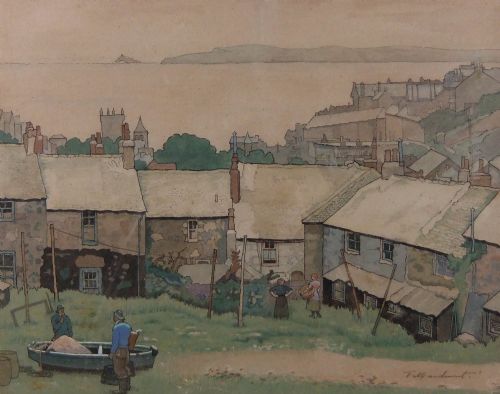
The pieces on this page originate predominantly from the nineteenth century through to the mid-twentieth century, encompassing British Impressionism and regional art traditions such as the St Ives School. Common subjects include local shipping, coastal cliffs and traditional fishing boats at rest or in motion.
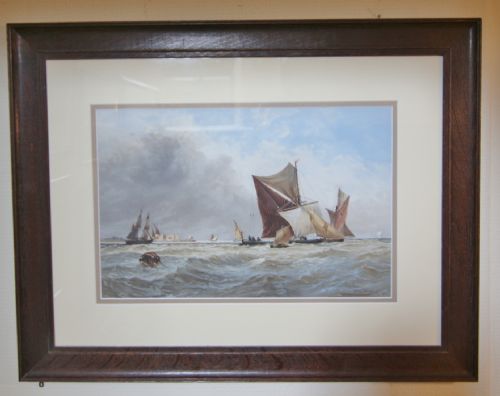
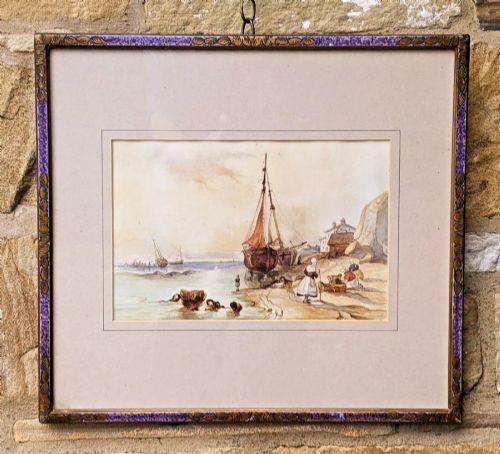
Most examples appear behind glass within wooden or gilt frames that complement the delicate nature of works on paper. Buyers find both intimate depictions of local coastal life and broader topographical views of specific bays and estuaries.
Materials and Technique
Artists painted these scenes using watercolour pigment applied to paper, often combining fluid washes with finer details in pen, ink or gouache. The translucency of the medium allowed the white surface of the paper to provide natural highlights for breaking waves and cloud formations.
Framed works generally incorporated protective glass and wooden mounts, occasionally featuring gilt frames that enhanced the visual depth of the maritime subject matter. These traditional conservation methods preserved the fragile water-soluble pigments from moisture and light exposure over decades.
Nineteenth-century artists frequently braved gale-force coastal winds just to capture a rogue fishing boat missing dinner.
Factors of Quality
Quality in these watercolours depends upon the artist's ability to capture light, atmospheric conditions and movement with controlled brushwork. Superior examples demonstrate a confident handling of water and pigment, resulting in luminous skies and convincing nautical perspective rather than flat or overworked areas.
The significance of the specific location, the clarity of the artist's signature and the overall preservation of the paper also influence the standing of an individual piece. Works displaying strong provenance or association with recognised regional painting groups tend to command greater attention from collectors.
James Orrock·William Cannon·James E. Aitken·Thomas William Morley·Hector Caffieri·Thomas Maidment·T. B. Hardy·Alfred G. Morgan·Carlo Ferranti·William Matthison·George Stanfield Walters·Frank Kelsey·Henry Barlow Carter·John Moxon·William Frederick Settle·Lionel Horsnell·John Bedloe Goddard·Paul Delvaux·Charles William Adderton·Richard Harry Carter·William Lee Hankey·Sir Thomas Newenham Dean·Ernest Dade·Edward Seago·Arthur Tucker
The Coastal Watercolour Art Glossary
- Watercolour
- A painting method in which the paints are made of pigments suspended in a water-based solution. The paper itself often serves as the brightest tone in the composition.
- Gouache
- An opaque water-based paint frequently used alongside traditional watercolours to add solid highlights and dense areas of colour. It contains a white pigment filler to increase opacity.
- Seascape
- A type of fine art depicting the sea, coastlines, ships and maritime activities. These works focus heavily on the interaction between water, weather and human navigation.
- St Ives School
- An artist community and regional painting style associated with the Cornish coastal town. Practitioners focused on capturing the unique light and maritime environment of the harbour.
- Gilt Wood
- Wood framing finished with a thin layer of gold leaf or metallic gilt paint. This traditional finish was frequently applied to enhance important nineteenth-century paintings.
Coastal Watercolour Art: Frequently Asked Questions
How should I display coastal watercolour art at home?
Display these works away from direct sunlight and high humidity to prevent the paper from yellowing and the pigments from fading. Using conservation-grade glass and neutral mounts protects the delicate medium over time.
Position paintings at eye level in rooms with stable ambient temperatures. Proper framing preserves the integrity of nineteenth and early twentieth-century paper works for years to come.
What subjects appear most frequently in these paintings?
Artists frequently documented working harbours, fishing luggers, sailing ships and recognizable coastal landmarks across Britain and Europe. Scenes often captured daily maritime routines, from morning departures to boats sheltering in local havens.
Topographical views of specific bays, cliffs and estuaries provide a record of nineteenth and early twentieth-century coastal geography. These subjects reflect the era's fascination with maritime commerce and coastal leisure.
How can I tell the period of a watercolour?
Examine the framing style, paper characteristics, and any visible artist signatures or dated inscriptions. Nineteenth-century works often feature heavier gilt frames and distinct paper watermarks characteristic of the era.
Subject matter and attire depicted in harbour scenes also offer clues to the dating. Victorian and Edwardian artists frequently recorded specific vessel types and maritime architecture unique to their decades.
Did artists paint these watercolours outdoors?
Many practitioners created initial sketches and rapid plein-air watercolours directly on the coast to capture shifting light and weather. Finished exhibition pieces were often completed later in the studio using these field notes.
The portable nature of watercolour supplies made the medium ideal for travelling artists working along exposed shorelines and busy harbour docks.