




Fishing Boat Seascape
A fishing boat seascape captures coastal labour and maritime trade along British and European shores through centuries of oil and watercolour.
Fishing Boat Seascape
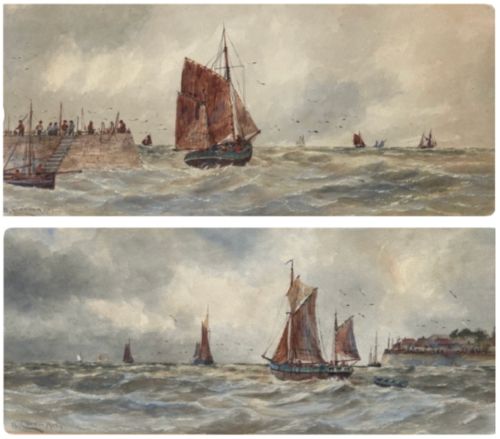
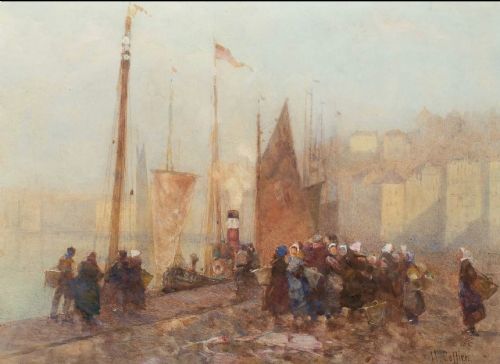
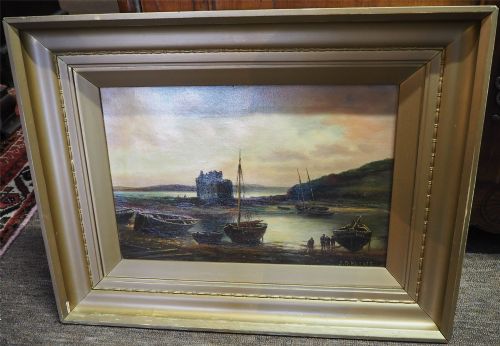
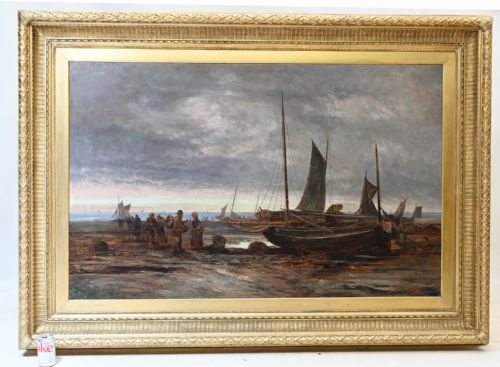
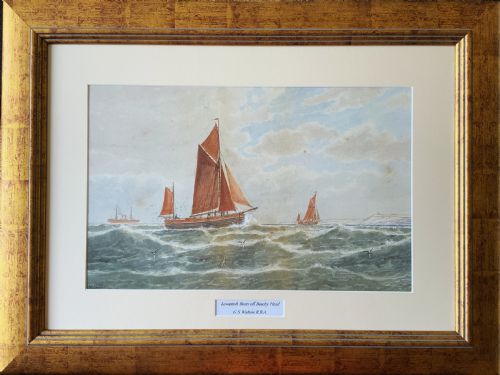
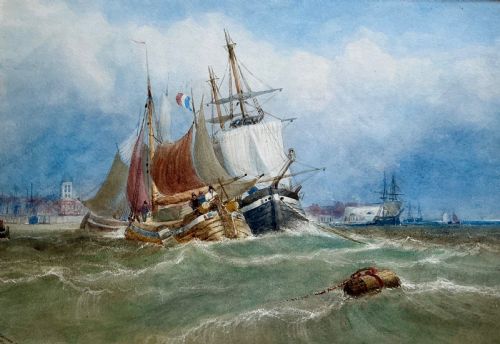
A fishing boat seascape depicts working vessels navigating coastal waters, tidal harbours, and open seas, rendered by painters from the nineteenth and twentieth centuries. These works record maritime trade, local fisheries, and coastal communities across Britain, France, and the Netherlands.
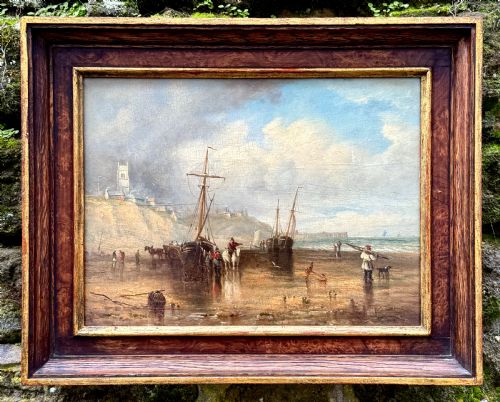
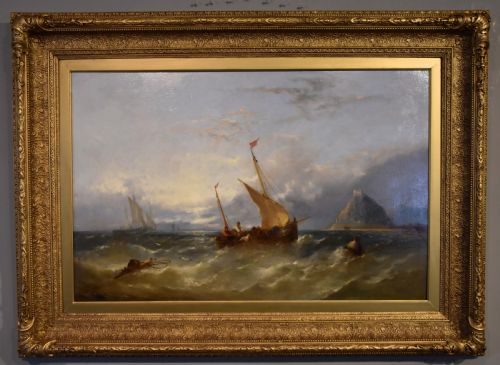
Buyers encounter oil paintings on canvas, board, and card alongside watercolour paintings on paper. Pieces range from intimate depictions of regional ports like Whitby, St Ives, and Brighton to large scale portrayals of trawlers in choppy seas.
The selections span Victorian marine art, British Impressionism, and Post-Impressionism, reflecting shifts in how artists observed light on water and working vessels from the eighteen-sixties through to nineteen-sixty.
How They Were Made
Artists applied oil paint or watercolour pigment onto prepared supports of canvas, wood panels, heavy card, and rag paper. Oil works often show textured brushwork built up in layers to capture the weight of the sea and the surfaces of wooden hulls.
Watercolour paintings rely on transparent washes and fine brush detailing on paper, sometimes heightened with bodycolour to denote breaking waves or foam. Canvases were stretched over timber frames or secured to card and board before framing in giltwood or moulded timber.
Several artists captured the exact moment a boat made a run for home before a storm.
What Varies in Quality
Quality rests in the handling of atmosphere, light, and movement, where skilled painters convey the rolling swell of the ocean and the specific rigging of working vessels rather than static outlines. The definition of distance, sky, and water texture determines the visual depth of the composition.
Works by established regional artists or those trained within recognised schools display confident brushwork and accurate topographical detail of harbours and coastal landmarks. Conservation history, including the stability of the canvas and the preservation of original pigments, also defines the standing of individual pieces.
James Orrock·William Henry Williamson·George Stanfield Walters·Henry Barlow Carter·Charles Napier Hemy·William Lee Hankey·Gustave De Bréanski·Pieter Cornelis Dommersen·Thomas Bush Hardy·Fred Mayor
The Fishing Boat Seascape Glossary
- Oil on Canvas
- Pigment mixed with drying oil applied to a woven fabric stretched across a wooden frame. This medium allowed artists to build rich textures and deep tones for maritime scenes.
- Watercolour
- Pigment ground in a water-soluble binder and applied to paper in translucent washes. It was frequently used for coastal sketches and finished marine watercolours.
- Coble
- A type of open traditional fishing boat with a flat bottom and high bow, commonly found along the northeast coast of England. These vessels appear frequently in regional Victorian and Edwardian watercolours.
- Marine Art
- Artistic representation of the sea, ships, and coastal views. This genre encompasses both calm harbour scenes and dramatic storm compositions.
- Impressionism
- An art movement characterised by relatively small, thin, yet visible brush strokes and an emphasis on accurate depiction of light. In marine painting, this approach prioritized transient atmospheric effects over rigid detail.
Fishing Boat Seascape: Frequently Asked Questions
What periods do these paintings come from?
The available works primarily date from the nineteenth and twentieth centuries, spanning the Victorian era through to the mid twentieth century. Artists worked across distinct periods including the late Victorian years, the Edwardian era, and post war decades.
Paintings from these different eras reflect changing artistic styles, moving from detailed maritime recording towards looser Impressionist interpretations of light and sea.
Where do the coastal scenes usually depict?
The locations concentrate heavily around British and European fishing ports, harbours, and coastal villages. Common settings include Yorkshire fishing towns like Whitby, Cornish harbours such as St Ives and Newlyn, and locations along the south coast.
Selected works also record continental harbours in Normandy, Holland, and other European shores where local fishing fleets operated.
How do oil and watercolour paintings differ?
Oil paintings utilise pigments bound in oil applied to canvas, board, or card, allowing for thick impasto and deep tonal layering. Watercolour paintings use water-soluble pigments on paper to create luminous, transparent effects.
Both mediums were widely used by marine artists, with watercolours often capturing immediate atmospheric conditions and oils providing durable, textured surfaces for stormy seas.
Are the paintings usually framed?
Many works retain period frames, including traditional giltwood moulding and timber frames appropriate to their date of creation. These surrounds help protect the edges of the canvas, board, or paper.
Framing styles vary from ornate Victorian gilt designs to simpler wooden frames typical of mid twentieth century presentation.