





Original 1950s Oil Painting
An original 1950s oil painting brings postwar texture and distinctive modernist or realist vision directly to your wall.
Original 1950s Oil Painting
When you search for an original 1950s oil painting, you encounter mid-century works spanning British landscapes, portraits, and expressive continental compositions. These pieces capture the artistic shifts of the post-war decades through varied regional schools and personal visions.
You are most likely to meet framed landscapes, maritime scenes, and figurative works executed during the nineteen fifties. Many carry signatures from British and European hands, showing subjects ranging from industrial factories to quiet rural farmhouses.
The materials and supports reflect mid-century studio practices, utilising prepared canvas or board housed in period wooden or gilt frames. These artworks demonstrate how painters of the era engaged with both traditional representation and emerging abstract ideas.
How they were made
Artists of the period applied oil paint loaded with pigment onto stretched canvas or rigid board supports. This combination allowed for both smooth, refined brushwork and thick, textural impasto applications.
Supports were frequently secured within wooden frames, sometimes finished with gilt or ebonised surfaces. The physical construction relies on standard mid-century framing methods that protect the painted edges.
Listings feature works executed on canvas and board using oil paint, housed in wooden and gilt frames.
What varies in quality
The strength of the composition and the confidence of the brushwork separate compelling works from routine decorative pictures. Skilled handling of light, colour, and spatial depth distinguishes the better pieces on this page.
The integrity of the original support and the sympathetic pairing with a period frame contribute to a piece's overall presence. Works that retain their authentic surface texture and clear provenance hold greater visual impact.
Kenneth Cozens·Bernard Hailstone·James Fry·David Shepherd·John Frederic Greenwood·Richards Rubin
The Original 1950s Oil Painting Glossary
- Impasto
- Paint applied thickly to a canvas or board, standing out in relief from the surface. This technique adds tactile depth and visible brush texture to mid-century compositions.
- Chiaroscuro
- Strong contrast between light and dark areas within a painted composition. Artists utilise this method to create dramatic focus and three-dimensional volume.
- Mid-Century Modern
- Design and art style spanning the middle decades of the twentieth century. It embraces simplified forms, abstraction, and progressive visual languages.
- Constructivism
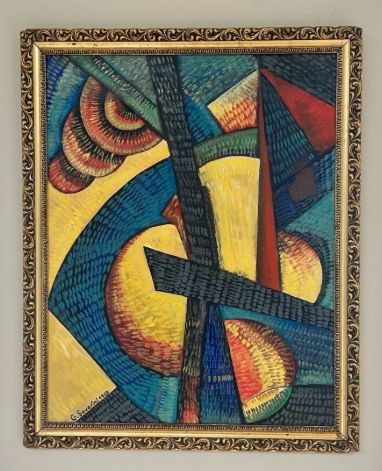
- An artistic approach originating in the early twentieth century that emphasises geometric abstraction and industrial forms. Works in this style often depict structured lines and constructed machinery.
- Board
- A rigid flat panel used as a painting support instead of woven fabric. Painters during the nineteen fifties frequently utilised these panels for smaller or experimental works.
Original 1950s Oil Painting: Frequently Asked Questions
What subjects appear in these paintings?
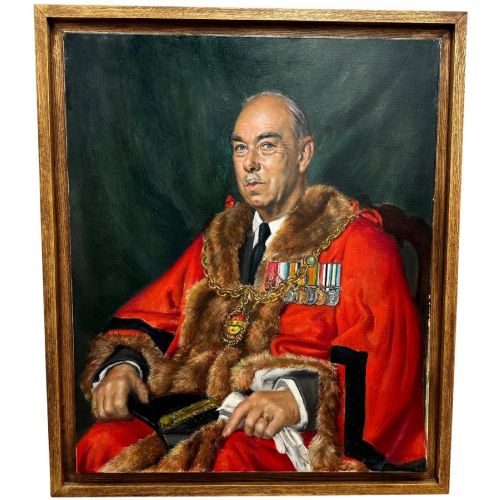
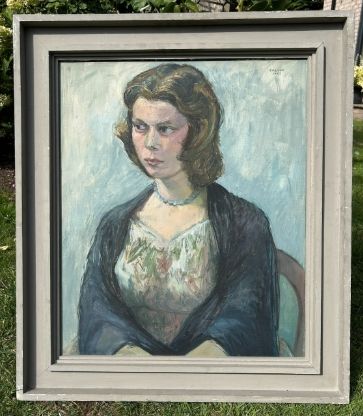
The subjects range from British maritime landscapes and Yorkshire dales to French modernist abstracts and industrial factory scenes. Portraits of local figures and ballerinas also feature among the recorded works.
Artists captured both rural tranquility and post-war industrial expansion, reflecting the diverse concerns of painters working across Britain and Europe during the decade.
How do I identify a nineteen fifties frame?
Frames from the period typically consist of wood, sometimes finished with ebonised surfaces or worn gilt detailing. Their construction methods and profiles match mid-century workshop standards.
Many works retain their original frames, which complement the aesthetic of the canvas or board they enclose.
Are these works painted on canvas?
Painters utilised both stretched canvas and rigid board as supports for their oil compositions. Canvas allowed for traditional tension and larger formats, while board offered a firm surface for impasto work.
Both materials are well represented across the available selection, often paired with matching period framing.
Where were these artists working?
The creators operated across various regions, including British coastal towns, Yorkshire, and continental European art centres like France. Emigre artists also brought continental training to their new surroundings.
This geographic spread resulted in distinct regional colourists and modernist groups working simultaneously during the post-war era.