



Antique Loch Painting
These antique loch painting works capture the dramatic waters and atmospheric light of the Scottish highlands, offering collectors a romantic window into nineteenth-century landscape traditions.
Antique Loch Painting
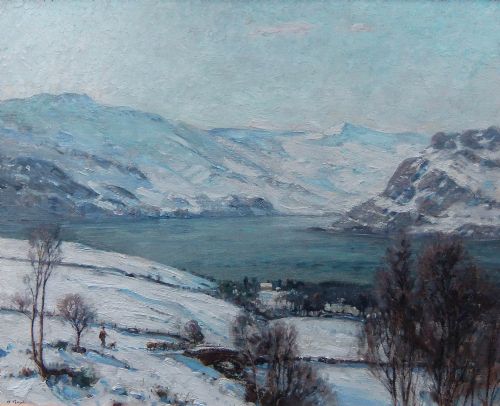
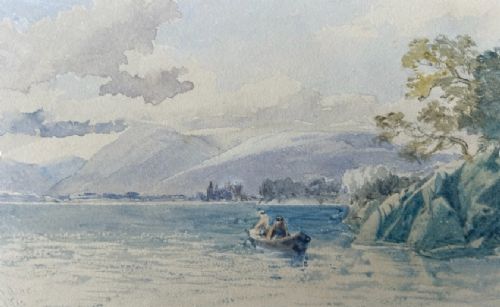
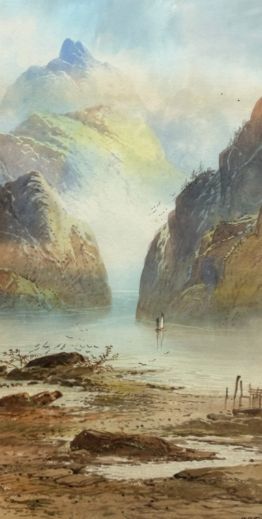
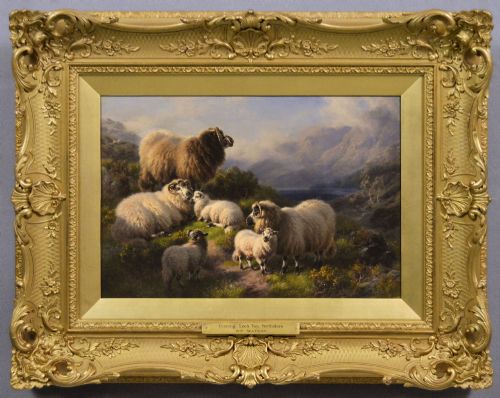
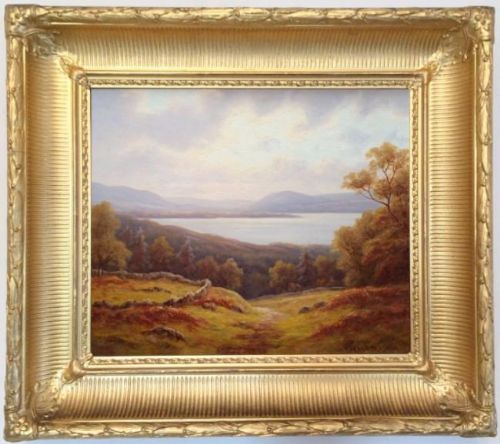
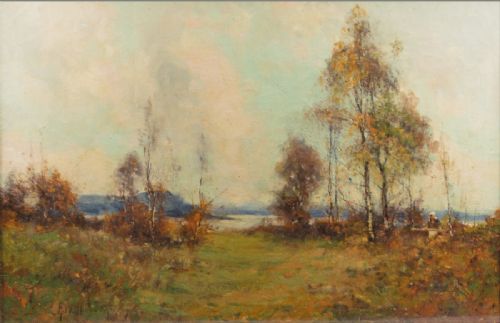
An antique loch painting portrays the expansive waters, rugged mountains and misty glens of Scotland, predominantly through the lens of nineteenth-century and early twentieth-century British art. Buyers frequently encounter framed works depicting serene morning mists or dramatic sunsets over famous bodies of water such as Loch Lomond, Loch Tay and Loch Awe.
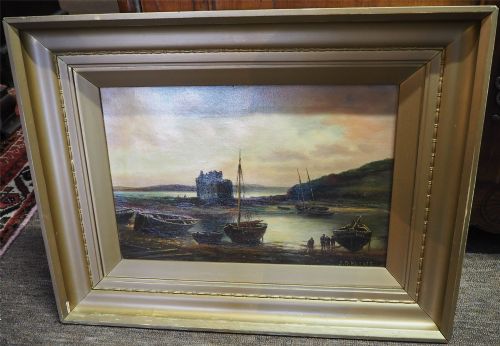
The selection ranges from intimate watercolours on paper to substantial oil paintings on canvas and wood panel. Many compositions feature characteristic regional staffage, including Highland cattle watering at the shore, solitary fishermen in small boats, or distant ruined castles silhouetted against the hills.
These pieces emerge from various recognised movements such as the Highland School, Scottish Romanticism and Victorian landscape realism. Painters often recorded specific topography with considerable fidelity, making each canvas a historical record of the Scottish wilderness as it appeared during the Victorian and Edwardian eras.
How They Were Made
Artists built these works primarily using oil paint on stretched canvas or wooden panels, as well as watercolour and gouache applied to heavy paper. Canvases were typically primed with gesso before the application of rich, layered pigments to build atmospheric depth and luminous water effects.
Makers employed fine sable brushes alongside palette knives to achieve both the delicate reflection of light on water and the heavy texture of highland heather and rocky crags. Finished works were then secured within heavy, often gilded wooden frames designed to enhance the romantic grandeur of the scene.
Several canvases include remarkably stubborn Highland cattle that appear to have stood entirely motionless while the mist rolled in over Loch Tay.
What Varies in Quality
Quality rests significantly in the artist's handling of atmospheric light and tonal nuance, where master painters successfully render the shifting mists and glassy reflections unique to highland waters. Weaker examples often rely on repetitive formulas and rigid brushwork that fail to capture the natural movement of weather over the landscape.
The treatment of scale and composition also divides the standard works from exceptional examples. Superior canvases balance the vastness of the surrounding mountains with meticulous detail in the foreground elements, such as cattle or foliage, maintaining structural harmony across the entire picture plane.
Thomas Miles Richardson Jnr·William Henry Earp·William Watson Jnr·Alexander Wellwood Rattray·Everett Watson Mellor·Henry Robinson Hall·Henry Hillier Parker·Frank Hider·James Bell Anderson·William Miller Frazer·Daniel Sherrin·Alfred de Breanski Snr·AJ Thornton·George Cole·Gustave De Breanski·George Melvin Rennie·Robert Houston·Louis F Flexman·George Stratton Ferrier·H M Krause·Francis E Jamieson·Thomas Austen Brown·Robert Finlay McIntyre·Herbert Moxon Cook·James Drummond
The Antique Loch Painting Glossary
- Gesso
- A white paint mixture consisting of a binder mixed with chalk, gypsum, or pigment, used as preparation for a substrate upon which an artist paints. This foundation layer stabilizes the canvas and provides a smooth working surface.
- Grisaille
- A painting executed entirely in shades of grey or another neutral monochromatic scheme. This technique is often used to imitate sculpture or serve as an underpainting for subsequent colour glazes.
- Gouache
- A water-based paint consisting of pigment and other inert materials designed to be opaque. It differs from transparent watercolour through the addition of white pigment to create solid, luminous passages of light.
- Staffage
- Human figures or animals included in a painting primarily to enliven the composition or provide a sense of scale. In these landscapes, highland cattle and figures in traditional dress frequently fulfil this role.
- Monogram
- A motif made by overlapping or combining two or more letters to form a single symbol. Many nineteenth-century artists used these personal ciphers to sign their watercolours and oils discreetly.
Antique Loch Painting: Frequently Asked Questions
How do I date an old loch painting?
Dating relies primarily on the artist's active period, the style of the original framing, and the specific materials recorded on the reverse. Canvas stamps from nineteenth-century colourmen also provide reliable manufacturing windows.
Changes in costume among any figures depicted, such as Victorian dress, help narrow the creation window when signatures are unclear or absent.
Were these paintings made on location?
Artists typically gathered preparatory sketches and watercolours directly in the Scottish highlands during warmer months. They then returned to studio environments to complete larger, highly finished oil paintings on canvas.
This method allowed painters to manage heavy equipment while still capturing accurate topographical details of remote locations.
How should I hang a framed oil painting?
Heavy nineteenth-century frames require secure picture hooks fastened directly into wall studs or heavy-duty masonry fixings to bear the substantial weight. Ensure the hanging wire and D-rings are robust and professionally fitted.
Position the artwork away from direct sunlight and strong heat sources to prevent the canvas and traditional oil pigments from drying or cracking.
What is the difference between oil and watercolour?
Oil paintings utilise slow-drying pigments suspended in medium, allowing for rich impasto textures and deep, luminous layering. Watercolours employ water-soluble pigments on paper, creating translucent washes of light.
Watercolour works require protective glass framing to prevent moisture damage, whereas oil canvases breathe and are displayed open to the room.