

Grey Landscape Artwork
Grey landscape artwork gathers paintings and drawings capturing atmospheric scenes in muted tones, offering a calm and contemplative view of natural and urban settings.
Grey Landscape Artwork
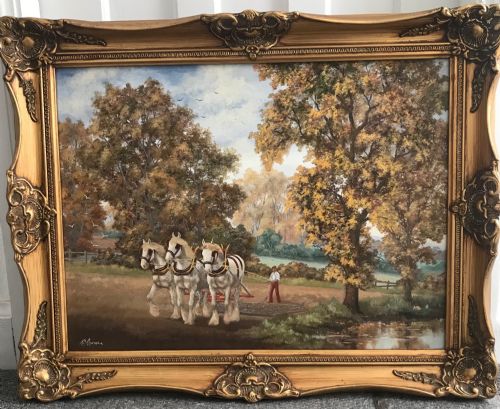
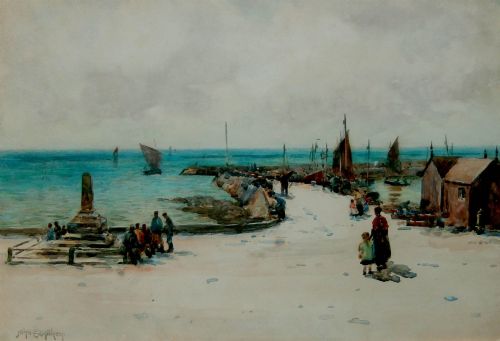
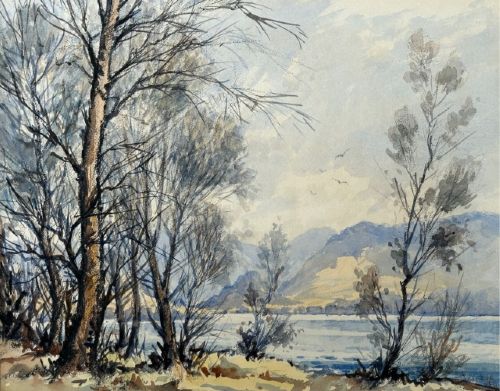
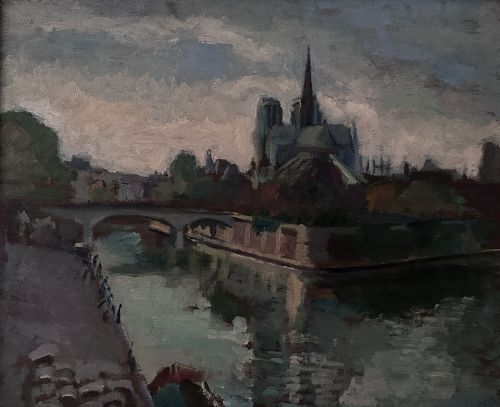
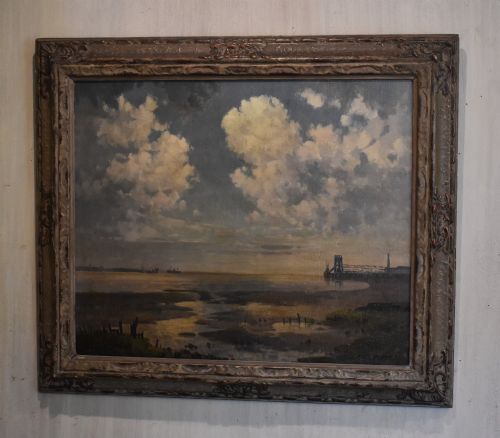
Grey landscape artwork encompasses oil paintings, watercolours, and charcoal drawings created across the nineteenth and twentieth centuries. These pieces record British and European coasts, rivers, and townscapes through restrained colour palettes.
Watercolours on paper and oil paintings on canvas or board dominate the offerings. Artists utilise muted tones to evoke overcast weather, winter scenes, and evening light.
Materials and methods
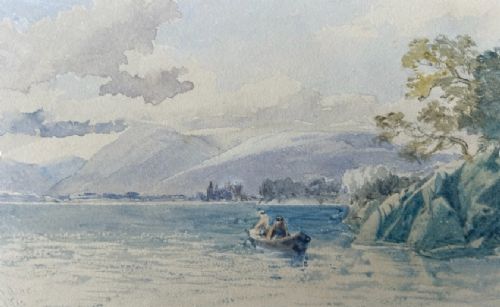
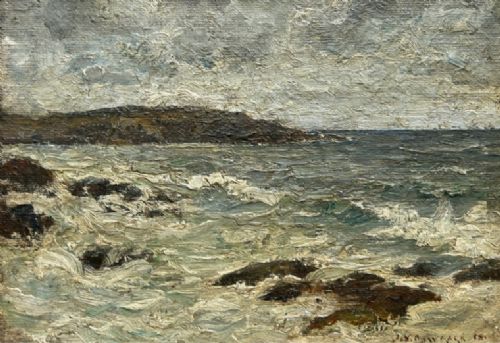
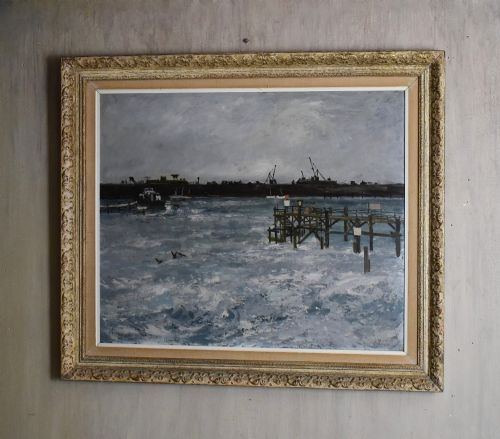
Painters apply oil paint to stretched canvas or wooden boards, frequently building textured impasto surfaces to render turbulent water or heavy skies. Watercolours utilise fluid washes on paper to capture translucent mists and reflective surfaces.
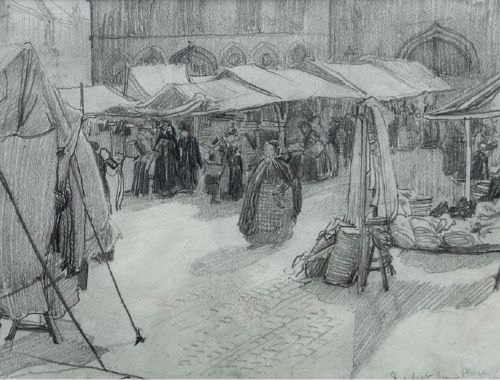
Draftsmen employ charcoal, pencil, and pen and ink to build tonal depth and linear precision in preparatory sketches and finished drawings. Woodblock prints rely on carved blocks and coloured inks applied to paper.
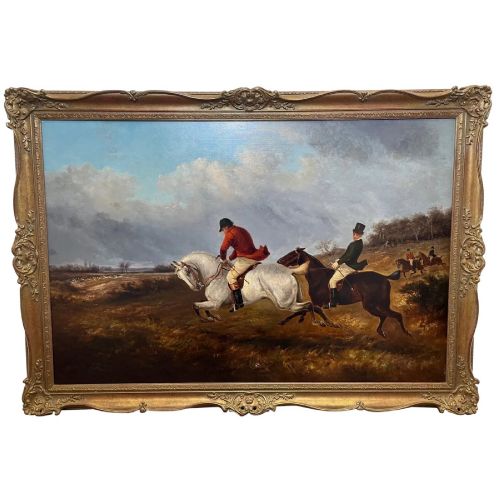
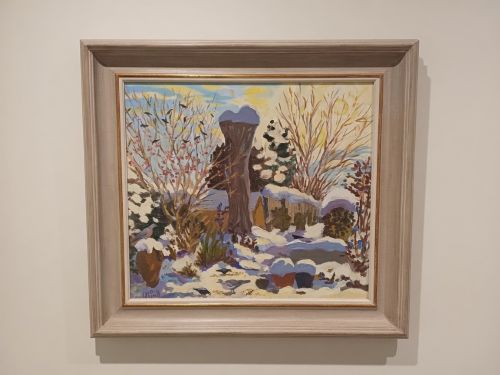
Framing typically involves period wood moulding, sometimes gilded or painted, protecting works executed on paper under glass and leaving canvas surfaces open to the room.
Listings feature works spanning the 18th century through the 1960s, employing watercolour, oil paint, charcoal, and woodblock printing.
Distinctions in quality
Compositional strength and atmospheric control separate accomplished pieces from standard topographical records. The finest works demonstrate deliberate brushwork and a sophisticated balance of light and shadow within a restricted palette.
Materials influence the permanence and visual impact of each piece, with stable pigments and well-preserved paper supports maintaining the intended tonal harmony. The dexterity of the hand behind the brush dictates the emotional resonance of the scene.
Kenneth Cozens·Thomas Miles Richardson Jnr·Henry Percy Huggill·John McDougal·Robert Leslie Howey·James E. Aitken·Thomas Smythe·Lucy Pratt·Clive Browne·Peter Brannan·Paul Bret·Hector Caffieri·James Fry·Francisco Sancha·Cyril Walduck Edwards·Alfred Wolmark·Thomas Maidment·Christine Nesbit·Brian Shields Braaq·Stuart Walton·Lilian Colbourn·Florence Adelina Hess·Shiro Katamatsu·Frank Kelsey·John Moxon
The Grey Landscape Artwork Glossary
- Impasto
- Paint applied thickly to a canvas or board, leaving visible brush or palette knife marks. This technique adds tactile dimension and catches light across the surface of a painting.
- Watercolour
- A painting method where fine pigment is suspended in a water-soluble binder, applied in translucent washes. Paper serves as the primary support, allowing the white of the sheet to illuminate the composition.
- Tonalism
- An artistic style prevalent around the turn of the twentieth century that focused on shadow, atmosphere, and muted colour harmonies. Works in this manner evoke a specific mood through subdued light.
- Woodblock print
- An image created by carving a design into a block of wood, applying ink, and pressing it onto paper. Multiple blocks are used when introducing separate colours.
- Oil on canvas
- Pigment bound in drying oil applied to a woven fabric stretched across a wooden frame. This medium allows for prolonged blending and rich depth of colour.
Grey Landscape Artwork: Frequently Asked Questions
What periods do these grey landscape artworks cover?
The works span from the eighteenth century through the Victorian era and into the mid-twentieth century. Pieces reflect shifting artistic movements including British Impressionism, Post-Impressionism, and Mid-Century Modern.
Earlier examples often adhere to traditional topographical rendering, while later twentieth-century pieces experiment with bolder brushwork and industrial subject matter.
How should I care for watercolours on paper?
Works executed on paper require protection from direct sunlight to prevent fading of the delicate pigments and yellowing of the support. Displaying them in rooms with stable humidity prevents warping and foxing.
Using conservation-grade mounts and glass with ultraviolet protection safeguards the integrity of antique watercolours over time.
What subjects appear most frequently in these paintings?
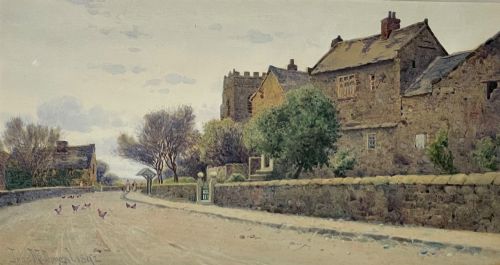
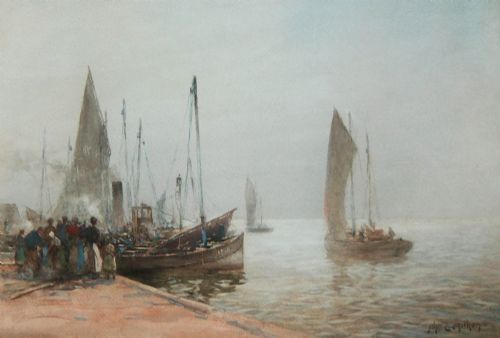
Coastal views, marine scenes, and river estuaries dominate the maritime offerings. Artists also capture rural fields, winter village scenes, and urban townscapes.
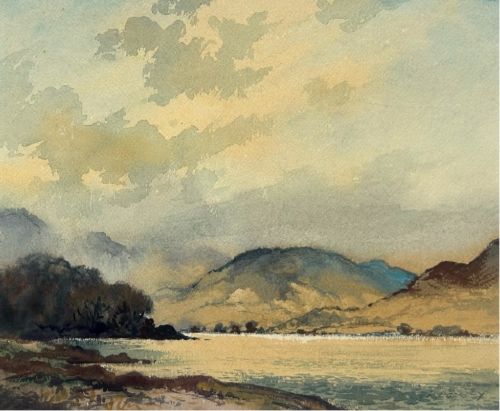
Depictions of stormy seas, overcast harbours, and misty lakes naturally align with the muted grey colour palette.
How do oil paintings on board differ from canvas?
Oil paint applied to wooden boards or panels provides a rigid, stable support that resists the sagging sometimes found in old canvas. Artists often achieved smoother detail or firmer impasto marks on a solid wooden ground.
Canvas offers natural give and texture, which interacts differently with the applied layers of oil paint.