



Framed French Architectural Landscape
A framed French architectural landscape brings the structured facades and town squares of France into your room through oils, watercolours, and ink.
Framed French Architectural Landscape
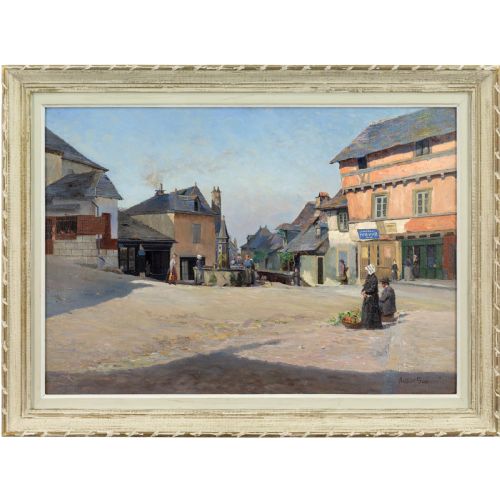
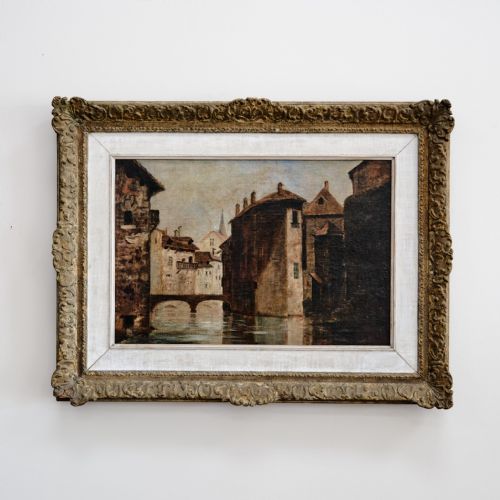
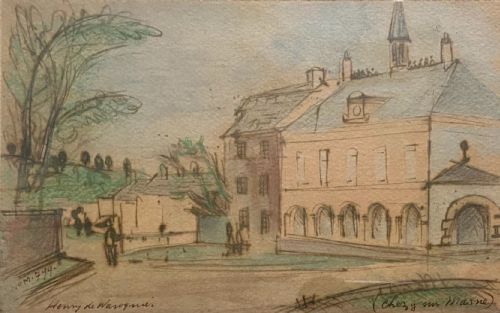
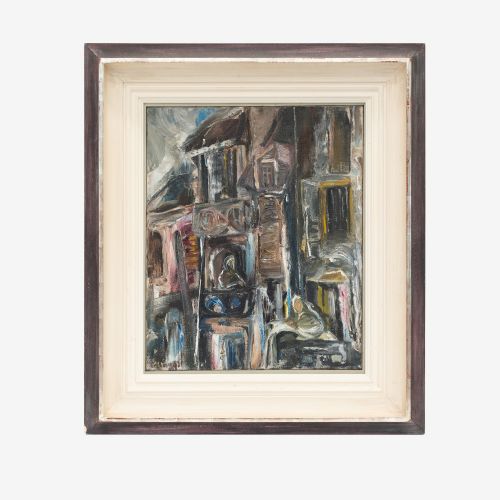
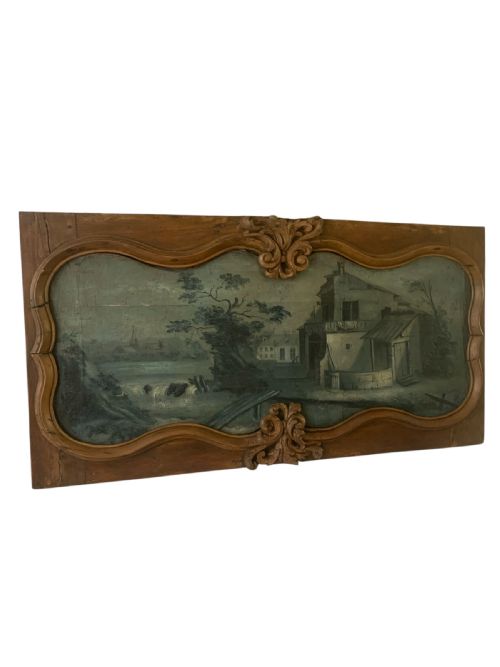
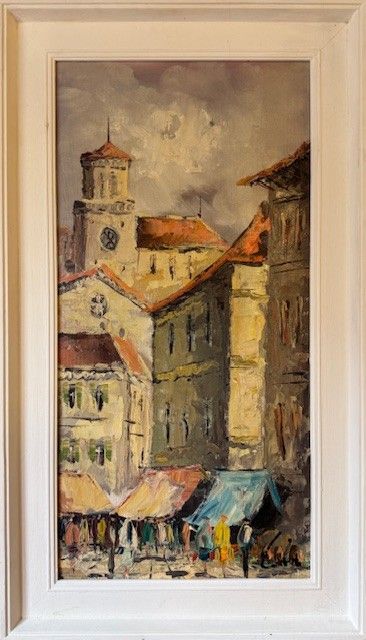
A framed French architectural landscape focuses on buildings, streetscapes, town halls, and chateaux situated within French settings. When you search for this phrase, you encounter depictions ranging from 18th-century overdoor panels to mid-century oil paintings and works on paper.
The selections span diverse eras including the 19th century, Edwardian period, and mid-century modernism. You will find market squares, Parisian river views, cathedrals, and rural farmhouses captured by various artists.
How they were made
Artists utilised traditional mediums such as oil paint on canvas and panel, alongside watercolours, ink, charcoal, and pencil on paper. These materials were often housed within moulded wooden frames finished with gesso.
Techniques range from precise architectural prints and mixed media drawings to fluid post-impressionist brushwork and modernist interpretations of French street scenes.
Listings feature works spanning the 18th, 19th, and 20th centuries, executed in oil, watercolour, ink, and pencil.
What varies in quality
Quality rests in the handling of perspective, light, and structural detail within the composition. A superior piece demonstrates confident brushwork and a balanced integration of buildings and landscape.
The depth of the artist's observation and the harmony between the framed artwork and its period support setting exceptional works apart from standard decorative examples.
Henry de Waroquier·Lilian Colbourn·Paul-Élie Gernez·Ron Folland·Armand Guillaumin
The Framed French Architectural Landscape Glossary
- Gesso
- A plaster-like mixture applied to wood frames as a base for paint or gilding. It provides a smooth surface for decorative moulding.
- Post-Impressionism
- An art movement extending beyond impressionism to emphasise geometric forms and expressive use of colour. Artists applied these principles to landscape and architectural subjects.
- Mixed media
- An artwork combining two or more artistic materials, such as ink and watercolour on paper. This approach allows for layered textures in architectural drawings.
Framed French Architectural Landscape: Frequently Asked Questions
How do I hang a framed architectural painting?
Hang the piece at eye level on a wall with stable ambient conditions away from direct sunlight. Ensure the weight of the framed canvas or work on paper is supported by appropriate wall fixings.
Allow the artwork adequate space to be appreciated without visual clutter from surrounding furnishings. Consider the lighting in the room to avoid glare on glass fronts.
What periods do these landscapes cover?
The available works span from the 18th century through the 19th century and across various decades of the 20th century. Each period brings distinct artistic styles and framing traditions.
Earlier pieces often feature classical architectural compositions, while 20th-century examples showcase impressionist and modernist interpretations of French towns.
Are these works on paper or canvas?
The selection includes both works on paper, such as watercolours, ink, and charcoal drawings, and paintings executed in oil on canvas or panel. Each medium offers a different textural quality.
Works on paper are typically presented behind glass in framed mounts, whereas oil paintings on canvas display the tactile weave of the fabric.
How do I identify a French townscape?
French townscapes often feature distinct architectural elements such as French Gothic cathedrals, Parisian quays, provincial market squares, and traditional shutters on houses. Signatures and inscriptions by the artist frequently reference specific locations.
The style of dress, street furniture, and vehicle types depicted in mid-century or earlier works also help contextualise the scene.