1,348  PAGES BROWSED TODAY PAGES TODAY • 0 ANTIQUES UPLOADED TODAYNEW ARRIVALS
GIFTSNEW
LATEST STOCK
Sort Order
Items Per Page
Browse Categories
Sort order
Relevant Links
Items per page
ID #SA1001445
FOR SALE
£340
Email Phone
Save
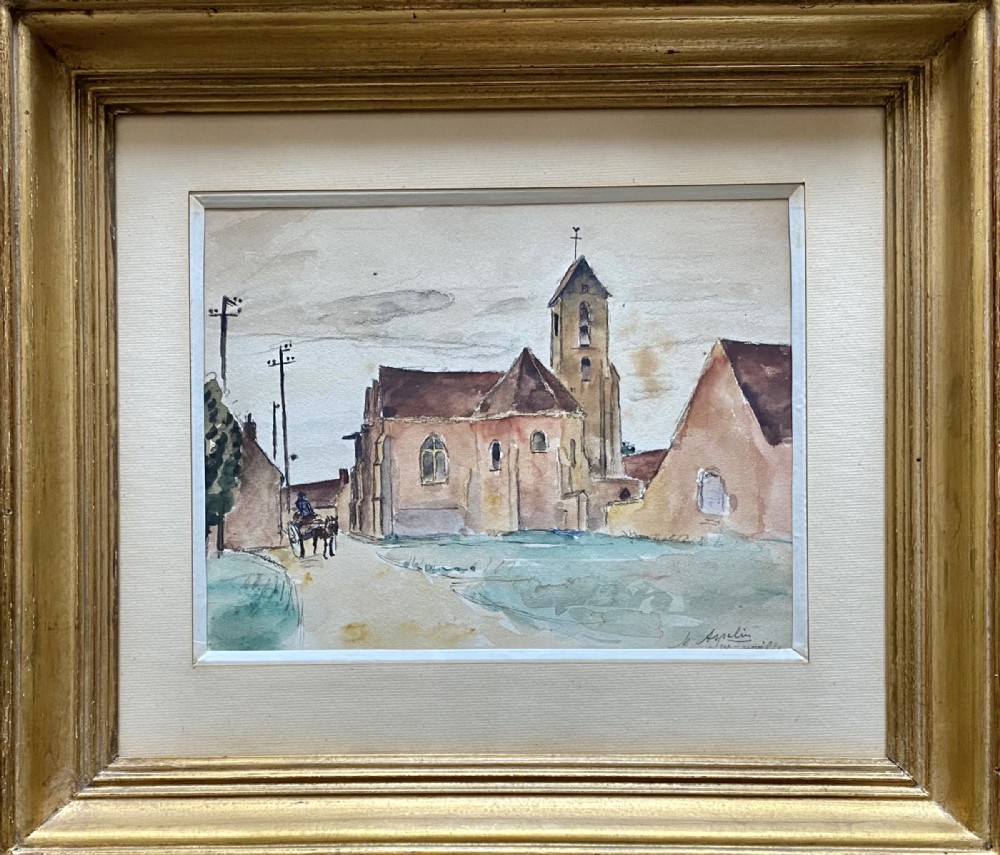
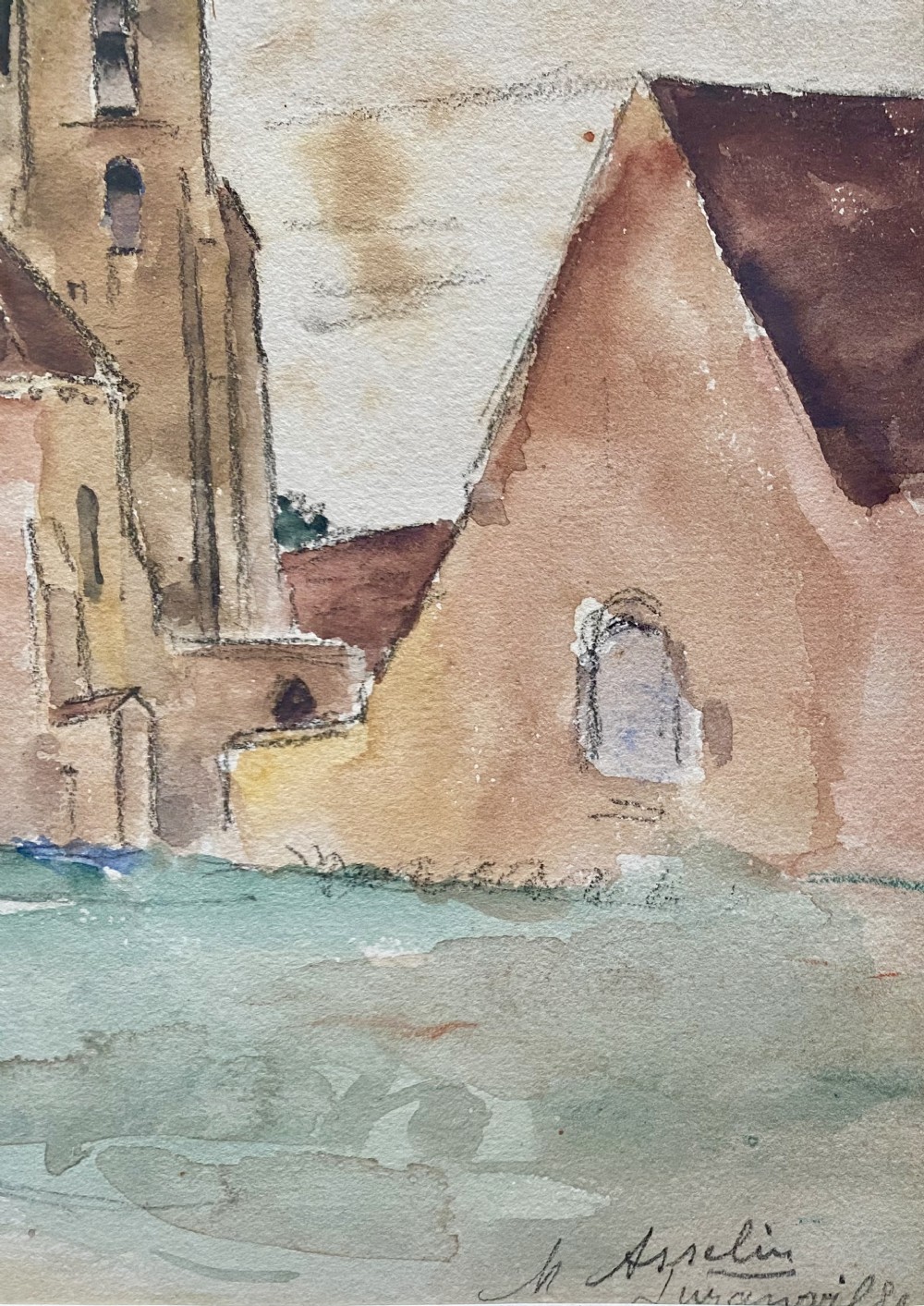
French Village Scene, Ca 1920 by Walter Sickert's Best Friend French Camden Group Artist Maurice Asselin Watercolour on Paper
For sale by Skippings Fine Arts
for sale €398     $432
£340
Skippings Fine Arts

Skippings Fine Arts

Sellingantiques Verified Since Feb 2018
Browse dealers 167 items
  • About Us
    Modern french & continental pictures selected by a former french auction house expert
Id #SA1001445
PDF SHARE
SAVE

French Village Scene, Ca 1920 by Walter Sickert's Best Friend French Camden Group Artist Maurice Asselin Watercolour on Paper

1900 - 1920
Description

Delicate and subte, Maurice Asselin's watercolours have a rare translucence - they shine almost like stained glass lit by the sun.

Art critics descibe Maurice Asselin's work as litterary, sensitive, restrained. His art is ecerything but flashy, but take the time to feel your way into this village scene from circa 1920, and you will reap the rewards.
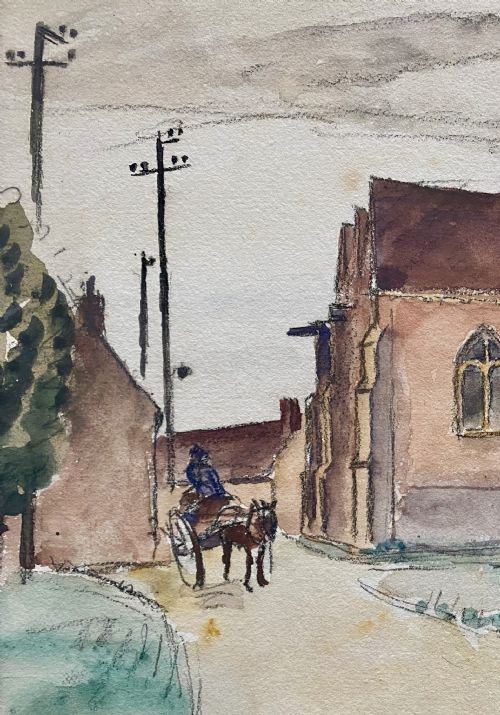
Walter Sickert calls him: "not only one of the most distinguished artists among the younger artists, but also one of the many sane and normal individualities who are really the important constituants of modern French painting".
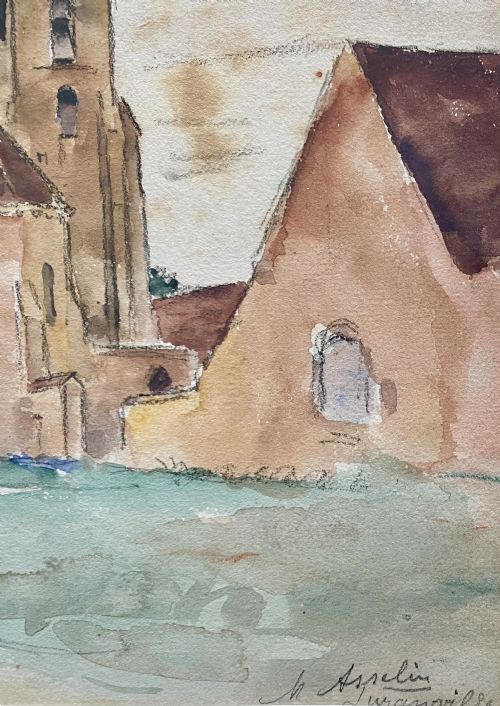
As Walter Sickert's best friend and the French artist most closely connected to the Camden Town Group, Asselin (1882-1942) was one of the most exciting French artists of his generation. This was felt by many of his contemporaries, including Sickert and Roger Fry.
He had a one-man show in London with Carfax and Co in 1915, the gallery close to the Camden Group which, according to Paul Nash, was 'probably the most distinguished and exclusive gallery in London at this time’.
Paintings by the artist are in museums all over the world, from Moscow to New York via Christchurch, New Zealand. Four of his works are in the Pompidou Centre in Paris. The Fitzwilliam in Cambridge owns an oil, as does the Hepworth, Wakefield.

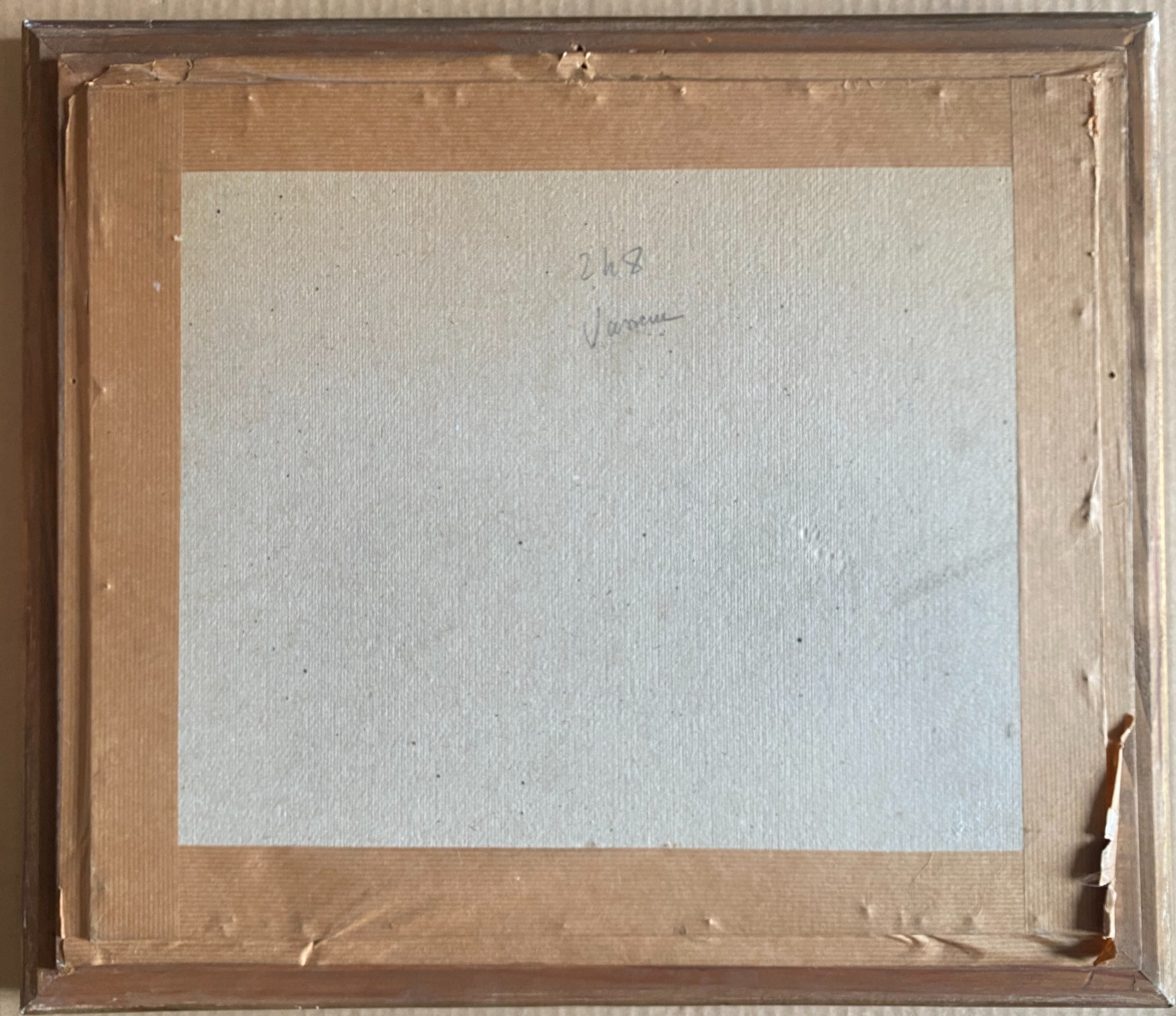
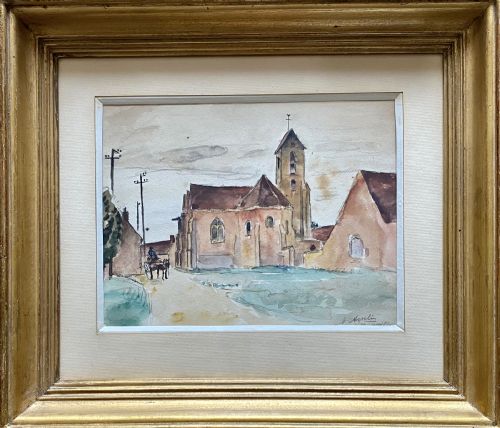
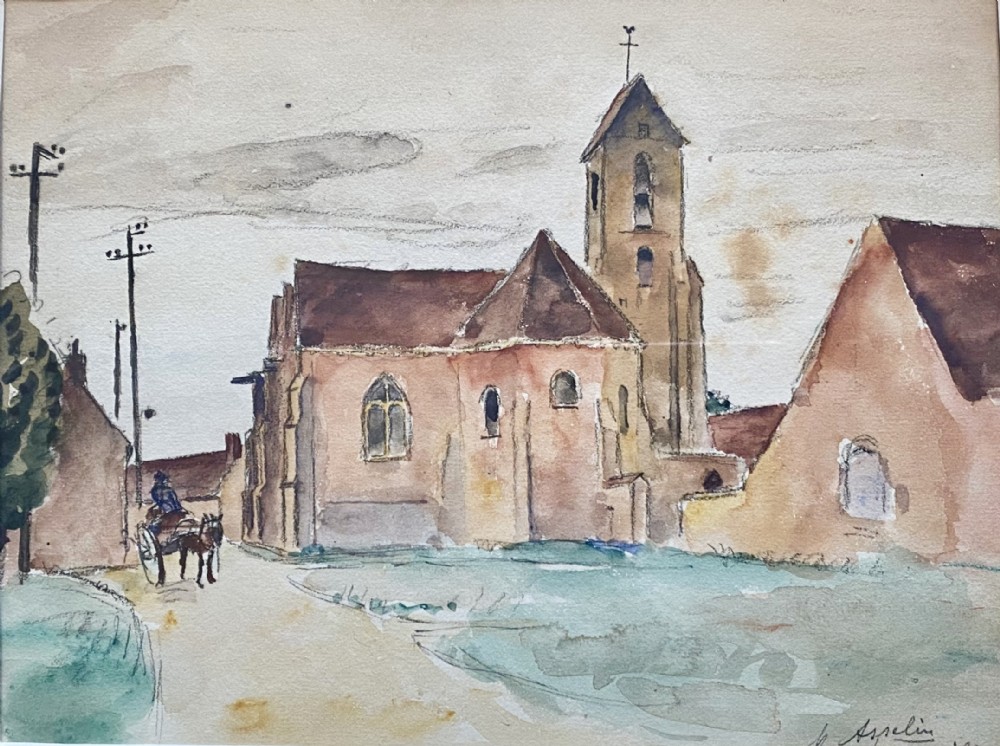
Our watercolour is situated "Juranville" a village in the Loire region close to Orléans, where Asselin was born. It measures 22 x 29 cm and is signed at the lower right. The overall framed size with light wear is 41 x 47 cm.

Physical Dimensions
Height
22cm (8.66")
Width
29cm (11.42")
Depth
1cm (0.39")
Declaration

Skippings Fine Arts has dated this French Village Watercolour Painting to the 1920s.

Reference Numbers
Sellingantiques Reference
SA1001445
Dealers Notes

Nous parlons français, und wir sprechen auch Deutsch! Paintings may be viewed in Norwich and in Paris, as well as in London and Cambridge by appointment. Please contact us if you would like further details and images of an artwork.

Description
Delicate and subte, Maurice Asselin's watercolours have a rare translucence - they shine almost like stained glass lit by the sun.

Art critics descibe Maurice Asselin's work as litterary, sensitive, restrained.

“
His art is ecerything but flashy, but take the time to feel your way into this village scene from circa 1920, and you will reap the rewards.
Skippings Fine Arts
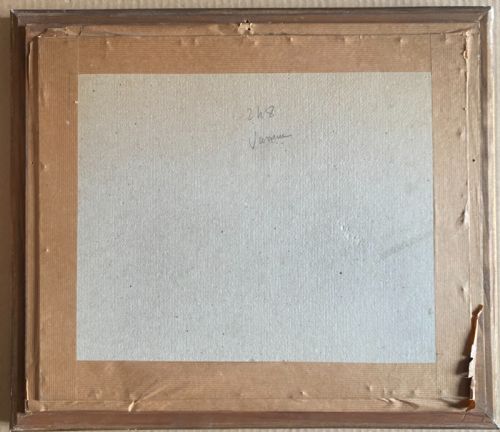
fig 1. An early 20th-century watercolour painting depicting a French village church and rustic buildings in soft brown and green washes with a horse and cart in the foreground.
fig 1. French Village Scene, Ca 1920 by Walter Sickert's Best Friend French Camden Group Artist Maurice Asselin Watercolour on Paper

Walter Sickert calls him: "not only one of the most distinguished artists among the younger artists, but also one of the many sane and normal individualities who are really the important constituants of modern French painting".

fig 2. An early 20th-century watercolour painting depicting a French village church and rustic buildings in soft brown and green washes with a horse and cart in the foreground.
fig 2. French Village Scene, Ca 1920 by Walter Sickert's Best Friend French Camden Group Artist Maurice Asselin Watercolour on Paper

As Walter Sickert's best friend and the French artist most closely connected to the Camden Town Group, Asselin (1882-1942) was one of the most exciting French artists of his generation. This was felt by many of his contemporaries, including Sickert and Roger Fry.

fig 3. An early 20th-century watercolour painting depicting a French village church and rustic buildings in soft brown and green washes with a horse and cart in the foreground.
fig 3. French Village Scene, Ca 1920 by Walter Sickert's Best Friend French Camden Group Artist Maurice Asselin Watercolour on Paper

He had a one-man show in London with Carfax and Co in 1915, the gallery close to the Camden Group which, according to Paul Nash, was 'probably the most distinguished and exclusive gallery in London at this time’.

fig 4. An early 20th-century watercolour painting depicting a French village church and rustic buildings in soft brown and green washes with a horse and cart in the foreground.
fig 4. French Village Scene, Ca 1920 by Walter Sickert's Best Friend French Camden Group Artist Maurice Asselin Watercolour on Paper

Paintings by the artist are in museums all over the world, from Moscow to New York via Christchurch, New Zealand. Four of his works are in the Pompidou Centre in Paris. The Fitzwilliam in Cambridge owns an oil, as does the Hepworth, Wakefield.

Our watercolour is situated "Juranville" a village in the Loire region close to Orléans, where Asselin was born. It measures 22 x 29 cm and is signed at the lower right. The overall framed size with light wear is 41 x 47 cm.

Height
22cm (8.66")
Width
29cm (11.42")
Depth
1cm (0.39")
Date of Manufacture

Skippings Fine Arts has dated this French Village Watercolour Painting to the 1920s.

Reference Numbers
Sellingantiques Ref
SA1001445
Skippings Fine Arts
Skippings Fine Arts
Sellingantiques verified Since Feb 2018

Modern french & continental pictures selected by a former french auction house expert

Dealer Profile

You can view the stock and full dealer information on the Skippings Fine Arts Profile Page
PDF SHARE
SAVE
An early 20th-century watercolour painting depicting a French village church and rustic buildings in soft brown and green washes with a horse and cart in the foreground.
1 / 5
Archive I An early 20th-century watercolour painting depicting a French village church and rustic buildings in soft brown and green washes with a horse and cart in the foreground.

French Village Scene, Ca 1920 by Walter Sickert's Best Friend French Camden Group Artist Maurice Asselin Watercolour on Paper
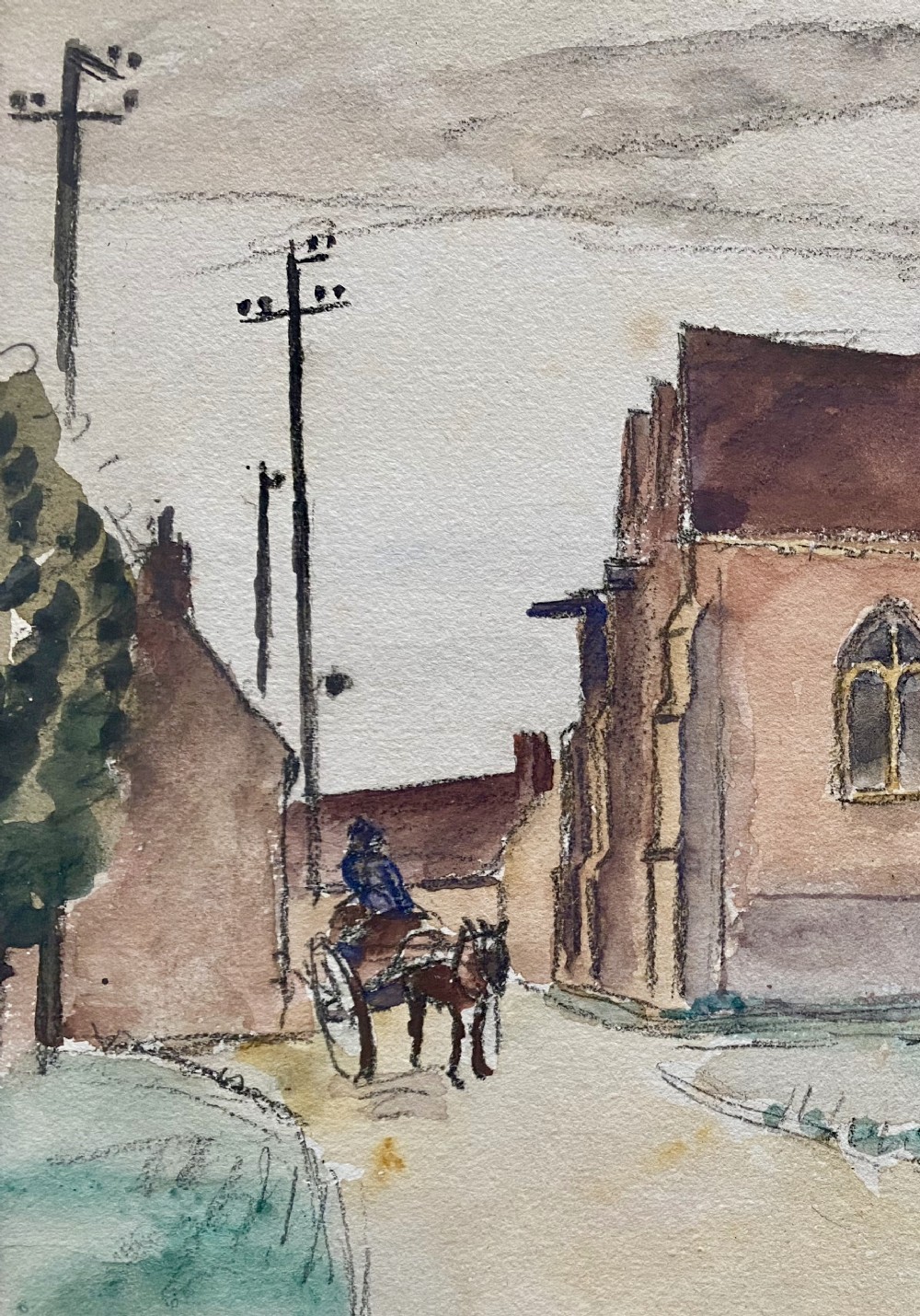
Archive II An early 20th-century watercolour painting depicting a French village church and rustic buildings in soft brown and green washes with a horse and cart in the foreground. View II
Archive III An early 20th-century watercolour painting depicting a French village church and rustic buildings in soft brown and green washes with a horse and cart in the foreground. View III
Archive IV An early 20th-century watercolour painting depicting a French village church and rustic buildings in soft brown and green washes with a horse and cart in the foreground. View IV
Archive V An early 20th-century watercolour painting depicting a French village church and rustic buildings in soft brown and green washes with a horse and cart in the foreground. View V
Enlarged Archival View
Telephone 0747 257 2398
Location
Norfolk
United Kingdom

By appointment
Verified Since Feb 2018
Items For Sale 167
Items Sold 686
Skippings Fine Arts
Skippings Fine Arts
Verified Since Feb 2018
View Dealer Info
Location: Norfolk, United Kingdom, , By appointment
Verified
Feb 2018
For Sale
167
Sold
686
An early 20th-century watercolour painting depicting a French village church and rustic buildings in soft brown and green washes with a horse and cart in the foreground.
French Village scene, ca 1920 by Walter Sickert's best friend French Camden group artist Maurice Asselin watercolour on paper
Ref: SA1001445
An early 20th-century watercolour painting depicting a French village church and rustic buildings in soft brown and green washes with a horse and cart in the foreground.
Detail View 1
Detail View 2
Detail View 3
Detail View 4
Archival Detail
Every single antique dealer on our platform is individually approved by our internal team. We verify their professional trade history, ethical standards, and photographic quality to ensure a secure, high-standard buying environment. Upon joining, every dealer agrees to a strict 9-point code of conduct. While issues can occasionally arise, our dealers typically resolve them swiftly and directly with the buyer. In fact, since our founding in 2002, Sellingantiques has only had to step in to help resolve an issue on roughly five occasions—a true testament to the quality of our dealers and their dedication to your happiness.
Our dealers are highly experienced in packing and shipping fragile, high-value antiques. Because you are in direct contact with the dealer, you will be able to easily go through all available shipping and insurance options together to ensure your item arrives safely.
Antiques are the ultimate green purchase. By choosing historical pieces over newly manufactured goods, you completely eliminate the carbon footprint of modern mass production while preserving exceptional, timeless craftsmanship.
Written by Sellingantiques from the dealer’s photographs and listing
  • ObjectWatercolour Painting
  • Period1900 - 1920
  • StylePost-Impressionism
  • MaterialWatercolour, Paper
  • ColourEarthy Brown
  • MotifsChurch spire, Horse and cart, Village architecture, Earthy washes
  • SizeH 22 cm (9 in) x W 29 cm (11 in) x D 1 cm (0 in)

This early 20th-century watercolour painting on paper originates from the post-impressionist period around 1920. Executed in earthy brown and green washes, the artwork depicts a French village scene featuring a church spire, village architecture, a horse and cart in the foreground, and telegraph poles against a pale sky. The composition displays a signature at the lower right corner, visible brushwork defining the building contours, and minor discoloration spots scattered across the paper surface. The artwork measures 22 cm high, 29 cm wide, and 1 cm deep. Placed within a domestic setting today, this piece suits a study, hallway, or living room wall, and functions effectively when hung above a sideboard. The muted colour palette and pastoral subject matter complement traditional and transitional interior schemes, bringing a calm, historical narrative to residential spaces. The framing provides a finished edge, allowing the work to integrate smoothly into existing gallery walls or function as a standalone focal point within a room.

Post-Impressionist watercolours from the 1920s often feature simplified architectural forms, expressive brushwork, and a muted, naturalistic colour palette to capture atmospheric light and localized rural scenery.

Artists typically used water-based pigments painted onto heavy cotton rag or cellulose paper, applied with fine sable or soft hair brushes to achieve varying degrees of transparency.

Authentication involves examining artist signatures, analyzing paper aging characteristics such as uniform toning or foxing, evaluating technique consistency, and tracing established provenance.

Watercolour paintings complement modern interiors when framed in clean wooden or gilded mouldings with acid-free mounts, placed as part of a curated gallery wall or above a console table.

Display the artwork away from direct sunlight using UV-filtering glass, maintain stable humidity levels to prevent cockling, and ensure all framing materials are strictly acid-free.
items
Add keywords to the filter
Price
£100
£250000
Era
Period
Style
Material
Origin
Stock Location
Recently Added
Online Payments
Categories