




Oriental Wall Dish
An oriental wall dish brings vibrant colour and intricate hand-painted detail from East Asia directly onto domestic walls.
Oriental Wall Dish
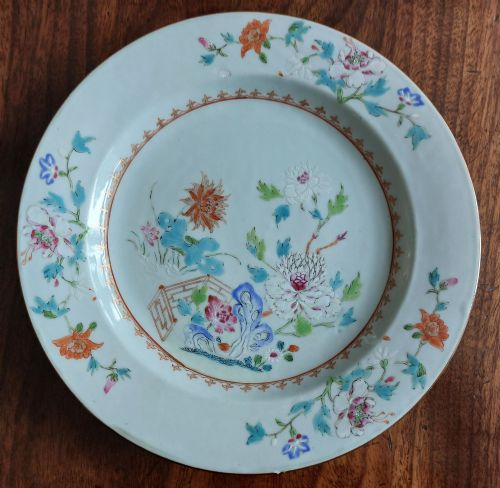
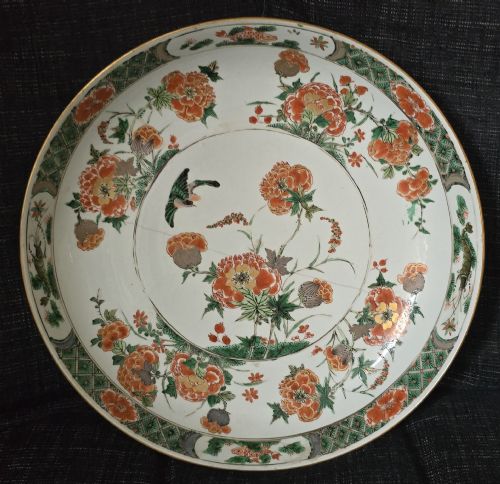
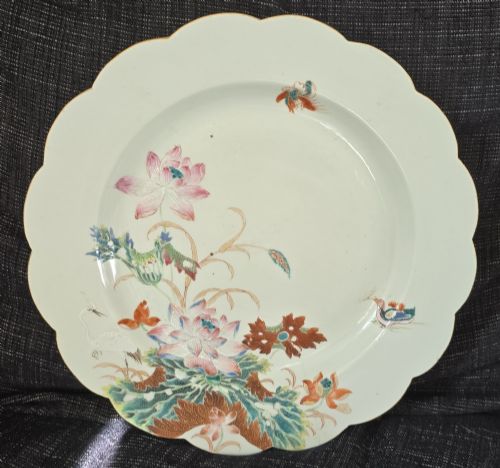
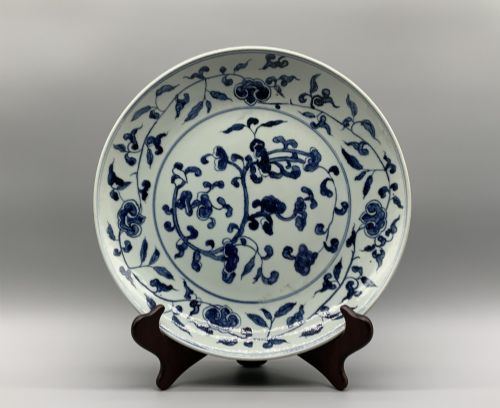
An oriental wall dish encompasses decorative plates, chargers, and plaques originating from Japan and China across the eighteenth, nineteenth, and early twentieth centuries. These large display pieces were created specifically to be hung or showcased for their striking visual impact rather than for daily dining use.
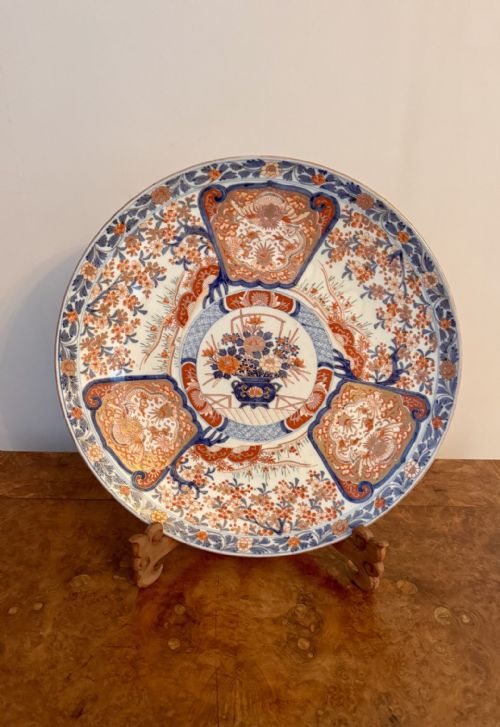
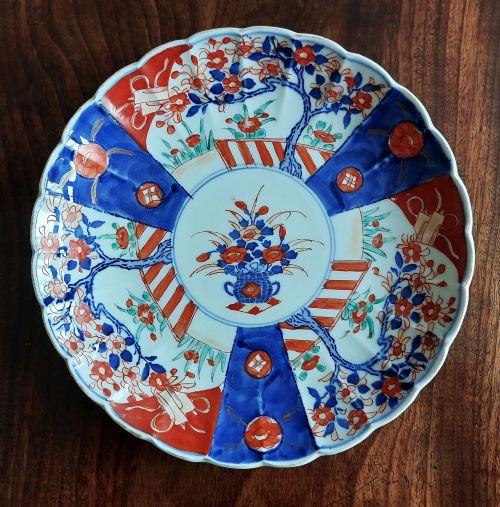
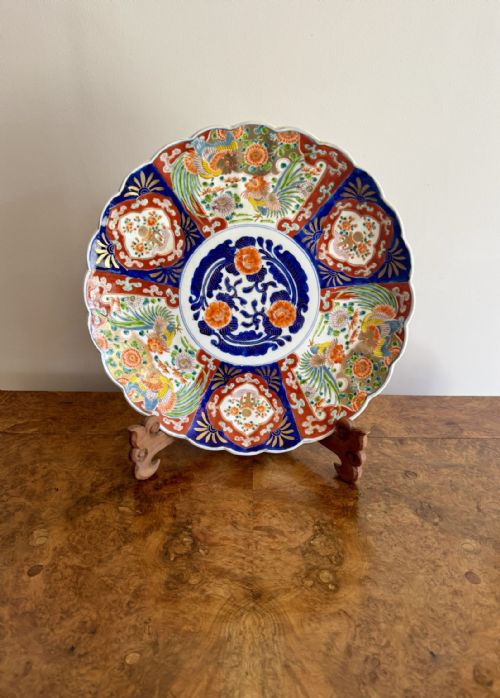
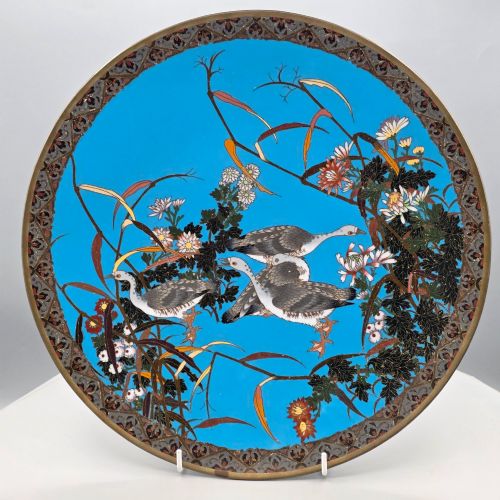
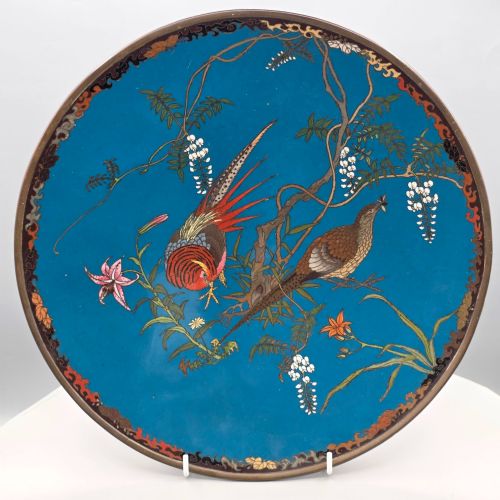
The selections available here lean heavily toward Japanese Imari porcelain and Meiji period cloisonne enamel chargers. Buyers frequently encounter plates featuring scalloped edges, cobalt blue and iron red palettes, alongside metallic cloisonne works depicting birds, landscapes, and flowers.
How they were made
Potters shaped porcelain bodies before applying intricate underglaze blue and overglaze enamel colours, firing the pieces multiple times to fix the pigments. Artisans also worked with copper and brass bases for cloisonne enamel, soldering thin metal wires to form cells that were filled with coloured enamel paste and polished smooth.
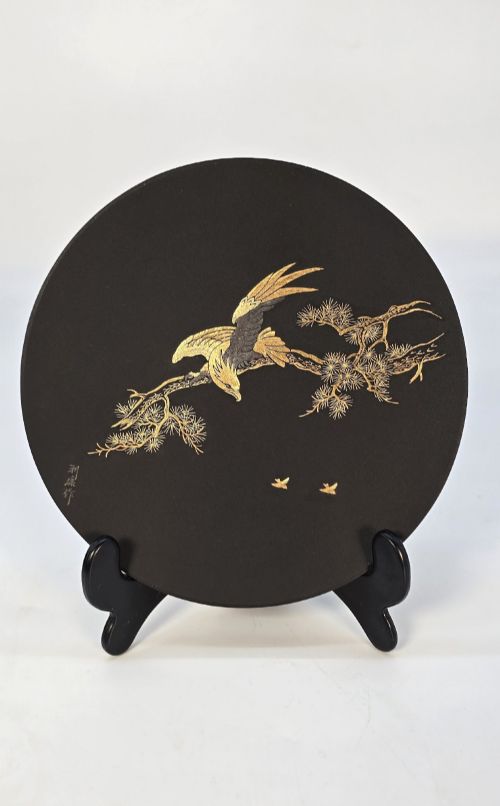
Certain decorative plaques utilise patinated iron inlaid with gold and silver for added contrast and texture. Gold leaf accents frequently highlight fine details on both ceramic surfaces and metalwork.
Materials represented across the selection include porcelain, copper, brass, enamel, cloisonne enamel, gold leaf, glaze, and gilt.
What varies in quality
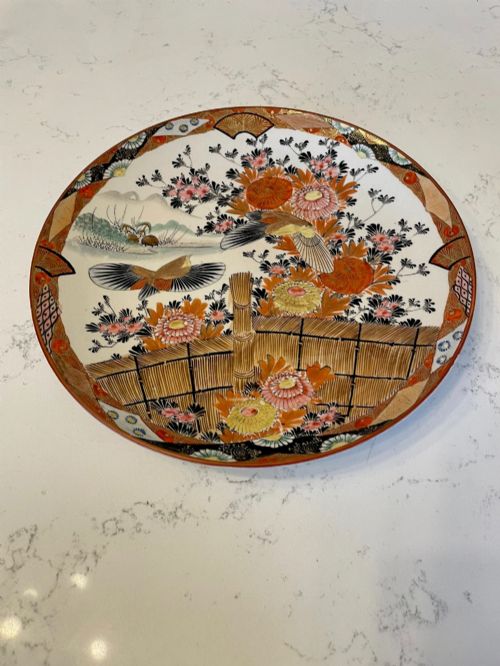
The skill of the artisan dictates the refinement of the imagery, visible in the precision of cloisonne wirework or the delicate brushstrokes of hand-painted avian and floral motifs. Masterpieces display complex, balanced compositions with detailed elements such as individual feathers or distinct scales.
The depth of colour, clarity of the glaze, and complexity of the subject matter distinguish standard production wares from exceptional signed pieces. Superior items maintain crisp definition across every decorative element without blurring or pooling in the enamel.
Koshida
The Oriental Wall Dish Glossary
- Charger
- A large decorative plate intended for display rather than table service. These substantial vessels often measure over thirty centimetres across.
- Cloisonne
- A technique where metal wires form raised partitions on a metal body to hold coloured enamel pastes. The surface is subsequently fired and polished to an even finish.
- Imari
- A style of Japanese porcelain featuring a distinct palette of underglaze blue, iron red, and gilt highlights. Production centred on the town of Arita for export markets.
- Moriage
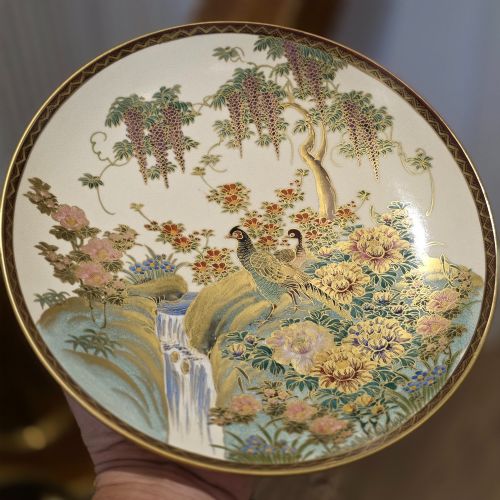
- A decorative ceramic method where slip is piped onto the surface to create raised, textured patterns. This technique appears prominently on Satsuma wares.
- Meiji
- A Japanese historical period spanning from eighteen sixty-eight to nineteen twelve noted for significant artistic output and international trade. Works from this era often exhibit highly sophisticated metal and ceramic craftsmanship.
Oriental Wall Dish: Frequently Asked Questions
How do I hang an antique oriental wall dish safely?
Displaying these chargers securely requires a professionally fitted spring-loaded wall hanger designed specifically for heavy ceramic or metal plates. Ensure the fixing grips the rim firmly without placing excessive pressure on any single point.
Position the dish away from direct sunlight and high traffic areas to protect the delicate enamels and gold leaf details from accidental damage.
What is the difference between Imari and Satsuma wares?
Imari pieces consist of hard porcelain decorated with deep cobalt blue, iron red, and gilding, typically featuring geometric and floral patterns. They offer a bright, resonant surface finish.
Satsuma items utilise an earthenware body covered in a crackle-glaze ivory finish, traditionally embellished with densely detailed figurative or natural scenes often enhanced with raised moriage work.
Were these dishes meant for dining?
Large chargers and decorative plaques served primarily as ornamental display pieces in both Asian interiors and European drawing rooms. Their generous scale and elaborate surface decoration made them unsuited for practical food service.
Craftsmen designed them to be admired on walls or mounted on heavy stands to showcase fine artistic techniques.
How do I identify a Meiji period piece?
Meiji period items date from eighteen sixty-eight to nineteen twelve, a time when Japanese craftsmanship reached exceptional heights for international export. Look for meticulous cloisonne wirework, dynamic depictions of nature, and occasional artist signatures.
The materials from this era typically combine traditional ceramic and metalworking skills with refined finishing techniques.