
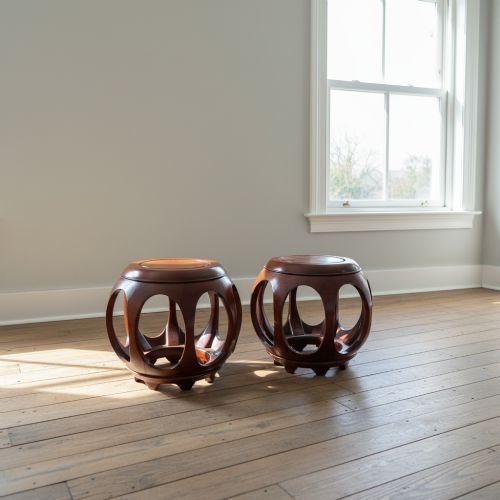
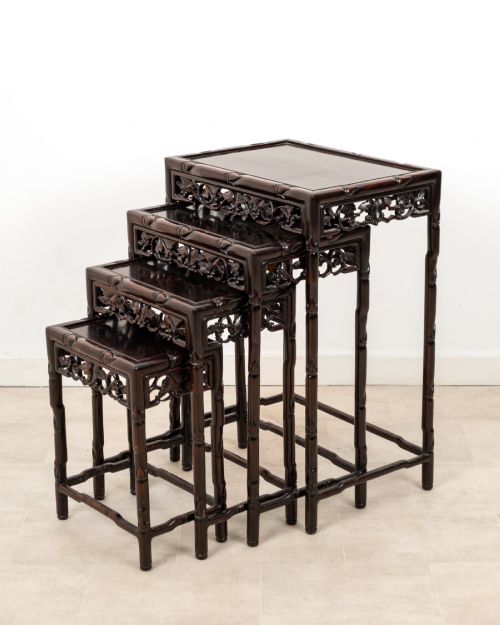
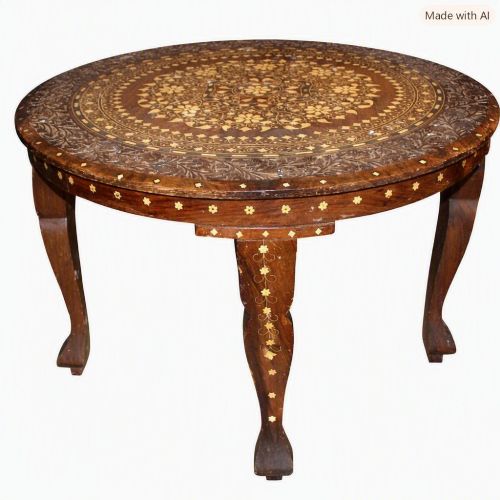
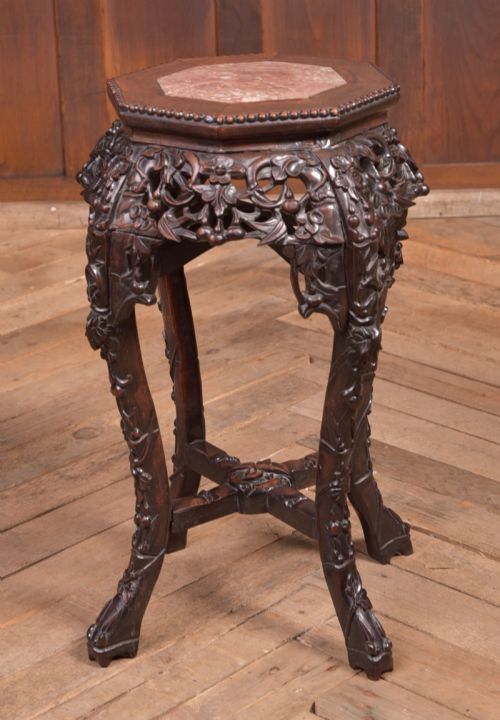
Oriental Hardwood Plant Tables
Oriental hardwood plant tables are solid timber stands built to display ceramics and botanicals, combining dense Asian and Indian woods with intricate carving.
Oriental Hardwood Plant Tables
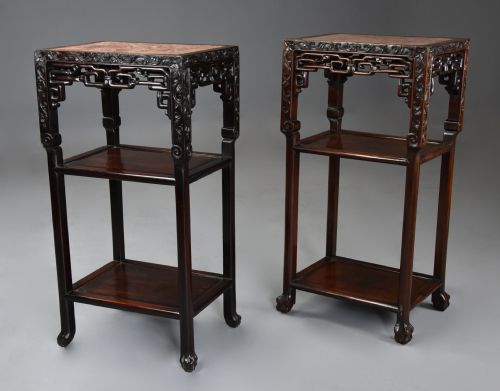
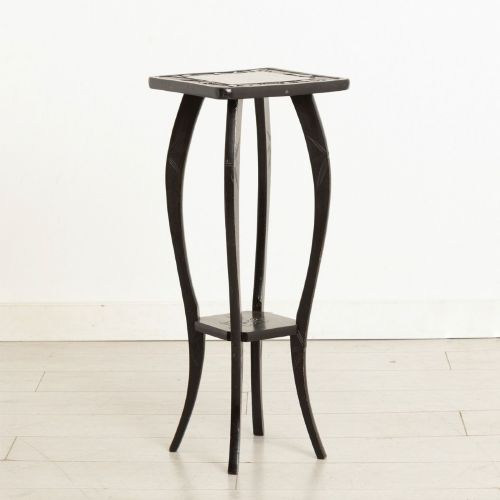
Oriental hardwood plant tables encompass a variety of low tables, pot stands, and pedestal tables originating from Chinese Export workshops, the Qing Dynasty, and Anglo-Indian production. Buyers search this phrase to find sturdy surfaces specifically suited for displaying heavy planters, jardinieres, and vases.
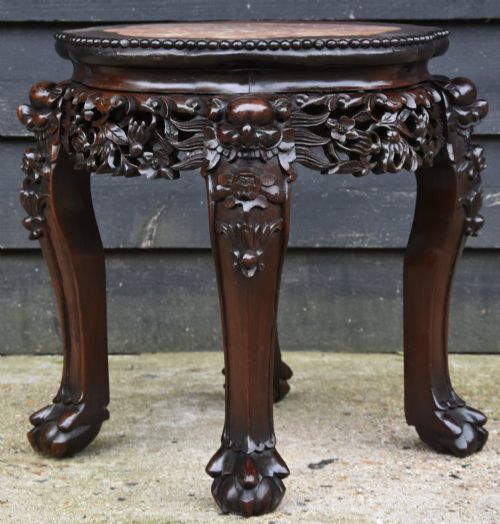
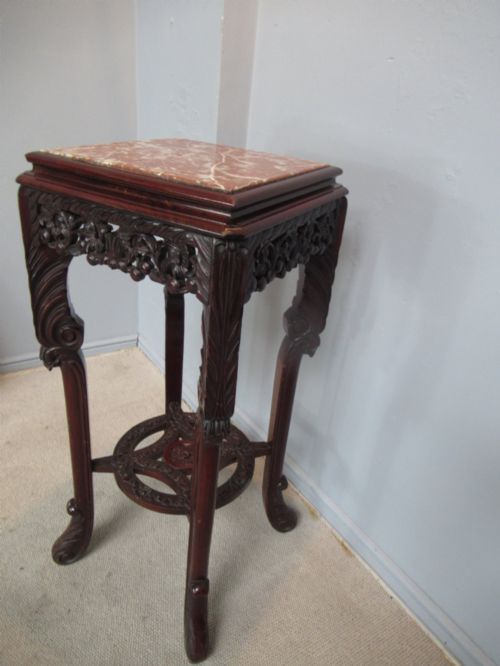
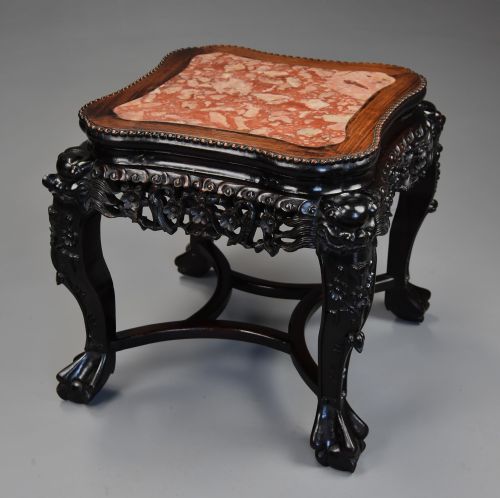
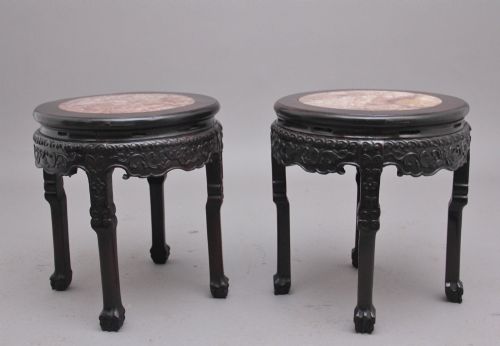
The versions most frequently met on this page include nineteenth-century Chinese hongmu and rosewood stands, often featuring inset marble tops and carved aprons. These items function equally well as occasional side tables or lamp tables in modern interiors.
How they were made
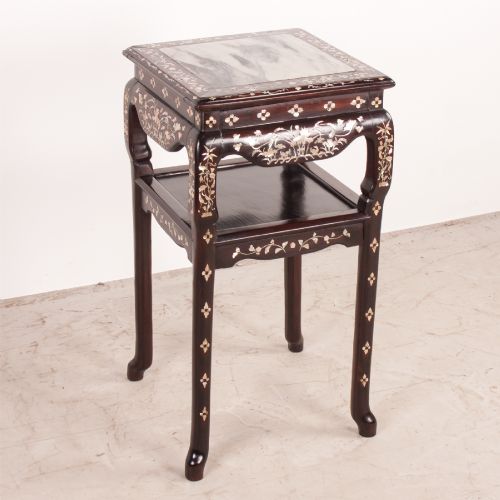
Craftsmen utilised dense tropical timbers such as rosewood, padouk, teak, and hongmu, often pairing them with contrasting panels of burr wood, bone inlay, or mother of pearl. These durable woods allowed artisans to carve deep, crisp relief motifs without compromising the structural integrity of slender legs and aprons.
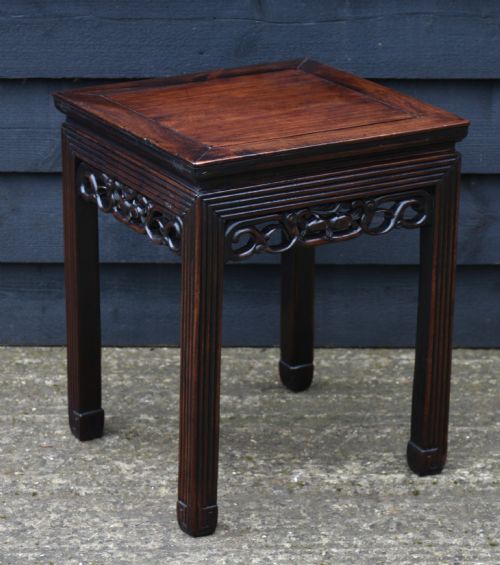
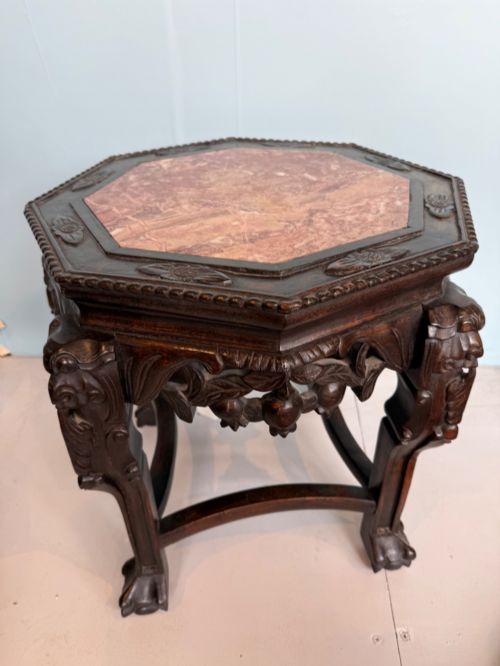
Many tables incorporate inset variegated rouge or white marble tops, held firmly within wooden rebates to support heavy ceramic pots and prevent moisture damage to the timber. Joinery methods relied on precise interlocking joints rather than metal fixings, ensuring stability across octagonal, square, and circular forms.
Several tables retain traces of nineteenth-century botanical soil in their carved crevices, offering quiet proof of their original greenhouse duties.
What varies in quality
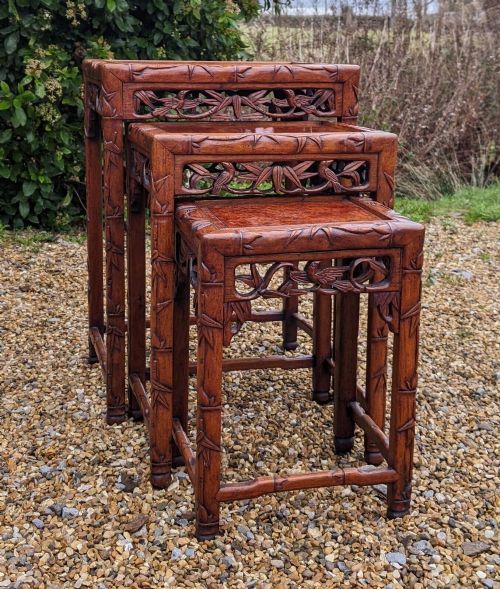
The standard of carving dictates the upper tier of these pieces, separating mechanical repetition from hand-chiselled depth where foliage, dragons, and geometric borders retain sharp undercut edges. Timber selection similarly separates the range, with dense huanghuali or heavily figured rosewood displaying superior grain movement and natural lustre.
Construction details such as the thickness of the marble insert, the snugness of the frame joints, and the symmetry of shaped aprons distinguish standard production items from masterwork commissions. Superior examples maintain balanced proportions and tight joinery that resists wobble despite heavy top loads.
Liberty & Co·Liberty of London·Gabriel Viardot
The Oriental Hardwood Plant Tables Glossary
- Hongmu
- A dense, dark traditional Chinese hardwood used extensively for high-status furniture during the Qing Dynasty. It translates literally to red wood.
- Jardiniere stand
- A tall or low pedestal table specifically designed to hold a large ceramic plant pot or flower bowl. These surfaces frequently incorporate marble insets to catch water spills.
- Padouk
- A heavy, durable tropical timber with a reddish hue that darkens with age. It appears frequently in nineteenth-century carved stands.
- Anglo-Indian
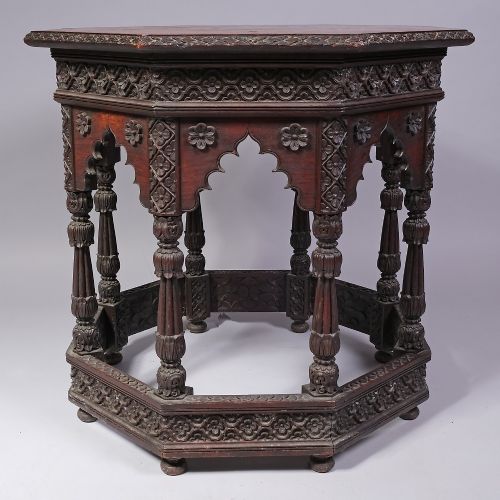
- Furniture produced in India by local craftsmen using traditional regional carving techniques adapted to British colonial tastes. These pieces often feature intricate bone inlay or elephant motifs.
Oriental Hardwood Plant Tables: Frequently Asked Questions
What were oriental hardwood plant tables used for?
These pieces served primarily as elevated platforms for heavy porcelain planters, bronze vessels, and decorative jardinieres inside traditional interiors. Their sturdy timber frames protected expensive ceramics from floor-level dampness while displaying them at eye level.
Over time, owners adapted them to hold lamps, tea sets, or wine vessels as interior fashions shifted. Today they function flexibly as compact side tables or bedside surfaces in contemporary homes.
How do I identify a Qing dynasty stand?
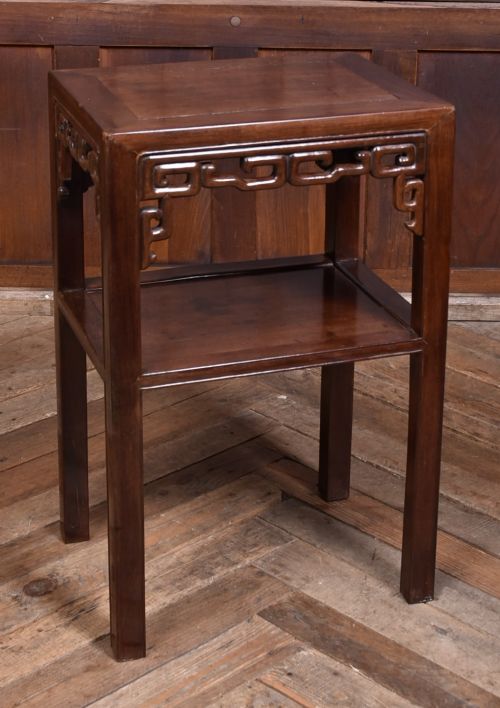
Qing dynasty stands typically exhibit deep hand-carved relief work depicting traditional motifs like prunus blossoms, dragons, or key-fret borders executed in dense woods like hongmu or rosewood. They frequently incorporate heavy inset marble panels with hand-finished bevels.
Examination of the underside reveals traditional joinery without modern metal screws or brackets. The weight of the timber and the patination accumulated through age provide further indicators of nineteenth-century origin.
Are marble top tables waterproof?
The marble insert itself resists water from plant pots and vases, protecting the underlying wooden frame from direct moisture contact during watering. However, water can seep into the fine rebate joint surrounding the stone if left pooling for extended periods.
It is wise to use a protective mat beneath heavy planters and wipe up spills promptly. The stone surface simply requires regular dusting and occasional mild soap cleaning to maintain its finish.
What is the difference between a pot stand and a low table?
Pot stands generally feature taller, narrower proportions designed to elevate a single specimen into the line of sight, often resting on high cabriole or straight legs. Low tables possess a broader footprint and lower height, suiting placement beside seating.
Despite the classification in historical records, many forms overlap because craftsmen built sturdy rectangular and circular tables that functioned interchangeably as plant pedestals or small tea surfaces.