


Graduated Nest of Tables
A graduated nest of tables is a clever set of interlocking surfaces that store compactly and separate for tea or writing.
Graduated Nest of Tables
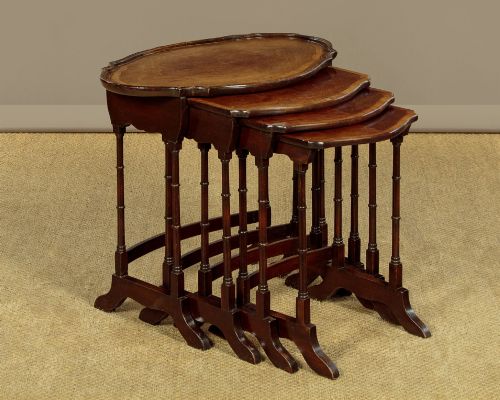
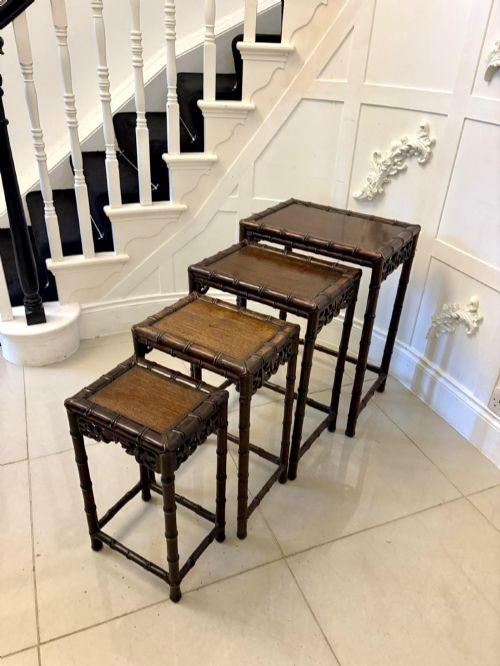
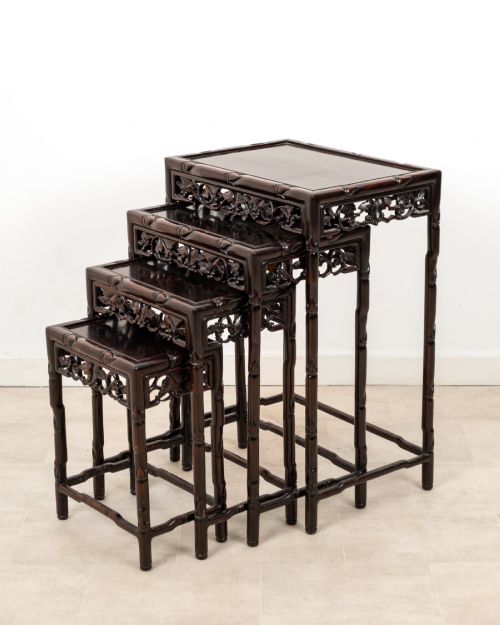
A graduated nest of tables provides multiple surfaces that slide neatly beneath one another when floor space is at a premium. These pieces span from the nineteenth century into the early twentieth century, taking forms from simple Edwardian mahogany frames to elaborate Chinese Qing Dynasty carved hardwood quartetto sets.
Most examples encountered here are Edwardian or Victorian creations, alongside Chinese hardwood and rosewood versions from the late nineteenth century. Buyers often select these sets for their exceptional versatility in a sitting room, allowing four distinct tables to appear from a single footprint.
The layout typically consists of three or four graduated tables, descending in height and width so each smaller table slides snugly under the one above it. Traditional British iterations lean on mahogany, walnut, oak, and satinwood inlay, while imported oriental examples utilise dense carved hardwoods.
How they were made
Cabinetmakers constructed these sets primarily from solid timbers and fine veneers, employing dense hardwoods such as mahogany, rosewood, oak, and walnut. British workshops often utilised satinwood inlay and barley twist turnings, while Chinese makers carved intricate motifs into heavy native hardwoods.
Joinery had to be exceptionally precise to ensure the graduated frames cleared one another smoothly without binding or scraping the polished surfaces. Each leg and stretcher was carefully proportioned so that the smallest table reached its designated resting position precisely flush with the largest frame.
The smallest table in a quartetto nest is often light enough to carry in one hand like a tray, ready to rescue a cup of tea from the sofa.
What varies in quality
Quality rests upon the density of the timber, the crispness of any carved or inlaid detail, and the precision of the nesting mechanism. Superior sets maintain structural rigidity across all four tables without loose joints or sagging tops, despite the thin framework required for interlocking.
The refinement of the timber selection marks the difference between standard production pieces and finer examples. Rich grain patterns in rosewood or mahogany, alongside hand-carved friezes on Chinese quartetto tables, elevate a utilitarian space-saver into a decorative focal point.
The Graduated Nest of Tables Glossary
- Quartetto
- A set of four graduated tables designed to nest together. This nineteenth-century term often appears in descriptions of Chinese hardwood nests.
- Graduated
- Describing tables built in decreasing sizes so each smaller piece fits beneath the next. This arrangement maximises storage efficiency.
- Faux Rosewood
- A painted or grained finish mimicking genuine rosewood timber. Cabinetmakers utilised this technique on alternative woods to achieve an expensive aesthetic.
Graduated Nest of Tables: Frequently Asked Questions
How were graduated nests of tables used historically?
These sets served primarily in drawing rooms and parlours where extra surface area was needed temporarily for tea service, reading materials, or writing correspondence.
Servants or hosts would separate the tables as guests arrived, distributing the smaller surfaces around the room before sliding everything back into a single compact unit afterward.
How do I tell an Edwardian set from a Victorian one?
Edwardian examples tend to feature lighter timber frames, subtle satinwood inlay, and simple tapered legs or delicate stretchers reflecting the tastes of the early twentieth century.
Victorian and earlier nineteenth-century pieces often display deeper, heavier mahogany construction, bolder proportions, and occasional quartetto sizing imported from Chinese workshops.
Can these tables support daily heavy use?
While sturdy enough for normal domestic tasks like holding cups and books, the slender legs and interlocking frames are inherently lighter than standard occasional tables.
Treating the smaller tables with care prevents strain on the joints, ensuring the nesting mechanism continues to slide freely without catching.