


Qing Dynasty Nesting Tables
Qing dynasty nesting tables are graduated sets of matching occasional stands that slide neatly beneath one another.
Qing Dynasty Nesting Tables
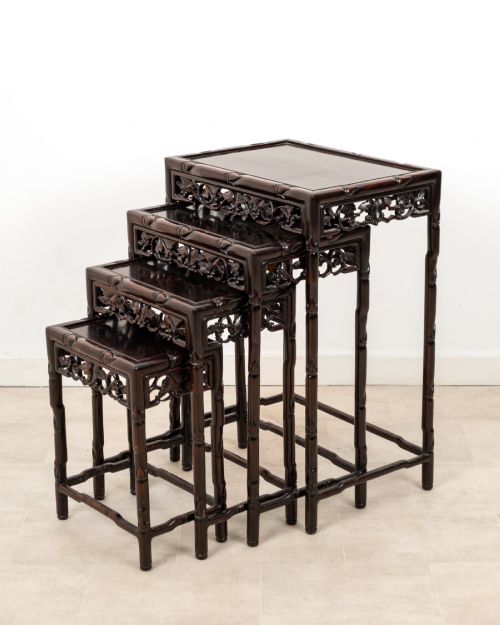
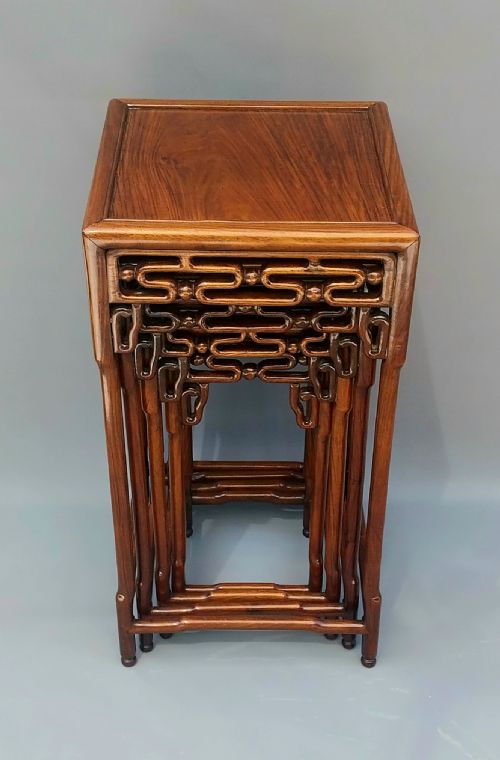
Qing dynasty nesting tables typically comprise sets of four graduated occasional stands designed to slide neatly beneath one another when not in use. The examples met on this page span the nineteenth century and the early twentieth century, including Edwardian and Victorian crossover periods.
Forms include sets of three or four pieces, often described as quartetto tables or occasional tables. They originate from Chinese traditions and Chinese export workshops, carrying styles ranging from late Qing dynasty to Chinese traditional.
How they were made
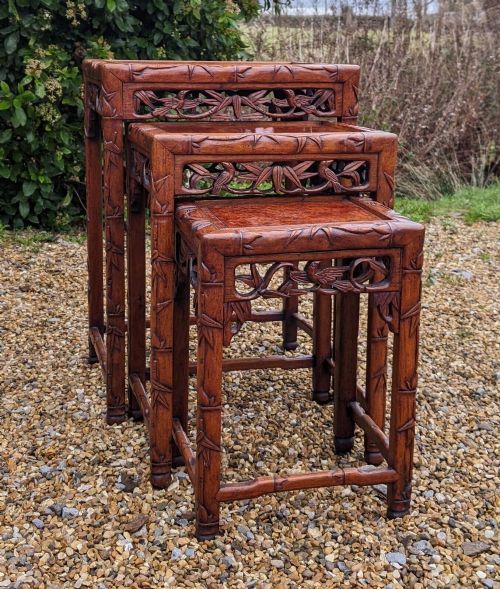
Maker workshops utilised dense timbers such as hardwood, rosewood, hongmu, and huanghuali wood, occasionally incorporating burrwood for distinct surface texture. Construction relied on precise joinery to allow each graduated table to fit flush inside the next.
One set of four clever tables includes burrwood panels alongside hongmu, giving each descending surface its own distinctive swirling grain.
What varies in quality
Quality rests in the choice of timber and the depth of the grain, particularly in woods like huanghuali and hongmu where rich colour variation elevates the piece. The crispness of the carved detail across the graduated set also defines the tier of the work.
The integrity of the nesting fit matters, as does the retention of all original matching members in a set of three or four. Heavier, denser hardwood frames command greater appreciation than lighter secondary timbers.
The Qing Dynasty Nesting Tables Glossary
- Nesting tables
- A set of graduated tables designed to fit one beneath another to save space. They are pulled out for serving tea or display.
- Hongmu
- A translation meaning red wood, used in Chinese furniture-making to describe dense, dark hardwoods such as rosewood. It forms heavy, durable frames.
- Huanghuali
- A prized fragrant hardwood from the legume family, known for complex grain patterns and deep amber colour. It appears in high-status Qing furniture.
- Quartetto
- A traditional term for a matched set of four small tables designed to stand together. The word reflects nineteenth-century British usage for Chinese nests.
- Graduated
- Describing a set where each piece diminishes in height and width to slide beneath the preceding one. This proportioning is essential for a proper nest.
Qing Dynasty Nesting Tables: Frequently Asked Questions
How many tables are in a standard set?
Most sets comprise four graduated tables designed to slide neatly beneath the largest piece. Occasionally, sets of three appear in the records.
Each table diminishes in size to achieve the compact stacked form.
What wood were they made from?
Workshops utilised dense Asian hardwoods including hongmu, huanghuali wood, and general hardwood. Burrwood panels also appear on specific tops for decorative contrast.
These timbers provided the structural weight needed for slender frames.
How do I date a set?
Dating relies on stylistic markers pointing to the nineteenth century, late Qing dynasty, or early twentieth-century periods like the Edwardian era. Joinery techniques and timber patination also offer clues.
Sets often carry attribution to around 1880, 1890, or 1900 based on construction methods.
Were they made for export?
Many sets fall under Chinese export classifications, tailored for Western markets during the late Qing period. British buyers imported them as versatile occasional furniture.
This trade explains their presence in Victorian and Edwardian homes.