
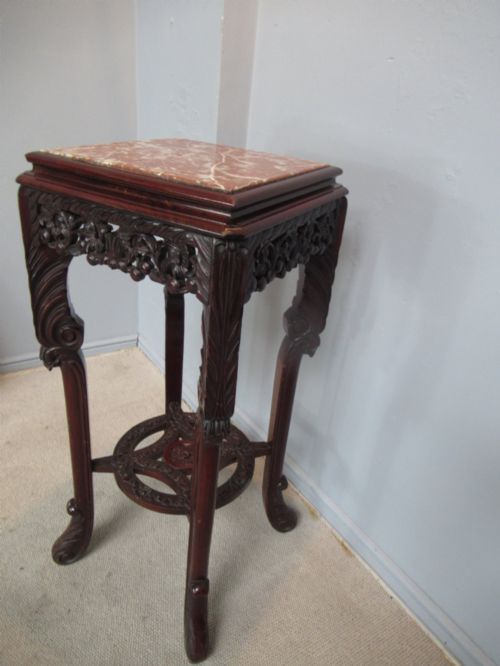
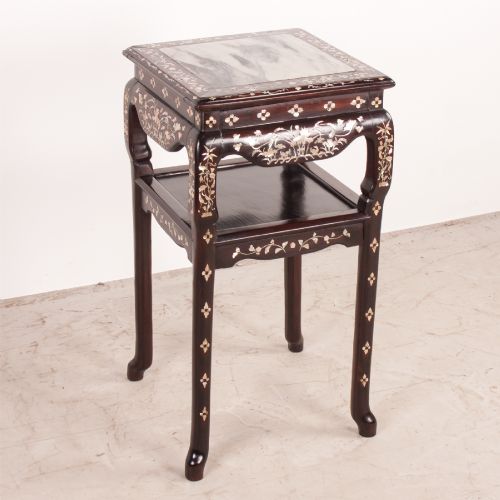
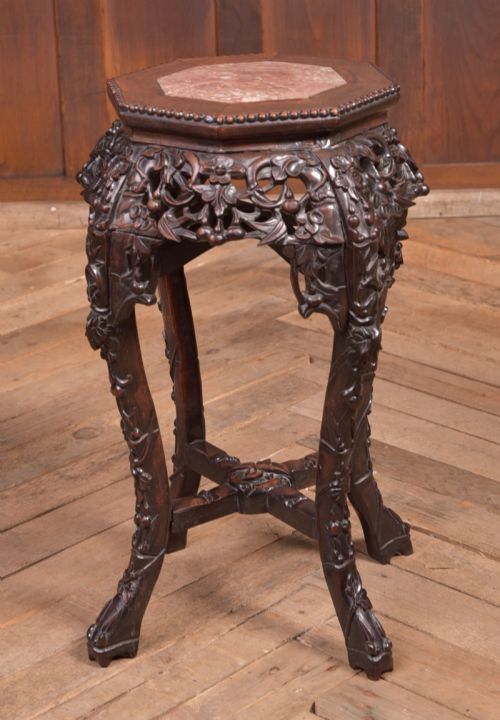
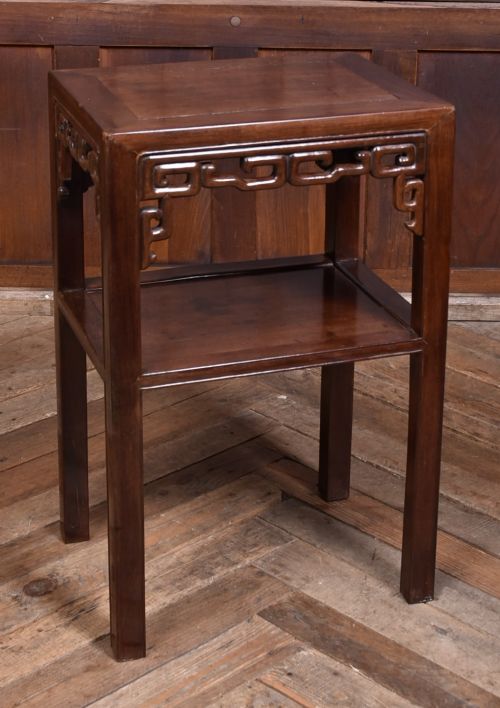


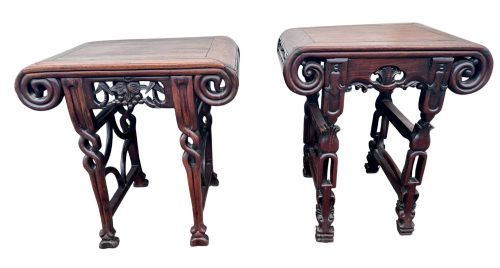
Oriental Hardwood Pedestal
An oriental hardwood pedestal supports heavy planters and treasured ceramics with a solid stance rooted in nineteenth-century craftsmanship.

Oriental Hardwood Pedestal
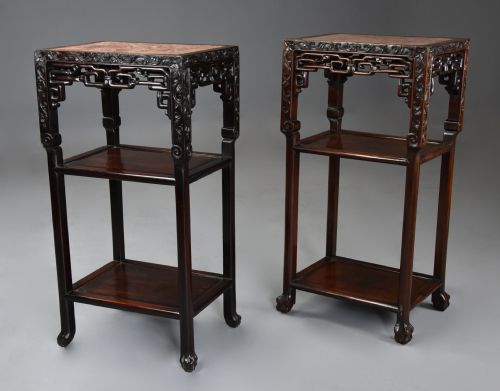
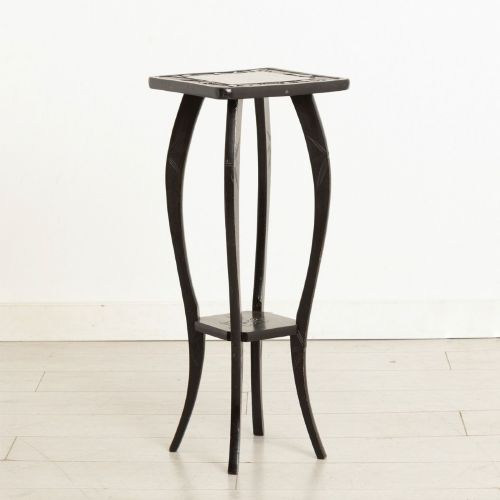
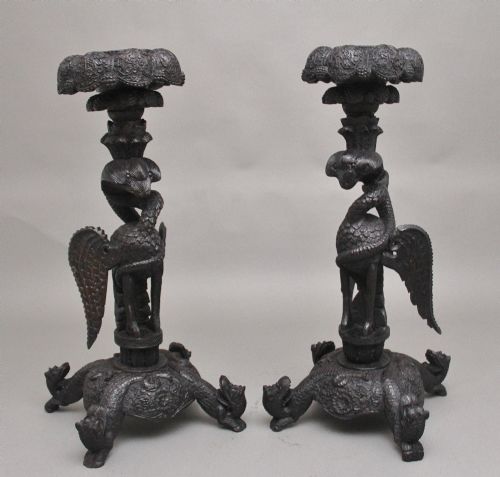
An oriental hardwood pedestal serves primarily as a plant stand, jardiniere table, or torchere to elevate decorative objects within a room. The pieces found here span the nineteenth and early twentieth centuries, drawing heavily from Chinese Qing Dynasty workshops and Japanese Meiji period studios.
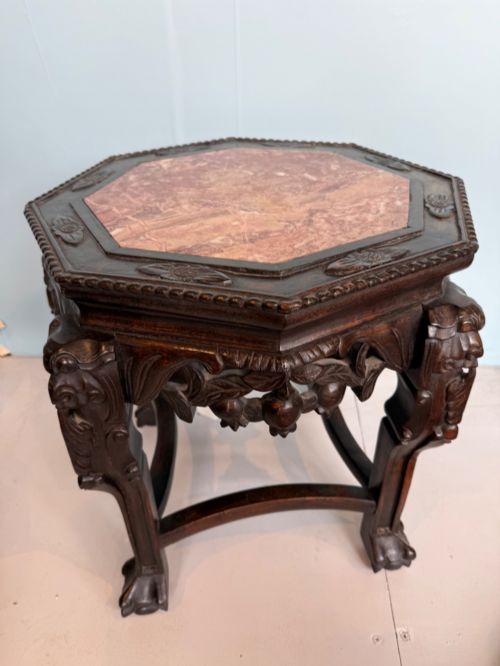
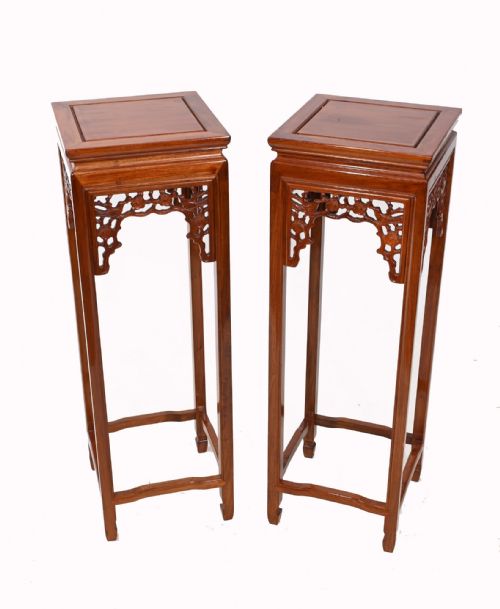
Most examples function as compact occasional furniture, taking the shape of circular pot stands, rectangular side tables, or tall display columns. Makers designed these forms to showcase singular items such as bronze vessels, bonsai trees, or porcelain vases.
The regional origin shapes the silhouette, ranging from robust Chinese padouk and rosewood structures to lighter ebonised Japanese stands and Anglo-Indian torcheres. Buyers encounter matched pairs alongside single freestanding columns built for specific display purposes.
Materials and Technique
Dense tropical timbers form the structural core of these pieces, utilising durable rosewood, padouk, teak, and heavy hongmu alongside ebonised wood. Artisans selected these materials for their natural strength and ability to hold intricate carving without splintering.
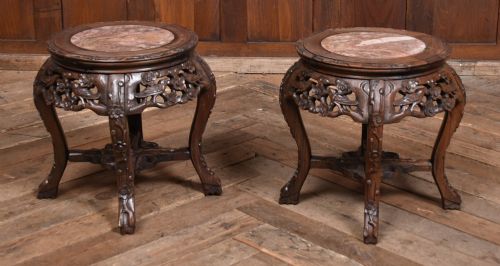
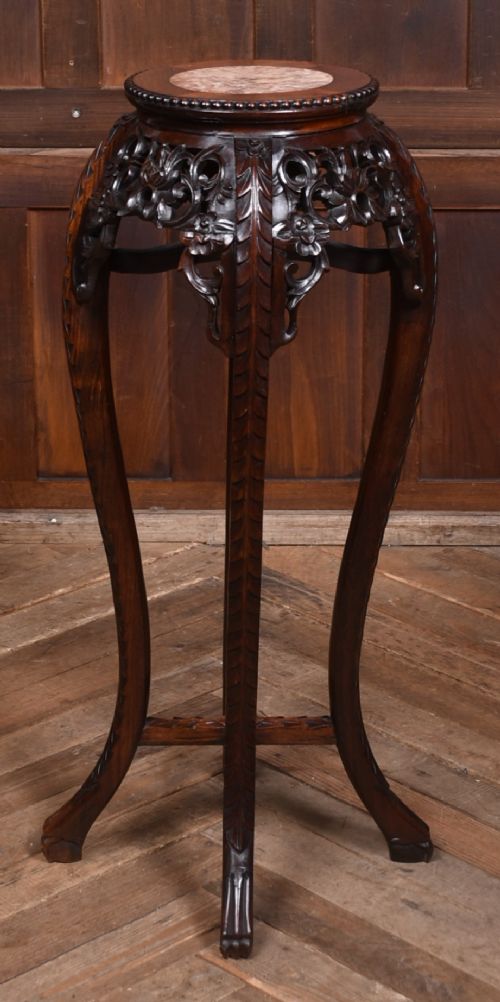
Many surfaces incorporate inset marble panels, such as rouge or white stone slabs, fitted cleanly into the timber frame to support damp plant pots. Hand-carving defines the ornamentation, featuring pierced foliage, animal motifs, and traditional border patterns executed with chisels.
Joinery techniques rely on traditional mortise and tenon methods, often allowing components to fit tightly without modern fixings. Some variations include mother-of-pearl inlay or lacquered finishes applied over the base wood to heighten contrast.
Distinctions in Execution
The crispness of the hand-carving separates standard production from superior work, visible in the depth and undercut detail of the foliage or animal figures. Finer pieces display smooth, uninterrupted surfaces where joints meet precisely and timber grain is chosen with care.
The quality of the inset marble top dictates the grade of the stand, with thicker, evenly figured stone representing higher craftsmanship. Stability under weight and the retention of original surface polishes further distinguish exceptional examples from simpler utility stands.
Liberty of London
The Oriental Hardwood Pedestal Glossary
- Jardiniere
- A large decorative pot or planter designed to hold growing flowers or foliage. These stands frequently elevate such vessels to eye level.
- Torchere
- A tall stand or candlestick holder adapted to serve as a pedestal for display objects. They provide vertical emphasis in room corners.
- Padouk
- A heavy, durable reddish-brown tropical hardwood prized for its strength and resistance to decay. Craftsmen utilised it extensively for carved stands.
- Hongmu
- A category of dense Chinese hardwoods translating to red wood. It encompasses several heavy timber species used in Qing Dynasty furniture.
- Bonsai Stand
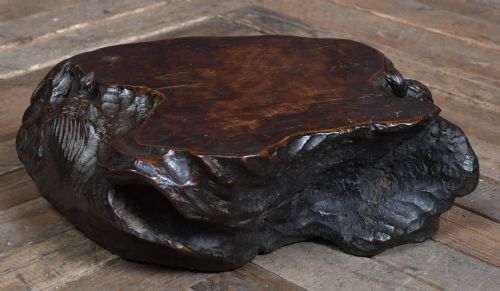
- A low pedestal specifically proportioned to support trained miniature trees. These pieces often feature rustic or naturalistic wood carving.
Oriental Hardwood Pedestal: Frequently Asked Questions
What were oriental pedestals used for?
These pieces served practical roles in nineteenth-century interiors by elevating heavy porcelain planters, bronze vessels, and decorative urns off the floor. This placement protected fine flooring from moisture and positioned display items for optimal viewing.
Beyond holding plants, households utilised smaller versions as lamp tables, reading stands, or occasional surfaces for holding tea wares and scholar's objects in reception rooms.
Are these stands sturdy enough for heavy items?
Dense tropical hardwoods like padouk, rosewood, and hongmu provide exceptional natural weight and structural rigidity. The heavy timber frames easily support substantial bronze figures, large ceramic vases, and heavy planters.
The stability depends primarily on the width of the base and the integrity of the original joinery rather than the slenderness of the central column.
How do I date a nineteenth-century stand?
Dating relies on observing timber selection, construction methods, and stylistic markers associated with the Qing Dynasty or the Victorian era. Nineteenth-century pieces generally show hand-cut joinery, patinated hard finishes, and deep relief carving rather than mechanical routing.
Matching the wear patterns on the feet and the ageing of the internal timber surfaces helps confirm the production period against comparative examples from the same decade.