
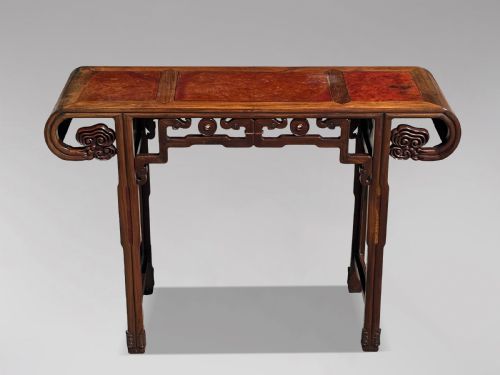


Oriental Hallway Console
An oriental hallway console brings architectural presence and striking surface grain to an entrance, grounding the space with historic timber.

Oriental Hallway Console
When you search for an oriental hallway console, you are looking at substantial rectangular tables rooted in Chinese craftsmanship, spanning the nineteenth century and early decades of the twentieth century. These pieces predominantly take the form of altar tables or console tables, designed originally for domestic interiors or ceremonial spaces.
The most common versions met on this page are carved hardwood altar tables and elm console tables, frequently displaying traditional Chinese provincial or Qing Dynasty characteristics. You will also encounter export pieces finished in red lacquer, alongside long carved console designs suited specifically for narrow entranceways.
Originating largely from Chinese workshops, these furnishings arrive in varied proportions, from three-drawer elm configurations to long rectangular hardwood surfaces with distinct ends. They serve practical needs in modern hallways while retaining their original decorative forms and period joinery.
Materials and construction methods
Construction relies heavily on dense timbers such as elm, hongmu, and mixed hardwoods, selected for their structural stability and rich grain patterns. Artisans shaped these materials using traditional joinery techniques that allowed the timber to expand and contract without compromising the frame.
Surfaces frequently feature applied lacquer in red finishes or clear treatments that highlight the natural figure of the wood. Brass mounts and hardware appear selectively to reinforce corners and drawers, combining utility with subtle ornamentation.
Carving is executed directly into the hardwood structure, particularly along the aprons and edges, following Qing Dynasty design traditions. Glass inserts and amboyna veneers occasionally supplement the primary timber framework in specific export and later nineteenth-century pieces.
Some tables arrive with subtle flange ends designed originally to stop ritual offerings from sliding off during ancestral ceremonies.
Distinctions in construction and finish
Quality rests primarily on the density of the chosen timber, with heavy hongmu and selected hardwoods standing apart from softer domestic elm. The depth and crispness of the carved detail along the aprons also separate standard provincial output from finer workshop productions.
The integrity of the original surface finish defines much of the character, particularly where layers of red lacquer remain undisturbed or where timber has aged with a deep, natural patina. Secondary elements like brass hardware and internal drawer construction reveal the care taken during initial manufacture.
The Oriental Hallway Console Glossary
- Altar table
- A traditional Chinese table featuring upturned flange ends and elongated proportions, originally designed for ceremonial use in domestic halls. These forms now serve as narrow console tables in contemporary hallways.
- Hongmu
- A translation meaning red wood, used to describe various dense, heavy Asian hardwoods highly prized for their deep colour and fine grain. Furniture constructed from this material possesses exceptional weight and structural durability.
- Qing Dynasty
- The final imperial dynasty of China, spanning from sixteen forty-four to nineteen twelve, which encompasses the primary manufacturing dates of these tables. Carved motifs and structural forms from this period heavily influence surviving antiques.
- Lacquer
- A durable finish created from natural tree resin applied in multiple layers to wooden surfaces, frequently seen in rich red tones on export pieces. This technique provides a hard, lustrous protection that deepens over centuries.
- Chinoiserie
- European artistic interpretation of Chinese decorative styles, applied here to describe pieces created for export or styled with characteristic oriental motifs. It reflects the cross-cultural exchange inherent in nineteenth-century trade.
Oriental Hallway Console: Frequently Asked Questions
How do I style an altar table in a hallway?
An altar table fits naturally against an entrance wall, utilising its narrow rectangular footprint to avoid blocking foot traffic. The surface accommodates lighting, mirrors, or decorative objects without dominating the room.
Pairing the table with a wall mirror or keeping the carved apron visible allows the architectural details to stand out. The natural timber tones complement both modern and traditional interior palettes.
How do I date a nineteenth-century console?
Dating relies on examining the timber species, joinery methods, and decorative carving styles associated with the Qing Dynasty. Hardwoods like hongmu and specific construction markers point towards late nineteenth-century workshop output.
Surface treatments such as traditional red lacquer or patinated elm further indicate the period of creation. Comparative study of export designs helps narrow the timeframe between eighteen seventy and nineteen twenty.
Are these tables made of solid wood?
Surviving examples are constructed from solid timbers including elm, hongmu, and assorted regional hardwoods. Artisans utilised traditional interlocking joinery rather than modern fasteners to build the primary frames and table tops.
Secondary materials like brass hardware and occasional amboyna veneers appear on specific decorative items. The heavy weight of these pieces stems directly from the dense, solid nature of the woods used.