






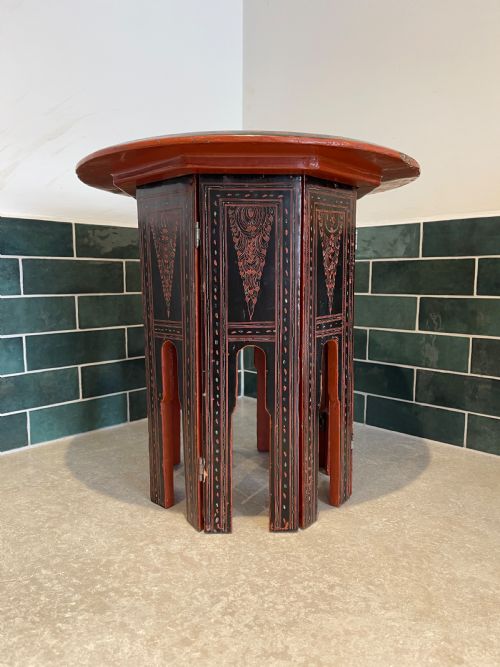
Red Lacquered Side Table
A red lacquered side table brings a vivid jolt of colour and pattern to a room, drawing on centuries of Asian and European craft traditions.
Red Lacquered Side Table
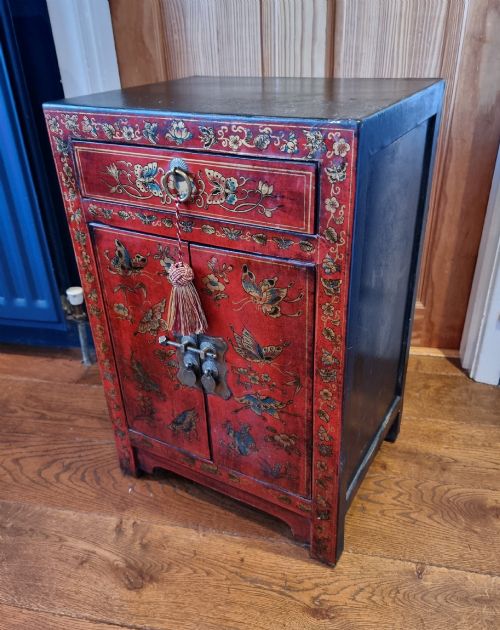
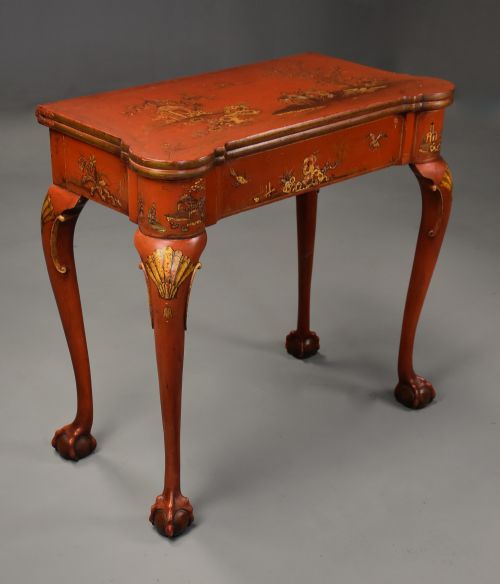
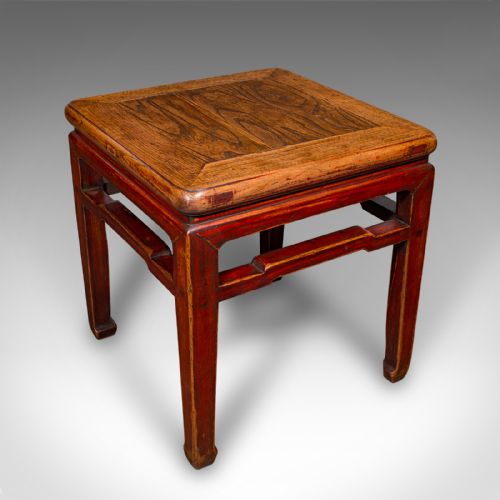
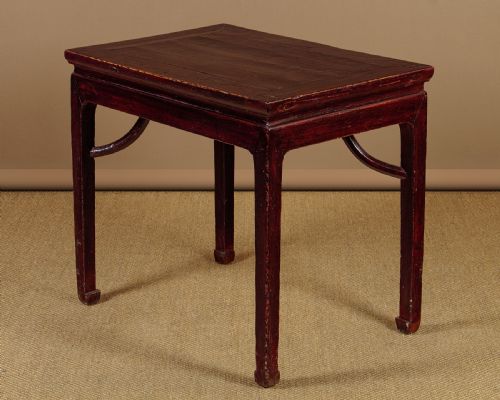
A red lacquered side table covers a diverse range of low tables, consoles, games tables, and small cabinets produced across the nineteenth and early twentieth centuries. These pieces cross various regional aesthetics, encompassing Chinese provincial forms, Japanese Meiji pieces, and Anglo-Burmese items alongside European Chinoiserie interpretations.
Most examples rely on wooden foundations, frequently utilising elm, bamboo, or general hardwoods before applying multiple layers of lacquer and decorative finishes. Buyers encounter everything from altar tables and demi-lune shapes to nests of tables and two-tier occasional stands.
The aesthetic leans heavily into Orientalism and trade routes, combining traditional Eastern forms with British and continental tastes from the Victorian era onwards. Whether taking the form of a low tea table or an upright bedside cabinet, the unifying thread is the striking red surface treatment.
Materials and construction methods
Makers built the structural carcases using timber substrates such as elm, hardwood, and bamboo, frequently pairing them with brass hardware or gilt mounts for structural joints and decorative contrast. The application of lacquer formed the protective and decorative skin, sealing the wood beneath successive brushed or polished coats.
Surface ornament often involved intricate painted detailing, gilding, or carved panels depicting landscapes and figures in the Chinoiserie tradition. Some specialised pieces utilised cinnabar lacquer or incorporated bamboo framing to achieve lightweight yet stable occasional furniture.
Materials recorded across the archive include elm, bamboo, brass, and hardwood paired with traditional lacquer.
Distinguishing quality across the range
Quality rests heavily on the depth and execution of the surface finish, distinguishing robustly layered lacquer and crisp hand-painted gilding from flat or rapidly applied modern alternatives. The crispness of carved wooden details and the stability of joinery in elm, hardwood, or bamboo frameworks signal the level of workshop care.
The integrity of the structural design, whether in a complex games table, a multi-tiered stand, or a simple altar table, determines how well the piece survives centuries of use. Superior examples maintain the harmony of their original decorative schemes without heavy-handed later repainting obscuring the underlying wood and lacquer layers.
The Red Lacquered Side Table Glossary
- Chinoiserie
- European artistic interpretations of Chinese and East Asian artistic traditions, popular in furniture decoration through gilt and painted motifs.
- Cinnabar
- A carved lacquer technique utilising heavy layers of red mercuric sulphide pigment, allowing deep relief carving into the surface.
- Altar table
- A traditional Chinese form characterised by an elongated rectangular top, often with upturned ends, raised on sturdy legs.
- Demi-lune
- A half-moon shape used for console and side tables designed to sit flush against a wall.
- Etagere
- A piece of furniture consisting of a set of open shelves for displaying small objects, frequently seen in tiered side tables.
Red Lacquered Side Table: Frequently Asked Questions
What is a red lacquered side table used for?
These pieces function as versatile surface furniture for holding lamps, books, or decorative objects in living spaces and bedrooms.
Historically, specific forms served as writing desks, tea tables, or altar surfaces, adapting easily to modern domestic interiors.
How do I care for lacquer furniture?
Protect the surface by keeping pieces away from direct sunlight and extreme humidity fluctuations which can damage organic finishes.
Dust gently with a dry, soft cloth and avoid chemical polishes that might degrade the historic lacquer layers.
Are these tables waterproof?
Traditional lacquer provides a durable, water-resistant seal, but antique surfaces require careful protection against standing liquids.
Using coasters and avoiding harsh cleaning agents preserves the delicate gilding and painted decoration underneath.
How can I tell the period?
Dating relies on examining the timber construction, the composition of the lacquer, and the style of hand-painted or carved motifs.
Comparing regional characteristics, such as nineteenth-century Chinese elm framing or early twentieth-century Burmese export work, clarifies the era.