
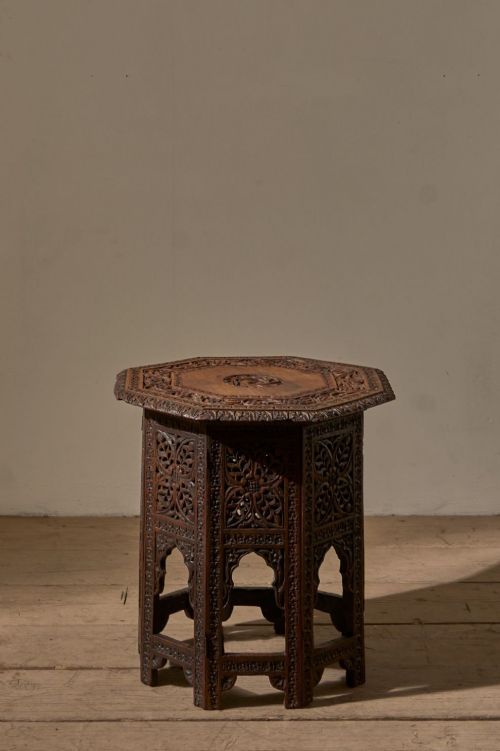
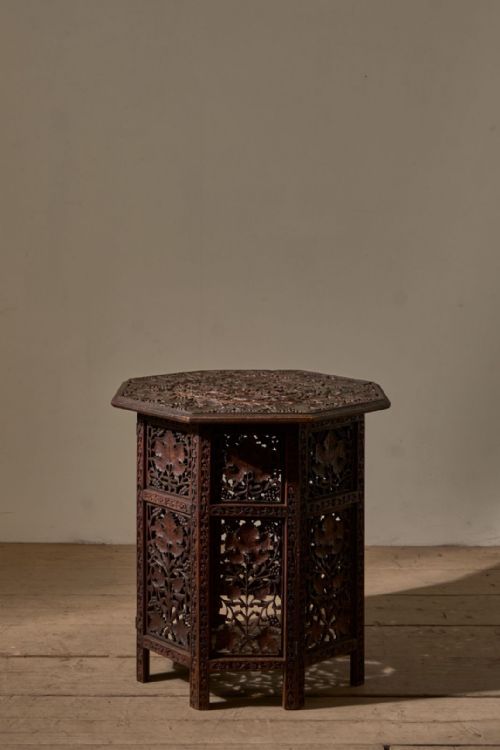


Octagonal Folding Side Table
These octagonal folding side table pieces bring intricate colonial craftsmanship and practical design together for modern interiors.
Octagonal Folding Side Table
When you search for an octagonal folding side table, you encounter pieces originating primarily from the late nineteenth and early twentieth centuries. These occasional tables bridge decorative artistry and portability, designed to fold flat when not in service.
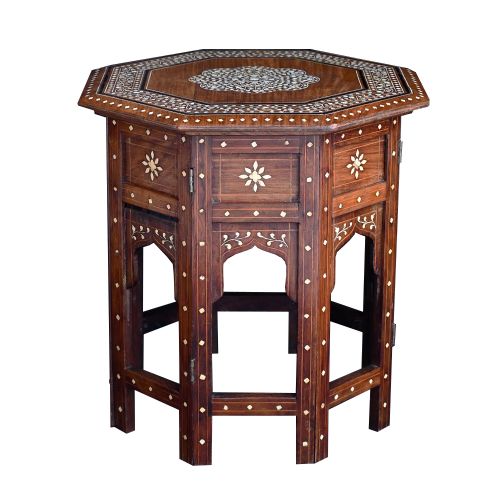
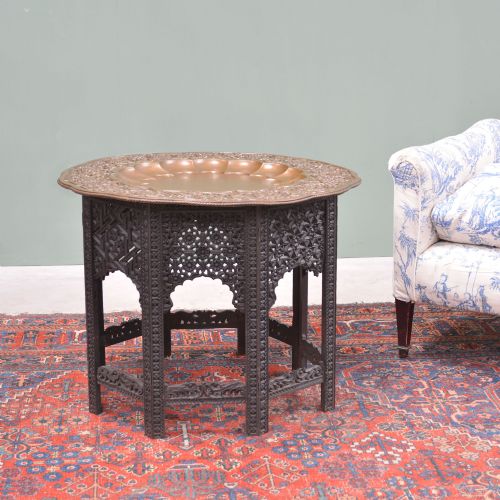
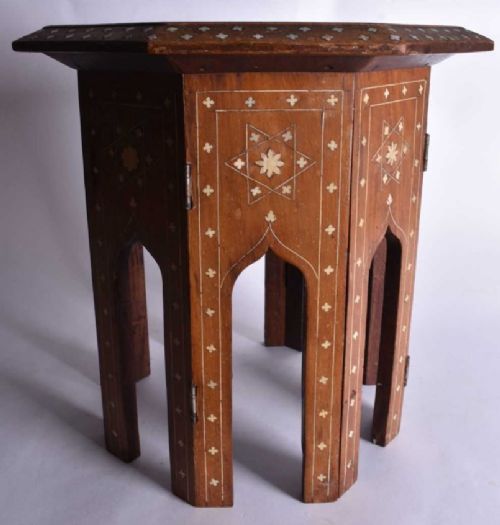
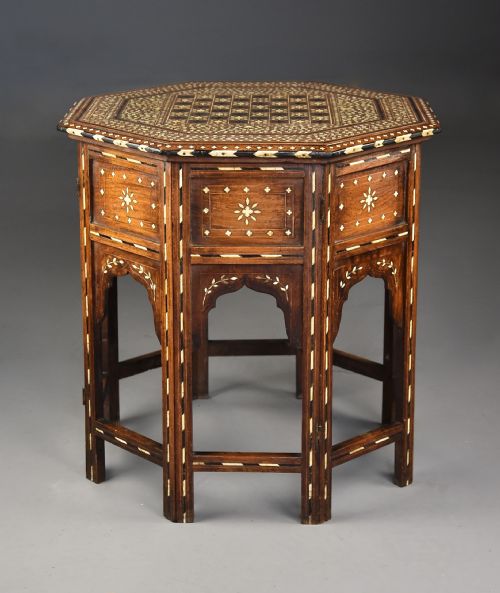
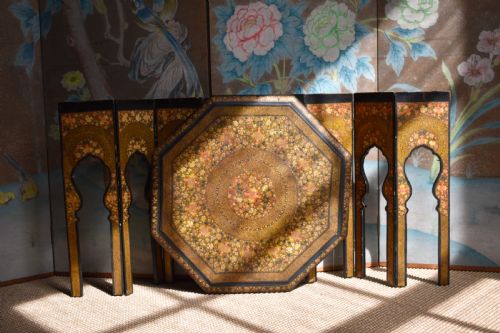
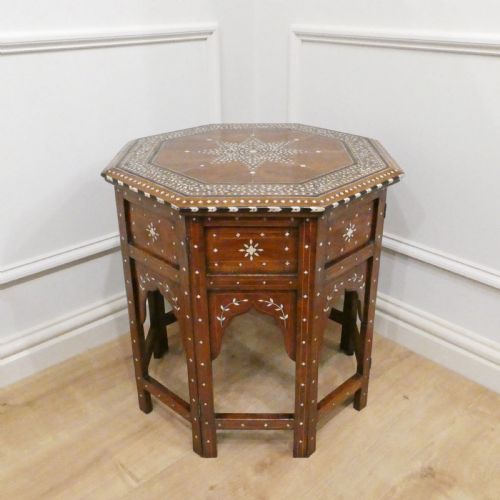
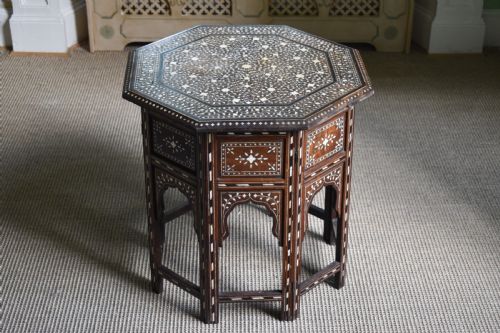
The most common examples on this page are Anglo-Indian and Hoshiarpur productions featuring intricate surface work. Alongside these, buyers find Syrian and Moorish revival designs, Burmese lacquer work, and occasional Georgian drop-leaf forms.
Materials and Construction
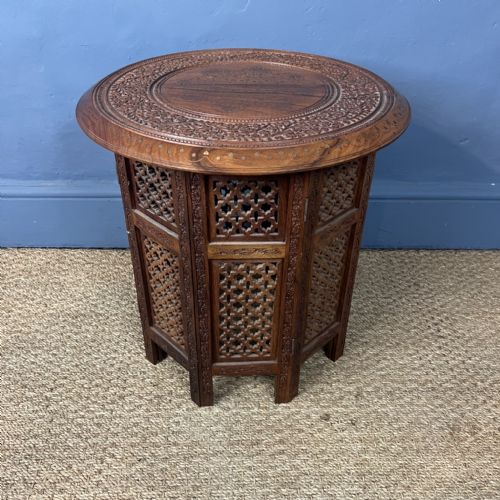
Workshops utilised dense timbers such as teak, padauk, sandalwood, rosewood, and general hardwood for the structural frames and folding bases. Artisans constructed the folding mechanism with interlocking wooden elements that allow the octagonal top to detach or collapse smoothly.
Surfaces received elaborate ornamentation through hand-carving and inlay techniques. Craftsmen pressed brass, copper, bone, and mother-of-pearl into the wood to create geometric and floral patterns, sometimes complementing the design with painted lacquer.
Listings feature woods such as teak, padauk, and sandalwood combined with brass, copper, and bone inlay across the nineteenth and early twentieth centuries.
Distinctions in Quality
Quality rests upon the density and precision of the surface ornamentation rather than the size of the table. Pieces featuring dense, complete bone or metal inlay work across the entire octagonal top stand above simpler carved surfaces.
The integrity of the folding mechanism and the stability of the base dictate structural merit. Superior examples maintain tight joints and alignment in the collapsible frame despite decades of movement.
The Octagonal Folding Side Table Glossary
- Hoshiarpur
- A district in Punjab known for producing highly decorated wooden tables with intricate inlay. Artisans there mastered the technique of setting bone and brass into dark timber.
- Anglo-Indian
- A designation for items made in India during the period of British rule, combining British furniture forms with local craftsmanship. These pieces often incorporate traditional Indian carving motifs.
- Octagonal
- A geometric shape possessing eight sides, which defines the tops of these specific tables. This form provides a balanced surface for display while softening room corners.
- Padauk
- A heavy, durable tropical hardwood with reddish tones utilised in colonial furniture. Its stability made it suitable for folding stands and carved table tops.
- Moorish Revival
- An architectural and decorative style popular in the nineteenth century that drew on Islamic design elements. Tables in this style feature complex geometric strapwork and star patterns.
Octagonal Folding Side Table: Frequently Asked Questions
How do these folding tables work?
The base consists of interlocking wooden sections that pivot on a central pin or hinge arrangement. This allows the support structure to fold flat into a compact unit.
The octagonal top then lifts off or collapses down onto the folded base for easy storage or transport.
Where were these tables made?
Many originate from craft centres in India, particularly Hoshiarpur, while others emerge from Burmese workshops or reflect Syrian and Moorish revival styles.
British makers also produced occasional octagonal folding furniture during the Georgian and Victorian periods.
How do I care for inlaid surfaces?
Dust the carved and inlaid wooden surfaces regularly with a soft, dry brush to prevent debris from settling in the recesses. Avoid using liquid polishes that can loosen bone or metal inlays.
Maintain stable humidity levels in the room to protect the wood and prevent the natural materials from shifting.
What periods do these tables cover?
The selection spans from the late eighteenth century through the Victorian era and into the early twentieth century. Most examples date from the late nineteenth century up to nineteen-thirty.
Earlier pieces typically show Georgian cabinetmaking, while later items focus on colonial export styles.