


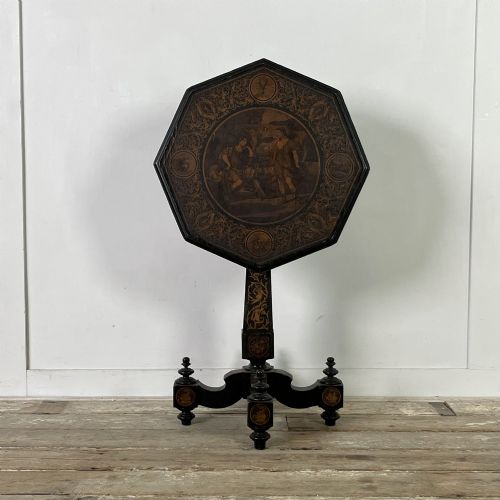


Black Painted Occasional Table
A black painted occasional table brings dark surface and practical function to a corner, drawing the eye with lacquered sheen or simple pigment.
Black Painted Occasional Table
A black painted occasional table is a versatile small furnishing designed to sit beside a chair or in a corner, holding a lamp, books, or a drink. When you search for this phrase, you encounter pieces spanning from the eighteenth century through to the early twentieth century, reflecting varied tastes in domestic utility.
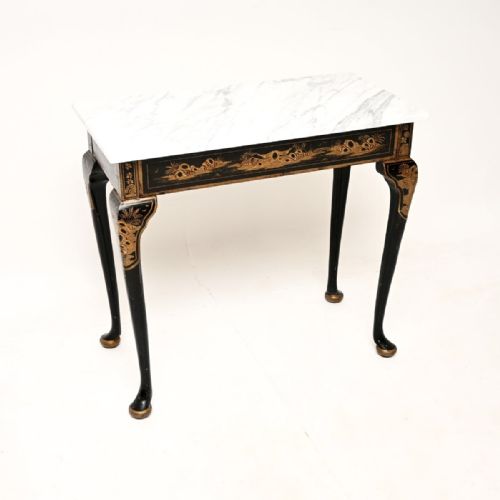
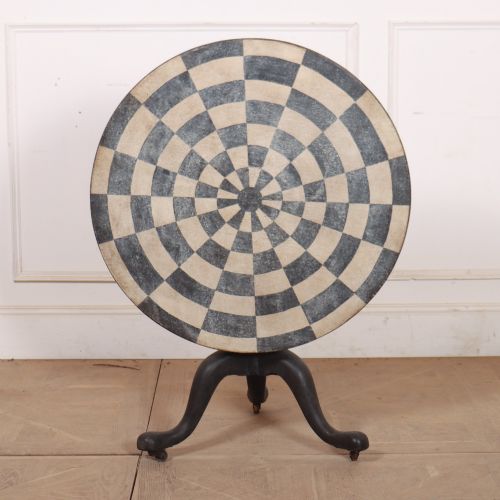
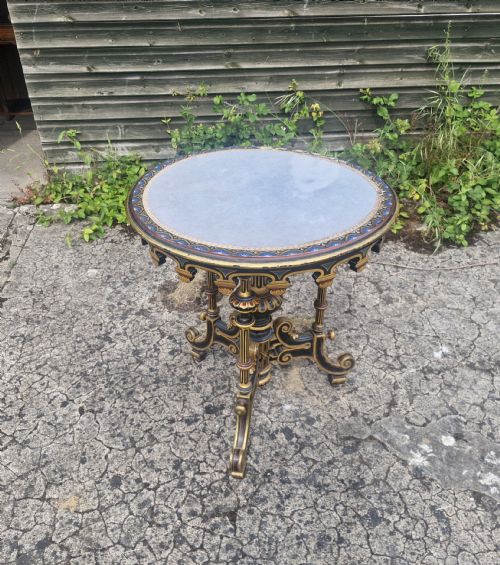
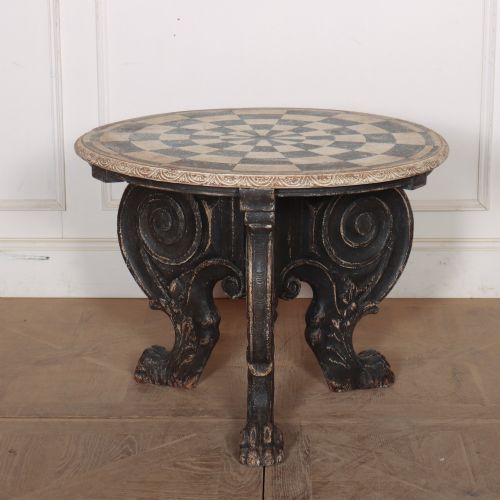
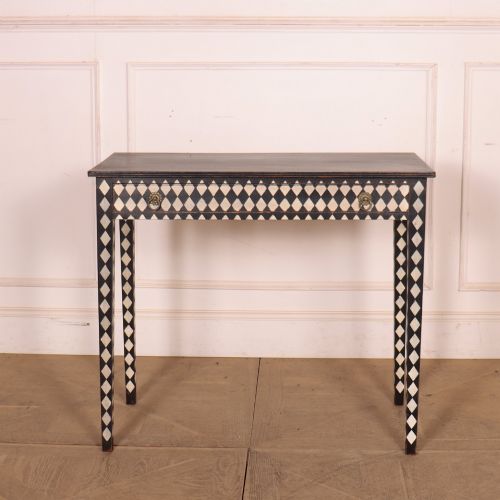
The selections here lean heavily toward Victorian and Edwardian examples, alongside earlier Georgian and eighteenth-century roots. Forms range from simple tripod and lamp tables to nests of tables, tilt-tops, lowboys, and tray tables on stands.
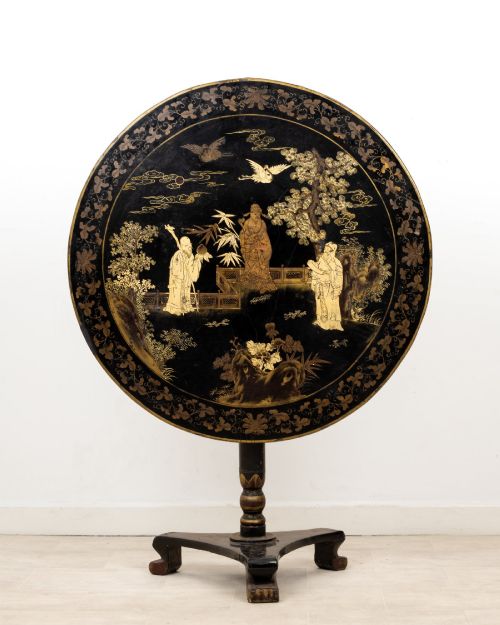
Origins stretch across English country workshops, continental European makers, and Asian export lacquer traditions. You find vernacular pine and oak alongside refined Victorian papier-mâché and elaborately decorated Chinoiserie.
Materials and construction
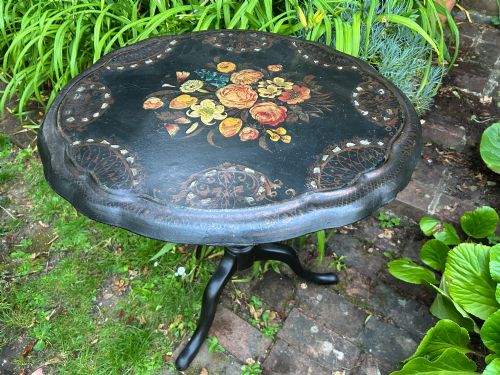
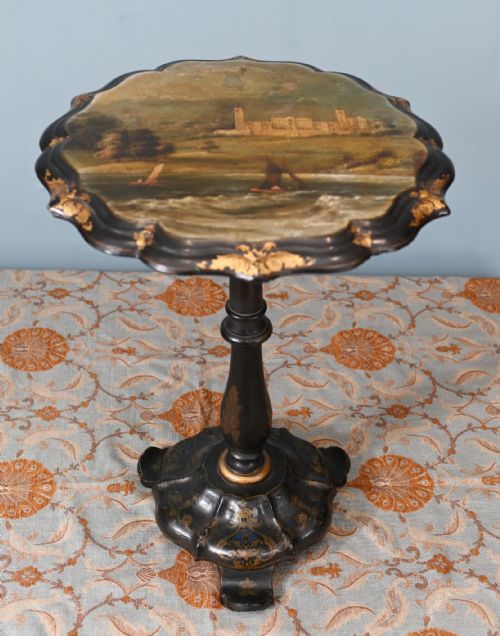
Construction relies upon traditional timber frames built from woods such as oak, pine, beech, and mahogany, which provide the structural foundation for painted or lacquered finishes. Papier-mâché serves as a key material for moulded tabletop surfaces, particularly in nineteenth-century pieces designed to carry hand-painted decoration.
Finishing techniques involve layers of black paint, japanning, or true lacquer applied to seal the wood. Artisans frequently added hand-painted details, gilt, gold leaf, and mother-of-pearl inlay, sometimes sealing the work with a protective varnish.
The selection includes pieces from the 18th, 19th, and early 20th centuries, spanning Victorian, Georgian, and Chinoiserie styles.
Judging quality and finish
Quality rests primarily in the execution of the surface decoration and the integrity of the underlying structure. Fine examples display crisp, hand-painted Chinoiserie motifs or intricate mother-of-pearl inlay embedded smoothly into the lacquer, rather than crude surface stencilling.
The stability of the frame and the retention of the original dark finish dictate value. Tables that retain their authentic nineteenth-century japanning or early paint without extensive modern re-painting command greater interest from collectors.
Thomas Hope
The Black Painted Occasional Table Glossary
- Chinoiserie
- European decorative style inspired by Chinese artistic traditions, featuring motifs of landscapes, figures, and pavilions rendered in gold or colour on black lacquer grounds.
- Japanning
- European imitation of East Asian lacquerwork, created by applying layers of varnish and heat-curing them before adding painted or gilded decoration.
- Papier-mâché
- Composite material made from paper pulp mixed with glue and resin, pressed into moulds and hardened to form smooth tabletops or trays.
- Tilt-top table
- Table featuring a mechanism that allows the top to pivot vertically when not in use, saving space in smaller rooms.
- Lowboy
- Small seventeenth- or eighteenth-century side table equipped with one or more drawers beneath the working surface.
Black Painted Occasional Table: Frequently Asked Questions
What is a black painted occasional table used for?
These pieces function as movable surfaces for lamps, books, or decorative items within a room. Their compact size allows them to sit easily beside seating or in vacant corners.
Historically, specific forms like tilt-top tables and nests served multiple domestic needs, moving to wherever extra surface area was required during social gatherings.
How do I date a black painted occasional table?
Dating relies upon examining the construction methods of the timber frame, the type of screws or joinery used, and the composition of the surface finish. Papier-mâché tops and specific Chinoiserie motifs often point directly to the nineteenth century.
Changes in furniture styles, from eighteenth-century Georgian tripod bases to Edwardian nesting sets, help narrow the decade of manufacture when combined with material evidence.
Are these tables sturdy enough for daily use?
Most occasional tables were built for light domestic service rather than heavy weight-bearing tasks. Solid wood frames and sturdy tripod bases handle normal placement of lamps and cups without difficulty.
Care should be taken with antique lacquer and papier-mâché surfaces to avoid moisture damage and deep scratching during everyday use.
What is the difference between lacquer and painted finishes?
True lacquer involves building deep, glossy layers from natural resins that are polished to a hard sheen. Painted finishes rely on pigment suspended in oil or modern binders applied directly to wood or gesso.
Japanning sits between these categories as a European technique designed to emulate Asian lacquer using traditional western varnishes and heat treatments.