


Victorian Chinoiserie Furniture
Victorian chinoiserie furniture brings together bamboo, lacquer, and hand-painted oriental motifs to create decorative tables, cabinets, and stands for the home.
Victorian Chinoiserie Furniture
The selections on this page span the nineteenth century, including specific decades such as the 1860s, 1870s, 1880s, 1890s, and 1900. Alongside traditional occasional tables, listings feature specialised forms like umbrella stands, Canterbury magazine racks, cabinets, chests of drawers, and hall benches.
Stylistic overlaps frequently occur between Victorian chinoiserie, the Aesthetic Movement, and Japonisme. These overlapping influences appear in items ranging from simple bamboo shelf units to elaborate escritoire cabinets and papier-mâché trays mounted on stands.
Materials and Construction
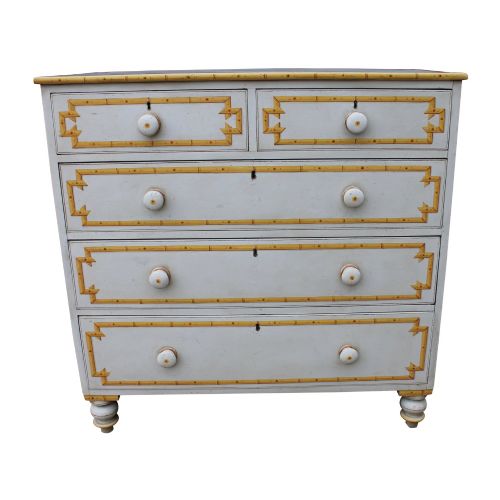
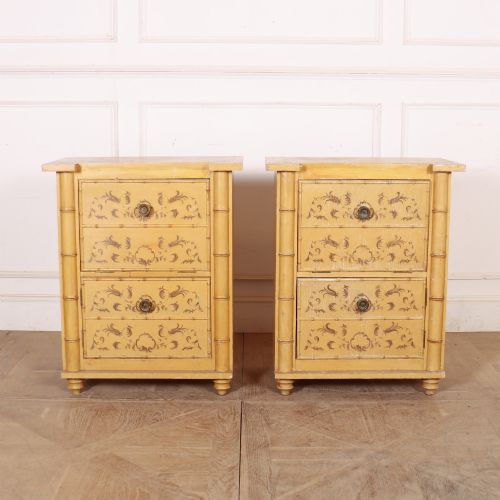
Construction relies heavily on natural bamboo, tiger bamboo, and turned wood finished as faux bamboo to support lightweight frames. Cabinetmakers combined these organic supports with hardwood structures, cane seating, and brass hardware.
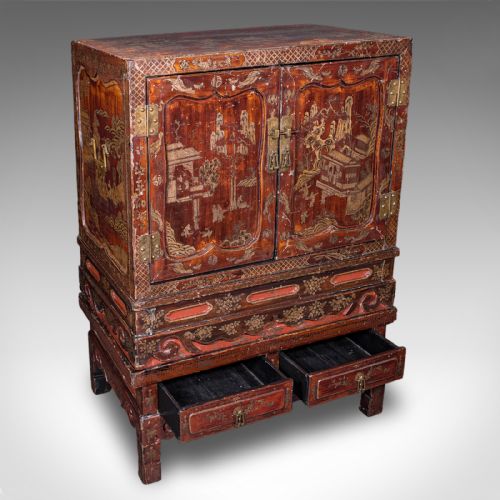
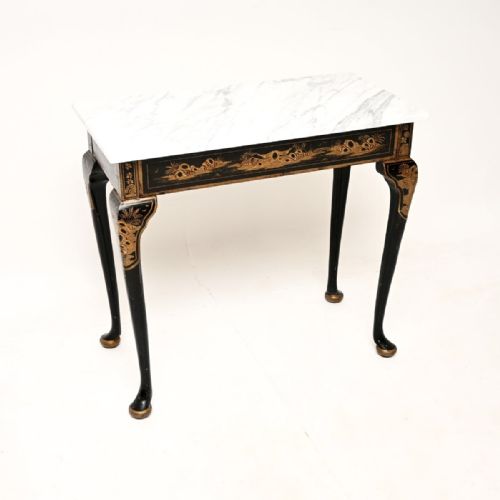
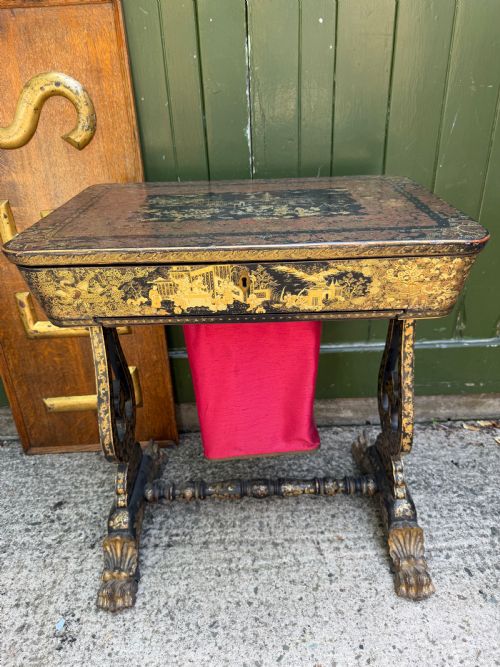
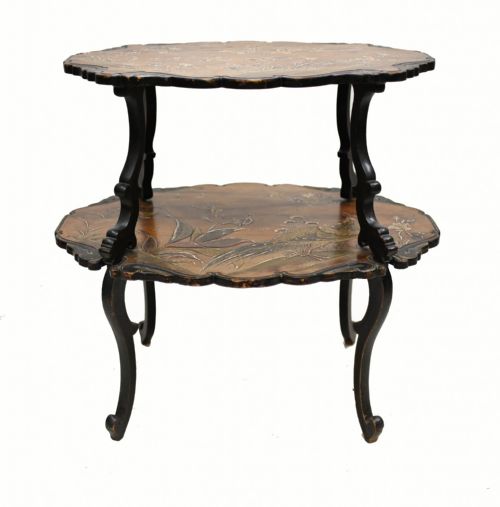
Surfaces receive decorative treatments including black lacquer, japanning, and hand-painted gilding to depict oriental scenes. Many tables incorporate inset elements such as marble tops, glass panels, or papier-mâché trays.
Listings incorporate organic materials including bamboo, tiger bamboo, hardwood, and cane, paired with lacquered wood and marble.
Execution and Detail
Quality rests in the precision of the hand-painted gilt decoration and the depth of the lacquer work applied to the wooden or papier-mâché surfaces. Finer pieces display crisp detailing in oriental motifs and secure joinery across bamboo and hardwood frames.
The integrity of secondary materials, such as genuine marble tops, inset ceramic panels, and woven cane seats, elevates the standing of an individual table or cabinet. Greater care in the turning of faux bamboo members and the stability of multi-tier stands also distinguishes superior examples.
Gabriel Viardot
The Victorian Chinoiserie Furniture Glossary
- Chinoiserie
- European artistic interpretation of Chinese and East Asian decorative styles, commonly utilising painted lacquer and motif work.
- Japanning
- A type of European finish that mimics traditional East Asian lacquer, typically built up in layers of dark varnish and cured.
- Canterbury
- A low multi-partition rack traditionally used for holding sheet music, magazines, or newspapers, often constructed from bamboo in this period.
- Etagere
- An open piece of furniture featuring multiple tiers or shelves used for displaying decorative objects and small items.
- Papier-mâché
- A composite material made from paper pulp mixed with binding agents, pressed into moulds and lacquered to form durable table trays.
Victorian Chinoiserie Furniture: Frequently Asked Questions
How do I use a nest of tables?
A nest of tables provides a set of graduating surfaces that slide beneath one another to save floor space when not in use. You can pull the individual tables out around a room as needed for holding drinks or small lamps.
These sets function well in sitting rooms where surface space is required temporarily without permanently cluttering the room layout.
Where should I place a plant stand?
Plant stands and jardiniere stands work best in corners, near windows, or beside seating where they can elevate greenery or decorative bowls. Their tall, narrow footprints allow them to fit into tight spaces without blocking walkways.
Many examples feature marble or lacquered tops designed to resist moisture from potted plants.
What is a faux bamboo finish?
A faux bamboo finish involves turning solid wood on a lathe to mimic the segmented joints and natural texture of real bamboo. Craftsmen then paint or stain the turned wood to resemble the varied tones of actual cane.
This technique provided the exotic look of imported bamboo using sturdy domestic hardwoods.
How do I care for lacquered surfaces?
Lacquered wood and papier-mâché surfaces require gentle dusting with a soft, dry cloth to prevent scratching the glossy finish. You should keep these pieces away from direct sunlight and excessive moisture to protect the paint and gilding.
Avoid using chemical polishes or abrasive cleaners, which can dull the historical lacquer layer.